Home Blog Page 1117

Fiji records 49 new cases of COVID-19, four deaths reported

Fiji has recorded 49 new cases of COVID-19 and four deaths Tuesday, increasing the total number of cases in the island nation to 51,203 and 636 deaths since the outbreak in April.

Permanent secretary for Health, Dr James Fong said there have been 62 new recoveries to report since the last update, which means that there are now 8,871 active cases.

“There have been 51,203 cases during the outbreak that started in April 2021. We have recorded a total of 51,273 cases in Fiji since the first case was reported in March 2020, with 41,251 recoveries,” he said.

Dr Fong said four new COVID-19 deaths reported for the period of 05 August -03 October 2021. All four COVID-19 deaths have been reported from the Central Division.

He said the two deaths reported Tuesday due to a delay in the issuance of the official death certificate from August included a 9-year-old child.

“There have been 10 more deaths of COVID-19 positive patients. However, these deaths have been classified as non-COVID deaths by their doctors. The doctors have determined that these deaths were caused by a serious pre-existing medical condition and not COVID-19.

“There have now been 638 deaths due to COVID-19 in Fiji, with 636 of these deaths during the outbreak that started in April this year. As of 30 September, the national seven days rolling average of COVID-19 deaths per day is 0.8. The seven days rolling average for COVID-19 deaths per day in the Central division is 0.1 and 0.7 in the Western sivision.

“We have also recorded 513 COVID-19 positive patients who died from the serious medical conditions that they had before they contracted COVID-19; these are not classified as COVID-19 deaths,” Dr Fong explained.

He said there are currently 74 COVID-19 patients admitted to hospitals in Fiji.

“40 patients are admitted at the Lautoka Hospital and 34 are admitted at CWM hospital, St Giles, and Makoi.

“Six patients are considered to be in severe condition, and six are in critical condition,” said Dr Fong.

The national seven-day average daily test positivity is 5.4 percent, which is on a downward trend, but it still is indicating a high level of community transmission, he said.

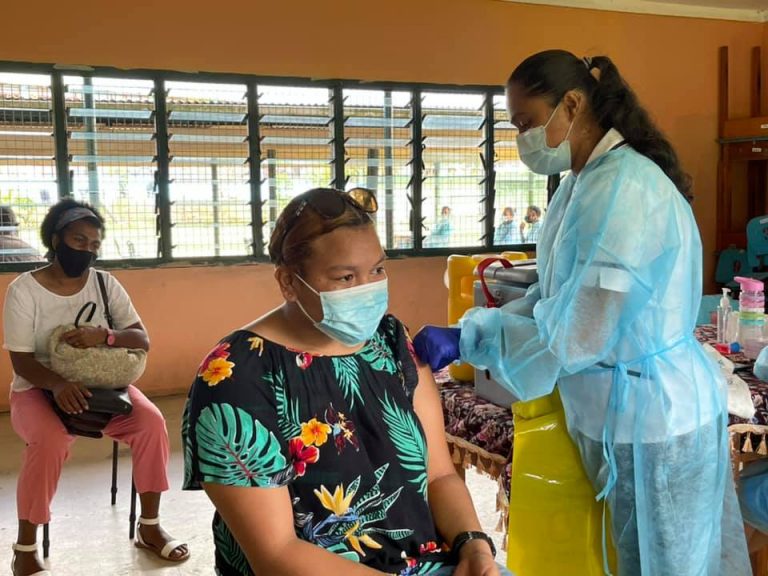
A total of 593,842 adults in Fiji have received their first dose of the vaccine and 470,867 have received their second doses.

“Based on our updated total population of 618,173 people aged 18 years and over (adults), the vaccination coverage rates are 96.1 percent for adults who have received at least one dose, and 76.2 percent are now fully vaccinated nationwide.

“As for children, 21,062 children in Fiji have received their first dose of the vaccine as of 04/10/2021. We will be tracking our vaccine coverage rates once we have firmed up our 15 to 17-year-olds age group denominator,” said Dr Fong.

SOURCE: PACNEWS

Climate talks chief urges Morrison to act

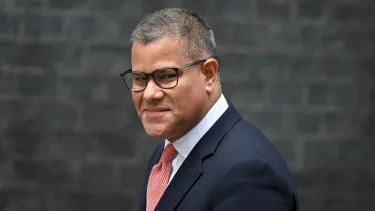
The minister in charge of next month’s crunch Glasgow climate summit has challenged Australia to nearly double its 2030 emissions reduction target and urged Prime Minister Scott Morrison to attend the talks in person.

Alok Sharma, the president of the United Nations Climate Change Conference, framed Morrison’s participation as a test of Australia’s friendship with Britain, warning the ravages of global warming cannot be avoided unless world leaders make Glasgow their top priority.

“I would dearly love the Australian Prime Minister to come,” Sharma said in an interview with The Sydney Morning Herald and The Age.

“I can understand that every leader will have to take into account what is going on domestically but COP26 really matters and we want to see as many world leaders as possible.

“You’re some of our closest mates in the world, and we need you by our side to demonstrate the unity of purpose that is going to be really essential at this summit.”

Sharma, a cabinet minister who was elevated to the COP26 presidency by British Prime Minister Boris Johnson earlier this year, has been rallying support for a new pact that would bind the world to deeper emissions cuts, a faster phase-out of coal and more cash for poorer nations.

Morrison has not decided whether to fly to Glasgow but is preparing to take to cabinet and backbench MPs a formal policy of net-zero emissions by 2050. He is also under pressure to lift Australia’s existing goal of cutting pollution by 26 to 28 per cent by 2030, although that will be much harder to find agreement on.

Warning the world was at a “critical juncture”, Sharma said embracing net zero by 2050 was not enough. He cited the UK’s goal of slashing dangerous carbon emissions by at least 68 percent by 2030 and Japan’s promise of a 46 to 50 percent cut.

“Australia is a major world economy,” Sharma said. “And if you compare to where other major world economies are, I hope that we could get to 45 to 50 percent from Australia.

“That would mean they’d be comparable with other major economies in the world.”

Labour took a 45 percent target by 2030 to the 2019 federal election – a policy the government claimed would take a “wrecking ball” to the economy. Opposition Leader Anthony Albanese has since called Labor’s pledge “a mistake”.

But the NSW Liberal government last week promised to cut greenhouse gas emissions by 50 percent by 2030, building on the same policy unveiled by the Victorian Labour government earlier this year.

Sharma said he has had candid conversations with the Australian government over the need to make much deeper cuts before the end of the decade.

“I say to them basically what I say to everyone, which is that we need to do more. If we want to ensure that we are at a point of net zero by the middle of the century, then we have to have ambitious 2030 emission-reduction targets which align with that goal.”

A report by the Intergovernmental Panel on Climate Change in August found a 45 percent cut by 2030 was essential to meeting the Paris Agreement’s goal of limiting global warming to 1.5 degrees. “But on the current trajectory, we will see an increase of 16 percent in emissions by 2030 rather than a reduction,” Sharma said.

A spokesperson for the Prime Minister said Australia would take part in the COP26 summit and had a strong record of “meeting and beating” its emissions reduction commitments.

“We are working closely with the UK on the technology advances that will be needed for the world to transition to a net zero economy. Technology not taxes is the way to tackle climate change, keep the lights on and keep people in jobs. This will continue to be at the heart of Australia’s response.”

The government has promised to release an updated 2030 projection and its long-term strategy ahead of the Glasgow meeting.

The more ambitious action from NSW and Victoria could help the government lift its 2030 target of a 26 to 28 percent cut to something approaching 35 percent, but the politics within the Coalition is fraught and most cabinet ministers still do not know what Morrison is planning just three weeks out from the Glasgow summit.

Sharma said the urgency of the climate crisis warranted bold decisions from Australia.

“Australia is a great friend, and I really want one of my closest mates to come to my party and I want them to sing the same songs,” he said.

“And that in a climate context means more ambition on cutting emissions and it means more support in terms of financing for developing countries.”

Asked whether it was possible to achieve net-zero emissions without a price on carbon – which Morrison and Albanese are opposed to – Sharma stressed the international landscape was shifting rapidly.

“I mean, even China now has an emissions trading scheme,” he said.

“It is internationally acknowledged that countries are going to have to domestically and internationally address the whole issue of carbon pricing and carbon leakage – every country will have to get there.

“And so my advice to any country is to start to think about this now.”

Sharma also thanked the Morrison government and Energy and Emissions Reduction Minister Angus Taylor for assisting Pacific islands attendees with travel to the Glasgow event.

More than 20,000 people are expected to arrive in the Scottish city during the first two weeks of November.

Prime Minister Boris Johnson has made climate change a key plank of his leadership.

Johnson recently said the gathering would be held “in the full glare of the global spotlight”.

“And when the summit ends, when most of the world has committed to decisive, game-changing action, it will be clear to all which of us has lacked the courage to step up,” he said.

“The world will see, and your people will remember, and history will judge,” he said.

SOURCE: SMH/PACNEWS

How the Pacific might get caught up in the latest US-China-Taiwan stoush

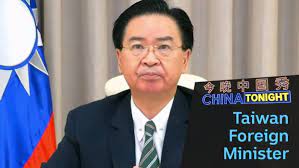
An Australian security expert says the Pacific would be at “at real risk” if military conflict did break out over Taiwan, as China steps up its military activity and Taiwan says it’s preparing for war.

Beijing has sent a record number of fighter jets into Taiwan’s defence zone over its National Day weekend, amid a surge in nationalism on the mainland.

The numbers rose again on Monday with 56 Chinese aircraft entering Taiwan’s air defence identification zone before Taiwan scrambled fighter jets and deployed missile systems to monitor the Chinese planes.

The United States has called China’s behaviour “provocative military action” and says Beijing’s increasing pressure against Taiwan undermines regional peace and stability.

But on Monday, China’s Foreign Ministry said it was the U.S that had made “provocative moves” that “undermine China-U. S relations and regional peace and stability” by strengthening its official and military ties with Taiwan.

The Foreign Ministry spokesman Hua Chunying went on to say that “China will take all necessary measures to resolutely crush all attempts at ‘Taiwan independence'”.

Joanne Wallis, a Professor of International Security at the University of Adelaide and author of Pacific Power? Australia’s Strategy in the Pacific Islands, told Pacific Beat that while the rhetoric is increasing, she doesn’t believe there is an imminent threat of conflict.

“There has long been concern that there would be conflict over Taiwan, there was the Taiwan Strait crisis in the 1990s, this is not a new situation,” she said.

“I think what is new is the rhetoric around it and I think that’s primarily driven in many ways by outside forces, rather than the situation itself”.

But she said that if conflict was to break out, the Pacific would be “at real risk”.

“Particularly the north Pacific, particularly the subregion of Micronesia given their geographic location but also…they are hope to a number of U.S [military] bases,” Professor Wallis said.

“The Pacific’s in quite a difficult circumstance, because the Pacific has lived through World War Two, they know what a ‘Great Power’ war looks like in their own backyard. You can quite understand why they’re anxious and cautious about what is happening.”

Four of Taiwan’s few remaining diplomatic allies are in the Pacific – Tuvalu, Marshall Islands, Nauru and Palau.

Professor Wallis said in the current state of play, the diplomatic recognition could play a role in “intra-Pacific islands’ dynamics” given the split within the region with the Micronesian countries pledging to leave the Pacific Islands Forum.

But she said in the event of any conflict, “diplomatic recognition will essentially be meaningless. In the event of a military conflict, states won’t be worried about who has relations with who”.

SOURCE: ABC/PACNEWS

Historical climate emissions reveal responsibility of big polluting nations

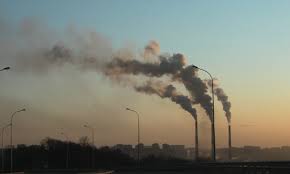
Analysis of the total carbon dioxide emissions of countries since 1850 has revealed the nations with the greatest historical responsibility for the climate emergency. But six of the top 10 have yet to make ambitious new pledges to cut their emissions before the crucial UN COP26 climate summit in Glasgow in November.

The six include China, Russia and Brazil, which come only behind the U.S as the biggest cumulative polluters. The UK is eighth and Canada is 10th. Carbon dioxide remains in the atmosphere for centuries and the cumulative amount of CO2 emitted is closely linked to the 1.2C of heating the world has already seen.

At the UN negotiations, historical emissions underpin the claims for climate justice made by developing nations, along with the disparity in wealth of nations. Countries that grew rich on fossil fuels have the greatest responsibility to act, developing nations say, and to provide funding for low-CO2 development and protection against the impacts of global heating.

The UK is hosting Cop26 and the prime minister, Boris Johnson, acknowledged this responsibility in a speech to the UN in September.

The analysis, produced by Carbon Brief, includes, for the first time, emissions from the destruction of forests and other changes in land use alongside fossil fuels and cement production. This pushes Brazil and Indonesia into the top 10, unlike when fossil fuel emissions alone are considered.

The data also shows the world has now used 85 percent of the CO2 budget that would give a 50 percent chance of limiting heating to 1.5C, the danger limit agreed in Paris in 2015.

The U.S, Germany, Britain and Canada are the only top 10 nations to have made pledges of deeper emissions cuts in advance of Cop26. While the U.S has said it will double its climate finance contribution to developing nations, some still see this as too little from the world’s biggest economy.

Russia has made a new pledge, but it allows for emissions to rise, and the Climate Action Tracker (Cat) group classes it as “critically insufficient” compared with the Paris targets. China and India have yet to make any new pledges, while those of Brazil, Indonesia and Japan do not improve on previous pledges.

“There’s a direct link between the 2,500bn tonnes of CO2 pumped into the atmosphere since 1850 and the 1.2C of warming we’re already experiencing,” said Simon Evans at Carbon Brief. “Our new analysis puts a vital spotlight on the people and countries most responsible for heating our planet.

“We can’t ignore CO2 from forestry and land use change, because it makes up nearly a third of the cumulative total since 1850. Once you include that, it’s really striking to see Brazil and Indonesia vaulting into the top 10.”

Mohamed Nasheed, ambassador for the Climate Vulnerable Forum (CVF), a group of 48 nations, and the speaker of parliament in the Maldives, said: “Basic justice demands that those who have done most to cause the climate emergency should take the lead in addressing it. This new analysis makes clear where responsibility lies: principally with the US, but also latterly with China and Russia.

“The historical emitters have taken up all the carbon budget for 1.5C and spent it on their own development. In that sense we have lent them our carbon budget and they owe us for it. Coming up to the COP26 we have seen some increased pledges for finance, but it is still far below the US$100bn a year the CVF is calling for.”

Tom Athanasiou, a partner in the Climate Equity Reference Project, said the differing capacity of rich and poor nations to fund climate action was important. “Historical responsibility is a keystone equity principle, but it’s not the only one,” he said. “Considering capacity is essential if we’re to keep climate action from happening on the backs of the poor.”

The Carbon Brief analysis shows that about 85 percent of the cumulative emissions of the US and China are from fossil fuel burning, and 15 percent from deforestation, with the reverse true for Brazil and Indonesia. Indonesia has made some progress in halting the razing of trees, but the felling of forests in Brazil has accelerated under the current president, Jair Bolsonaro.

The inclusion of deforestation emissions pushes Australia up from 16th to 13th place – Australia is thought to have cleared nearly half of its forest cover in the last 200 years. Australia’s emissions-cutting pledge for Cop26 does not increase its ambition and is rated “highly insufficient” by Cat.

The U.S has been the biggest cumulative polluter from 1850 all the way to the present day. Russia was the second biggest polluter until 2007, when its emissions were surpassed by China’s, whose emissions started rising rapidly from the 1970s. The UK was the third biggest emitter for a century, from 1870 until 1970, when it was overtaken by Brazil.

“We started the industrial revolution in Britain. We were the first to send the great puffs of acrid smoke to the heavens on a scale to derange the natural order,” Johnson told the UN general assembly in September. “We understand when the developing world looks to us to help them and we take our responsibilities.”

The COP26 president, Alok Sharma, said: “Big emitters, especially those in the G20, have a responsibility to send a strong and powerful message to the world that they are raising ambition and accelerating action on climate change. While those who have contributed most to the problem of global heating should take the lead, there is a role for all countries and parts of society in rising to this shared challenge.”

Robbie Andrew at Cicero, a Norwegian climate research centre, said: “While historical emissions are very important, almost two-thirds of our emissions of fossil CO2 have come since about 1980, and about 40 percent since 2000 [and] it’s what’s happening now that we can do something about.”

Last week, the UN secretary general, António Guterres, said developed economies needed to take the lead and Greta Thunberg raised the issue of historical responsibility as well.

“I recognise that the countries who have emitted the most carbon [dioxide] did not do so with the intention of harming the climate,” Nasheed said. “The internal combustion engine was invented for mobility, not to drown island nations. So I call for a collective approach to this, where we act together to rapidly scale up the clean technologies that we need instead of playing a postcolonial blame game.”

The Carbon Brief analysis used data from the Carbon Dioxide Information Analysis Centre, Our World in Data, Global Carbon Project, Carbon Monitor and studies on emissions from deforestation and changes in land use. It starts in 1850, before which reliable data is scarce, and so does not include emissions from the deforestation that occurred before that time. It accounted for changing national boundaries over time but did not ascribe the emissions from previously colonised countries to the colonising nation.

SOURCE: THE GUARDIAN/PACNEWS

Stop fuelling sensitive issues PNG Journalists told, says Ealedona

0

Journalists in Papua New Guinea have been reminded to uphold ethical standards when reporting on sensitive issues.

Former managing director of the National Broadcasting Corporation (NBC), Joseph Ealedona, said journalists were duty bound to report fairly and accurately to avoid inflaming sensitive issues with their reports.

He reminded journalists to be impartial and always be objective and truth-seeking reporting conflicts.

He made reference to the Bougainville issue, saying duty of care must be taken when reporting.

“Bougainville is a sensitive issue where care must be taken to verify the reports before publishing it.”

Ealedona was speaking at the two-day workshop hosted by the United Nations Development Programme.

This is in consultation with the National Co-ordination Office of Bougainville Affairs and Autonomous Bougainville Government through its media and communication department.

The workshop was aimed at equipping journalists to:

– Report conflicts professionally without feeding the flames of conflict.

– Recognise that they can make a constructive difference during times of conflict and that they can do so without compromising their roles as providers of fair, accurate and responsible reporting.

– Help journalists recognise how they may unwittingly exacerbate conflict and encourage them to consider the impact of certain practices.

– Help journalists see how, by enhancing their understanding of conflict and the theories that explain it and that they can provide more informed, accurate and comprehensive coverage.

– Enable journalists to identify a variety of roles they can play in reporting on conflict and explore how by fulfilling these roles, they can make a difference.

– Suggest strategies that journalists can adopt in reporting on conflict.

– Provide some simple but useful tips and points that can assist journalists in reporting effectively on conflict.

– And also show how, by approaching conflict stories in different ways, journalists can make a diverse range of contributions toward peace

Ealedona who was a regional award wining journalist reporting on Bougainville during the height of the crisis, shared his experiences and in doing so encouraged journalists to exercise media freedom with responsibility towards nation building and unity.

He said journalists must consider the impact of their news reports whether they are inflaming the situation or correcting misperceptions among different parties.

United Nations Development Programme assistant resident representative, Julie Bukikun, said the objective of the workshop was to ensure journalists are fair and credible in their reporting.

SOURCE: POST COURIER/PACNEWS

American Samoa, Fiji, Guam, Palau, Samoa, Vanuatu remain in EU tax blacklist

0

The European Union removed Anguilla, Dominica and Seychelles from its tax haven blacklist Tuesday amid criticism that the trade bloc is letting countries off the hook, particularly in light of the recent Pandora Papers revelations.

Anguilla, Dominica and Seychelles were placed on the list because they did not meet tax transparency criteria. EU finance ministers, meeting in Luxembourg, endorsed a decision to move them to a “grey list” after the three agreed to a review of their tax systems.

The EU blacklist was set up in 2017 to tackle rampant tax evasion and is regularly updated.

Nine “jurisdictions” remain listed as “non-cooperative:” American Samoa, Fiji, Guam, Palau, Panama, Samoa, Trinidad and Tobago, the U.S. Virgin Islands and Vanuatu.

Anguilla, Dominica and Seychelles are now listed as places that do not yet comply with all international tax standards but have committed to the principles of good tax governance. Costa Rica, Hong Kong, Malaysia, North Macedonia, Qatar and Uruguay were also added to this “grey list.”

Australia, Eswantini and Maldives were removed from it after reforming their tax systems.

The International Consortium of Investigative Journalists and its media partners recently published a massive leak of offshore data dubbed the “Pandora Papers.” The cache of almost 12 million files sheds light on the financial activities of many members of the global elite.

French EU lawmaker Aurore Lalucq, who authored a report on harmful tax practices, said she hopes the disclosures “will finally be a loud enough wake-up call for EU leaders” and the European Commission to urgently reform the bloc’s code of conduct for business taxation.

Some of the world’s most notorious tax havens are not even listed by the EU, Lalucq said in a statement. “Sadly, the countries that remain black-listed do not represent the most important financial flows,” she said.

Chiara Putaturo, the tax expert at charity group Oxfam, described the EU blacklist as “a joke” and said it should “should penalize tax havens. Instead, it lets them off the hook.” She alleged that Anguilla and Seychelles “are at the heart of the latest tax scandal.”

“While the Pandora Papers investigation blew the lid on how the super-rich continue to use tax havens to avoid paying their taxes, ordinary people are asked to foot the COVID-19 recovery bill,” Putaturo said.

SOURCE: AP/PACNEWS

National Security reporting course underway for Solomon Islands Journalists

0

The Australia Pacific Security College (PSC) in collaboration with the Media Association of Solomon Islands (MASI) have commenced a National Security Reporting Course for journalists based in Honiara and Gizo.

“Leading the National Security Conversation” will be the topic of discussions for these journalist participants over the next four weeks.

Speaking at the opening programme, MASI vice-president Douglas Marau in his welcome remarks said the issues of national security surrounding climate change, geopolitics and resource security would be the main topic for discussions during the duration of the course.

Marau also briefly highlighted the National Security Strategy document launched by the Government in November last year and the need for the media to align itself to the strategy as an important partner in national security reporting.

He said the media plays an important role in national security reporting.

“I believe some of the important interrogations that will surface during our discussions will include the important role media plays in the governance of the security sector; as well as the challenges that impede the media’s ability to provide effective oversight over security institutions,” he said.

The MASI vice-president also highlighted challenges faced by journalists reporting on security issues, which includes restriction to certain information for public dissemination and the vulnerability because of modern technology and the free flow of uncensored information on social media platforms.

On the other hand, he said the media also has a duty of care and responsibility to make sure they release information that will not cause anxiety, fear and information that is a threat to national security.

“Nevertheless, the media and security sectors are mutually dependent on each other. The media plays an important role in our national security and this is the most important feat that must be acknowledged,” Marau said.

Other speakers in the opening session are Professor David Gegeo, Head of Humanities and Science at the Solomon Islands National University (SINU) and Professor Meg Keen of the Australia National University (ANU).

Dr Steve Sharp, owner of TME Media and Education Services, a Sydney based consultancy is leading the course while MASI President Georgina Kekea is facilitating the sessions locally.

Participants to this course will have the opportunity to reflect on the importance of reliable reporting and the timely flow of information – all of which are vital for the strength and security of the Solomon Islands.

The objectives of the course are to enhance participants’ journalistic and communication skills in reporting and conveying information on security issues.

PSC has worked with senior editors in the Solomon Islands media to identify the topics of priority to use as case study material to ensure relevance and a degree of realism.

MASI acknowledges the support provided by PSC especially by its staff Jay Caldwell and Kalei Billings – Dugucanavanua.

The MASI Board also thanked the Editors of the mainstream media for their input in this NSR course.

For enquiries, please contact: Georgina Kekea
President, Media Association of Solomon Islands (MASI)
Mobile:(677)77 57 526
Email: ginakekea@gmail.com

SOURCE: MASI/PACNEWS

Bitcoin dream brewing in Tonga

A Tongan member of parliament hopes the country can copy El Salvador in adopting bitcoin as legal tender and pave the way for other Pacific islands to follow its revolutionary path, as enthusiasm for the potential of cryptocurrencies engulfs emerging economies.

Bitcoin advocate, Tongan MP, barrister and hereditary Tongan landowner Lord Fusitu’a says he will table an El Salvador-style bill for Tonga to adopt bitcoin as legal tender alongside the pa’anga at the next state opening of parliament in May 2022.

The first stage of his plan for Tonga to adopt the borderless currency will involve using digital wallet Strike on the Bitcoin Lightning Network to help Tonga’s diaspora of 250,000 to 300,000 overseas workers send money back to its island population of about 100,000.

“Tonga is the highest remittance-dependent country on earth,” Fusitu’a says. “Between 38 percent and 41.1 percent of our GDP, depending on which World Bank figures you use, is remittances. So, nearly half our economy is money sent back from our diaspora.

“To get those remittances to Tonga, Western Union takes a 30 percent bite out of them, on average. It can be 50 percent. In El Salvador, it’s closer to 50 percent. So, our GDP in 2020 was US$510 million, 40 percent of that is just over US$200 million so 30 percent of that or US$60 million is fees alone to Western Union.”

He says the adoption of the Strike Network to remit money back to Tonga will not require an act of parliament or endorsement by the National Reserve Bank of Tonga as it is a commercial solution to use bitcoin rails to send fiat in real time at virtually no cost.

“So instead of sending US$100 and receiving US$70, you send US$100 and get a $US100 – an extra 30 percent of disposable income. That’s like going to someone in the U.S and saying you’re not going to pay any more federal income tax.”

In 2005, the Tongan government introduced a 15 percent goods and services tax to try to offset a shortfall in income tax not paid by many citizens in its informal economy. “We have a population that is largely hand-to-mouth, artisanal, fishermen, farmers and handicraft makers,” Fusitu’a says.

“So if everyone has 30 percent extra income, they’re spending that into the 15 percent the government collects. So, the government coffers go up 30 percent as well, and the money’s there to build roads, and hospitals, and schools. So, the fisherman in the village can suddenly send his kids to school with breakfast, instead of without breakfast.

“Then they’ll get to the point where they go, hang on, I used to get by on that US$70 and for the first time they’ll have savings. Those savings become the foundation for generational wealth for people who had no concept of savings before because, now, they’re going to save in an asset [bitcoin] that can appreciate at 200 per cent per annum.”

The hereditary lord’s bitcoin project based on El Salvador’s crypto gamble remains little more than a dream for now, but he is confident he can overcome potential opposition from Tonga’s central bank, executive branch, or other MPs.

The Governor of the Reserve Bank of Tonga, Sione Ngongo Kioa, said the bank had no plans to adopt bitcoin as a legal tender alongside the Tongan pa‘anga. “The adoption of bitcoin as an official alternative currency, as you mentioned, is definitely unlikely,” he said.

On 15 June, the bank put out a statement saying it has sole legal responsibility for issuing currency or legal tender in Tonga. It also has the power to license any business offering crypto for investment in Tonga, with no licenses currently issued.

According to Lord Fusitu’a, the legislation to make bitcoin an alternative legal tender for all Tongan consumers and vendors will require the approval of a parliamentary majority equal to at least 14 of the Tongan legislative assembly’s 26 members.

“We have a house of 26 with 17 people’s reps and nine lords,” he says. “The lords, we always vote as a block. I’m the only barrister – not just among the lords but in the whole parliament – so the lords take my legal and economic advice always, that’s nine. So, we need another five. Three members of the other 17 have already come into contact with the asset [bitcoin] on their own personal journeys, so that’s 12, so we need two more out of 14.”

The bill will be tabled as a private member’s bill, with the prime minister and cabinet part of the 17 people’s representatives to vote in parliament. Tongan King Tupou VI must also assent to any bill as an apolitical check on the legislature and executive.

Fusitu’a shrugs off concerns that China or other multi-lateral development financiers such as the World Bank and International Monetary Fund might oppose the plan.

Lord Fusitu’a speaks at the UN’s Global Conference of Parliamentarians against Corruption. He is also chairman of the Commonwealth Pacific Parliamentary Group on Human Rights.

He says about 5 per cent of Tonga’s ethnic population is now Chinese.

“Our current king was the prime minister in the early 2000s when the World Bank’s austerity measures imposed on us for the loans included cutting public servants’ wages, which we did, but in 2006 it caused the only riots in our country’s history, so our king has seen how the IMF and World Bank gutted our economy and society previously,” he says.

“Our current prime minister was the auditor general then, so he saw what the World Bank and IMF did. So moving towards a monetary system that would see the back of those institutions, I can’t speak for them [the king and PM] obviously, but I would assume they wouldn’t be too upset after going through that.

“I’ll get up on international simulcast radio and video [to Tonga and its diaspora] and say, ‘I’ll give you 30 percent of disposable income back. Anyone who doesn’t want that for the country I’m willing to debate you now’. There’s not too many politicians that’ll take that bet on live radio and TV.”

On 01 October, the IMF released a report acknowledging that crypto ecosystems could replace official currencies in “unbanked” emerging economies, unless regulators step up to ensure financial stability.

In El Salvador, critics of President Nayib Bukele have accused him of an authoritarian vanity project in turning the country into a risky crypto laboratory, where citizens lose money if the bitcoin price falls. Ratings agency Moody’s downgraded El Salvador’s debt rating partly for this reason.

Today, Tonga’s pa’anga is pegged to five currencies and kept artificially low to protect its export industry, but this makes imports expensive.

The country’s only two commercial banks are ANZ and Bank of the South Pacific. Lord Fusitu’a disparages them as predators on Tongans and says bitcoin is the perfect tonic for the famously independent and proud island state’s economy.

“Bitcoin is the first truly global natively open monetary system. Blockchain is the most optimal storage medium for money if your goal is decentralisation and complete, egalitarian, democratisation of money,” he says.

“When a Tongan works in a meat packing plant in Geelong or picks fruit in Robinvale, those 12 hours are arbitrarily valued by someone else, by a central bank who are not elected officials.

You have no say in their election, and they arbitrarily set the supply of the currency, the oscillating value of the currency. So even the strongest currency on the planet, the US dollar, the world’s reserve currency, is losing value at 5 per cent per annum.”

Other Pacific islands such as Fiji, Vanuatu and Samoa could benefit from blockchain and crypto’s revolutionary power, according to Fusitu’a. Samoa has about 150,000 off-island citizens, versus 200,000 on-island.

Tonga’s Prime Minister’s Office was asked for comment, but had not responded at the time of publication. For now, there is little certainty the crypto ambitions can become law.

SOURCE: AUSTRALIA FINANCIAL REVIEW/PACNEWS

Cost of hosting events at UN climate summit surges on shortages

An array of organisations aiming to host events at November’s UN climate conference in Glasgow have raised concerns about delays and the unusually high cost of building pavilions at this year’s COP26 summit.

Seven environmental and governmental groups told the Financial Times they were taken aback by the large sums quoted for the construction of pavilions, as labour and materials shortages delay planning and drive up prices.

One leading scientific organisation said it was quoted almost £500,000(US$679,000) in total to rent the space, for the structure to be built, and to pay for key items such as furniture and audiovisual equipment.

This year’s ground rent was about 30 percent higher per square metre than in Madrid in 2019, according to a UN official. Construction and materials costs were also higher than usual due to supply shortages, the official added.

The resulting delays have prompted questions about whether construction will be completed in time for the UK-hosted summit, which is less than four weeks away.

WWF, the charity, said that although annual pavilion costs varied, “this year we have noted that there has been a more significant increase than we have previously seen”.

The charity added that the conference was important for influencing policymakers and it was “vital” that all countries as well as civil society groups were represented.

Countries, scientific groups and non-profit organisations that attend COP conferences often commission the temporary structures, where they host educational events, meetings and parties. This year’s are to be built in the Scottish Event Campus centre by Orientations Events, based in Glasgow and Hamburg.

“From the outset, Orientations said ‘try not to use too many walls because it’s going to be really expensive’,” said Michael Funch, project manager for the Nordic Council of Ministers’ pavilion. “They knew there would be supply crunches.”

Total costs for the group’s roughly 100 square metre structure will amount to about £150,000(US$203,000), or about a third more than for those at the last COP in Madrid.

“It’s really hard for anyone who doesn’t have at least over £100,000(US$135,000) to be able to build a pavilion and secure that kind of representation,” said Funch.

Although some groups are recycling parts of their pavilions from previous years, many are not able to do so. All pavilion hosts must rent the ground space and also pay for construction.

One prominent scientific group that was quoted £500,000(US$679,000) for its pavilion has decided — at short notice — to significantly scale back its plans.

A further two organisations said they were still waiting for delayed quotes for the costs of their pavilions. A fourth, a non-profit group, said Orientations had proposed that it also pay for the cost of local accommodation for the workers.

Demand for pavilions at this year’s COP is especially high, though their construction cannot begin until mid-October when the event space becomes accessible.

One popular fixture of the COP conference in recent years has been the Pacific pavilion, which often features music and dance from the Pacific Islands, as well as talks and panel discussions.

However, at Glasgow the Pacific Islands will not have a pavilion of their own but a “space” that can only seat about 20 people, compared with seating for about 100 in a normal year.

“It is smaller, much smaller,” said Tagaloa Cooper-Halo, director of climate change resilience at the Secretariat of the Pacific Regional Environment Programme (SPREP). “It is pretty much the same cost as a much larger space in Madrid.”

Orientations declined to comment. A COP26 spokesperson said organisers were confident all the pavilions would be ready in time. “There has been unprecedented demand for pavilions at COP26 and the impact of Covid on the supply of essential goods and materials has increased cost.”

The UK government has funded some pavilions, including those for the Indigenous Peoples Forum on Climate Change and the Alliance of Small Island States, but said it was not able to support all requests.

SOURCE: FINANCIAL TIMES/PACNEWS

COVID-19 transmission in PNG widespread: Data

Twelve provinces in Papua New Guinea are showing widespread community transmission of the Coronavirus (Covid-19), according to reports and data from health authorities.

They are Morobe, East Sepik, Madang, West Sepik, Enga, Eastern Highlands, Hela,Western Highlands, Southern Highlands, National Capital District (NCD), Central and Western.

Community transmission came after the PNG Covid-19 Health situation report picked up data and delayed reporting of testing and limited contact-tracing activities in the provinces.

Challenges on obtaining swabbing, testing, providing data and contact tracing are still observed, the report stated.

Strategies are being explored to improve and strengthen current responses, including ramping up active surveillance and enhancing testing in order to establish the extent of Delta transmission, the report said.

Increasing vaccination coverage to the high risk/ vulnerable population with priorities for frontline health workers, persons over the age of 45 and persons with underlying medical conditions, including, re-enforcing maintenance of the new normal practices even after vaccination, are also part of the national strategy.
Covid-19 cases are being reported around PNG, with cases reported in 16 of the 22 provinces over the past seven days.

NCD accounted for the highest number of cases, followed by Western, Western Highlands, Eastern Highlands, Morobe, West Sepik and Enga.

The Autonomous Region of Bougainville, Gulf, Manus, New Ireland, Northern and West New Britain didn’t report in over the past seven days.

Almost 90 per cent of these cases reported were diagnosed in the last 7-14 days, suggesting active (ongoing) community transmission in provinces reporting cases.

The epidemic curve shows notable surge (low peak) with increasing test positivity in Aug-Sept for several provinces, data shows.

There has been an almost three-fold increase in the number of Covid-19 deaths reported in the last seven days, compared to the previous week.

Meanwhile, almost all the Covid-19 patients admitted at the Port Moresby General Hospital (PMGH) are unvaccinated, chief executive officer Dr Paki Molumi says.

Dr Molumi told The National that 50 Covid-19 patients were admitted at the hospital and the number was increasing daily.

He said 98 percent of those admissions were unvaccinated people, hence, it was important that people were vaccinated to prevent hospitalisation and death.

“The 19-bed isolation ward is fully occupied,” he said.

“I cannot confirm how many Delta variant cases.

“We are managing with the resources available.

“We are recruiting more staff on short term contracts to manage the increasing number of cases so staff remain to continue providing other non Covid-19 services.”

Dr Molumi said the Taurama Aquatic Centre Covid-19 ward was also open and five mild cases were admitted there.

The low vaccination uptake in the communities and among the health workforce was a concern, he said.

He said at the PMGH 72 per cent of the medical staff but less than 10 per cent of the nurses were vaccinated. “This vaccination hesitancy among our frontline staff, especially the nurses, is a concern for us.”

Dr Molumi told The National earlier that the number of cases started increasing in August.

“We have few intensive care unit beds, that’s why we encourage people to vaccinate and reduce transmission to protect our fragile health system,” he said.

In another development, Goroka hospital has seen a rise in Covid-19 patients which has stretched its capacity in bed spaces and oxygen masks, Eastern Highlands Health Authority chief executive officer Dr Joseph Apa says.

Dr Apa told The National that the 40-bed at the Covid-19 isolation centre were all occupied and oxygen cylinders and masks were in short supply.

He said most Covid-19 patients at the isolation centre required oxygen.

Dr Apa said the hospital and PHA had prioritised the items as emergency needs and were doing their best to acquire them. He however said the availability of the oxygen cylinders depended on the supplier Boral Gas in Lae.

The situation is of great concern as the hospital had no capacity to produce oxygen locally.

Dr Apa said awareness was conducted in communities in the province on the need to get vaccinated to be protected from the Covid-19. He said the responsibility and decision to get vaccinated had been left to the people.

He said while there had been a number of confirmed Covid-19-related deaths the true number remained unverified.

Eastern Highlands Provincial Police Commander Supt Michael Welly sent police units to enforce the curfew in Goroka town.

He warned residents, travellers transiting through the province, commuters and people to comply with the terms and conditions of the curfew.

“Anyone found breaching the regulations will be dealt with according to the Pandemic Act,” he said.

SOURCE: THE NATIONAL/PACNEWS

Stay connected

529FansLike
172FollowersFollow
156SubscribersSubscribe
- Advertisement -