Home Blog Page 1096

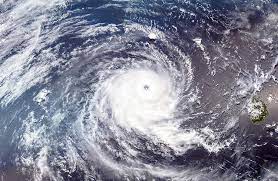
South Pacific Cyclone Season starts today

The first day of November is also the first day of the South Pacific cyclone season.

Last season taught humanitarian and emergency personnel that they need to be prepared to respond as early as possible. When severe tropical cyclone Yasa hit Fiji last December as a Category 5, it was the earliest in the season that a cyclone of that strength had made landfill.

NIWA’s forecast of cyclone activity this season indicates that between 9 – 12 named cyclones could occur between now and the end of April. Expect above normal activity in terms of the frequency of cyclones that get so strong that they also get a name. This will occur during a time when Pacific borders remain shut, and when Pacific emergency responders are still dealing with the ongoing impacts of the Covid pandemic.

It is key that any public response, particularly during cyclone season, supports the strengthening of the local economy and leadership in the Pacific, and utilises the robust networks and systems that are already in place.

At the Council for International Development’s (CID) annual conference last week, both Cook Islands Prime Minister Mark Brown and Samoan Prime Minister Fiamē Naomi Mata’afa called for New Zealand to ‘use country systems’ and support locals when responding to a cyclone.

CID, in partnership with the World Food Programme (WFP) continues to encourage the New Zealand public to donate as effectively as possible following a disaster. New resources developed in collaboration with National Disaster Management Offices in the Pacific is designed to help get this message to the public. Feedback is also important.

“We must support and learn from those most directly impacted by the aftermath of cyclones. No one knows better than Pacific authorities and communities in-country, and the Pacific diaspora here in New Zealand, on how to respond following an emergency,” says Aaron Davy, Humanitarian Manager at Council for International Development.

Unfortunately, too many containers filled with unrequested and unneeded goods continue to be sent by the New Zealand public following a devastating cyclone. After Tropical Cyclone Pam (2015) and Tropical Winston (2016) hundreds of containers filled with teddy-bears, bottles of water, perishable food and second-hand clothing were sent to the Pacific. Over half of donated goods end up in Pacific landfills.

“Remittances continue to play a critical role following a Pacific crisis. Cash remains best, but we know this is not always possible for some, plus there are sometimes cultural reasons for sending goods. So for us, supporting Pacific networks is also part of supporting community responses and resilience both in the Pacific and in New Zealand.”

CID has translated fact sheets on supporting remittances and ‘five ways to help’ if giving cash is not an option. These are currently in English, Samoan, Fijian and Bislama languages, and available on the www.donateresponsibly.com website. More Pacific translations are on the way over the next month, as well as a roadshow to engage with Pacific community groups.

“It is even more important we know and do what helps this cyclone season. The negative impacts of the covid pandemic and associated lockdowns have not changed, but we can change the way we listen to and support the Pacific region following an emergency, said Davvy.

SOURCE: SCOOP NZ/PACNEWS

Antigua, Tuvalu to seek justice over climate change damage

The Prime Minister of Antigua and Barbuda and the Prime Minister of Tuvalu today signed a historic accord allowing for litigation before international courts.

This move will allow for a legal path to address the severe damage to Small Island States caused by climate change.

The agreement establishes a Commission of Small Island States on Climate Change and International Law, creating a body for the development and implementation of fair and just global environmental norms and practices.

The Commission is also authorised to request advisory opinions from the International Tribunal for the Law of the Sea on the legal responsibility of States for carbon emissions, marine pollution, and rising sea levels.

Membership in the Commission is open to all Small Island States whose leaders have long complained about the absence of effective mechanisms for States most responsible for climate change to compensate for the resulting loss and damage.

At the signing ceremony in Edinburgh, the Prime Minister of Antigua and Barbuda, Gaston Browne, explained that Small Island States’ emission of greenhouse gases is negligible.

However, he said they bear the overwhelming burden of its catastrophic effects, including persistent destruction, repeated costs of rebuilding and huge debts to finance resilience.

“This injustice must end. We insist that those States most responsible for this dire situation respect their legal obligations to stop global warming and to provide compensation to its victims,” he said.

The Prime Minister of Tuvalu, Kausea Natano, stressed that climate justice must be a matter of survival.

“Rising sea levels, extreme weather events, the decline of marine resources – these threaten our very existence,” he said.

According to Natano, it is time to put words into action, to save Small Island States, and to save the world from impending disaster.

SOURCE: JAMAICA OBSERVER/PACNEWS

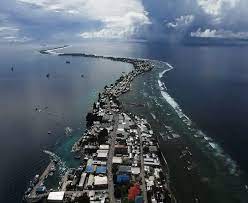
Marshall Islands could vanish beneath the Pacific Ocean within 50 years, delegates warn Cop26

Delegates from the Marshall Islands warned today that their nation could vanish beneath the Pacific Ocean within 50 years if nothing serious is done to combat global warming.

Climate envoy Tina Stege said that the islands were already feeling the effects of climate change, including longer and more intense droughts and rising sea levels, and she urged world leaders to act before they disappear.

The islands, which have a population of 60,000 people, one of the world’s first countries to be severely affected by climate change, with 40 per cent of all buildings in its capital Majuro at risk from the rising level of the ocean.

Stege expressed hope that the outcome of the Cop26 summit in Glasgow would help save her homeland.

She told Sky News: “We are going to need to adapt in a transformative way and we are going to need support to do that and so we really need to see an addition for finance.

“I can’t accept the outcome that the Marshall Islands will be history in 50 years. I don’t think it’s acceptable to anyone in this world to write off a country, Stege said.

SOURCE: SKY NEWS/PACNEWS

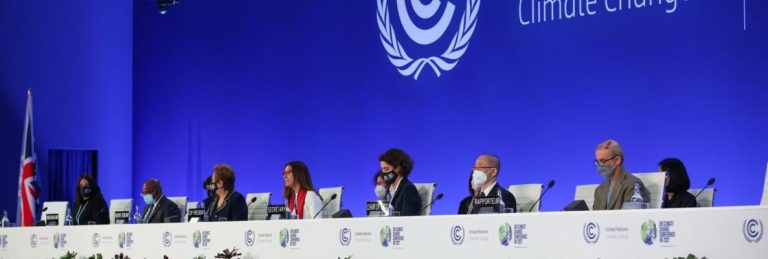
“Greater Ambition now critical” as UN Climate Change Conference opens

0

Following a series of reports and studies warning that urgent action is needed to keep the Paris Agreement’s goal of limiting global average temperature increases to 1.5C within reach, the United Nations Climate Change Conference opened today with the key aims of raising ambition on all fronts and finalising the agreement’s implementation guidelines.

“We are extremely grateful to the Government of the United Kingdom for hosting this crucially important conference in these unprecedented times and for making every effort to keep all participants safe and healthy,” said Patricia Espinosa, Executive Secretary of UN Climate Change.

“The devastating loss of lives and livelihoods this year due to extreme weather events clarifies how important it is to convene COP26 despite the impacts of the pandemic still being felt. We are on track for a global temperature rise of 2.7C, while we should be heading for the 1.5C goal. Clearly, we are in a climate emergency. Clearly, we need to address it. Clearly, we need to support the most vulnerable to cope. To do so successfully, greater ambition is now critical,” she underlined.

Greater ambition is required to achieve progress on all elements of the climate change agenda, including reducing emissions, moving adaptation to the centre of the agenda, addressing loss and damage from extreme climatic events and increasing the provision of support to developing countries.

A central issue is the provision of support to developing countries, especially in relation to the goal of mobilising US$100 billion annually by 2020. Financial support is crucial for all elements of the climate change regime, including mitigation, but also in terms of adaptation, capacity-building, technology transfer and several other elements. Many Parties, especially developing countries, feel that in order to advance towards full implementation of the Paris Agreement, previous commitments should first be honoured.

Finalising the Paris Agreement’s implementation guidelines will enable the full implementation of all provisions, which will unleash more ambitious climate actions by all its Parties. Specifically, the outstanding guidelines relate to the details around the global goal on adaptation, how to report climate action and support transparently, and the use of market-based mechanisms and non-market approaches.

“We have no choice but to make COP26 a success. For that, we need unity of purpose. We need to leave Glasgow with a balanced package of decisions that reflects the positions of all countries. With a willingness to compromise among the many perspectives we can arrive at workable, ambitious solutions that will help us keep the 1.5C goal within reach. We stand ready to work with all Parties and to leave no voice behind to reach this important goal,” Espinosa said.

Having been postponed by a year owing to COVID-19 and having to address items from COP25 held in 2019, COP26 has a huge agenda beyond the key aims.

Addressing the conference following his election, COP President, Alok Sharma thanked delegates for travelling to Glasgow and outlined the urgent need for action:

“As COP President I am committed to promoting transparency and inclusivity. And I will lead this conference in accordance with the draft rules of procedure, and with the utmost respect for the party-driven nature of our process. In that spirit I believe we can resolve the outstanding issues. We can move the negotiations forward. We can launch a decade of ever-increasing ambition and action. Together, we can seize the enormous opportunities for green growth, for good green jobs, for cheaper, cleaner power. But we must hit the ground running to develop the solutions we need. And that work starts today. We will succeed, or fail, as one.”

Highlights of COP26

Following a procedural opening on Sunday, 31 October, to enable work to begin quickly, Monday and Tuesday will be the World Leaders Summit with the presence of Royalty and more than 100 Heads of State or Government.

The World Leaders Summit provides all Heads of State or Government with the opportunity to set the stage for COP26.

Key Events

A number of key Ministerial and other events around current climate change efforts will take place during the COP. These include:
*The fourth biennial high-level Ministerial Dialog on climate finance
*The first Ministerial Dialog on climate finance under the Paris Agreement
*Several workshops and events to advance gender-related issues
*Annual meeting with the participation of indigenous peoples and traditional knowledge
Together, all events provide Ministers and participants with a space to have frank and open discussions on progress made to date.

Global Climate Action

Climate Action undertaken by a diversity of stakeholders working to support the implementation of the Paris Agreement will be showcased throughout COP26.

Under the guidance of two high-level climate Champions, Gonzalo Muñoz (Chile) and Nigel Topping (UK), progress, plans and targets for a range of sectors and initiatives will be presented in over 100 events in the Climate Action Zone in COP.

Participants will learn that climate action stakeholders representing 15 per cent of the global economy and accounting for around 11 per cent of total CO2 emissions have already made net zero commitments by (latest) 2050 through the Race to Zero campaign. Furthermore, the mitigation efforts by climate actors are matched by efforts under the Race to Resilience, which is reaching over a billion people, through activities such as Nature-based Solutions, disaster risk reduction, agricultural resilience, and finance and insurance.

In addition, UNFCCC supported sectoral initiatives in sectors such as sports, fashion, tourism, events, films and aviation will announce higher ambition, faster implementation and increased collaboration to align these sectors with the 1.5 degree Celsius target of the Paris Agreement.

Physical and digital participation

COVID-19 measures have been put in place throughout the venue to keep all participants safe and healthy for the duration of the COP.

Yet on-going restrictions may have made physical participation difficult for some. To ensure a truly inclusive COP, digital participation has been enabled to complement the physical COP negotiations.

For media enquiries, please contact: Alexander Saier

SOURCE: UNFCCC/PACNEWS

Whipps pleads with world leaders to take “radical action now” on climate crisis

Palau’s President Sunangel Whipps Jr. has appealed to the world leaders to take “radical actions” to combat the devastating impacts of climate change to the Pacific’s livelihoods, security, and wellbeing, translating into economic losses for nations.

On Tuesday, President Whipps who is in the United States on his way to the climate summit in Glasgow, Scotland said the efforts to curb climate crisis are not enough.

“Over the past five years, our homes, our food, our blue economy, our health, and overall wellbeing have been ravaged by the climate crisis and resulted in economic losses ranging from 31-63% of national GDPs. The latest Intergovernmental Panel on Climate Change (IPCC) reports tell us that our collective climate change efforts to date are not enough for a 1.5- degree trajectory,” he said.

Whipps said the Pacific small island developing states contribute just 0.03% of the global emissions level, but the ‘emissions gap’ has only been narrowed by 11-14%.

President Whipps also reiterated that during the summit, equitable access to climate financing must be established and viable technological transfer for both mitigation and adaptation as the funding is not for the small and vulnerable nations.

“Only 20% of climate financing has gone towards adaptation; of that, only 2% went to SIDS, and about half of those funds were only available as loans.”

He said in 2020, the World Bank recommended an annual $4trillion in investments to adequately address global climate change needs but only $100 billion was pledged by the biggest emitters.

“To date, they have contributed only $66 billion (or 1.65% of the target,” Whipps said.

He said all countries must step up and “paddle together.”

“A Palauan proverb imparts wisdom we can apply to our efforts. “A le ta bedesid, e ke denguu a cheroid.” In translation, it means, when in a canoe, we have to paddle together in unison in order to go far. Just like the African proverb, “If you want to go fast, go alone, but if you want to go far, go together.”

The climate summit is scheduled from 31 Oct to 12 Nov.

SOURCE: ISLAND TIMES/PACNEWS

PNG IFMS System hacked: Pundari

0

Papua New Guinea’s Finance Department is restoring the Government system after a purported hacker left its Integrated Financial Management System (IFMS) vulnerable for a week, Finance Minister and acting Treasurer Sir John Pundari confirmed last night.

Sir John said the Government did not pay any ransom and the system was restored up to functional level so that its departments and agencies could access to commit and process cheques safely.

“All provinces and districts will also have access to commit funds through a controlled temporary arrangement,” according to a statement from him.

“The department has now managed to fully restore the system, however, because of the risk, we are playing it safe by not allowing full usage of the affected network.”

Sir John said restoration of services to all agencies, including the sub-national, will be done gradually, bearing in mind security of individual networks so as not to compromise or allow any further spread of this malware or other virus.”

Finance secretary Dr Ngangan said the department had been hit with what he described as a “ransomware attack” last Friday.

He said the department’s IT experts worked around the clock and managed to arrest the threat and restore the system.

“We are now working around the clock to establish the point of entry of such threat,” Dr Ngangan explained.

“Because of the threat, temporary arrangements are in place which includes a set-up of 25 computers in the department fitted with necessary cyber securities to ensure the Government Financial Service continues.”

Dr Ngangan explained that it was only the IFMS that was attacked and not the Alesco payroll system.

SOURCE: THE NATIONAL/PACNEWS

COP26: the world’s best chance to save our one blue planet – Pacific ACP Leaders call on G20 for climate action

Ahead of the G20 Rome Summit and COP26 in Glasgow, Pacific Leaders have written a letter to G20 Leaders, asking the G20 to do their part, as the countries behind most of the world’s greenhouse gas emissions, to ensure an end to the global climate crisis.

Pacific Leaders state; “We do not have the luxury of time and must join forces urgently and deliver the required ambition at COP26 to safeguard the future of all humankind, and our planet”.

The letter to the President of the G20 Rome Summit, Italian Prime Minister Mario Draghi, attaches the ACP Leaders Statement on COP 26 for a 1.5-degree world, and asks G20 Leaders to ensure they “help set our path to ending our global climate change crisis, and ensuring no is left behind in our post COVID-19 world.”

Pacific Islands Forum Secretary General Henry Puna said; “G20 members are responsible for around 75 per cent of the global contribution to greenhouse gas emissions, so a strong commitment and outcome from the G20 Rome Summit will pave the way for an ambitious and successful COP26”.

“Pacific ACP Leaders urge G20 Leaders to make decisive commitments on climate action, including revised Nationally Determined Contribution targets that keep 1.5 degree Celsius within reach, carbon neutrality by 2050, the phase-out of coal plants and all fossil fuel subsidies and investments, and delivery of the USD$100 billion climate finance goal, with a balanced allocation between adaptation and mitigation”, said Puna.

The COVID-19 pandemic must not delay ambitious climate action and recovery must be catalysed through green investments and technologies that are sustainable, clean, climate-smart and in line with net zero emissions by 2050.

SOURCE: PIFS/PACNEWS

OCO and WHO Stand Against Illicit Trade of Tobacco

0

A joint operation by the Oceania Customs Organisation (OCO) and the World Health Organisation codenamed “Operation EXIT” is expected to provide insights into how the region can combat the illicit trade of tobacco, which continues to be a major concern for the Pacific.

During the operation, participating countries will strengthen their targeting and profiling efforts on suspicious trade, identify the modus operandi of the traders of illicit tobacco and share this information for a regional database.

“Tobacco is a globally traded community that attracts a lot of taxes and because of the nature of the product- the trade of illicit tobacco is a very lucrative business- we all need to work together,” guest of honour, Papua New Guinea Chief Commissioner of Customs, David Towe said during his opening remarks at the launch of Operation EXIT.

Towe added that illicit tobacco, contrabands, and counterfeits were a major concern for his administration in PNG.

“We need to work together especially in the Pacific as we have limitations in resources and capacities,” Towe added.

In recent years, the illicit trade of tobacco products in the Pacific has increased. The most common form of illicit trade in the Pacific is the import of tobacco products, not adherent to domestic tobacco control laws hence these being smuggled into countries under the guise of legitimate trade or even by the exchange at high seas from the mothership to local vessels.

According to WHO, tobacco usage is an epidemic, a silent killer with 8 million people dying every year, of which 1.2 million were non-smokers, who had never chosen the habit but have been affected.

As this affects economies and the environment, Customs administrations have an obligation under the WHO Framework Convention on Tobacco Control.

OCO Head of Secretariat Richard Brennan said this was a concern for all Customs administrations as the trade of illicit tobacco not only eroded the revenue base for countries, but it also caused severe health effects.

“Customs has its obligation towards ensuring collection of rightful government revenues and protecting public health and safety. For several years, OCO members have discussed strategies on combatting illicit tobacco trade and individual countries have been undertaking their own national enforcement initiatives,” Brennan said.

“However, we wish to further strengthen the ability of our members to prevent the illicit trade of tobacco products across the Pacific; therefore, a regional approach is necessary. The development of a regional database would create a source of information for all members to assist them in strengthening their profiling capacity, said Brennan.

SOURCE: OCO/PACNEWS

Pacific Regional E-Commerce Strategy and Roadmap Approved

A new Regional Strategy to boost e-commerce will help Pacific businesses make the most of global online markets.

Endorsed by Pacific Islands Forum Trade Ministers, the Pacific Regional E-commerce Strategy and Roadmap draws on input from almost 200 stakeholders. The Strategy focuses on digital trade activities that will benefit from a regional approach. These collective actions will complement the national work carried out by Forum Island Countries.

The Pacific Regional E-commerce Strategy and Roadmap prioritises regional measures in seven policy areas including (1) National E-commerce Readiness and Strategy Formulation; (2) ICT Infrastructure and Services; (3) Trade Logistics and Trade Facilitation; (4) Legal and Institutional Framework; (5) Electronic Payment Solutions; (6) E-commerce Skill Development; and (7) Access to Finance for E-commerce.

In total, the Strategy identifies 54 Priority Measures, for a total cost of about USD 55 million – excluding the cost of infrastructure-related measures.

According to Faiyaz Siddiq Koya, Fiji’s Minister for Commerce, Trade, Tourism and Transport, and Forum Trade Ministers Chair “the Strategy is the culmination of years of committed, serious and competent work, as there are things that we can only do better through collective action, in the spirit of Pacific regionalism. The Strategy will help Pacific countries tapping into the global E-commerce market, which is already valued at about USD 27 billion and keeps growing at an impressive speed”.

The Pacific Regional E-commerce Strategy builds upon the findings of the diagnostic assessments conducted by the PIFS and the UNCTAD between 2017 and 2021 for eleven Forum Island Countries, with the latest such assessment concluded for Nauru in June 2021.

For each Priority Measure, the Pacific Regional E-commerce Strategy and Roadmap identifies the most suitable implementing agencies. These include, among others, the International Communication Union (ITU), the International Trade Centre, the Oceania Customs Organisation, the Pacific Community, the Pacific Islands Chapter of the Internet Society (PICISOC), the Pacific Islands Forum, Standards Australia, UNCTAD, the United Nations Capital Development Fund (UNCDF), the United Nations Commission on International Trade Law (UNCTRAL), the United Nations Economic and Social Commission for Asia and the Pacific (UNESCAP), the Universal Postal Union (UPU), and the World Bank.

In the words of its Secretary General, Henry Puna, “COVID-19 is surely the defining challenge pf this decade, but it can also become the opportunity of our generation if we make the right moves together, including on E-commerce. The PIFS will coordinate this emerging regional partnership on E-commerce – it will provide high-quality support to its steering body, monitor implementation of the Pacific Regional E-commerce Strategy and Roadmap, facilitate resource mobilisation, the onboarding of new valuable partners, and crucially, ensure that our members are always in the driving seat

SOURCE: PIFS/PACNEWS

New USP research paper explores journalism culture in the region

What are the views of Pacific journalists on professional ethical issues and what pressures affect their work? What is the age, experience, qualifications and gender breakdown of the Pacific journalist corps?

These crucial questions are addressed in a recently published research funded by The University of the South Pacific (USP).

Published in the latest Pacific Journalism Review, the research investigates the journalism culture in the Pacific Islands, with the findings offering insights into possible remedial methods and future directions.

‘Watchdogs under Pressure: Pacific Islands Journalists’ Demographic Profiles and Professional Views’ is based on a comprehensive survey providing a much-needed update on the demographic profiles, professional views, role conceptions, and perceived influence of over 200 Pacific Islands journalists in nine of USP member countries, namely, Cook Islands, Fiji, Marshall Islands, Nauru, Samoa, Solomon Islands, Tonga, Tuvalu and Vanuatu.

Associate Professor in Pacific Journalism at the School of Pacific Arts, Communication, and Education (SPACE), Shailendra Singh, co-authored the paper with Professor Folker Hanusch from the University of Vienna who is also an international expert on world journalism cultures.

He stated that while global scholarship on journalists’ professional views had expanded tremendously in recent decades, the Pacific remains a blind spot. For instance, the Pacific was not featured in the Worlds of Journalism Study on 76 countries, perhaps the most ambitious undertaking in the field as yet.

Assoc. Professor Singh stated that USP had financed this critical research in its member countries as journalists provide a valuable public service in the region.

“Journalists’ health has an impact on the health of journalism, and journalism’s health has an impact on the health of the countries in the region. As a result, it is incumbent upon us to conduct due diligence on our journalists, on whom we rely for information in making vital judgments,” he added.

“Through such research, we find out many things including the challenges they face.”

He discussed how the data could be used to support media organisations and national governments make better policy decisions.

“Our survey found an improvement in education and experience levels in the current cohort of journalists, compared to 30 years ago, but we are still lagging at the international level. This (data) may persuade governments, universities, and international donors to provide more fellowships and scholarships to build on the improvements of the last 30 years,” Assoc. Professor Singh said.

The study also found the parity in female and male journalists overall, however, male journalists tended to hold senior editorial positions, implying that most females required help in obtaining more senior positions in media organisations.

He emphasised the report provides an enhanced understanding of the journalism culture in the Pacific Islands to media organisations, governments, civil society organisations, and aid donors.

“In the face of imminent concerns like climate change, this work can be utilised to identify future paths and remedial measures,” Assoc. Professor Singh remarked.

He acknowledged USP’s Journalism Teaching Assistants, Geraldine Panapasa and Eliki Drugunalevu for helping out in the field work, as well as the USP Research Office, for sponsoring the study, along with USP as a whole for supporting the journalism programme. He also praised Professor Pal Ahluwalia, USP Vice-Chancellor and President (VCP), for his vision, which places a high value on journalism.

“As well as our co-funders, the U.S Embassy in Fiji and the Pacific Media Centre in Auckland, New Zealand. Special thanks to Professor David Robie, the former USP Journalism coordinator and managing editor of Pacific Journalism Review for publishing our work,” he added.

Professor Ahluwalia praised the team’s joint work in publishing this study and commended them on the study’s astounding findings.

He stressed that journalists play a significant role in the Pacific and that the concerns identified in the report must be addressed.

“We are required to look after their well-being and look into the issues they are encountering,” the VCP added.

Acting Deputy Vice-Chancellor Education Professor Jito Vanualailai congratulated Assoc. Professor Singh and the team for the excellent paper.

He expressed his desire to see more comprehensive studies in the future, which he believes will help the Pacific region.

SOURCE: USP/PACNEWS

Stay connected

529FansLike
172FollowersFollow
156SubscribersSubscribe
- Advertisement -