Home Blog Page 1035

Fijian Drua Memorabilia can launched

0

The Fijian Drua team will have its own beer in the Super Rugby Pacific competition in the 2022 season.

Thanks to Paradise Beverages Ltd, the Fijian Drua Memorabilia can was launched in Suva Tuesday.

“We are delighted with this initiative by Paradise Beverages,” Fijian Drua CEO Brian Thorburn said.

Paradise Beverages the partnership would be reviewed after this season.

“We at Paradise Beverages will feel very proud when the Fijian Drua run out with the Fiji Bitter logo on the shorts, we hope many Fijians will feel the same way,” Paradise Beverages general manager Mike Spencer said.

The beer with limited edition will be available during the season, and for the team too.

SOURCE: FIJI TIMES/PACNEWS

Adapting to climate change ‘happening worldwide’, essential

0

The impacts of climate change are already “very visible” and “happening worldwide”, the head of the UN weather agency told the start of the 55th Session of the UN’s Intergovernmental Panel on Climate Change (IPCC) which convened on Monday.

The meeting opened to approve the report of the second IPCC Working Group focusing on impacts, adaptation and vulnerability to climate change which will be added to the Sixth Assessment Report later this month.

The report of the first IPCC Working Group, which focussed on the physical science of climate change, influenced the work of the UN Climate Conference in Glasgow, COP26, last year.

World Meteorological Organisation (WMO) Secretary-General Petteri Taalas reminded delegates that during COP26, “there was not a single head of State who questioned the scientific facts”, saying the message had got through and “has been heard”.

The WMO chief noted that some areas of the world such as tropical latitudes and developing countries, especially in Africa, Southern Asia, and the Pacific islands, are particularly vulnerable to climate change.

Last year WMO published a report on disaster statistics, which demonstrated that for the past 50 years, 4.5 billion people have experienced a major weather-related disaster over the past 20 years.

And while there has been a drop in casualties thanks to improved early warning services, dramatic increases in economic losses have occurred.

Only a week ago, in Madagascar, deadly Cyclone Batisirai was a Category 4 storm “and had severe impacts on the economy and human well-being”, said Taalas.

“We have to be careful how we communicate these facts. We have to separate impacts from natural variability to impacts from climate change”.

According to earlier thinking, 2°C was an ambitious enough climate change target.

However, the UNFCC’s previous special report revealed that the impact of 1.5°C would be “a game changer”.

“After that, 1.5°C became the desired outcome of climate mitigation work for the coming years”, said the WMO chief.

However, despite that COP26 was the second most successful conference after Paris, he observed that the 1.5°C target is “barely alive”.

“The work needs to continue”, he spelled out.

Citing a growing trend of rising sea levels, glaciers melting and continuing disasters, the top WMO official underscored the importance of adaptation.

“Climate change impacts are related to economy, food security, infrastructure, the biosphere and health”, he said. “We have to adapt to climate change. That means droughts, flooding, tropical storms, heatwaves, water shortages, coastal inundation”.

Later this year, COP27 will take place in Sharm-el-Sheik, Egypt, followed next year by COP28 in the United Arab Emirates.

“We hope to hear more pledges at those conferences. We are working for such a goal. The next COP will have a more Africa flavour. It is the most vulnerable continent”, he said.

Explaining that “major gaps” in African countries and Caribbean islands are obstacle for climate adaptation, Taalas said that WMO is focussing attention on Multi-Hazard Early Warning services to forecast the impacts of disasters.

He drew attention to a new financing mechanism to enhance observation systems, a new water and climate coalition that pays attention to water shortages and an enhanced partnership with the UN Disaster Risk Reduction office (UNDRR) to form “a centre of excellence on climate change and disasters”.

“We are working together with financing institutions like World Bank, European Union, UNDP, Green Climate Fund, to allocate more finance to early warning services”, stated the WMO chief.

The Executive Director of the UN Environment Programme (UNEP), Inger Anderson, also cited COP26 in pointing out that “the work of the IPCC underpins climate action”.

She noted that the first Working Group’s report “kept up the pressure on world leaders” and its relevance was clear in many of the delegates’ statements as well as in the final decision taken at Glasgow.

“Now it is the turn of Working Group II to lay out the latest evidence on how past and future changes to Earth’s climate system impact life on our planet”, Anderson said.

“This report on impacts, adaptation and vulnerability will integrate more strongly across the natural, social and economic sciences…highlight[ing] the role of social justice and indigenous knowledge”, she added.

Chairing the meeting, Hoesung Lee informed the participants that this was the final phase of a “strict and meticulous review process” of the report.

Over the next two weeks, Governments and scientists collectively will deliver a “sound, tested and robust summary…critically important for policymakers around the world,” he said.

“I have no doubt that we will see constructive and collaborative work in the next two weeks as we work across all time zones to deliver this report, Lee said.

SOURCE: UN NEWS CENTRE/PACNEWS
Forum rump given one last chance – Palau President Whipps

0

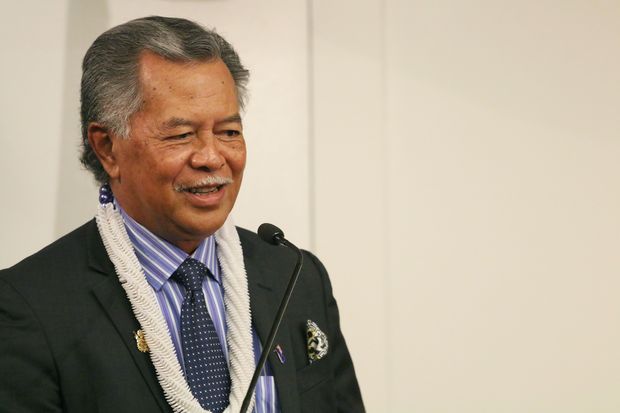
The president of Palau said the pause on Micronesia’s pending withdrawal from the Pacific Islands Forum is the last chance for leaders in the south to set things right.

Last year after a falling out over the candidacy for Forum secretary-general, five northern Pacific states initiated formal withdrawal processes which begin taking effect in June.

But after a meeting, last Friday Micronesian leaders announced they were pausing their withdrawal because they had been given an undertaking that by June their concerns would be addressed.

The main concern for the Micronesian leaders is that their man was overlooked in favour of Henry Puna, contravening a gentlemen’s agreement that the post would go to a Micronesian.

The president of Palau, Surangel Whipps Jr said he is open to a resolution but will not stand on ceremony if one is not forthcoming.

“Our community of course want to see us, if we can resolve an issue resolve it. However, they also want us to be firm and be clear and not be taken for granted. So once again we are going to trust the gentlemen’s agreement and build on that,” he said.

The expectation based on reports from the Federated States of Micronesia is that Puna is set to leave the secretary-general post by mid-year but may retain the post of Pacific Ocean Commissioner, possibly based in Auckland.

But the Forum secretariat says it cannot comment.

Officials say they are “unable to make any comments on the high-level political dialogue, which is ongoing.”

The region’s first Pacific Ocean Commissioner was appointed by Forum Leaders in 2011.

A spokesperson for New Zealand’s Ministry of Foreign Affairs says – “New Zealand supports ongoing regional efforts to maintain the unity of the Pacific Islands Forum. We welcome the announcement by FSM to pause its plans to withdraw from the Forum while discussions continue.

SOURCE: RNZ PACIFIC/PACNEWS

Solomon Islands welcomes U.S announcement to re-open Embassy in Honiara

0

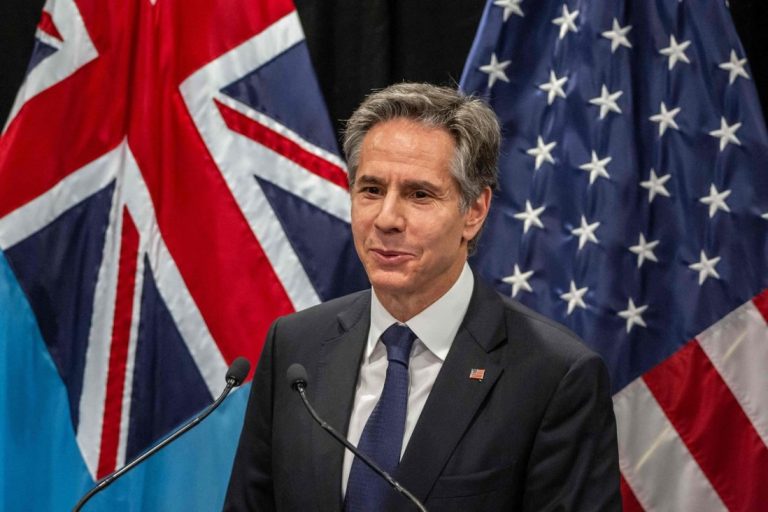
Solomon Islands Minister of Foreign Affairs & External Trade, Jeremiah Manele has welcomed the announcement made by the U.S Secretary of State, Antony Blinken, to re-establish the U.S Embassy in Honiara.

The announcement was made by Secretary Blinken during the US–Pacific Island Leaders Meeting held on Saturday in Fiji.

Foreign Minister Manele assured Secretary Blinken that the Government stands ready to work with U.S diplomats to make this happen.

During the meeting, Minister Manele used the opportunity to acknowledge the bilateral assistance provided by US in the country.

On COVID-19 response, Minister Manele acknowledge the support provided by the US through the COVAX facility for the delivery of Pfizer vaccines last year and for additional Pfizer and Johnson & Johnson vaccines that will be delivered in the coming months.

On climate change, Minister Manele reiterated that climate change remains the single greatest threat facing the region and the current low ambition under the Paris Agreement creates an uncertain future for Pacific Islands.

He said Solomon Islands looks to United States for leadership and those with resources to take more ambitious climate action, contribute generously to Green Climate Fund and honour the annual US$100-billion- pledge.

Manele also acknowledged the support by U.S Government through MCC Threshold programme with a commitment of USD$20 million, signed on 27 of January this year, and the USAID-Scale programme.

Minister Manele reaffirmed government’s support and look forward to deepen its bilateral cooperation and engagement with the US and also look forward for the expansion of USAID programme across the country.

On the issue of UXOs, Foreign Minister also highlighted impediments associated with it, urging Secretary of State Blinken to address their concerns of unexploded ordinances in the Pacific Island nation.

On people to people connection, Minister Manele said Solomon Islands looks forward to welcoming the Peace Corps again to Solomon Islands since the programme ceased in 2002.

He said the Solomon Islands shares a mutual connection with the Peace Corp programme, through the legacy of President Kennedy who served in the Solomon Islands, during World War II and later initiated the programme.

The Solomon Islands Government hopes the Agreement that facilitates the resumption of the programme can be concluded soon.

Foreign Minister Manele joined other Pacific Leaders attending the meeting to discuss regional issues affecting the region such as climate change, COVID-19, sustainable development, oceans, and regional security.

Pacific Leaders acknowledge the support rendered by the U.S over the years and look forward to strengthen their cooperation and collaboration with US to address common issues and challenges faced by the region.

Minister Manele attended the meeting virtually from Honiara.

SOURCE: SOLOMON TIMES ONLINE/PACNEWS

Anti-money laundering regulations in the Pacific – a double-edged sword

0

Written by Dek Joe Sum

Across the world, new measures are being introduced to keep up with the increasingly sophisticated money laundering and terrorism-financing schemes. The compliance burdens of the anti-money laundering and counter-terrorism financing (AML/CTF) rules are intended to make it more difficult for criminals to conceal and use their illicit money. However, the unbanked and poor in some of the world’s least developed countries have unwittingly become the collateral damage of the regulatory process. This blog explains how tighter AML/CTF rules affect financial inclusion, remittances, and bank entry in the Pacific.

The main channel for cross-border payments is through the correspondent banking relationship, an arrangement under which one bank (correspondent) holds deposits on behalf of a respondent bank in another jurisdiction, providing payments and other financial services. In layman’s terms, correspondent banking connects a country’s economy with the global financial system by facilitating cross-border payments and currency exchange for trade, investment, and remittance purposes.

As the global AML/CTF regulatory and enforcement landscape has become more stringent, banks are required to undertake extensive scrutiny of their customers’ account transactions and have a greater understanding of their financial arrangements, through the know your customer (KYC) and customer due diligence (CDD) procedures. Failing to comply with these regulations usually brings hefty financial penalties and reputational damage. In 2020 alone, fines related to AML and KYC non-compliance against financial institutions reached USD$10.4 billion worldwide.

In response, international banks are paying greater attention to their respondents’ AML/CTF programme effectiveness and jurisdiction-related obligations. To minimise their exposure to money laundering risks, and reduce the chance of being fined, international banks have started to reduce correspondent relationships with partners they deem risky, a process known as ‘de-risking’. This is leading to a decline in correspondent banking relationships globally, with the Pacific suffering the most.

As these relationships become harder to retain, the fear of losing a correspondent banking relationship is apparent; and the steps taken by domestic banks to mitigate such a risk are far-reaching.

First, the process to perform banking transactions has become increasingly stringent. For instance, vanilla farmers in Papua New Guinea (PNG) were not allowed to deposit their harvest income in the bank, because of the lack of documentation such as invoices to prove the source of the funds. The formal sector in the Pacific is not exempted either. There is anecdotal evidence that legitimate cash-intensive businesses have had their bank accounts closed by banks as part of their de-risking strategy.

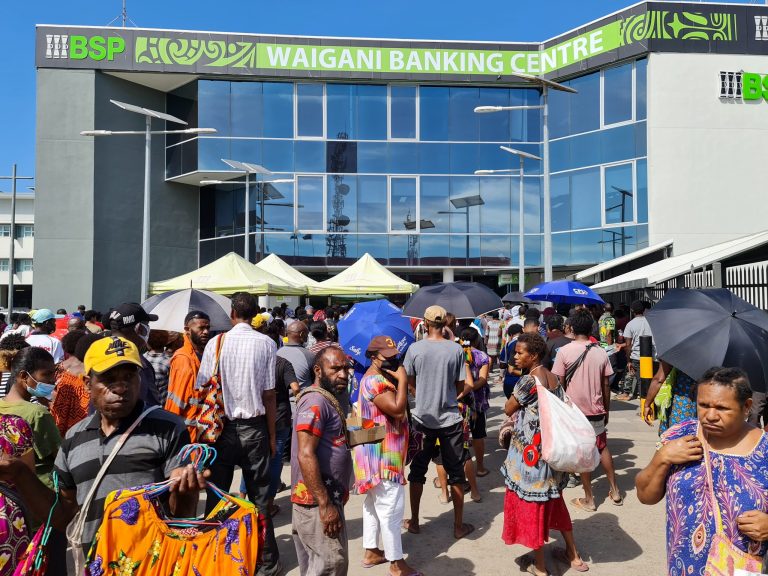
This is not unexpected. The Bank of South Pacific (BSP), the largest bank in PNG with operations in six other Pacific countries, acted swiftly to hire an additional 40 AML/CTF analysts to strengthen their CDD procedures, after BSP was found to have breached the country’s AML/CTF rules last year.

Another consequence is the disruption to remittance flows. Remittances have always been a feature of Pacific island economies, where they constitute a large part of household cash income, and provide a safety net for many families. Remittances account for 8%, 25% and 42% of Fiji’s, Samoa’s and Tonga’s GDPs respectively.

In the extreme case, a complete loss of correspondent banking relationships, people could lose access to cross-border payments and remittance services entirely. While it is unlikely to come to that, any further withdrawal of the relationship in the region is detrimental, as it could make remittances more costly and increase the use of unregulated channels to transfer money.

In addition, the growing difficulty for financial institutions to establish a new correspondent relationship with an international bank is raising the entry barrier to the banking sector, as a correspondent relationship is a precondition for a banking licence.

In the Pacific, most correspondent services are provided by Australia and New Zealand banks. However, these banks have become very cautious with existing correspondent relationships, and even terminated a few, after they were slapped with record-breaking fines for AML/CTF violations. With a small market size and weak regulatory and enforcement capabilities, many international banks find the risk of operating in the Pacific is not worth taking. For smaller domestic financial institutions, this is making it more difficult to secure a new banking licence.

This blog proposes three solutions.

First, CDD procedures should be simplified for activities and sectors that present a low risk in terms of money laundering and terrorism financing. The global AML/CTF watchdog, Financial Action Taskforce, provides some flexibility in the application of its AML/CTF regime, where a country may decide to exempt a specific type of activity from the usual CDD procedures to accommodate financial inclusion.

For instance, in India, small bank accounts with low transaction limits can be opened by individuals with no proof of identity for up to 12 months before official documents are needed to maintain the bank account. This is relevant to the Pacific, where a large part of the population are smallholder rural farmers with little or no immediate access to government-issued identification and income documents.

Second, authorities in the Pacific should actively address their vulnerabilities in meeting AML/CTF compliance expectations. Some progress has been made to improve domestic banks’ KYC reporting capacity and minimise disruption to remittance flows. But more can be done.

One way is through tailoring the regulatory AML/CTF framework and guidelines to the country’s context. An analysis found that the AML/CTF legislation in many developing countries has excessively stringent CDD requirements that exceed the country’s regulatory and enforcement capabilities. A more realistic AML/CTF framework will help domestic financial institutions to better manage compliance expectations and mitigate the risk of losing a correspondent relationship.

Lastly, new technologies and government intervention have the potential to get around AML/CTF barriers. Recent innovations such as digital identity, central bank digital currencies, distributed ledger technology and artificial intelligence have been experimented with in various jurisdictions. Tonga’s central bank has stepped in to offer a remittance service to the Tongan diaspora. If the private sector is withdrawing, governments may need to step in to overcome an induced market failure.

Whatever combination of measures is taken, urgent action is needed. The last thing the Pacific needs is to be disconnected from the global financial system.

SOURCE: DEVPOLICY.ORG/PACNEWS

Pacific Islands Forum’s head to be replaced, FSM President David Panuelo says, after leadership dispute

0

A top Micronesian leader says Pacific Islands Forum (PIF) secretary-general Henry Puna will quit the position in order to stop the key regional diplomatic body from splitting.

Micronesian countries have been locked in an acrimonious dispute with other members of the Pacific Islands Forum over last year’s contested leadership ballot, which saw Puna narrowly defeat Micronesia’s candidate, Gerard Zackios.

Micronesian countries said that was in breach of a “gentleman’s agreement” to hand them the position, and began the process of withdrawing from the forum.

But leaders and officials from a host of Pacific Island countries, including Australia and New Zealand, have spent months in quiet discussions trying to heal the rift.

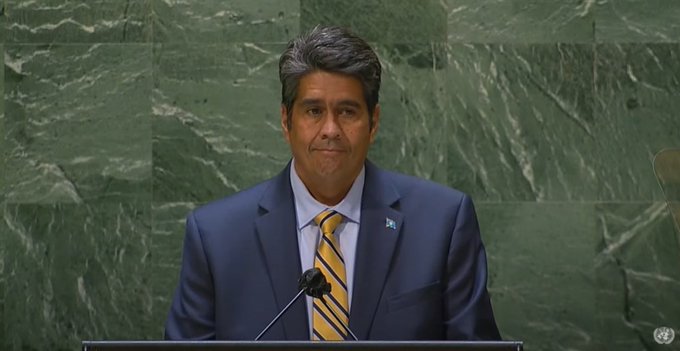
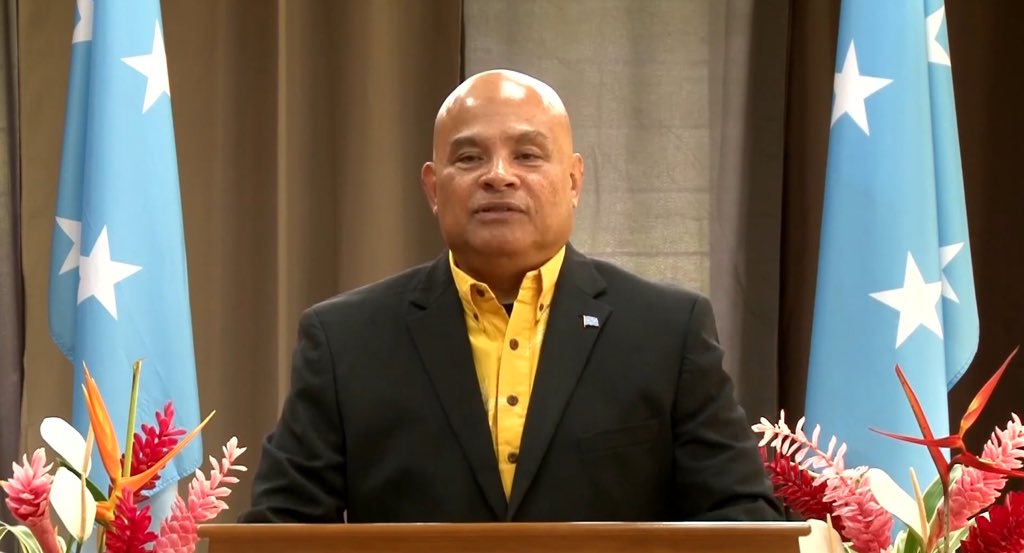
On Saturday — just two days before his country’s exit from PIF was due to formally take effect — the President of the Federated States of Micronesia (FSM) David Panuelo issued a shock statement saying all Micronesian countries had decided to “temporarily rescind” their withdrawal because of “reforms” promised by the forum.

On Monday, Panuelo told the ABC’s Pacific Beat that under the agreement, current PIF chair Fiji had promised that Puna would step down in June this year and make room for a Micronesian candidate.

“That’s one of the reforms, among others, and I think it’s the most hardline [position] all of us had taken on as Micronesian leaders, because if the Pacific Islands Forum is to continue with credible unity, those reforms … have to be met,” he said.

Palau President Surangel Whipps Junior told the ABC that Micronesian leaders were last week asked to pause their withdrawal from the forum and were given “confirmation” their requests would be honoured, including the appointment of a Micronesian representative to the position of secretary-general.

“We finally got word … that the position of Micronesia will be honoured and the SG will be changed and reforms will happen in the Forum,” President Whipps said.

“It’s nothing personal against the current secretary-general. It’s all about honouring commitments, rebuilding trust and working together as a Pacific.”

President Whipps said if reforms did not occur by June, Micronesian countries would complete their withdrawal from the PIF.

“It means that we’re done, we will move on. The forum did not honour their commitments,” he said.

Panuelo said resolving the leadership issue would allow Pacific Island nations to move on from the PIF leadership dispute and focus on more important issues, like COVID-19 and climate change.

Panuelo also said he was confident other Pacific Island nations and the PIF leadership would deliver what they had promised.

“We would not have been confident or decide unanimously to have this temporary pause [of our withdrawal] if we don’t have confidence,” he said.

“It’s good to have the good faith and trust that these things will materialise in [the] time we’ve indicated [by June],” he said.

FSM President, David Panuelo.

The deal has not yet been confirmed by the Pacific Islands Forum Secretariat, or by Fiji’s government.

The ABC has approached both for comment.

“The Forum Secretariat is unable to make any comments on the High Level Political Dialogue, which is ongoing,” it said.

But if the agreement stops the Pacific Islands Forum from splitting, it will be a source of relief in capitals across the region.

Australian officials worried that the breakdown of the Forum would be politically destabilising, while Pacific leaders said splitting PIF would undermine Pacific efforts to campaign collectively on critical issues like climate change.

Panuelo said several major countries in the wider region — including the United States, China, Japan, Australia and New Zealand — had pressed Pacific leaders to keep the forum united.

He also indicated that several political heavyweights, including Fiji’s Prime Minister Frank Bainimarama, Papua New Guinea’s Prime Minister James Marape and Nauru’s President Lionel Rouwen Aingimea, had been heavily involved in negotiations to find a solution to the dispute.

And while Panuelo is still keen for Zackios to take the position, he said that Micronesia had been asked to put forward two candidates for the role.

Tess Newton Cain, who is the Project Lead of the Griffith Asia Institute’s Pacific Hub, said it was “possibly a bit surprising” to see Panuelo lay out the deal in so much detail before it had been formally announced.

But she said that PIF was now entering “uncharted waters” and some other countries may worry about the precedent set by the deal.

“Once this has happened, there’s always a sense of what happens next time? If Melanesia wants their candidate, would they go down this route as well?” she said.

“Having said that, as we know, the whole process of appointment of the secretary-general is under wholesale review.

“So what’s happened now will feed into this … in terms of developing a new process for appointing the SG, which means we hopefully don’t have to go through this again,” she said.

SOURCE: ABC/PACNEWS

Cook Islands detects first Covid case

The Cook Islands has detected its first case of Covid-19.

Prime Minister Mark Brown said this case was not connected to the visitor who tested positive for Omicron after leaving Rarotonga and arriving back in New Zealand last Monday.

He said this person – who is currently isolated and under observation at their private holiday accommodation – arrived in Rarotonga last Thursday.

They were a close contact of a family member in Auckland who tested positive on Sunday in New Zealand.

Brown said as a precaution this person got tested, and was asymptomatic, but she returned a positive result in just a few hours later.

The woman is travelling with two others, and they will all remain in isolation until they no longer test positive for Covid-19.

Brown said it was helpful that the person was staying in private holiday accommodation, not a resort or motel.

The woman was double vaccinated and had returned a negative PCR test prior to boarding their flight from New Zealand.

In his nationwide address Brown had pertinent advice for Cook Islanders: “Our extremely high vaccination rate is another factor in our favour, as it slows the spread of transmission and reduces the health impacts in those who do contract this virus.

“I can also tell you that from the moment Te Marae Ora confirmed this person as testing positive for Covid-19, our contact tracing team swung into action to trace their movements since arriving in Rarotonga and to start identifying any potential close contacts.”

Brown said locations of interest would be available on the Covid-19 website and the TMO Facebook page.

“As each new piece of information is gathered and confirmed, we will also be keeping you all as up-to-date as possible as any new places of interest and potential close contacts are identified.

“Those people deemed to be close contacts of this case are currently being contacted by TMO and will be advised to get tested,” he said.

SOURCE: RNZ PACIFIC/PACNEWS

Climate fight pledge – Blinken: These islands are ground zero for the devastating impacts

The United States is committed to tackling the devastating impact of climate change in the Pacific region.

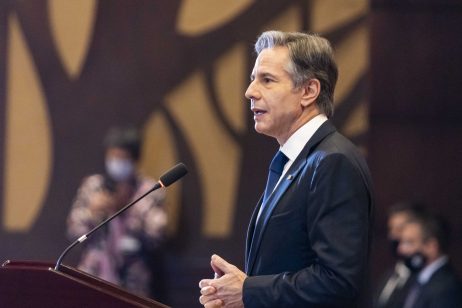
U.S Secretary of State Antony Blinken noted this in a joint news conference after his meeting with Pacific leaders on Denarau Island over the weekend.

“As much as any other place in the world, these islands are ground zero for the devastating impact of climate change and I heard that so powerfully and eloquently from our colleagues,” Blinken said.

“It resonates not just as something that we think about but something that actually touches us here, because for so many of our partners here this is truly the existential issue of our times. “And we’re committed to tackling that challenge, to meeting it head on, to doing it together.”

Blinken said Pacific islanders were proud people and no matter their size, they alone should be able to choose their path.

The senior U.S government official said his country shared that belief and the world would be a more secure and prosperous place when core international principles like that were respected.

He also explained that the U.S has provided more than 700,000 vaccine doses to Pacific Island countries, including Fiji and they continued to work together to build Fiji’s capacity to prevent, detect, and respond to future health emergencies.

Meanwhile, when the USA signalled its intent to leave the Paris Agreement, we felt forgotten by a superpower, says acting Prime Minister Aiyaz Sayed-Khaiyum.

He noted this in his official statement after meeting with the U.S Secretary of State Antony Blinken in his brief official state visit to Nadi over the weekend.

“So, of course, we welcomed President Biden’s promise to the world that America was back – Secretary, you being here shows that promise was more than words,” Sayed-Khaiyum said.

“We’ve just held the most historic and comprehensive meeting ever between Fiji and the USA and a wider meeting with our fellow Pacific leaders. We believe that both mark the start of a more direct partnership between Fiji and the USA and a new era for America in the Blue Frontier of the Pacific.”

Sayed-Khaiyum said Fiji and its Pacific brothers need American might and its minds — as well as pioneering solutions and investments — here, at the shores of this Blue Frontier.

“That big, blue responsibility is linked to the wellbeing of every person on earth.

“Despite that, Fiji and our small state neighbours have felt, at times –– to borrow an American term –– like “fly-over” countries.

“Small dots spotted from plane windows of leaders en route to meetings where they spoke about us rather than with us, if they spoke of us at all.”

Secretary Blinken left for Hawaii straight after his meeting with the acting prime minister, cabinet ministers and a few representatives of the civil society organisations.

SOURCE: FIJI TIMES/PACNEWS

Pacific workers face deportation despite probe into their employer

0

The federal government has threatened to cancel the visas of Pacific Islanders brought to Australia to fill chronic worker shortages in the meat processing industry even though their claims of being exploited by their employer are under formal investigation.

Home Affairs officials last month wrote to a number of Pacific Islander workers to notify them of the intention to cancel their visas after they stopped working for labour-hire firm Regional Workforce Management, which sponsored their visas and placed them into various meat processing companies.

Under the Morrison government’s flagship Pacific Australia Labour Mobility scheme, workers are required to stay with the same employer that sponsors them.

“The sponsor has advised the department that your employment with them was terminated effective 19 November 2021,” Home Affairs warned one Pacific islander worker in a document seen by The Age and The Sydney Morning Herald. “This appears to indicate you have not complied with condition 8577(a) … Based on this information, there appear to be grounds for cancelling your visa.”

The visa threats come as the Fair Work Ombudsman and the Department of Foreign Affairs and Trade(DFAT) confirm they are investigating allegations against Regional Workforce Management, which has been a key supplier of Pacific Islander workers to meatworks and other agricultural businesses in several states.

Workers brought to Australia by the labour hire company allege they have been placed in sub-standard housing, in some cases going without heating and smoke alarms. The workers have also complained about unsafe working conditions, denial of medical treatment for injuries and allegedly non-transparent wage deductions that left some with pay rates of just $9 (US$6.41) per hour.

The FIP Group, owner of Regional Workforce Management, did not respond to requests for comment. Another FIP Group labour hire subsidiary, Meat Processors, was also criticised last year over the treatment of its Pacific workers.

Newcastle’s meat worker union branch secretary, Justin Smith, said he asked government officials to allow the Pacific Islander workers whose visas were threatened to find new employers rather than being sent home. “Given the existing labour shortages in the industry, it makes sense,” Smith said.

The revelations threaten to further damage the reputation of Australia’s foreign labour programmes. They come as details emerged in The Australian recently of an Australian Border Force probe that targeted the phone records of Vanuatu’s High Commissioner, Samson Fare, after a raid on the Queensland home of a Christian missionary suspected of helping Pacific workers abscond from their employers.

Several Pacific Islander workers in Australia under a related labour programme, the Seasonal Worker Programme, earlier this month fronted a Senate inquiry into job security to tell of their experiences of hefty wage deductions and the difficulty of escaping bad employers. One worker said his pay and conditions meant his employment was tantamount to slavery.

Matthew Canavan. Photo: ABC

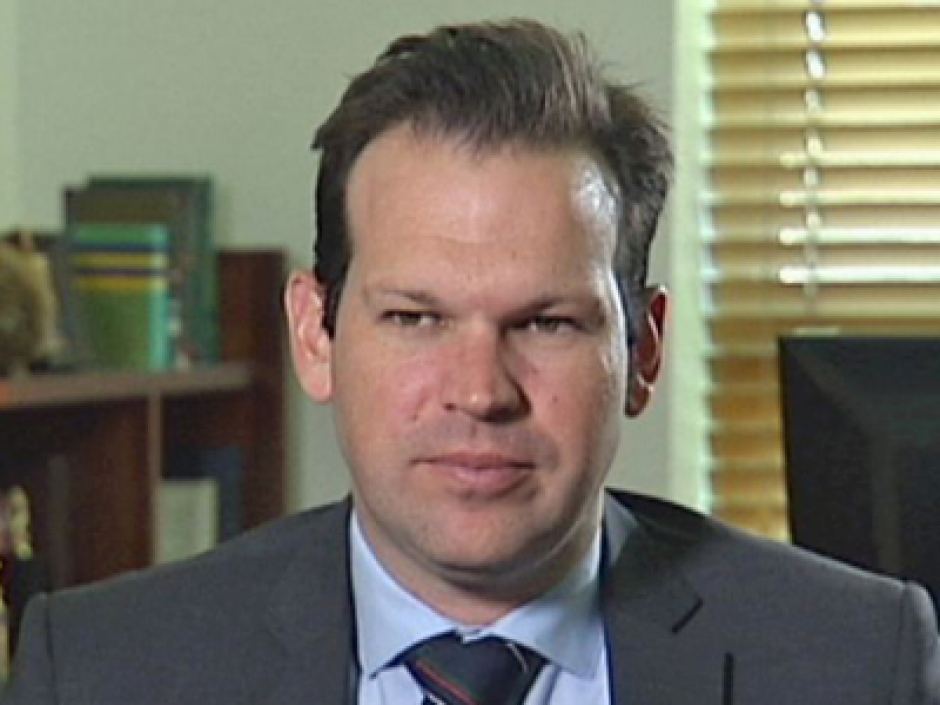
Their testimony prompted Nationals senator Matt Canavan to describe his own government’s labour program as indentured labour and a “cartel” after a senior official in the Department of Foreign Affairs and Trade admitted workers were not permitted to leave an employer for better pay and conditions elsewhere.

The Morrison government’s Pacific Australia Labour Mobility scheme was introduced in 2018 and allows workers from the Pacific and East Timor to stay in Australia for three years to fill job shortages in the agriculture and meat processing sectors. It does not offer a pathway to permanent residency and the workers remain separated from their families.

DFAT has confirmed to The Age and Herald that is investigating complaints raised in a 35-page report from the Australian Meat Industry Employees union that details the allegedly adverse experience of at least a dozen Pacific Islander workers at a NSW abattoir, including one who lost an eye at work.

Many of the affected workers referred to in the union report were initially sponsored by Regional Workforce Management. The meat processing company named in the report has cut ties with the labour hire firm and now directly employs its Pacific Islander workers.

A spokesman for the Fair Work Ombudsman confirmed Regional Workforce Management was among 18 approved employers of Pacific labour that are under investigation.

He said the ombudsman had recovered almost $185,000 (US$131,827) in unpaid entitlements owed to Pacific workers by employers under the scheme and the Seasonal Worker Programme between 2019 and 2021. Twenty-six employers were issued compliance or infringement notices during that period, he said.

Meat processing companies and other agricultural businesses have tried to pressure the government to crack down on workers who “abscond” from their job to search for better pay and conditions with other employers.

Government statistics show more than 1100 Pacific Islanders fled their agricultural jobs in Australia in the past year. Meat company bosses say the fleeing workers compound an already serious labour shortage problem and run up big costs in wasted human resources and training.

Government posters released last year told Pacific workers they would “bring shame to their family” if they changed employers.

The Australian Meat Industry Council said in a statement that the majority of Pacific workers employed in the industry were happy with their conditions and wanted to extend their stay with their present employer.

Sources involved in the Pacific and seasonal worker programmes said some visa recipients had made claims for temporary protection visas that, if granted, allowed them to switch employers without repercussion.

In one case, workers in South Australia have reported being charged $100 (US$71) to get a medical certificate from a meat processing company doctor if they called in sick. Another group of workers in regional Victoria claimed they were charged $50 (US$35) a week for transport even after they bought a car to take them to and from work.

Uniting Church Australia’s senior social justice advocate, Mark Zirnsak, said while protections for workers in the Pacific and seasonal worker programs were far stronger than those for backpackers, there was still room for improvement.

Dr Zirnsak said a lack of transparency about payslips and deductions of expenses continued to be a big problem.

SOURCE: SMH/PACNEWS

Waratahs on guard against Fijian ambush

0

Laughing off claims Fijian Drua will be the easybeats of Super Rugby Pacific, the NSW Waratahs are instead on guard against a first-round ambush from the competition’s newcomers.

Winless in 2021, the Waratahs enter their season opener on Friday night at Commbank Stadium with renewed confidence after an unbeaten trial campaign against the Queensland Reds, Brumbies and combined Shute Shield opposition.

The Tahs have no plans on letting all the momentum slip against a Drua outfit fresh off upsetting the Melbourne Rebels in their first and only trial last week.

“They were very strong,” the Waratahs’ former sevens specialist Dylan Pietsch said on Monday.

“The thing is with Fiji, they can score from wherever, whenever.

“So if you’re five metres out, they’ll somehow get an offload out and score from 100 metres — and they’ve done that to me many times.”

Drua coach Mick Byrne is playing down his side’s first-season prospects in the major leagues, but NSW attack coach Chris Whitaker is having none it.

Whitaker said the Drua’s talents were there for all to see during their initiation in the National Rugby Championship from 2017-19, including their triumphant 2018 campaign.

“They live for it,” Whitaker said.

“They’re freak athletes. They’re not short on recruiting some talent, that’s for sure.

“You just have to look at that Rebels game.

2Whether they’re starting the game or finishing the game, they’ve all got natural ability and, once they start to click, they’ll be a dangerous team, that’s for sure.”

Whitaker said it’s imperative the Waratahs stick to their game plan and not fall into playing sevens-style rugby.

“Our biggest danger is turning it into like a Fijian style game. I think that’s what they want,” he said.

“On both sides of the ball we’ve got to be really disciplined and stick to what we’re doing best.

“We want to limit the amount of opportunities that we give them in the unstructured scenario — loose turnovers, loose kicks, anything like that.

“They can create something from nothing and, once they get on a roll and once you get in that unstructured type of play where there’s unforced errors, that’s the whole trick of the Fijians and the way they play.

“They play a high passing game to try to lure you into that as well.

“The moment you started to play like Fiji that’s when you make mistakes and that’s when you’re playing to their strengths,” he said.

SOURCE: AAP/PACNEWS

Stay connected

529FansLike
172FollowersFollow
156SubscribersSubscribe
- Advertisement -