


Green Climate Fund (GCF) Executive Director Mafalda Duarte has challenged countries to follow Solomon Islands’ lead in supporting global climate finance, describing its US$400,000 pledge towards the Fund’s next replenishment as a historic demonstration of leadership and solidarity.
Duarte said it was significant that Solomon Islands, a country classified as both a Small Island Developing State (SIDS) and a Least Developed Country (LDC), had made the first pledge to the GCF’s next replenishment cycle.
“This is a historic moment for the Green Climate Fund, and a powerful message to the world,” Duarte said.
She said countries that had contributed least to climate change but faced some of its most devastating consequences were stepping forward to demonstrate leadership.
“Countries that have contributed the least to climate change, yet face some of its most devastating consequences, are not waiting for others to act.
They are stepping forward and setting the pace for global climate action,” she said.
Duarte called on other countries, particularly major economies, to follow Solomon Islands’ example and help ensure the next replenishment delivered greater climate finance to developing countries.
“Solomon Islands has set the bar; now it is time for others to follow the lead and ensure this replenishment is a turning point in how the world delivers climate finance,” she said.
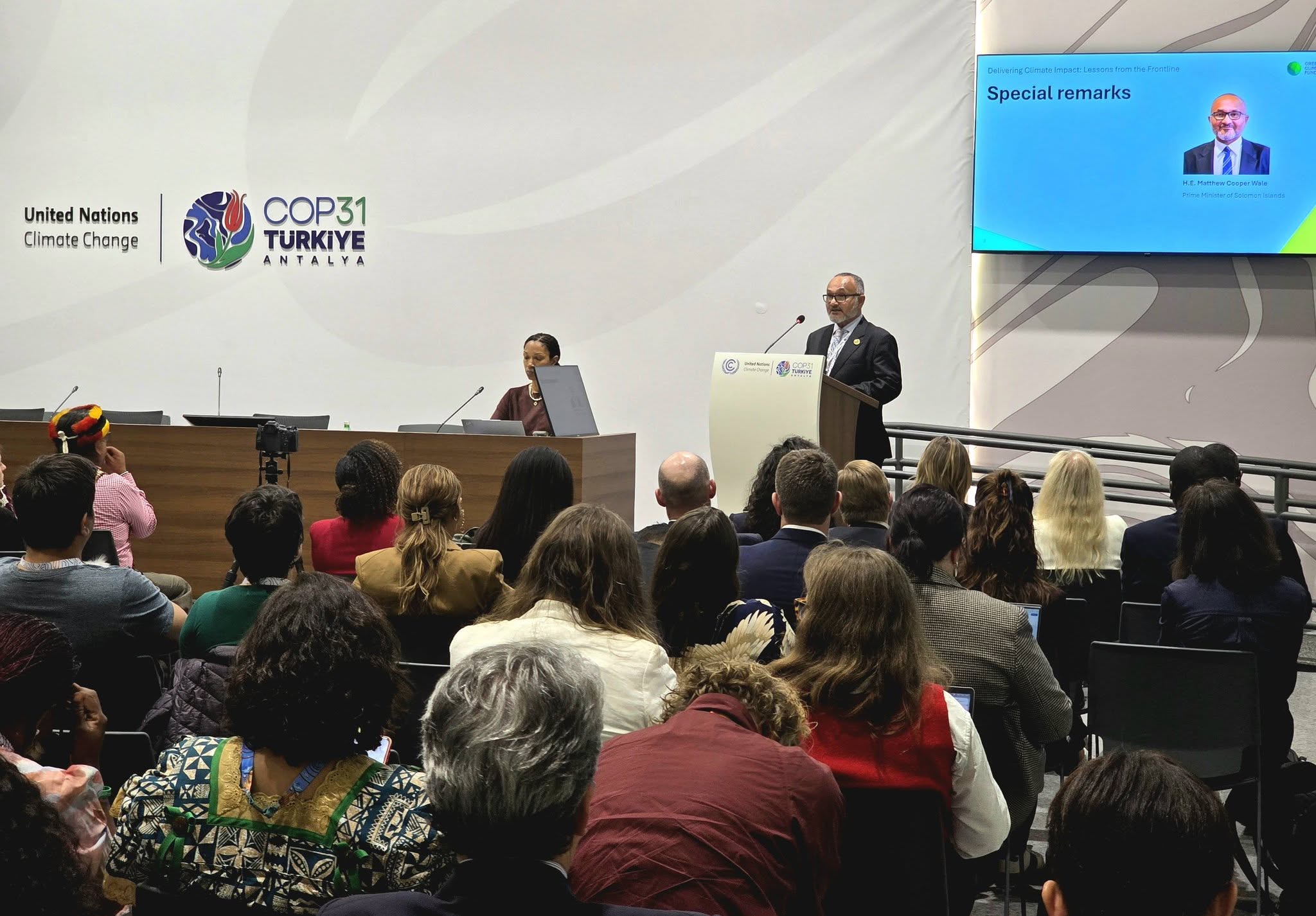
Solomon Islands Prime Minister Matthew Wale said his country’s contribution reflected the daily impacts of climate change on its communities and its determination to take responsibility despite having limited resources.
“In Solomon Islands, climate change is not something we read about in reports. It is something our people live with every day.
“Saltwater is creeping into our wells, king tides are washing through homes, and families are facing the painful question of whether they can remain on the land their ancestors called home,” Wale said.
Wale said the Pacific had not caused the climate crisis but would not wait for others to act.
“The Pacific did not create this crisis, but we will not stand by and wait for others to act,” he said.
He urged the world’s largest economies to make their own contributions, saying the success of climate finance must be measured by the difference it makes to vulnerable communities.
“The true measure of success will not be the promises made here in Antalya, but the difference we make to the lives of our people and the generations that follow,” Wale said.
Solomon Islands’ US$400,000 contribution is the first pledge towards the GCF’s next replenishment, which aims to mobilise international finance for climate action in developing countries and is scheduled to conclude in October 2027.
Pacific island countries face growing threats from tropical cyclones, sea-level rise, coastal and inland flooding, with critical infrastructure and essential services often located in highly exposed areas.
These impacts threaten water supplies, energy access, connectivity and livelihoods, increasing the need for investment in climate resilience.
Through its partnership with the GCF, Solomon Islands is advancing national climate priorities, including strengthening community resilience, expanding renewable energy access and supporting climate-resilient development.
The next replenishment will determine the resources available to support developing countries in responding to climate change in the coming funding period.