


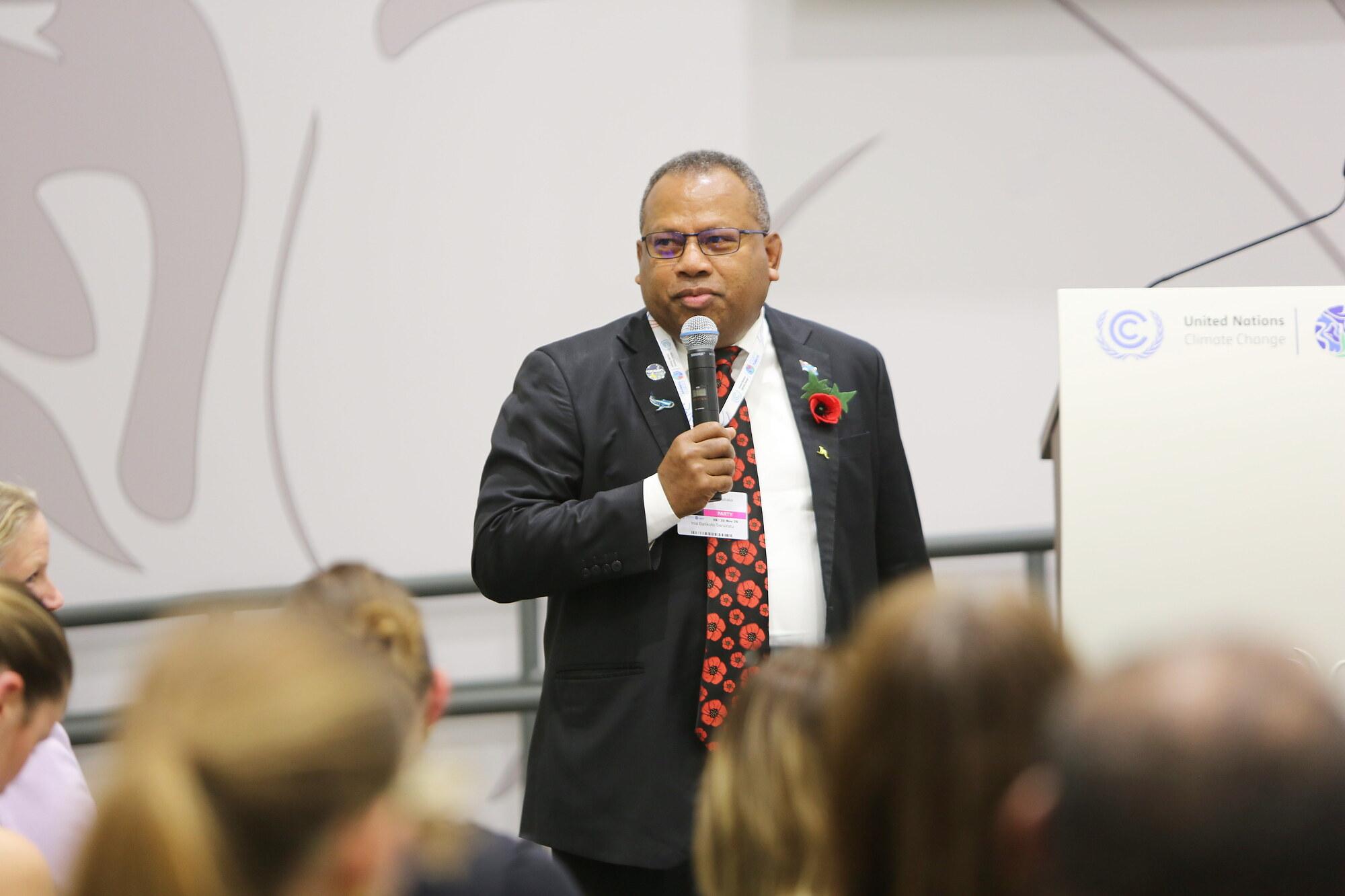
Maritime decarbonisation presents Pacific Island countries with an opportunity to strengthen regional connectivity, reduce dependence on imported fossil fuels and build more resilient economies, Fiji Opposition leader and COP31 Pacific Ocean Envoy Inia Seruiratu says.
Seruiratu said shipping was a lifeline for Pacific communities, connecting islands, supporting trade, delivering essential goods and underpinning economic development across the region.
Addressing a maritime decarbonisation event at the Australian Pavilion at COP31 in Antalya, Türkiye, he said the transition to low-emission shipping should be viewed as an economic and development opportunity rather than an additional burden for Pacific countries.
“Maritime decarbonisation is not only a climate imperative. It is an economic and development opportunity,” Seruiratu said.
He said Pacific countries, which collectively have responsibility for nearly 20 per cent of the world’s exclusive economic zones, understood the close relationship between their economies, communities and ocean resources.
Seruiratu said the Pacific Regional One Maritime Framework reflected the region’s commitment to making maritime transport part of its transition towards a resilient, low-emissions future.
He said shipping would be critical in connecting clean energy producers to markets, supporting regional supply chains and ensuring Pacific countries shared in the economic benefits of the global energy transition.
The transition could also reduce emissions, strengthen energy security, lower dependence on imported fuels and improve maritime connectivity across the region.
Through initiatives such as the Pacific Blue Shipping Partnership, Pacific countries are working with development partners to identify pathways towards low- and zero-emission shipping.
Seruiratu said cleaner and more efficient maritime transport could deliver climate, economic and development benefits at the same time.
However, he stressed that the transition would require stronger regional and international partnerships.
“No single country can decarbonise regional shipping routes, develop new maritime fuels, or build the necessary infrastructure alone,” he said.
He said governments, shipping operators, ports, financiers, development partners and regional industries needed to work together to accelerate the transition.
Seruiratu also highlighted the importance of international platforms such as the Global Maritime Forum in sharing practical progress, developing partnerships and identifying solutions to advance maritime decarbonisation.
He said the Pacific’s priority was to build cleaner, more resilient and better-connected regional supply chains that would support the energy transition and long-term economic prosperity.
For Pacific Island countries, he said, maritime decarbonisation must deliver more than emissions reductions by strengthening the economic systems on which island communities depend.
“By working together, we can build cleaner, more resilient and more connected regional supply chains that support both the energy transition and the long-term prosperity of our ocean region,” Seruiratu said.