



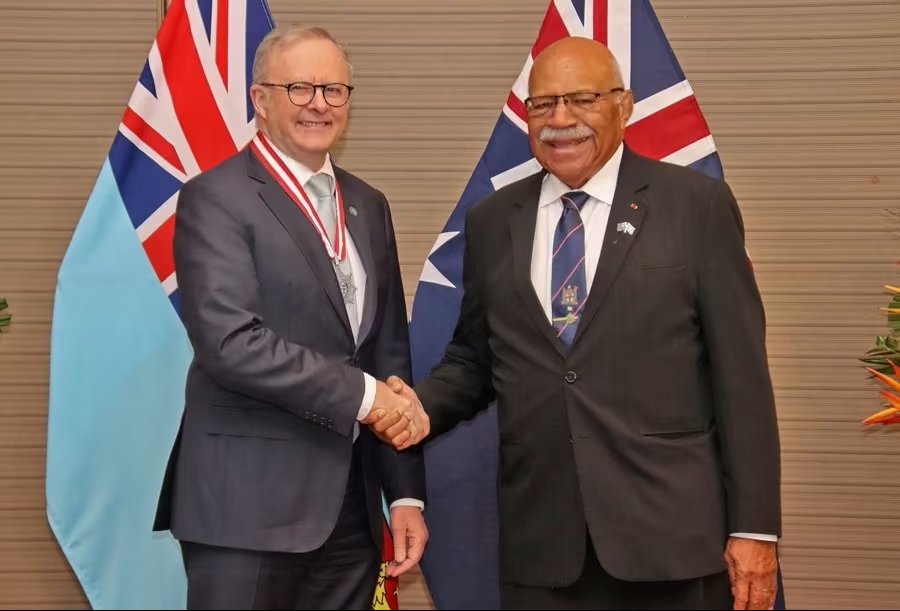
Fiji’s Parliament has been urged to defer ratification of two major treaties with Australia, with a parliamentary committee warning that the agreements could have significant implications for the country’s sovereignty, independent foreign policy and national security.
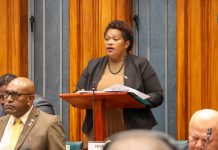
Presenting the Standing Committee on Foreign Affairs and Defence’s review report in Parliament, Chairperson Lenora Qereqeretabua said the committee had recommended further negotiations with Australia over the Fiji-Australia Vuvale Union and the Ocean of Peace Alliance, also known as the Bita Wali Treaty.
She said while both agreements offered opportunities to strengthen economic development, infrastructure, health, education, climate resilience and regional cooperation, their legal, constitutional, financial and strategic implications required careful consideration.
On the Fiji-Australia Vuvale Union, the committee raised concerns about whether closer economic and institutional integration could affect Fiji’s ability to maintain independent relationships with other development partners.
It also highlighted the need to protect critical infrastructure and sovereign data, ensure transparency around the proposed 10-year work plan and clarify financial commitments.
The committee questioned the sustainability of development assistance and called for clear distinctions between grants and loans, alongside measurable outcomes, defined implementation responsibilities and parliamentary oversight.
Qereqeretabua said the partnership must recognise the differences in economic capacity between Fiji and Australia and ensure cooperation did not create disproportionate dependence or undermine Fiji’s sovereign decision-making.
On the Ocean of Peace Alliance, the committee expressed particular concern about mutual defence obligations, visiting force arrangements, foreign military presence, intelligence sharing and third-party security engagements.
It called for clear legal and operational safeguards governing military deployments, jurisdiction, accountability, environmental protection and parliamentary scrutiny of future defence arrangements.
The committee also warned that defence cooperation must preserve Fiji’s independent and non-aligned foreign policy and must not expose the country to security commitments inconsistent with its national interests.
The report raised concerns about the treaty-making process, including the absence of comprehensive public consultation before the agreements were signed.
Qereqeretabua told Parliament that the Office of the Solicitor-General had been invited to engage with the committee for more than a month and was subsequently provided with written questions, but no response had been received at the time of the review.
The committee said this had limited its ability to obtain authoritative legal clarification on significant provisions of the treaties.
It also questioned the limited involvement of relevant divisions within the Ministry of Foreign Affairs and External Trade in the treaty process.
The report identified several drafting and editorial inconsistencies, including an error in the signature block, the absence of a definition of the term ‘party’ and a failure to clearly identify the signatories to both agreements.
The committee said these issues raised concerns about the adequacy of legal scrutiny, proofreading and quality assurance before the treaties were finalised and signed.
It further emphasised that both agreements must be considered within the context of Fiji’s Foreign Policy White Paper, its longstanding commitment to being friends to all and enemies to none, and its leadership in advancing the Blue Pacific Ocean of Peace Declaration.
The committee’s recommendation is for Parliament to defer approval of the ratification of both treaties in their present form and for Government to undertake further negotiations with Australia.
Qereqeretabua stressed that deferral did not amount to rejection of the treaties or Fiji’s longstanding friendship with Australia.
Rather, the committee said further negotiations would provide an opportunity to secure appropriate legal safeguards, clarify treaty obligations, disclose implementation arrangements and strengthen parliamentary scrutiny and democratic accountability.
The committee maintained that Fiji could remain a trusted friend and development partner of Australia while preserving its sovereignty, constitutional authority and independence in determining its foreign policy and national security priorities.