
Opinion by Feleti Teo, Lynda Tabuya, Alison Davidian
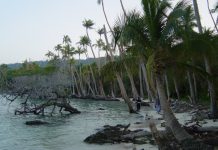
The ocean is not a backdrop to Pacific life. It is the source of it. As the Tongan Fijian writer Epeli Hau’ofa wrote, the sea is “our pathway to each other and to everyone else” – it is the connective tissue of who we are rather than a boundary that isolates us.
For generations, communities across Tuvalu, Fiji and the wider Pacific have learned to read and understand the ocean’s moods, heeded its warnings, and passed this knowledge through traditions and methods that determine how we fish, plant and build.
What we are living through now is different. Rising seas, extreme weather and a warming ocean are changing the conditions that have shaped our knowledge and the way of living. We are not writing about a future threat – Pacific governments are governing in the middle of it. And it does not fall on everyone equally.
Climate change magnifies inequalities already present in the Pacific and can create new ones. Pacific women earn less, own less land, and have less access to credit and decision-making than men. They also carry much of the unpaid work that holds communities together – managing household water supplies and deciding how it is allocated, growing and preparing much of what their families eat, tending gardens, gleaning from reefs, caring for children and elders. When a cyclone hits or a harvest fails, those gaps widen. Women absorb more of each shock with fewer resources to fall back on and less say in how the response is shaped.
Community resilience is built through women’s everyday work. Across Tuvalu’s low-lying atolls, women contribute directly to food security – tending gardens, gleaning shellfish and more from reef flats, and using income from what they produce and sell to feed their families. Shell handicrafts and other traditional crafts are a further source of income, carrying knowledge and practice passed down through generations of women. As reefs and shorelines change, women stand to lose not only that income and food, but the knowledge and culture bound up in producing it.
When Tropical Cyclone Ana struck Fiji in 2021, a landslide displaced family in Nabavatu village. Women who earned income gathering and selling shellfish faced losing that livelihood as the community prepared to relocate inland and organised to help build new livelihoods.
After Tropical Cyclone Pam struck Tuvalu in 2015, damaged boats disrupted fishing, while women kept displaced families fed despite wrecked kitchens and water supplies.
Pacific women are already the response – community by community, disaster by disaster. Yet too much of their work remains under-recognised. What climate assessments fail to capture, climate finance does not reach. When women’s work goes unmeasured, it goes unfunded. When their knowledge is absent from plans, their needs are absent from the response.
The global commitments and goals are there: the Belém Gender Action Plan on gender-responsive climate action and the goal of scaling climate finance to US$1.3 trillion a year by 2035. What matters now is whether they change what happens on the ground – whether women’s realities are captured in the data, their knowledge shapes climate plans, and finance reaches the women doing the work.
The Pacific is already moving to turn those commitments into action. At Tuvalu’s initiative, Pacific Leaders recently endorsed a Pact on Gender and Climate Action committing the region to lead implementation of the Belém Gender Action Plan through stronger recognition and inclusion of women’s leadership, better climate data that reflects women’s realities and finance that reaches women and communities. The Pacific Resilience Facility– a Pacific-led financing mechanism now taking shape – offers the arrangements to get resources into the hands of women already leading resilience and adaptation on the ground. We know what more is needed: emissions must come down fast enough to keep 1.5°C within reach; the Belém Gender Action Plan must be backed with the resources needed for implementation; and the US$1.3 trillion goal must translate into climate finance that reaches women and communities.
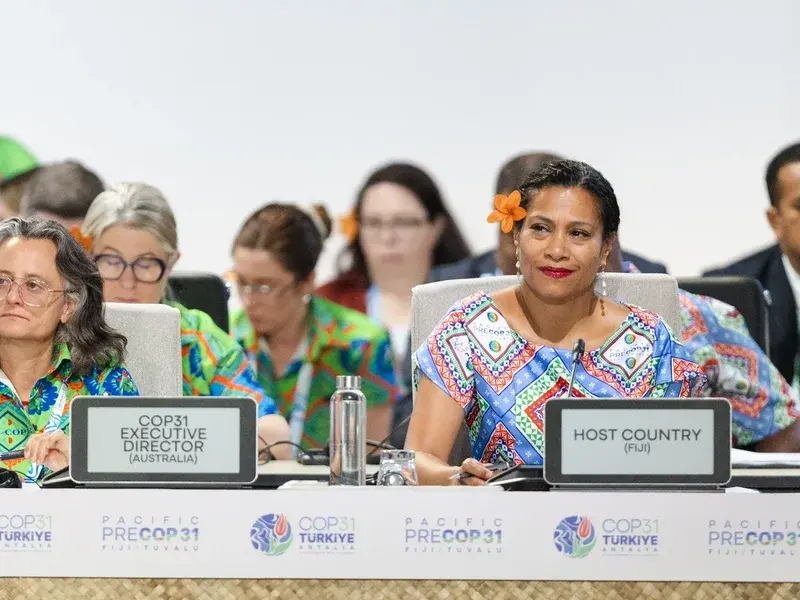
This November, we will gather in Antalya, Türkiye for COP31, where Australia will serve as President of Negotiations. Earlier this month, the Pacific hosted the Pre-COP in Fiji, alongside a leaders’ event in Tuvalu, bringing the realities and priorities of small island developing states directly into the road to Antalya. Every fraction of a degree translates in turn into more of this unrecognised work: greater strain on household water supplies and food systems, more people to care for, more livelihoods disrupted. The temperature goal is not a separate issue from the gender one. It sets how much adaptation work Pacific women will be doing, and how often.
Pacific women cannot be expected to carry the losses of a crisis they did so little to create, shoulder the unpaid work of recovery, and then compete for a fraction of the finance intended for their communities. They are already adapting, rebuilding and leading. They do not need the world to chart their course. They need those with the greatest power – and the greatest responsibility – to do their part, so they can keep charting their own.
Feleti Penitala Teo is Prime Minister of Tuvalu.
Lynda Tabuya is Minister for Information, Environment and Climate Change, Fiji.
Alison Davidian is the UN Women Representative for the Fiji Multi-Country Office, supporting programmes and policy engagement across 14 Pacific Island countries.