The United States has called for an end to the United Nations committee that reviews Guam’s political status, and former Guam delegate to Congress Robert Underwood says island leaders who stay silent will be seen as agreeing.
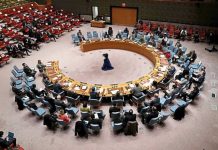
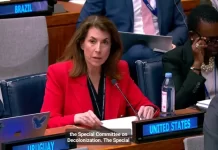
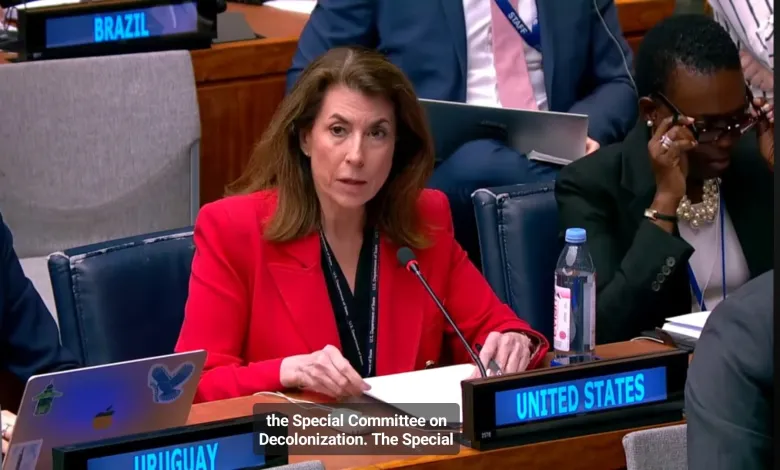
Tammy Bruce, the deputy U.S permanent representative to the United Nations, made the call on 15 October while explaining why Washington voted against every decolonisation resolution before the Fourth Committee.
She said the Special Committee on Decolonisation, known as the C-24, has “outlived its original purpose” because more than 80 former colonies have joined the United Nations since the committee was created. She also faulted its “yearly junkets to resorts in the Caribbean and South Pacific.”
Bruce also addressed Guam directly.
She said the United States disagrees with criticism of the federal court ruling that blocked the island’s planned plebiscite on self-determination, and she reaffirmed the U.S right to conduct military activities.
The committee adopted its resolution on Guam the same day.
The session transcript records 150 votes in favor and two against.
Melvin Won Pat-Borja, executive director of Guam’s Commission on Decolonisation, told The Guam Daily Post that the United States and Israel cast the only votes against the resolution.
The governor’s office did not side with Washington in its responses to the Post on Friday.
Whether the committee’s procedures should improve is “a legitimate subject for discussion,” the office said
“Whether the people of Guam should lose that forum before achieving a genuine act of self-determination is another matter entirely.”
It added, “For Guam, that mission is not yet complete.”
Regarding the junket’s accusation, the office said the committee should be judged by whether it moves territories closer to self-determination, not by “how often its members travel.”
Asked about the U.S position on the court ruling on Guam’s plebiscite, the office told the Post: “Given the important nature of this specific topic and the high likelihood of future litigation, we have no comment to offer at this time.”
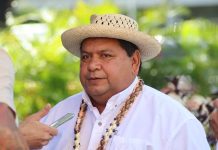
Underwood, who served as Guam’s delegate from 1993 to 2003 and now chairs the Pacific Centre for Island Security, spoke with the Post last week and said the statement shows the United States “is not interested in decolonisation.”
He was not surprised, he said, because Washington has been unresponsive to the committee for the past few years. What startled him was how openly it said so. As for the United Nations going along, he was doubtful.
“It would take the United Nations to disestablish that,” he said. “And I just don’t see that happening.”
His warning for Guam was blunter. He characterised the U.S position as a message that Guam’s international forum could be taken away.
“In case you believe that you have international standing to discuss your situation, we’re going to take that,” Underwood said.
“We’re voting to take that away from you at the United Nations.” He added, “So, if nobody in (an) elected office in Guam today or over the course of the next two weeks or three weeks says anything about it, then the United States government, Washington, D.C., will interpret that as acceding to it.”
Won Pat-Borja also said the U.S stance came as no surprise, and he tied it to the military.
In his view, Washington challenges the committee’s mandate because a change in Guam’s political status would change how the armed forces operate on the island.
He contrasted Guam with the freely associated states of Micronesia, where he said military plans are negotiated under compacts. “But in Guam, all they have to do is put out a public notice and allow some time for people to submit comments,” he said.
He rejected the junket label. The C-24’s Pacific seminar gives territories a rare opportunity to speak for themselves, he said, because administering powers handle their foreign affairs. “Why would we not take advantage of the one opportunity a year to be able to do so?” he asked.
The United States says it supports self-determination for Guam, Won Pat-Borja said, “but they also turn around and impose that it has to be done on their terms.”
He noted that Davis v. Guam, the case behind the court ruling on Guam’s plebiscite plan, was filed by a private citizen, not the federal government. Still, “Congress could authorize a vote,” he said.
Adi Martínez Román, co-director of Right to Democracy, an advocacy group focused on U.S territories, agreed with part of Bruce’s statement.
“It is true that the people in Non-Self-Governing Territories deserve better,” she said in a statement.
er co-director, Neil Weare, placed the blame on Washington. He said it is “ultimately the United States that has failed in its commitment to advance self-determination for the people in U.S territories under its rule.”
Won Pat-Borja also highlighted the statement from the Pacific Conference of Churches, based in Suva, Fiji. The group cited a 2019 advisory opinion from the International Court of Justice on the Chagos Islands and rejected the argument that the decolonisation process is nonbinding.
“To call the foundation of the UN decolonization process ‘non-binding’ is to tell colonized peoples that their rights are optional,” the statement said.
What comes next for Guam’s decolonisation effort could depend on the outcome of the upcoming election. The governor chairs the island’s decolonisation commission by law, Won Pat-Borja said, and a new governor could keep the work going, change course or shelve it. His own tenure adds uncertainty. “I’m only here until December,” he said.
He added that he is still waiting for the final text of the Guam resolution, which he described as strong this year.