

– Three Fiji entries have been recognised in the 2026 Pacific Dataviz Challenge for turning data into stories about climate change, rising sea levels and sustainable development across the Pacific.
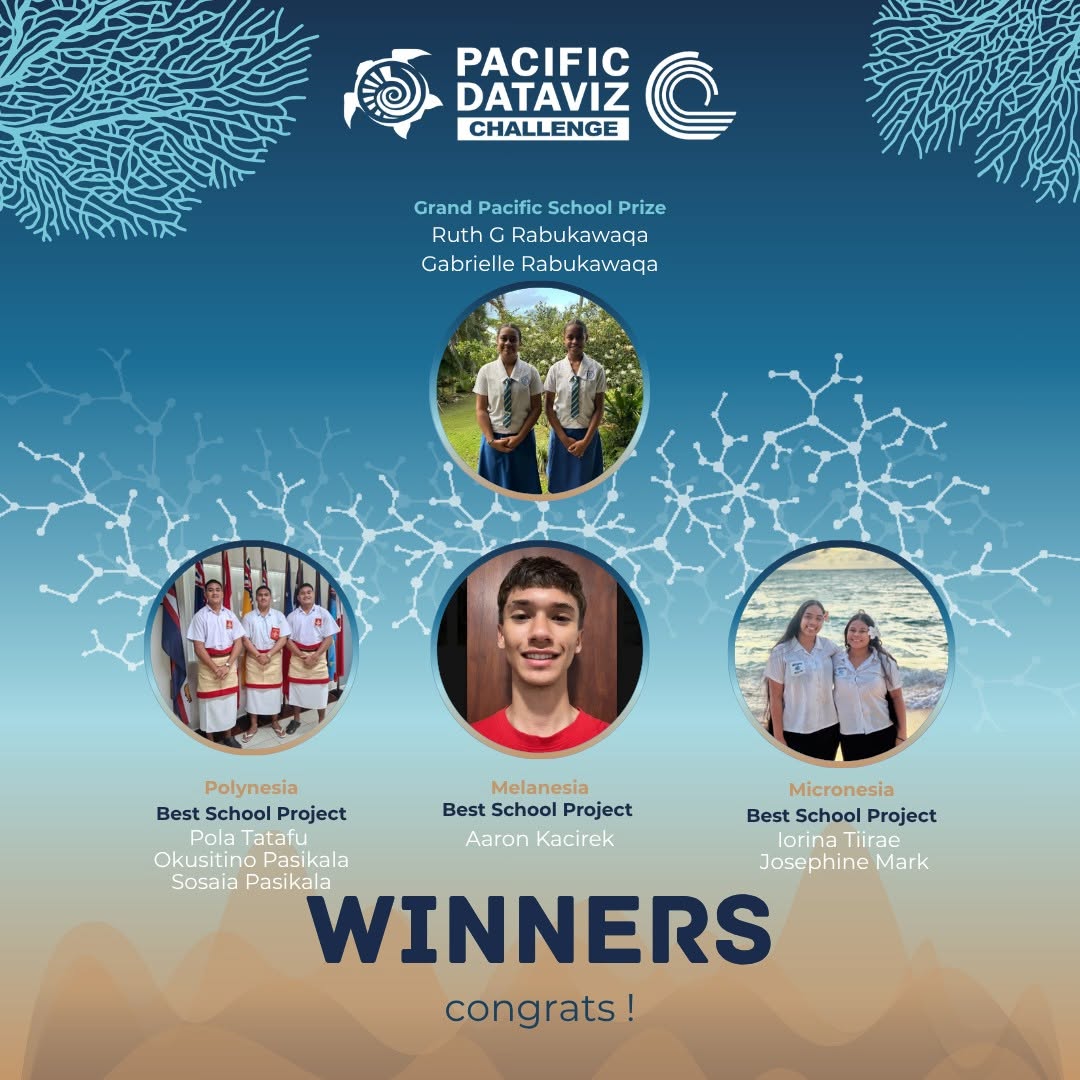
Sisters Ruth G. Rabukawaqa and Gabrielle Rabukawaqa, students at St Joseph’s Secondary School in Suva, won the Grand Pacific School Prize for The Development Challenge, exploring the relationship between tourism, energy demand and sustainable development across Pacific Island countries.
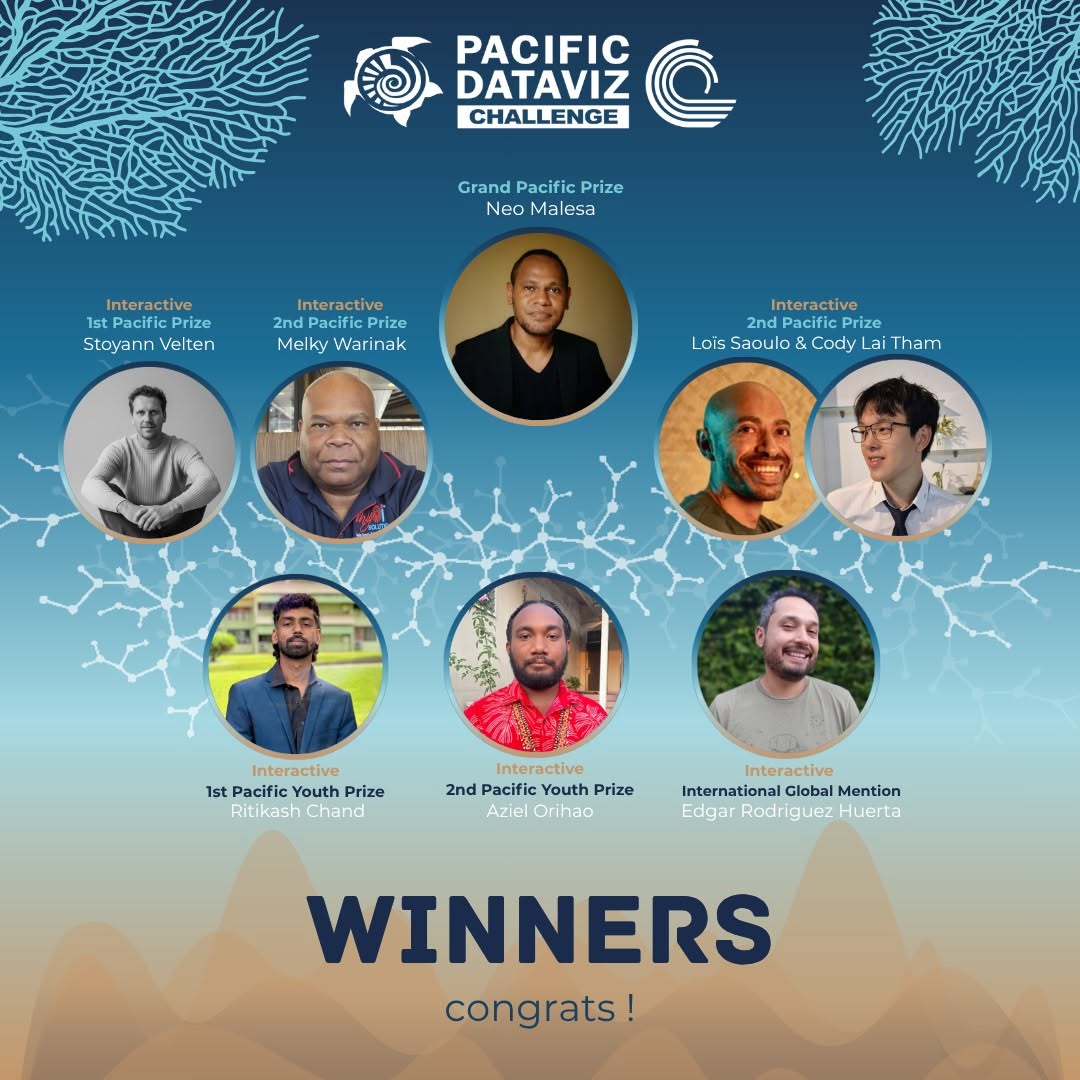
Ritikash Chand won first prize in the Pacific Youth interactive category for The Rhythm That Guided Us, a visualisation exploring how changing rainfall patterns are reshaping Fiji’s climate.
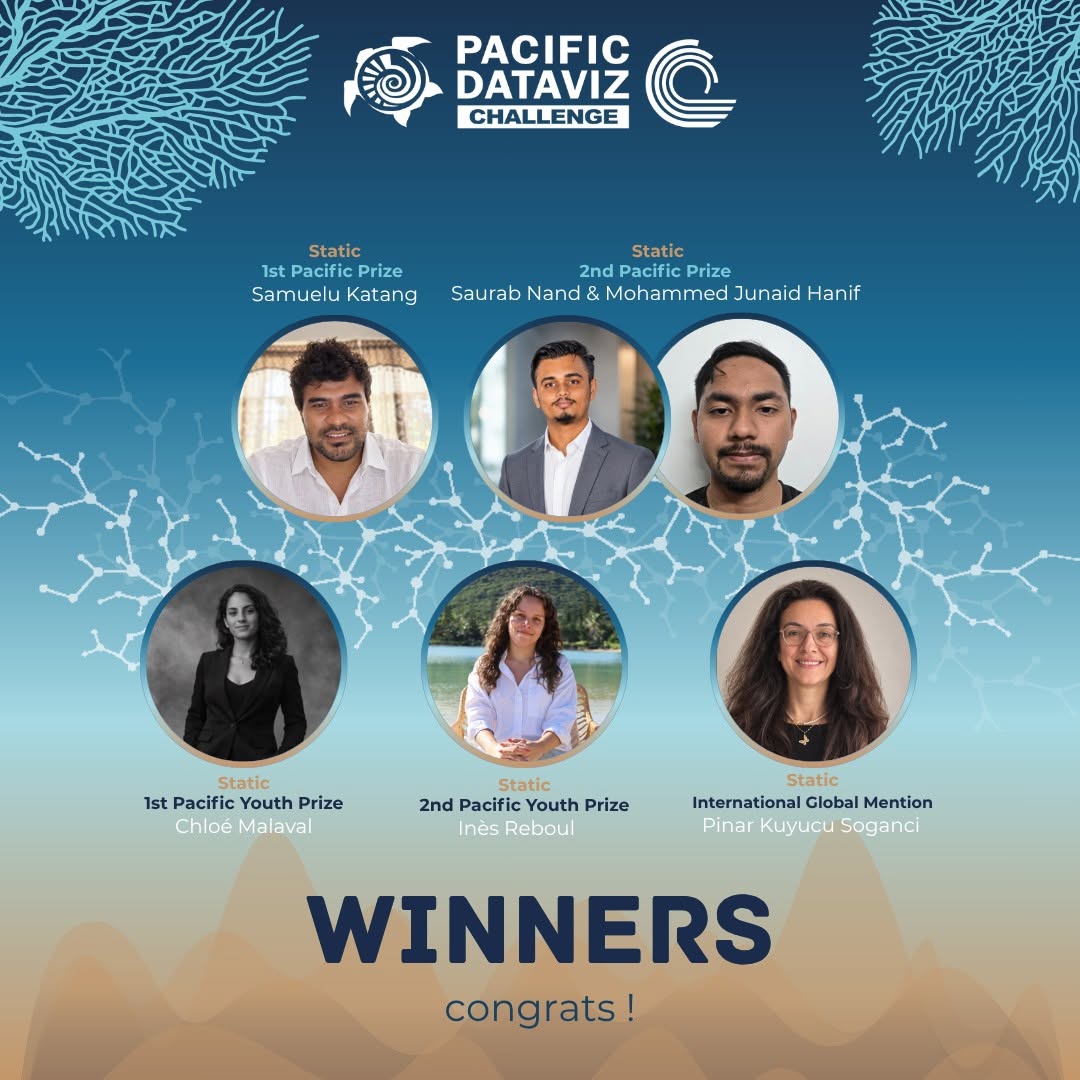
Saurab Nand and Mohammed Junaid Hanif received second prize in the Pacific static category for The Island Stays. The Village Goes., which examines how rising sea levels affect Pacific islands and communities differently.
The five Fiji prize recipients received their awards at a ceremony held on 15 October at the University of the South Pacific in Suva. The ceremony was opened by Senivasa Waqairamasi, Fiji’s Director of Climate Change.
Turning Pacific data into stories
Led by the Pacific Community (SPC) and its regional partners, the Pacific Dataviz Challenge invites participants to transform open data into visual stories that make complex issues more accessible and support informed decision-making.
Now in its fifth year, the Challenge brings together students, educators, data professionals, designers, developers and artists to create projects ranging from posters and infographics to interactive apps, games and dashboards.
The 2026 edition focused on climate change, with participants exploring its impacts on rainfall, coastlines, livelihoods and development. This largest edition to date attracted 463 participants from 50 countries and territories, with 16 entries receiving prizes.
Fiji has continued to play an active role in the Challenge Lusiana Boutu andElia Komaitoga, 2025 Pacific Youth prize recipients, both from the Fiji Bureau of Statistics, shared their experience at the launch of the 2026 edition.
“You don’t need to be an expert. You just need to be curious, to ask questions, and to try,” said Boutu, encouraging participants to explore data visualisation.
SPC Deputy Director-General for Science and Capability, Dr Andrew Jones, said the Challenge helped participants move beyond finding data to understanding and communicating its significance.
“Data, in itself, is not enough. Its value lies in how it is understood, and ultimately, how it informs action. The Pacific Dataviz Challenge is a space where people learn not just that Pacific data exists, but how to analyse it, question it, and share it in ways that resonate.”
Exploring climate and development challenges
Chand’s The Rhythm That Guided Us uses more than four decades of rainfall data to illustrate changing weather patterns and their implications for communities and livelihoods in Fiji. The Pacific Youth prize includes a cash award of US$1,000.
Nand’s and Hanif’s The Island Stays. The Village Goes. draws on satellite shoreline measurements from nine Pacific locations to show why the impacts of sea-level rise vary between islands and communities. The Pacific static category second prize includes US$1,000.
The Rabukawaqa sisters’ The Development Challenge examines how tourism-driven economic growth can increase energy demand and complicate the transition to renewable energy across Pacific Island countries. The Grand Pacific School Prize includes US$500.
Inspiring the next generation of Pacific data storytellers
Pacific Dataviz Challenge lead Léo Cann-Polydor says that Fiji’s profile in the Challenge reflected the strength and breadth of Fijian data storytelling.
“The three Fiji-winning projects demonstrate how data visualisation can connect regional trends with the experiences of Pacific communities, helping audiences better understand the challenges facing the region.
“Through its focus on open data, creativity and storytelling, the Pacific Dataviz Challenge supports a new generation of Fiji’s data storytellers in exploring the issues shaping their region’s future,” he said.