

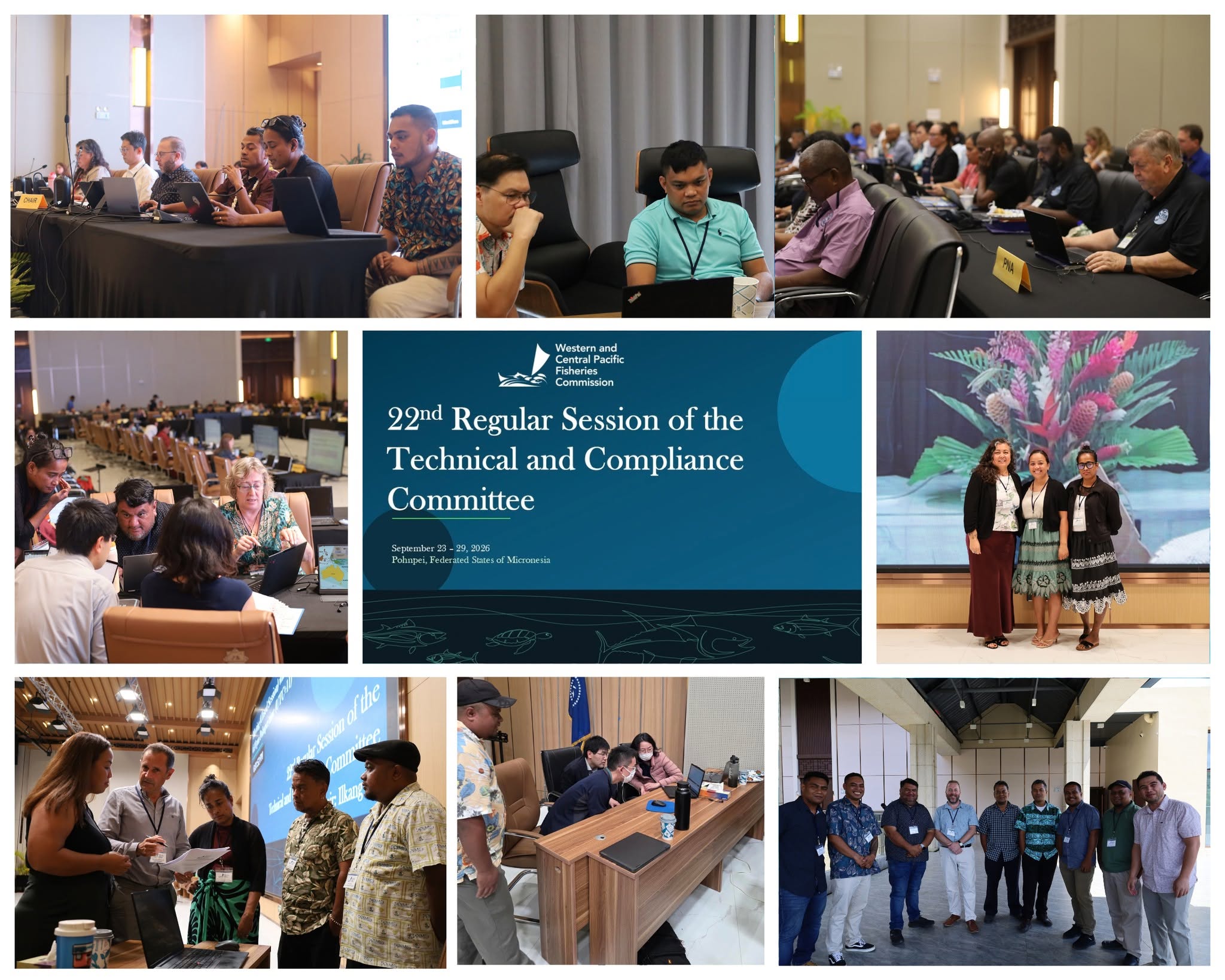
Tuna management, fisheries conservation and climate change impacts on marine ecosystems will be among the key issues at the 23rd regular session of the Western and Central Pacific Fisheries Commission (WCPFC) in Port Vila, Vanuatu, from 30 November to 05 December 2026.
The meeting will bring members together to consider the status of tuna stocks, develop harvest strategies and management procedures for key tuna species, and strengthen measures to reduce fishing impacts on non-target marine species.
Submissions for the meeting are due by 31 October 2026, while arrangements for the session remain provisional.
The agenda includes the conservation and management of South Pacific albacore and bigeye tuna, including proposed management procedures and arrangements for their implementation.
Members will also consider preparations for the 2027 review of conservation and management measures covering bigeye, yellowfin and skipjack tuna in the Western and Central Pacific Ocean.
Climate change will feature in discussions, with the commission examining how its impacts can be incorporated into the management and conservation of regional fisheries and marine ecosystems.
The commission is also expected to review reports from its scientific, technical and compliance bodies, alongside work on fisheries monitoring, reporting and enforcement.
Measures to protect marine species from fishing impacts will be reviewed, including safeguards for sea turtles, mobulid rays, cetaceans, seabirds and sharks.
Compliance will be another major focus, with members considering the 2026 Compliance Monitoring Report covering the 2025 reporting year, the compliance monitoring scheme and the proposed 2027 list of illegal, unreported and unregulated fishing vessels.
The agenda also includes support for developing states through the 2026 Strategic Investment Plan, the West Pacific East Asia project and an independent review of the implementation of Article 30 of the Convention on the Conservation and Management of Highly Migratory Fish Stocks in the Western and Central Pacific Ocean.
Members will consider membership and observer arrangements, applications for cooperating non-member status in 2027, and the commission’s 2027 budget, alongside indicative budgets for 2028 and 2029.
Reports from working groups will cover fish aggregating device management, observer programmes, electronic reporting and monitoring, high-seas boarding and inspection, port state measures and marine pollution.
The meeting will also consider cooperation with other organisations and broader international ocean governance issues.
The WCPFC is responsible for the conservation and management of highly migratory fish stocks in the western and central Pacific Ocean, one of the world’s most important tuna fishing regions.
Its decisions are significant for Pacific Island countries, where tuna fisheries contribute to government revenue, employment, food security and economic development.