



When drought threatens a community’s water supply, as it increasingly does under the current El Niño event, governments need more than warnings of what to expect. They also need money to act.
The Asian Development Bank (ADB), with support from Japan, is helping the Federated States of Micronesia, the Marshall Islands, and Naoero pay for drought insurance. The policies were fast-tracked for the current El Niño episode and have been active from as early as September 2026, to strengthen countries’ financial preparedness for potential emerging drought conditions later in the year. The first early response payment for drought conditions linked to El Niño was triggered for the Yap Outer Islands in the Federated States of Micronesia on 10 November.
The aim is to give governments another source of funding to financially prepare for drought response. Because droughts develop gradually, the type of insurance policy involved—known as parametric insurance—provides payouts when pre-agreed thresholds are met. The policies have three triggers linked to increasingly severe drought conditions, with payments based on estimated costs for response needs in the affected locations.
This tailored approach helps to ensure that governments have the right resources to respond quickly and adapt to drought conditions through actions such as public awareness campaigns and delivery of emergency water supplies, and sanitation services helping avoid the worst knock-on effects for local communities and businesses. The design of the insurance policies was funded by the Government of New Zealand under its Climate Finance Capacity Support Programme.
ADB’s Samantha Cook and Belinda Hewitt explain how drought insurance can help Pacific governments act sooner to protect water supplies, livelihoods, and essential services.
Q: Why is drought particularly difficult for Pacific Island countries?
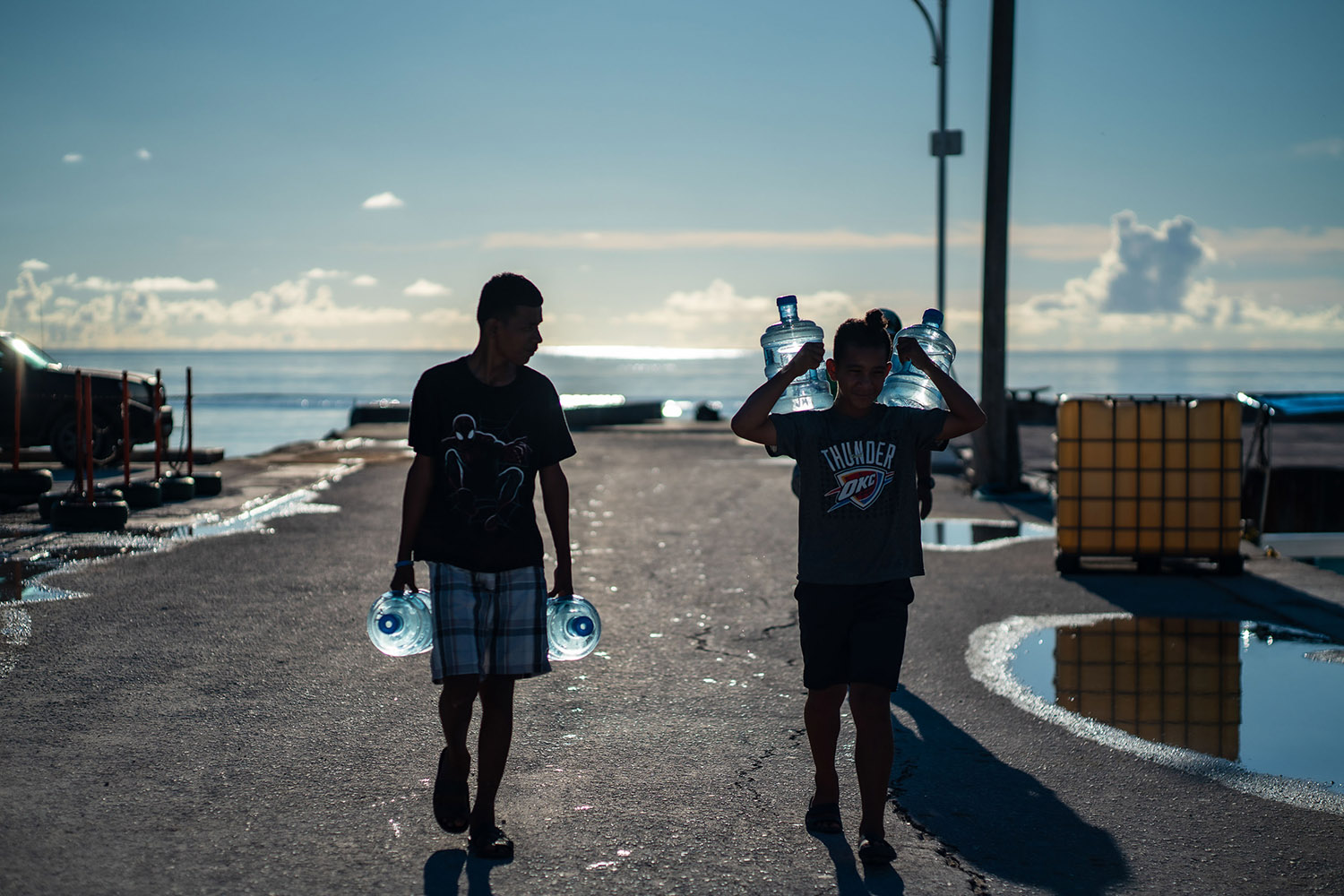
Many Pacific Island communities have limited sources of freshwater, though the picture varies island by island. When drought conditions set in, the situation can deteriorate even further as saline intrusion contaminates limited groundwater resources, especially on atolls and small islands.
On the lower-lying islands of the Federated States of Micronesia, households rely almost entirely on rainfall collection. Limited freshwater supplies also make the northern atolls of the Marshall Islands particularly vulnerable. Although Naoero is forecast to receive above-normal rainfall in the coming months, conditions can vary significantly from the beginning to end of an El Niño episode, and the country’s reliance on rainwater leaves it vulnerable to future dry spells.
Even before this El Niño, many Pacific communities were already vulnerable because of a lack of sustainable freshwater supplies. And it’s not just drinking and sanitation; public health, schools, and farms are at risk too.
Responding requires practical support, including water tanks and delivery trucks, health supplies, and desalination equipment. These needs can place pressure on budgets for countries already struggling to meet everyday needs.
Q: Why put this protection in place now?
A strengthening El Niño is changing rainfall patterns across the Pacific. Below-normal rainfall is expected through January 2027 from Palau to the Marshall Islands and southern Papua New Guinea to southern French Polynesia, the World Meteorological Organisation says. At the same time, wetter-than-normal conditions are forecast until late 2026 along the equator from Naoero to eastern Kiribati. Policies suited to each country’s situation are important for understanding where drought preparation is most urgent and what the best intervention looks like.
The insurance pilot looks beyond the current El Niño to help countries prepare financially for future droughts. A warmer climate can intensify some of El Niño’s impacts, reinforcing the need to arrange funding before emergencies develop. The pilot will help the governments pay drought insurance premiums for an initial two years, with country contributions increasing in the second year. ADB, the Pacific Catastrophe Risk Insurance Company (PCRIC), and the participating countries will assess how this cover can complement other sources of disaster financing in the long term.
Q: What exactly is ADB doing and how will it work?
ADB will help the three governments pay drought insurance premiums by covering a proportion of the cost. The support is intended to make such insurance more affordable for governments and help assess its long-term usefulness.
Funding comes through P-PREPARE, an ADB-administered Pacific trust fund supported by Japan. The contribution from the fund alongside co-payments by the countries facilitates up to US$6 million in drought insurance cover for the three countries combined. The cover will come from PCRIC, which is the regional provider of parametric insurance owned by the Pacific island countries. PCRIC was established with support from donors following a decision at the 2015 Forum Economic Ministers Meeting to help Pacific governments manage disaster risks.
The insurance policies are parametric: they pay when designated agencies report that pre-agreed thresholds have been met, rather than after an assessment of actual losses. This approach enables much faster payouts. Because droughts, unlike many other types of disaster, develop gradually, this type of cover can provide payments at different stages and help governments prepare and respond as conditions worsen.
Governments will receive the funds within 10 days of an event meeting the pre-agreed triggers. The payments support government responses, such as delivering water to affected communities or purchasing desalination units.
Q: What can the pilot achieve—and what are its limits?
The pilot will help the governments and ADB assess the effectiveness of drought insurance over two years. Over this period, consulting firm Willis Towers Watson will conduct an independent evaluation to examine whether the cover provides value for money and how it fits alongside other ways of financing disaster response. The findings will also help guide decisions on expanding the model elsewhere. This will provide useful information to ADB, PCRIC, and the participating countries to decide whether to continue with the insurance product and whether it should be modified in any way.
Parametric insurance is designed to cover a proportion of expected losses, not the full cost of a drought. A country could experience drought without triggering a payment. Conversely, an event could trigger a payout even when impacts on the ground are limited, allowing the government to use the money for other costs. This mismatch between payouts and actual losses is called basis risk and applies to all parametric products.
The cover will complement other forms of international financing, including ADB-supported contingent disaster financing—funding arranged in advance that becomes available when agreed conditions are met. The insurance is intended to complement existing funds by providing additional support for more severe events. This helps ADB to implement a risk-layered approach to financing disaster response where events of different magnitudes and frequencies use different financial instruments according to the amount of funds that may be needed.
The test is whether the pilot gives governments useful additional protection at a cost they and their partners can sustain.
Samantha Cook is Director, Disaster Risk Management Division, and Belinda Hewitt, Principal Disaster Risk Management Specialist.