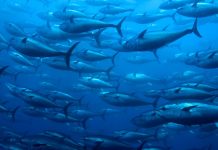




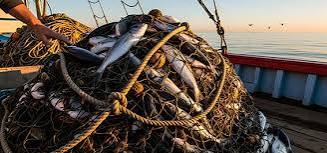
Tuna fishing fleets are choosing to transfer their catches to cargo vessels on the high seas even when Pacific Island ports are closer, according to new research that puts pressure on the Western and Central Pacific Fisheries Commission (WCPFC) to end the practice.
The findings come days before WCPFC members meet in Port Vila, Vanuatu, from 30 November to 5 December, giving the Commission an opportunity to decide on reforms to high-seas transshipment in the world’s largest tuna fishery.
A six-year analysis by the Marshall Islands Marine Resources Authority (MIMRA) and Starboard Maritime Intelligence found that in 41 percent of transfers examined, a suitable port was at least as close as the cargo vessel the fishing vessel travelled to meet.
In about 19 percent of cases, fishing vessels travelled more than three times the distance to meet a cargo vessel than they would have travelled to reach a suitable port.
The study examined 1,644 transfers involving six cargo vessels and 486 fishing vessels between May 2020 and March 2026.
It challenges the fishing industry’s longstanding argument that ports are too far from fishing grounds, making unloading catches on the high seas a practical necessity.
Transshipment involves transferring fish from fishing vessels to refrigerated cargo vessels at sea, allowing fishing fleets to continue operating without returning to port.
Under WCPFC rules, high-seas transshipment by longline vessels is prohibited unless a member determines that unloading in port is impracticable. However, guidelines to establish how impracticability should be assessed, due in 2012, have never been adopted.
Dr Moritz Lehmann, Senior Oceanographer at Starboard Maritime Intelligence and a lead author of the study, said the distances routinely covered by fishing vessels weakened the argument that returning to port was impracticable.
Fishing grounds can be more than 8,000 nautical miles from vessels’ home ports, while vessels travel about 4,500 nautical miles during active fishing.
The analysis also found no measurable relationship between fuel prices and the locations of transshipment operations over the six-year period, challenging claims that fuel costs determine whether vessels transfer catches at sea or in port.
Five of the eight main transshipment areas identified in the study are within 550 nautical miles of Pacific Island ports, including Funafuti in Tuvalu, Kavieng in Papua New Guinea, Kosrae in the Federated States of Micronesia, Honiara in Solomon Islands and Kiritimati in Kiribati.
The report also raises concerns about the impact of prolonged periods at sea on crew welfare, labour conditions and fisheries monitoring.
Without regular port calls, authorities have fewer opportunities to inspect working conditions and provide protection for fishing crews.
The International Labour Organisation estimates that at least 128,000 fishers worldwide were in forced labour aboard fishing vessels in 2021.
The study documented one case in which a fishing vessel travelled 22,155 nautical miles over 148 days without entering port.
It also found that 36 percent of fishing vessels transferred catches to more than one cargo vessel, increasing the difficulty of tracing fish to individual vessels and verifying where and how it was caught.
Glen Joseph, Director of MIMRA, said every high-seas transfer represented a missed opportunity for Pacific Island countries to oversee fishing activities and benefit from port services.
“Every transfer that takes place on the high seas is a port call that does not happen, and an opportunity for oversight that is lost,” Joseph said.
He said Pacific Island countries were not seeking to end transshipment but wanted operations moved into ports and national waters where they could be monitored and crews protected.
Sharks Pacific Executive Director Dr Jessica Cramp said the research showed high-seas transshipment was often a commercial choice rather than a necessity.
“For seventeen years, high-seas transshipment has been presented as a necessity. It was meant to be the exception, not the rule,” Cramp said.
She said the Port Vila meeting offered governments an opportunity to require evidence for exemptions and strengthen independent monitoring.
The Marshall Islands and its partners are calling on WCPFC members to end high-seas transshipment by longline vessels and require transfers to take place in designated ports or within national waters.
They are also urging the Commission to introduce independent observers for high-seas transshipment, require vessels to return to port at regular intervals and demand evidence to support claims that port unloading is impracticable.
The proposed reforms would also help enforce the Commission’s 2024 crew labour standards and improve traceability of tuna entering international markets.
The United States, European Union and France have expressed support for ending high-seas transshipment.
The WCPFC, which manages tuna and other highly migratory fish stocks across the Western and Central Pacific, oversees a fishery supplying more than half of the world’s tuna.
The report, High-seas transshipment in the Western and Central Pacific Ocean: fleet structure, vessel economics, and the impracticability assessment, was submitted by the Marshall Islands to the Commission’s Technical and Compliance Committee in September 2026.
It analyses vessel movements and commercial patterns but does not assess compliance by individual vessels.