
Fiji’s coastal communities are set to benefit from a new climate adaptation approach that combines seawalls with mangrove restoration, as rising sea levels continue to threaten villages across the country.
A report by Development Asia, an initiative of the Asian Development Bank (ADB), highlights how green-gray infrastructure is being used to strengthen coastal resilience and protect vulnerable communities from flooding, erosion and climate change impacts.
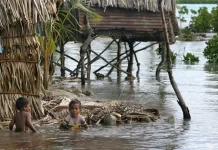
The report warns that sea level rise is already having a significant impact on Fiji’s coastlines and is expected to worsen in the coming decades.
The Intergovernmental Panel on Climate Change predicts Pacific Island countries will experience higher rates of sea level rise, with projections from the Commonwealth Scientific and Industrial Research Organisation (CSIRO) and the Secretariat of the Pacific Regional Environment Programme (SPREP) showing sea levels could increase by between 0.32 metres and 0.47 metres by 2070.
From 1992 to 2024, sea level rise around Fiji was measured at between 4 millimetres and 5 millimetres per year, significantly above the global average of 3.2 millimetres per year. Monitoring data recorded a localised measurement of 4.1 millimetres per year in 2024.
The report notes that low-lying villages are already experiencing regular flooding and coastal erosion, underlining the urgent need for adaptation measures.
To help address these challenges, the Fiji Government has received support through ADB’s Building Coastal Resilience through Nature-based and Integrated Solutions Technical Assistance programme.
The proposed solution combines traditional coastal engineering with nature-based approaches, including rock seawalls built with locally sourced materials and large-scale mangrove restoration.
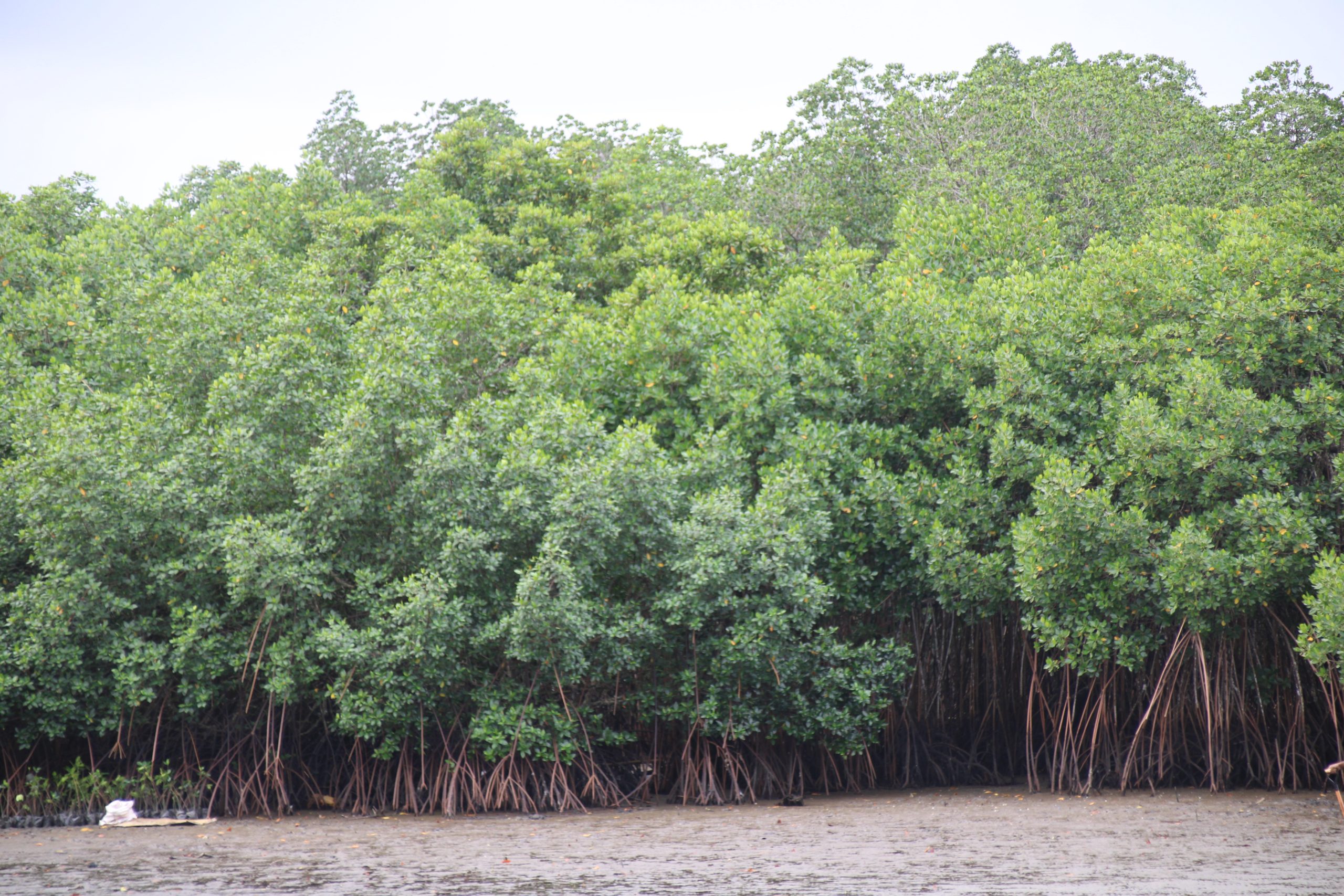
According to the report, mangroves play a critical role in protecting coastlines by trapping sediment, reducing wave energy and providing habitat for marine life.
“Mangroves not only contribute to food security by providing a habitat for fish and birds to nest and live, but they also have a unique ability to capture and retain sediments by reducing the force of water flowing through their dense vegetation.”
The report says mangroves strengthen shoreline protection by acting as a natural buffer against wave action.
However, it cautions that mangroves alone cannot prevent flooding and that a combination of natural and engineered solutions is required.
To identify suitable locations for the project, ADB used satellite imagery, artificial intelligence and machine learning technology to analyse mangrove coverage and shoreline changes.
The Earth Observation for Sustainable Development Forestry Management project, financed by the European Space Agency, supported mapping of mangrove extent and health using Sentinel satellite data.
Another assessment funded through ADB’s technical support programme analysed 13 years of coastline changes using advanced deep-learning techniques.
One of the villages selected for implementation is Namarai in Ra Province.
The report notes that Tropical Cyclone Winston caused extensive damage to the village in 2016, destroying 30 of its 36 houses and severely impacting nearby mangrove forests.
“Along the shoreline fronting the village, there was notable mangrove degradation between 2015 and 2017, attributed to the impact of Tropical Cyclone Winston in 2016.”
Despite the destruction, satellite analysis shows a steady recovery in mangrove density and coverage between 2017 and 2022.
The report says the village is already actively restoring mangroves through a seedling nursery that also supplies nearby communities.
Community consultations played a central role in the design process.
Residents identified coastal erosion, flooding of access roads and inundation around the village meeting house as their main concerns.
Engineers designed seawalls to reduce erosion and wave overtopping during extreme weather events, while mangrove planting in front of the structures will help absorb wave energy.
Additional measures include stabilising seawall crests with vetiver grass, installing one-way valves and swales to improve stormwater drainage, and constructing a raised road to improve access during floods.
The community also influenced the final design by relocating proposed mangrove planting areas to avoid affecting the village rugby training field.
The report says the success of the project depends on selecting sites where environmental conditions can sustain long-term mangrove growth.
“The success of adding a nature-based solution component to a standard seawall development relies heavily on the suitability of the selected sites where natural environmental conditions will likely sustain mangrove growth, a crucial element of the project.”
ADB says the combination of seawalls and restored mangrove habitats will improve living conditions and strengthen the resilience of coastal communities facing climate change.
Construction is expected to begin soon at pilot sites including Namarai, while additional villages are being assessed for future implementation.
The report concludes that integrating nature-based solutions with traditional infrastructure offers a practical pathway for protecting Fiji’s coastal communities from rising seas while preserving vital ecosystems.