


Pacific countries are heading to the UN climate talks in Türkiye with a stronger push for climate finance, ocean protection and action to keep the 1.5°C target alive, following a week of negotiations in Fiji.
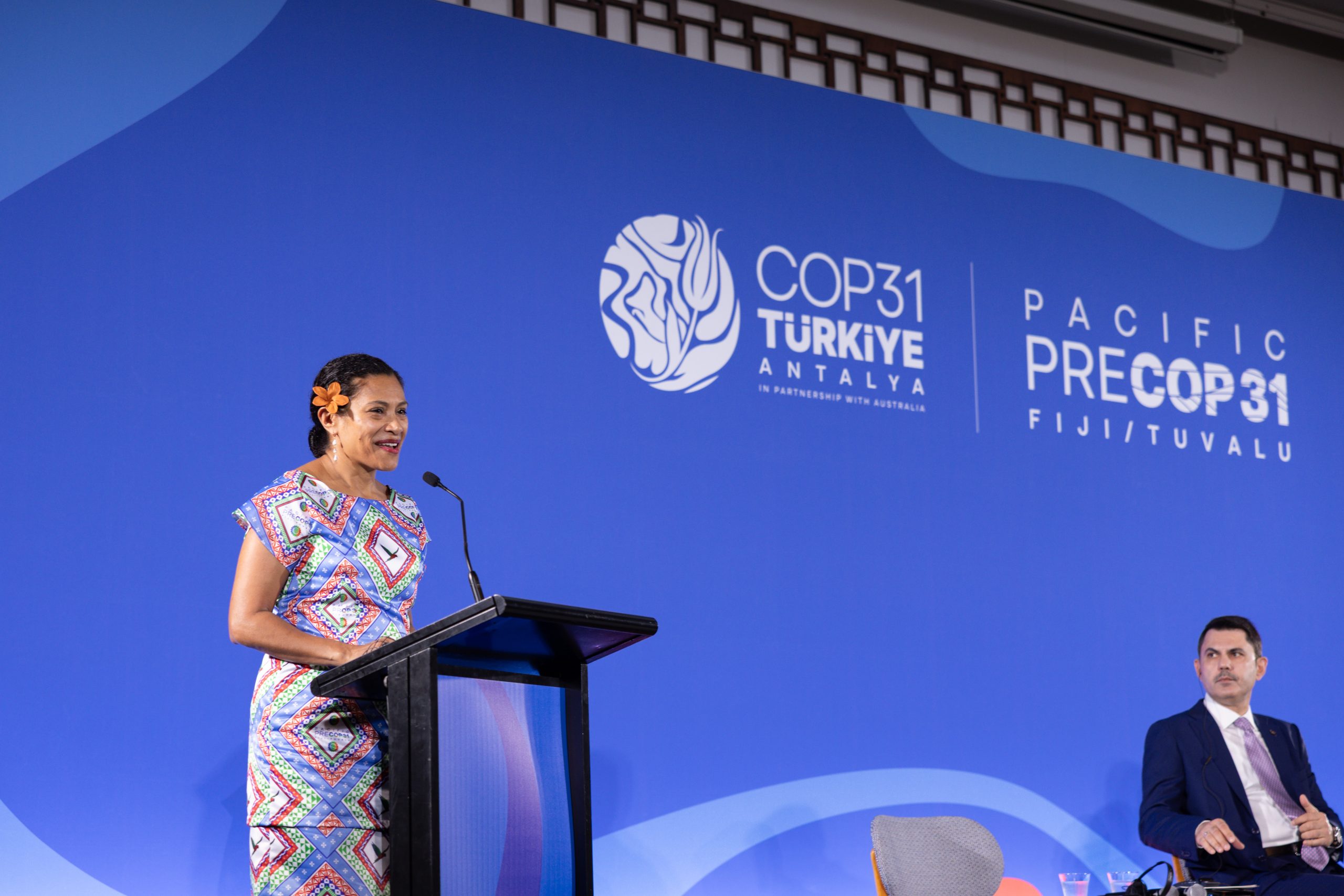
Fiji’s Minister for Information, Environment and Climate Change, Lynda Tabuya, said the Pre-COP meeting in Nadi had helped turn Pacific priorities into concrete commitments, including millions of dollars for climate resilience, renewable energy and infrastructure.
“The Pacific is no longer just raising the alarm. We are leading the global response to climate change,” Tabuya said at a ministerial press briefing in Nadi.
The meeting brought together governments, youth leaders, civil society, women’s groups and other stakeholders, who Tabuya said worked together to turn Pacific priorities into action.
One of the key commitments announced by Fiji is US$10 million for the Pacific Resilience Facility, which Tabuya said would provide grants directly to communities for projects such as seawalls, securing clean water and protecting homes before disasters strike.
Papua New Guinea has also committed 25 million kina (US$5.6 million) to support Tuvalu’s land reclamation work.
Australia announced a AUD$7.29 million (US$5.1 million) renewable energy package for the Pacific, including support for Vanuatu’s transition to renewable energy, as well as another AUD$3 million (US$2.1 million) to protect existing infrastructure in the Pacific.
For Fiji, the meeting also marked progress on its plans to tap international climate finance through carbon markets.
Tabuya said Fiji’s new five-year costed carbon market plan would open new sources of international climate finance for renewable energy and the protection of natural ecosystems.
“Our resource owners have been asking this of us for many years. Finally, it is happening,” she said.
Fiji also announced its National Action Plan for Coral Reef Conservation 2026–2032, aimed at bringing the country’s climate-resilient reefs under sustainable management.
The push for stronger international recognition of oceans is another priority heading to COP31.
Tabuya said the Pacific wants the ocean agenda integrated more firmly into the United Nations framework, arguing that the ocean must have “its rightful place” in the climate agenda.
The issue was highlighted during a visit to Tuvalu earlier in the week, where ministers and media saw the impacts of rising sea levels.
“There on the atoll, surrounded by water on all sides, they witnessed the impact of rising sea levels and met the families displaced by the creeping tides,” Tabuya said.
The meeting also saw the endorsement of the Taku Pakasoa Declaration by 30 regions, which Tabuya said would help mobilise efforts to protect the 1.5°C threshold.
With the Pre-COP meeting now over, the focus shifts to COP31 in Antalya, where Pacific countries will push for the commitments made in Fiji to translate into concrete action.
Tabuya said the Pacific’s priorities at COP31 would be to keep 1.5°C within reach, ensure climate finance reaches the people who need it most, and give the ocean its rightful place in the climate agenda.
She said the week’s achievements had also been rooted in Pacific knowledge and traditions of environmental custodianship, combined with climate science.
“So many of these achievements are rooted in indigenous knowledge, traditions of our custodianship working together with climate science.
“We must look at our international partners for solid commitments and turn this political momentum into delivery,” Tabuya said.