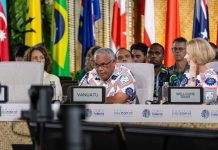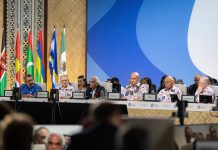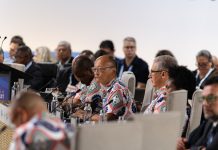
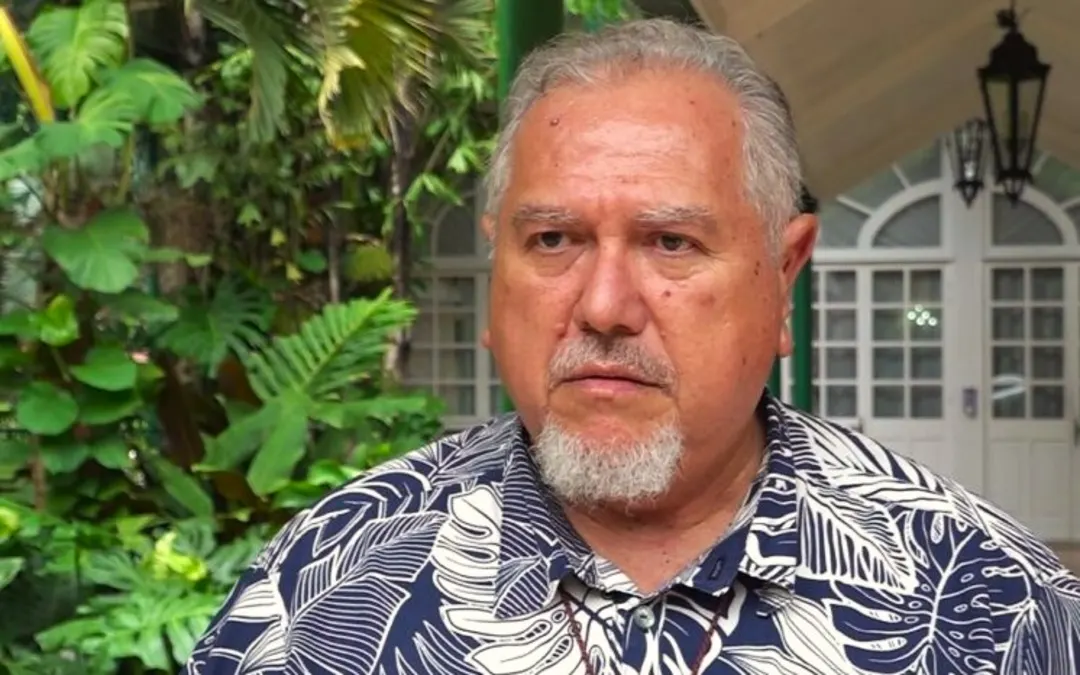
French Polynesia President Mottai Brotherson has called on France to open a United Nations-backed decolonisation dialogue, saying 13 years after French Polynesia was placed on the UN list of Non-Self-Governing Territories, the process remains at a deadlock.
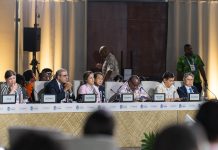
Addressing the UN Special Political and Decolonisation Committee, Brotherson said France had yet to engage in a structured dialogue under UN auspices despite repeated calls since he took office in 2023.
“Sadly, our decolonisation process has reached a deadlock,” Brotherson said.
“13 years after our inscription on the UN list, France has yet to engage in a structured dialogue under the auspices of the UN.”
He said a significant development came on 24 September when the French Polynesia Assembly adopted a resolution supported by its three main political groups – Tavini, Ahipa and Tapura Huiraatira bringing independence and autonomist forces together around the principle that the people should determine their political future.
Six days later, his government formally renewed its call for France to engage in a decolonisation dialogue with the UN involved in the process.
“These initiatives have not opened yet that dialogue. Only France’s willingness to engage can do so,” Brotherson said.
“But they sent an unprecedented message: we may disagree on the destination, but we can and we must agree on the right of our people to choose that destination freely.”
Brotherson said French Polynesia was not seeking another bilateral discussion within the existing French institutional framework.
“Our future cannot remain solely a French domestic matter,” he said.
“We are asking for a true decolonisation dialogue grounded in international law, involving France, the institutions and political forces of French Polynesia, with the United Nations associated with the process.”
He proposed a three-part programme: comprehensive information and education on different political status options; a UN visiting mission to hear directly from the people of French Polynesia; and an agreed pathway towards a democratic act of self-determination through a referendum.
“No predetermined outcome, no unilateral imposition.
“We are not asking France to decide our future. We are asking France to stop preventing us from discussing how we will decide it,” Brotherson said.
Brotherson acknowledged his own position as an independence leader but said the final decision must belong to the people.
“My conviction is known, but the future of our country cannot be decided by one leader, one political party or one government.
“It belongs to our people,” he said.
He also linked self-determination to the legacy of France’s nuclear testing programme, saying France conducted 193 nuclear tests in French Polynesia and that their consequences remained part of the territory’s environment, families and collective memory.
“Truth, justice and responsibility must be part of the relationship we seek to rebuild,” he said.
Brotherson also raised the issue of French Polynesia’s ocean and deep-seabed resources, arguing that decisions over whether and how those resources are used should rest with the people.
“These resources are not merely commodities waiting to be extracted.
“They are the natural heritage of the Maori people and the ocean is our ancestor,” he said.
Brotherson said he preferred political dialogue to litigation but warned that dialogue could not mean indefinite waiting.
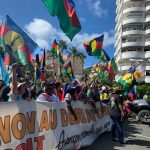
“The recent history of Kanaky New Caledonia reminds us that dialogue must come before violence, not after it,” he said, stressing that he was not making a comparison or a threat.
Turning directly to France, Brotherson said the current UN committee session was the last to be held during President Emmanuel Macron’s two presidential terms.
“When he leaves office, 14 years will have passed, 14 years during which France could have chosen dialogue,” he said.
He challenged France to reconcile its stated commitment to liberty, equality and fraternity with the question of French Polynesia’s political status.
“Can liberty be complete when a people is denied a genuine process to determine its political future?
“And what becomes of fraternity when a hand extended for dialogue remains unanswered?,” he asked.
Brotherson also paid tribute to Oscar Temaru, whom he described as the architect of French Polynesia’s 2013 inscription on the UN decolonisation list.
He also acknowledged the death of Leon Tefo, a member of the Polynesian pro-independence delegation, who died in New York two days before the session.
“For 13 years we have asked, we have sought, we have knocked.
“Now is the time for France to open the door. Let us open the decolonisation dialogue,” Brotherson said.
Responding to Brotherson, France’s representative reaffirmed Paris’ position that French Polynesia already has extensive political autonomy under the French Constitution.
“French Polynesia is an overseas collectivity that has a great degree of political autonomy,” the representative said.
He said the autonomy system allowed the people of French Polynesia to elect their government and representatives and determine public policies in areas including the economy, education, health, tourism, labour and culture.
Only sovereign responsibilities, including defence, remain under the authority of the French state, he said.
France said it supported continued direct dialogue between the French state and French Polynesian institutions and would continue consultations with political stakeholders.
“We are in favour of a constant direct dialogue between state bodies and the French Polynesian territory,” the representative said.
He also highlighted French economic support for French Polynesia, saying transfers from France amounted to about 30 percent of the territory’s GDP, or around €2 billion annually.
France also supports French Polynesia’s participation in regional forums, including the Pacific Islands Forum, and major projects such as the Pacific Games, he said.
“The state continues its engagement and its trust-based dialogue with all French Polynesian stakeholders to guarantee the archipelago’s development,” the representative said.