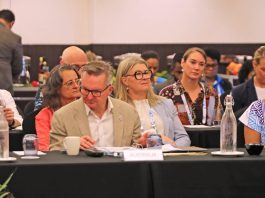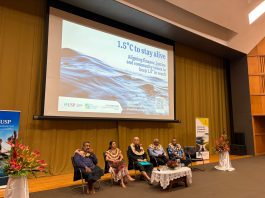

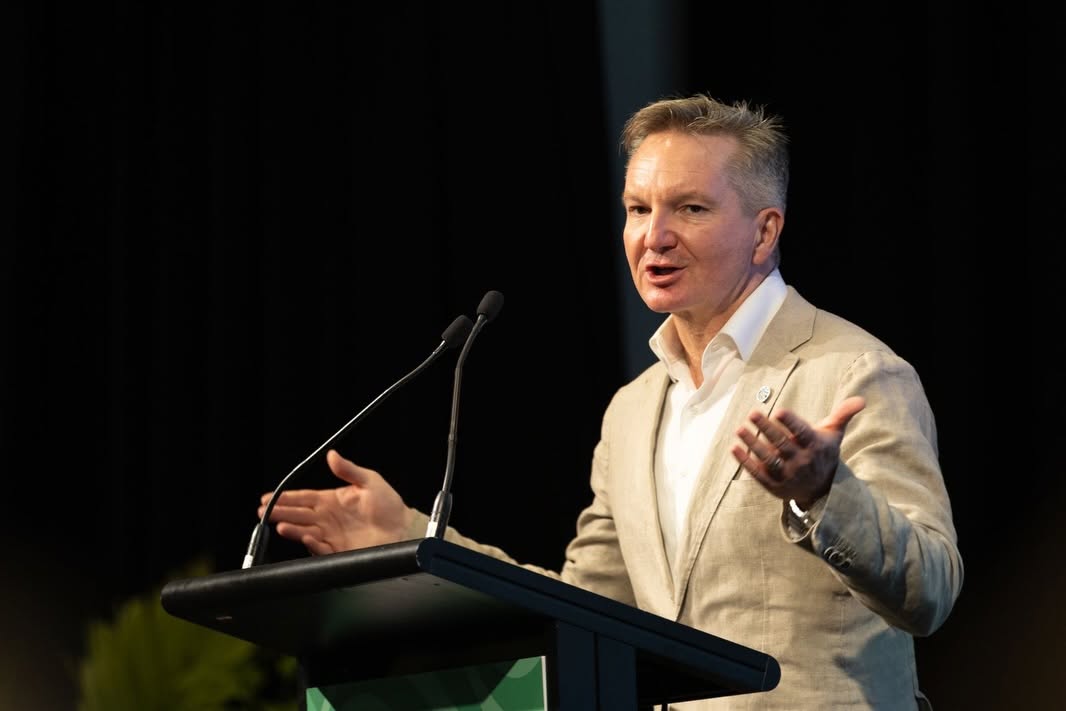
Australia’s Climate Change and Energy Minister Chris Bowen says the Pacific must have a stronger voice in global climate negotiations, as Australia and Türkiye prepare to co-host COP31.
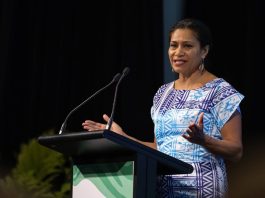
Speaking at the Pre-COP Stakeholder Program’s Vale ni Vanua – Knowledge Exchange in Fiji, Bowen said the Pacific had done little to cause climate change but had the most at stake in efforts to address it.
“The Pacific, which has done so little to cause climate change, and has so much at stake in combating climate change,” Bowen said.
He said the decision to begin the Pre-COP program with a knowledge exchange reflected the need to capture and put to work the knowledge and experience of those dealing with climate change on the front lines ahead of COP31 in Antalya, Türkiye.
“Pre-COP is about exchanging experiences and knowledge and ideas about how we can make COP31 a success. And no one is more important in that process than the Pacific,” he said.
Bowen said climate change was affecting every nation, but its consequences were particularly severe for low-lying Pacific Island countries.
“There are four nations in the world that, on a sober reading of the projections, face the very real risk of being submerged. Three of them are here in the Pacific.”
He said the visit to Tuvalu, which is part of the Pre-COP program, would help put the realities facing Pacific island countries before global leaders.
“Tomorrow we will visit the least visited country in the world. No country has fewer visitors in the world than Tuvalu,” Bowen said.
The visit will bring together leaders and influential figures, including presidents of multilateral development banks, to raise the profile of Pacific climate concerns internationally.
Bowen stressed that the Pacific’s concerns should not be viewed only as regional issues, but as part of a wider global challenge facing vulnerable and small island developing states.
“I see the Pacific not just elevating their own issues, but also on behalf of the world’s vulnerable states, on behalf of the small island developing states around the world,” he said.
Among the key issues, Bowen highlighted the difficulty many vulnerable countries face in accessing climate finance, despite having some of the greatest needs for adaptation.
Bowen also pointed to the importance of oceans in climate mitigation and adaptation, saying ocean issues had not received sufficient attention in previous COP negotiations.
“The fact that some of the nations that need the climate finance for adaptation, the most are those who struggle to get it the hardest
“The fact that oceans, which are so important in terms of potential outcomes, potential mitigation, but also the impacts, have not picked up so strongly in COP negotiations in years past,” he said.
Bowen said the world also needed to confront the reality that the 1.5-degree Celsius temperature goal was at risk of being exceeded, with Pacific nations among those facing the greatest consequences.
“In Fiji, we are again calling on the world to match ambition with delivery,” he said.
Bowen said Australia and Türkiye were aligned on the need for COP31 to focus on implementation and acceleration, rather than simply making further commitments.
“This COP must be about implementation and acceleration,” he said, adding that it should be “transparent, predictable, and inclusive for all.”
He said there was still work to be done to ensure existing commitments on renewable energy and energy efficiency were implemented, while greater emphasis was needed on electrification alongside the expansion of renewable energy.
Bowen also reaffirmed Australia’s position as part of the Pacific family.
“Australia is a proud member of the Pacific family. We share a region, we share an ocean, and we share the future.
“And we all succeed when the Pacific is safe, resilient, and prosperous,” he said.
With more than 190 parties expected to work towards consensus at COP31, Bowen acknowledged the challenges ahead, particularly in an increasingly difficult global environment.
Bowen said Australia would leave “nothing on the field” in its efforts to build consensus at COP31 and ensure the Pacific’s concerns are heard.
“We will leave no stone unturned to do so,” he said.
He expressed confidence that the summit could deliver progress despite the challenging global environment.
“I’m very confident that COP31 will be remembered as one in which, in a difficult environment, the world took a forward step.
“In a difficult environment, the world said multilateralism matters more than ever before,” Bowen said.
He said this should also mean ensuring that “a region which has not had its voices heard, like the Pacific, has had its voices heard when we get to the end of our contest.”