
By Pita Ligaiula in Savusavu
Pacific journalists need to look beyond the corruption itself and examine how corruption and climate-related disasters disproportionately affect women, people with disabilities, young people and other marginalised groups.
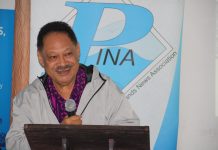
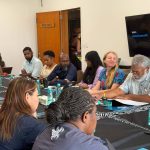
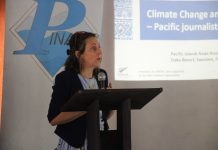
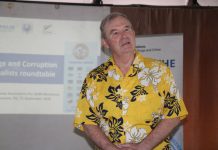
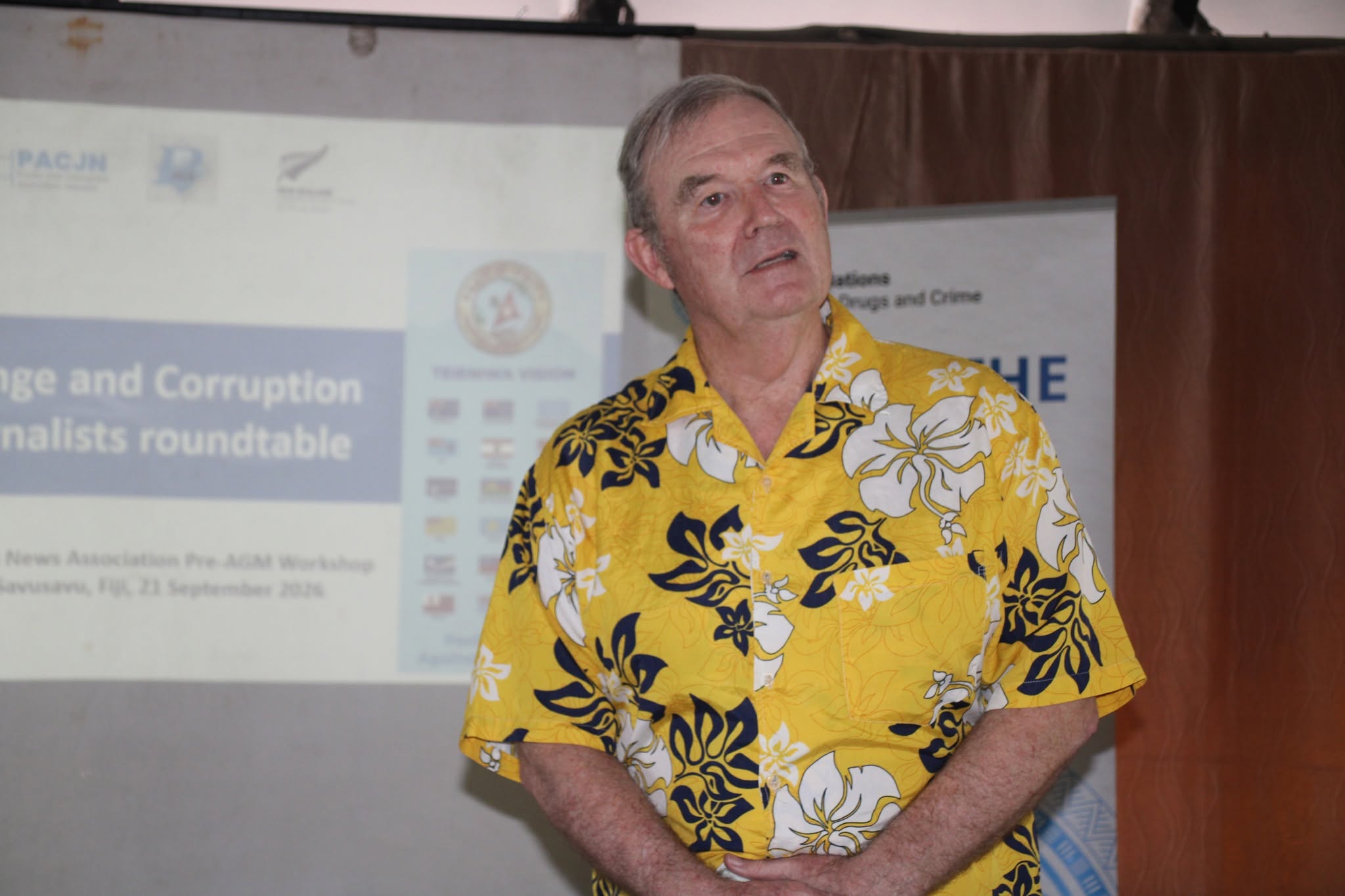
That was the message from anti-corruption consultant John Hyde during a Pre-Pacific Media Summit workshop on Climate Change and Corruption: Mainstreaming Gender Equality, Disability and Social Inclusion (GEDSI) in Anti-Corruption Reporting.
Hyde said inclusion should be central to how journalists report corruption, particularly when vulnerable communities are already facing barriers to accessing government services, justice and decision-making.
“The really important word in there is inclusion,” Hyde told journalists.
He said GEDSI — Gender Equality, Disability and Social Inclusion — was not simply about identifying groups that were excluded, but about finding ways to ensure they could participate equally in society.
Hyde said the same approach needed to be applied inside newsrooms and in the way journalists source and frame stories.
“It wasn’t enough to say that our newsrooms are open to everybody.
“Our stories are open to any source who wants to give it to us. It’s about what are we doing that will help people who are disempowered get their stories to us,” he said.
Hyde said this was critical to ensuring journalism reflected the experiences of the whole community rather than relying on the voices of people who already had access and influence.
He said evidence increasingly showed a link between corruption, discrimination and vulnerability.
People already facing disadvantage could be “hit over the head twice” when corruption was compounded by discrimination that prevented them from seeking redress or accessing services.
Hyde said the issue extended beyond government leaders to the bureaucracy and private sector, where many government functions had increasingly been outsourced.
“The private sector is where so much corruption is happening
“We do have to move a lot of our focus there,” he said.
Hyde said journalists should also examine whether people affected by corruption could access justice equally, including women, youth, people with disabilities and other groups at risk of being left behind.
“It’s not only for people with disabilities. For women, for youth, for those at risk,” he said.
Hyde also challenged journalists to examine their own assumptions when reporting on vulnerable communities, warning against framing people as victims.
He recalled the traditional newsroom approach of “if it bleeds, it leads”, where images of people suffering were often used to attract attention.
“It’s something that a lot of newsrooms, and I think development partners and many people, that we are having to question ourselves now,” he said.
Hyde said journalists could report inequality without stripping people of their dignity.
He cited examples where women facing economic hardship could be portrayed as capable individuals dealing with difficult circumstances rather than simply as victims.
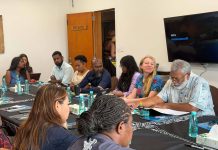
A journalist participating in the workshop said GEDSI was not adequately covered in journalism training and should be introduced earlier in university curricula.
The journalist said reporting should avoid marginalising communities and should focus on what people do rather than defining them by their circumstances.
Hyde agreed that journalists needed to challenge their own assumptions, including situations they might consider “gender neutral” but which could actually be “gender blind”.
The discussion also highlighted the need for journalists to broaden their pool of sources.
Participants said a platform bringing together women experts, people with disabilities, youth and community leaders could help journalists identify new voices for stories.
Hyde said such initiatives could help break the reliance on the same sources and give journalists access to people with valuable knowledge and experience.
He said community leaders, including women leaders, often had significant institutional knowledge about issues affecting their communities that was not reflected in mainstream reporting.
“It’s not a detriment in our newsrooms to be not only looking at a corruption risk in the story, but also the inclusion risk in a story,” Hyde said.
“If we’re not talking to people who don’t have a strong voice or don’t have access to our newsrooms, are we getting the whole story?”
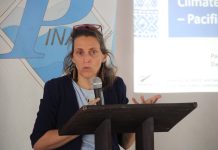
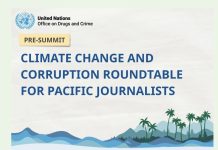
The workshop was part of the Pre-Pacific Media Summit programme examining the links between climate change, corruption and journalism in the Pacific.
Hyde said the shift from simply identifying exclusion to actively creating inclusion should also be reflected in anti-corruption reporting.
“The focus is on a solution.
“And that’s really comforting to hear that sort of resource is being produced,” Hyde said.