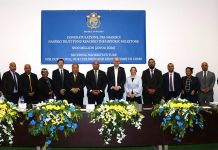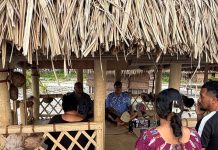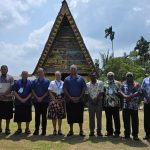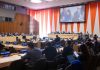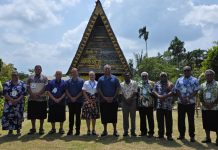

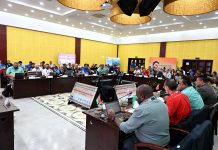
Pacific climate-vulnerable countries and communities are pushing for faster action on Loss and Damage as the 25th meeting of the Executive Committee of the Warsaw International Mechanism (WIM) opens in Majuro, Marshall Islands.
The five-day meeting, from 14 to 18 September, brings global Loss and Damage discussions to a frontline Pacific island nation where rising seas, extreme weather, damage to ecosystems and threats to livelihoods are already being experienced.
The Loss and Damage Collaboration (L&DC) says the meeting must move the WIM from agreed mandates towards practical support for developing countries and communities on the frontline of climate change.
“For communities on the frontlines of climate change, Loss and Damage is not an abstract policy issue,” the L&DC said.
“It is the loss of homes and livelihoods, damage to ecosystems, disruption of cultural practices, displacement, and growing threats to the places people call home and, in many cases, their very lives and livelihoods.”
The Executive Committee, known as ExCom, is expected to consider a wide range of issues, including voluntary guidelines for collecting and managing Loss and Damage data, the role of climate science in policymaking, the work of its thematic expert groups, cooperation with the Santiago Network and funding arrangements including the Fund for Responding to Loss and Damage.
It will also consider preparations for the second Global Stocktake and recommendations for its 2026 annual report.
The L&DC has identified five priorities for ExCom 25.
First, it is calling for the Committee to finalise and endorse voluntary guidelines for enhancing the collection and management of data and information for countries preparing their biennial transparency reports.
The guidelines are intended to help developing countries document Loss and Damage and communicate their needs without creating additional reporting burdens.
The L&DC said the guidelines should be practical, flexible and non-prescriptive, recognising different national circumstances and capacities.
The group is also calling for progress on the Action and Support Expert Group (ASEG), including finalising its membership and endorsing its second plan of action.
It said the group’s work should help developing countries access technical assistance through the Santiago Network and finance through the Fund for Responding to Loss and Damage.
A third priority is ensuring that Loss and Damage policy is grounded in the best available science, including Indigenous knowledge and the experience of frontline communities.
The L&DC said the ExCom should take account of emerging evidence on economic and non-economic loss and damage, as well as developments in the Intergovernmental Panel on Climate Change and other scientific processes.
“Global Loss and Damage policy must be grounded in the best available science and the extensive knowledge held by frontline communities,” the group said.
The fourth priority is advancing a regular State of Loss and Damage Report.
The ExCom is working with the Santiago Network Advisory Board to develop terms of reference for the report, which is expected to capture the scale and changing nature of Loss and Damage, the priorities of frontline communities, financing needs and gaps, and barriers to accessing support.
The L&DC said the ExCom should maintain momentum to ensure the terms of reference are finalised at the seventh meeting of the Santiago Network Advisory Board.
The fifth priority is strengthening coordination across the Loss and Damage architecture, particularly between the WIM, Santiago Network and Fund for Responding to Loss and Damage.
The L&DC said developing countries should not have to navigate separate and complex UN processes to access technical and financial support.
“By working together seamlessly, these bodies can help developing countries more easily access the technical and financial support available to them under the UNFCCC and its Paris Agreement,” it said.
ExCom 25 will also consider comprehensive risk management and compound risks, with the Committee expected to endorse an updated plan of action for its Technical Expert Group on Comprehensive Risk Management.
The work will focus on compound risks and cascading impacts, reflecting the interconnected nature of climate-related threats faced by vulnerable countries and communities.
The Committee is also expected to decide whether to prepare a synthesis report for the second Global Stocktake.
If agreed, an intersessional working group would be established to prepare the report ahead of the March 2027 deadline.
The L&DC said the report would provide an opportunity to document the growing economic and non-economic Loss and Damage experienced by developing countries and frontline communities, as well as the responses, support gaps and resources required.
The Warsaw International Mechanism was established in 2013 at COP19 to address Loss and Damage in developing countries particularly vulnerable to climate change.
Its Executive Committee is responsible for advancing three core functions: strengthening knowledge and understanding of comprehensive risk management; improving dialogue, coordination and coherence; and catalysing action and support, including finance, technology and capacity-building.
ExCom 25 is being held alongside the fourth meeting of the WIM’s five thematic expert groups.
The L&DC said the meeting provides an opportunity to ensure that technical work translates into practical tools that countries and communities can use.
It is also urging the ExCom to develop practical knowledge products on assessing economic and non-economic Loss and Damage and integrating Loss and Damage into national planning instruments, including nationally determined contributions and national adaptation plans.
“ExCom 25 is a chance to strengthen these pathways,” the group said.
“This can also help ensure that frontline experiences inform the work of both the Santiago Network and the FRLD to provide technical assistance and financial support.”
The meeting in Majuro is therefore expected to place a strong focus on closing the gap between knowledge, policy and delivery as climate impacts intensify across vulnerable developing countries.
The L&DC said global climate decisions must remain grounded in the experiences of communities whose livelihoods, cultures, ecosystems and connection to place are already being affected.
“The challenge before the ExCom is increasingly clear: how can the Loss and Damage architecture turn growing knowledge into practical action and support for developing countries?” it said.