
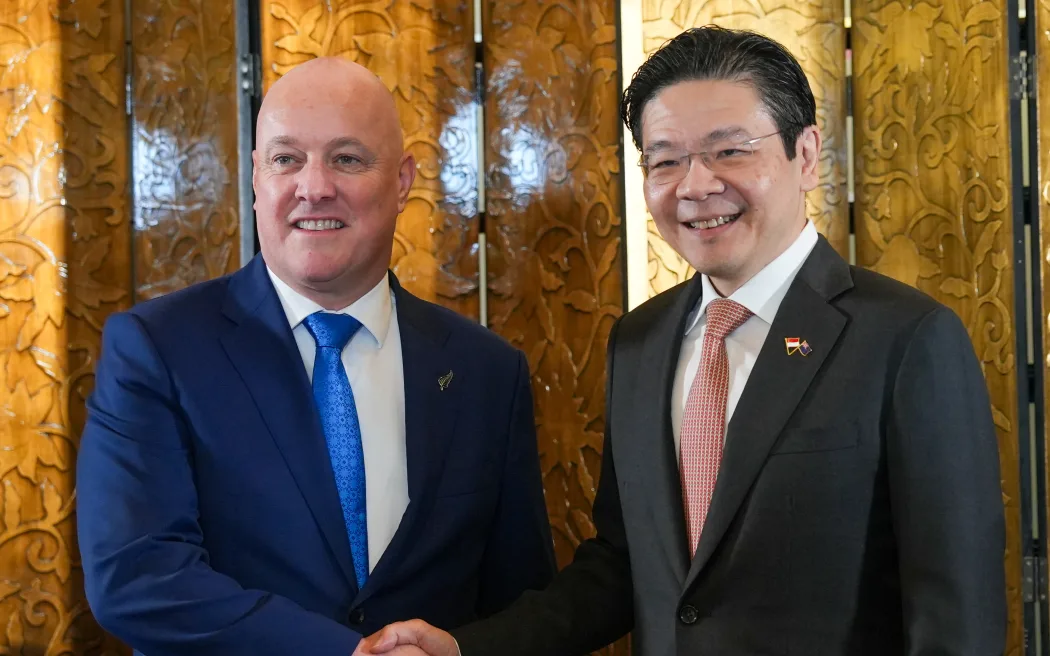
Singapore Prime Minister Lawrence Wong and his New Zealand counterpart Christopher Luxon have called for the immediate reopening of the Strait of Hormuz and pledged to keep trade flowing as global supply chains come under pressure from the Middle East crisis.
In a joint statement following the first Singapore–New Zealand Annual Leaders’ Meeting, both leaders warned that the disruption is already hitting global trade and supply lines.
“The Leaders called for the unconditional, unrestricted, and immediate re-opening of the Strait of Hormuz.
“The closure of the Strait of Hormuz is having a significant impact on global supply chains, particularly on oil, gas and petrochemical products as well as essential goods and critical downstream derivatives such as fertilisers and plastics for packaging.”
They said the impact is being felt across the region.
“These impacts are being felt heavily in the Indo-Pacific and Pacific regions.”
The two countries also committed to avoiding protectionist measures.
“We will refrain from imposing trade-restrictive measures on essential goods.”
They said supply chains must remain open despite the crisis.
“We will ensure that trade lines remain open, including via land routes, air and sea freight, to facilitate the flow of energy supplies, including petroleum oils, and other essential goods.”
Both leaders urged other countries to follow suit.
“We call on other trading partners to join us in ensuring global energy supply chains are kept open.”
The statement comes amid rising global uncertainty, with both leaders stressing the need for cooperation.
“As small, open, outward-looking economies, we are strong advocates for a stable, resilient and rules-based global system underpinned by international norms and rules that support the free movement of goods and people.”
They also called for a resolution to the Middle East conflict.
“We called on the parties to uphold their commitment to the ceasefire and work to find a permanent negotiated solution to this conflict.”
The meeting marked the first under the Comprehensive Strategic Partnership launched in 2025, with both sides highlighting progress in strengthening economic and supply chain cooperation.
“The Leaders reaffirmed the excellent state of our bilateral relations, underpinned by deep mutual trust, shared strategic interests and a shared commitment to an open and inclusive international order.”
They welcomed a new agreement aimed at securing essential supplies.
“The AOTES is the first-of-its-kind, legally binding bilateral agreement to enhance supply chain resilience and to help ensure the continued flow of essential supplies, including food, fuel, chemicals, construction and healthcare products.”
The leaders said the deal will provide stability for businesses and consumers.
“This will provide consumers and companies with greater confidence and stability.”
They also highlighted cooperation in food security, healthcare and financial systems, including new agreements to streamline trade and improve pandemic preparedness.
On defence, both sides signalled plans to deepen cooperation.
“There is clear desire and intent on both sides to expand our cooperation into new and emerging areas, as our militaries operate more common platforms and face similar challenges.”
They reaffirmed support for global trade systems and regional frameworks.
“They affirmed our shared determination to strengthen the WTO and the rules-based multilateral trading system.”
The two leaders also signalled closer regional engagement.
“In our respective capacities as the incoming Chairs of the Pacific Islands Forum (PIF) and ASEAN in 2027, the Leaders agreed to explore ways to enhance ASEAN-PIF relations and foster inter-regional cooperation.”
They reiterated commitment to international law and sovereignty.
“The Prime Ministers reaffirmed their commitment to working together to strengthen the United Nations and support a resilient, rules-based multilateral system that underpins global stability and prosperity.”
Both leaders said they will continue to work closely amid global uncertainty.
“The Leaders reaffirmed their resolve to navigate the future together, in line with the vision set out in the CSP, to shape a resilient and forward-looking partnership that benefits our nations, our peoples and our region.”