

Forum Foreign Ministers are calling for stronger and more sustainable financing for gender-based violence prevention, while backing new regional action on disability rights, health, education and early childhood development.
Ministers agreed that lack of sustainable financing remains the main barrier to expanding gender-based violence prevention programmes across the Pacific.
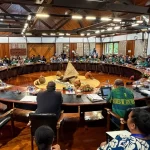
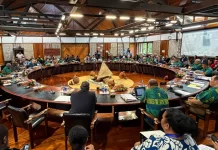
The issue was among the key outcomes of the 2026 Forum Foreign Ministers Meeting in Suva last week, where Ministers reviewed progress on people-centred development and regional efforts to advance gender equality and social inclusion.
Ministers agreed to convey guidance from the Pacific Islands Forum Women Leaders Meeting to Forum Leaders, consistent with commitments under the revitalised Pacific Leaders Gender Equality Declaration.
They highlighted the need for gender-based violence prevention priorities to be included in national planning, gender-responsive budgeting and public investment decisions.
Ministers also recognised the opportunity to use climate and green finance to strengthen gender-based violence prevention.
They encouraged the inclusion of gender-responsive and inclusive measures in climate finance proposals and resilience planning.
They also stressed that renewed commitment to women’s political leadership would help advance the 2050 Strategy for the Blue Pacific Continent.
Forum Foreign Ministers endorsed the refreshed Pacific Framework for the Rights of Persons with Disabilities for consideration and endorsement by Forum Leaders at the 55th Pacific Islands Forum Leaders Meeting in Palau.
Ministers welcomed progress across the People-Centred Development agenda and noted stronger coordination of regional action on gender equality, disability inclusion, health, education and early childhood development.
Ministers also noted an update from Tonga on its whole-of-government approach to strengthening the reintegration of returned nationals.
Tonga encouraged consideration of the wider regional implications of reintegration policies and called for practical cooperation on information sharing, reintegration support and community resilience.
Non-communicable diseases were also identified as a major human development challenge in the Pacific.
Ministers noted with concern the findings of the 2024 Review of the Pacific NCD Roadmap and encouraged Members to strengthen whole-of-government and whole-of-society approaches to NCD prevention and control.
They also supported Education Ministers’ call for closer collaboration between the education and health sectors to strengthen health and wellbeing in schools.
This includes early detection and intervention to ensure timely responses to health issues affecting students.
Ministers reaffirmed the Leaders’ decision that the Conference of Pacific Education Ministers provides the oversight mechanism for reviewing the regional education architecture.
They acknowledged Education Ministers’ commitment to further develop the Pacific Regional Education Framework policy and implement its second phase, including responses to emerging education issues.
Ministers also noted progress on early childhood development and a proposal to develop a regional Early Childhood Development and Status of Pacific Children Report in 2027.
The outcomes place gender equality, disability inclusion, health, education and early childhood development at the centre of the Forum’s people-centred development agenda.