



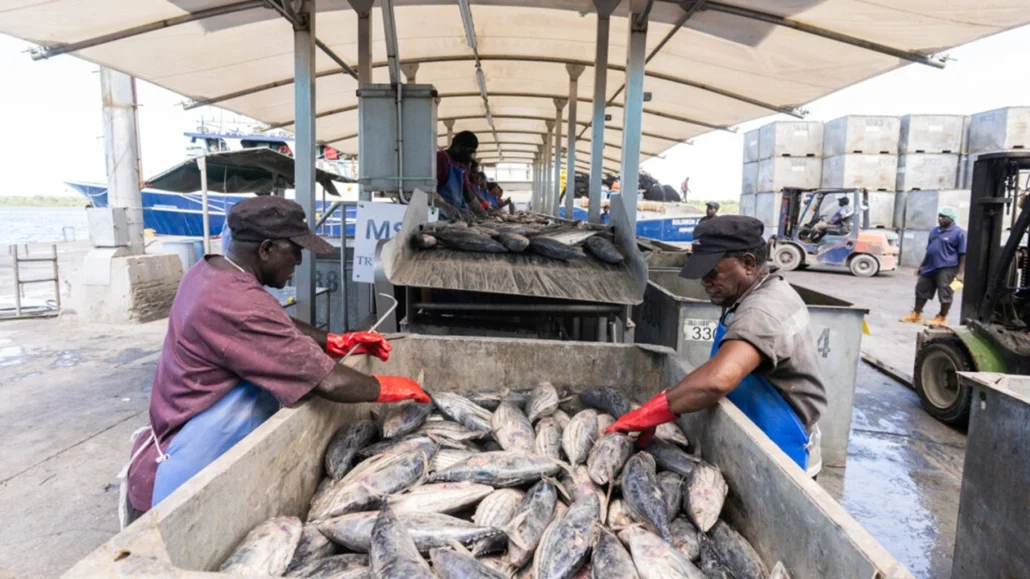
All four key tuna stocks in the Western and Central Pacific remain healthy, while Pacific nations have strengthened fisheries management, reduced illegal fishing losses, and advanced regional cooperation, according to the Pacific Islands Forum Fisheries Agency (FFA) Annual Report 2024–2025.
The report says the 2024–2025 period marked a year of strong performance across all six strategic outcomes of the FFA Strategic Plan 2020–2025, with members and development partners making progress in sustainable fisheries management, offshore fisheries rights, economic development and institutional strengthening despite environmental, geopolitical and economic challenges.
In the foreword, Director-General Noan David Pakop said the agency is entering a critical period as it prepares its next five-year strategic plan.
He said the ongoing Independent Refresh and Performance Review would help ensure the FFA remains fit for purpose and continues to deliver results for members in a changing regional environment.
Reflecting on the past year, Pakop said members had made strong progress in sustainable fisheries management.
“As a result of our collective efforts, our four key tuna stocks – skipjack, yellowfin, bigeye and albacore – remain in a healthy state. New reference points and targets were also set, laying stronger foundation for long-term sustainability. Together we have achieved something exceptional in global fisheries management; this is not only a win for the Pacific, it is a milestone of global significance,” he said.
Despite the gains, Pakop said the region continues to face the challenge of ensuring more economic benefits remain in Pacific Island countries.
The report notes that only around 15 percent of tuna caught in the region is processed or handled onshore in member countries, highlighting the need to retain more value from Pacific fisheries.
The FFA also reported progress in tackling Illegal, Unreported and Unregulated (IUU) fishing through stronger surveillance and monitoring systems. Estimated losses from IUU fishing have fallen by more than 50 percent since 2016, supported by regional monitoring, control and surveillance operations and new electronic compliance tools.
On fisheries sustainability, the report says all Western and Central Pacific tuna stocks were assessed as not overfished, with no overfishing taking place during the reporting period. Target Reference Points (TRP) have been adopted for skipjack and South Pacific albacore, while work continues on similar measures for bigeye and yellowfin tuna.
The report also highlights progress in climate resilience, including implementation of the FFA Climate Change Strategy, expanded electronic reporting, improved bycatch mitigation measures and stronger science-based fisheries management.
Looking ahead, Pakop said the agency will focus on helping members expand domestic fisheries industries and increase processing capacity so more benefits stay within the Pacific.
“My focus will be on deepening engagement with our Members to better support their national development priorities.
“This includes identifying and strengthening development pathways through fisheries, guided by a cross-sectoral approach. Central to this effort is expanding domestic processing capacity, grow national fisheries industries, and unlocking greater value from our tuna resources to ensure that more of the benefits remain within the region and directly contribute to the wellbeing of our people,” he said.
The report says the achievements during the reporting period will help shape the FFA’s Strategic Plan 2026–2030 as the agency continues working with members to strengthen sustainable fisheries management and regional cooperation.