
Forum Secretary General Baron Waqa has warned that growing geopolitical tensions and a widening range of security challenges are testing the region’s peace and security architecture, as he called for stronger coordination among national security agencies across the Pacific.
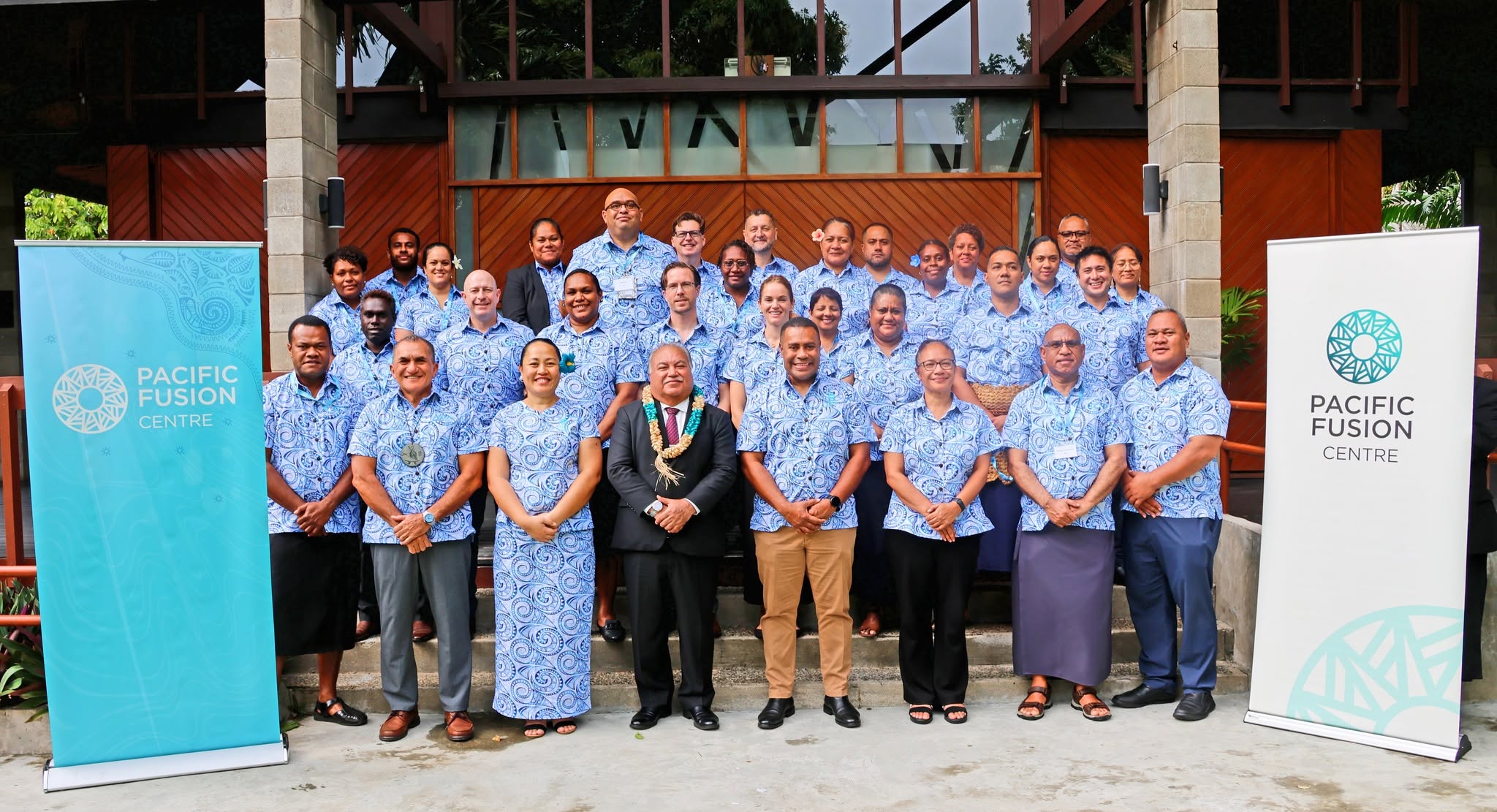
Opening the Pacific Fusion Centre National Security Coordinators Roundtable on Thursday, Waqa said the Pacific was operating in an increasingly complex environment marked by global instability and interconnected security threats.
“We meet at a time of growing complexity in our region and across the globe.”
“There is multiple flashpoints and shifting geopolitical dynamics around the world that are reshaping the strategic landscape,” he said.
Waqa said these developments were placing pressure on the multilateral system that has long supported regional peace and security.
“These shifts are placing added strain on the multilateral system that has long underpinned our collective peace and security.”
He said Pacific countries also continue to face a broad range of challenges, including climate change, rising energy costs, transnational organised crime, illegal, unreported and unregulated fishing, corruption, cyber threats, non-communicable diseases and water security.
“These dynamics require us to continually assess whether our regional peace and security architecture is coherent, flexible and responsive enough to respond to these challenges.”
Waqa told National Security Coordinators that their role was becoming increasingly important as the threat environment evolves.
“And as our threat environment evolves, the role of national security coordinators becomes increasingly vital.”
“You are central to strengthening national preparedness, supporting whole-of-government responses, and ensuring that regional commitments are translated into effective action at national level,” he said.
The Secretary General said the Pacific Islands Forum was continuing efforts to strengthen regional security governance through ongoing reforms and policy development.
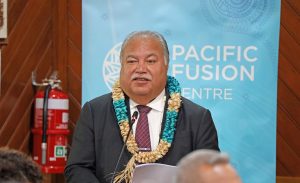
“In support of these priorities, the Pacific Islands Forum continues to strengthen regional security governance to ensure that our mechanisms remain fit for purpose.”
“And I am pleased to note that we are doing this through the Review of the Regional Architecture, and through the development of the Regional Peace and Security Action Plan 2026-2030, which is close to being finalised,” he explained”
However, Waqa said a major challenge remained the lack of alignment between regional security mechanisms.
“But a key challenge that remains is the disconnect across the range of regional peace and security mechanisms and meetings, all of which are intended to support the delivery of Leaders’ decisions yet often operate in a siloed way.”
He described the National Security Coordinators’ Roundtable as an important platform for strengthening regional coordination and identifying emerging risks.
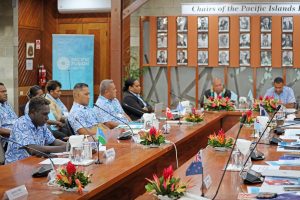
“This National Security Coordinators’ Roundtable is an important part of the broader ecosystem.”
“It provides a space for national security officials to exchange views, strengthen coordination, and identify emerging risks across the region.”
“And it is key to the implementation of the regional peace and security action plan,” he said.
Waqa noted that despite its value to Forum members, the Roundtable is not currently a formal component of the Forum’s peace and security architecture.
“But while it is highly valued by Members, this convening is currently not formally a part of the Forum’s peace and security architecture.”
He said there was value in considering how the forum could be more closely aligned with existing Forum processes.
“As Members continue to consider the evolution of the region’s peace and security governance, there is merit in exploring how this Roundtable could be more closely aligned to Forum processes.”
Waqa told participants that Pacific countries were facing converging threats with direct consequences for communities across the region.
“We meet here at a pivotal moment. Converging threats confront our Blue Pacific Continent and test our collective resolve and our national capacity, with direct implications for the wellbeing of our people.”
He said these challenges required countries to balance national priorities with regional commitments under existing Pacific frameworks.
“These realities require us to remain attentive to our national priorities while deepening our collective efforts to uphold the commitments set out in the Boe Declaration, the Ocean of Peace Declaration, and the vision of the 2050 Strategy for the Blue Pacific Continent,” he said
Waqa urged participants to continue sharing experiences and strengthening cooperation.
“More than ever, we must learn from one another, share practical experiences, and work in a spirit of Pacific solidarity to strengthen our regional responses.’
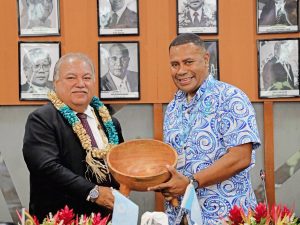
“As we look ahead, our focus must remain on delivering tangible outcomes for Pacific people.”
The Forum SG also called on participants to engage constructively and remain united in addressing the region’s security challenges.
“I encourage all participants here to engage constructively in the discussions today. Remain united in purpose and draw strength from our shared values.”
“The future of our Pacific people depends on our collective ability to secure a peaceful, resilient, and prosperous Blue Pacific now and for the generations to come,” said Waqa.