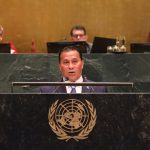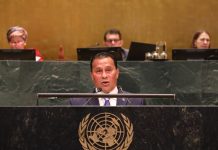

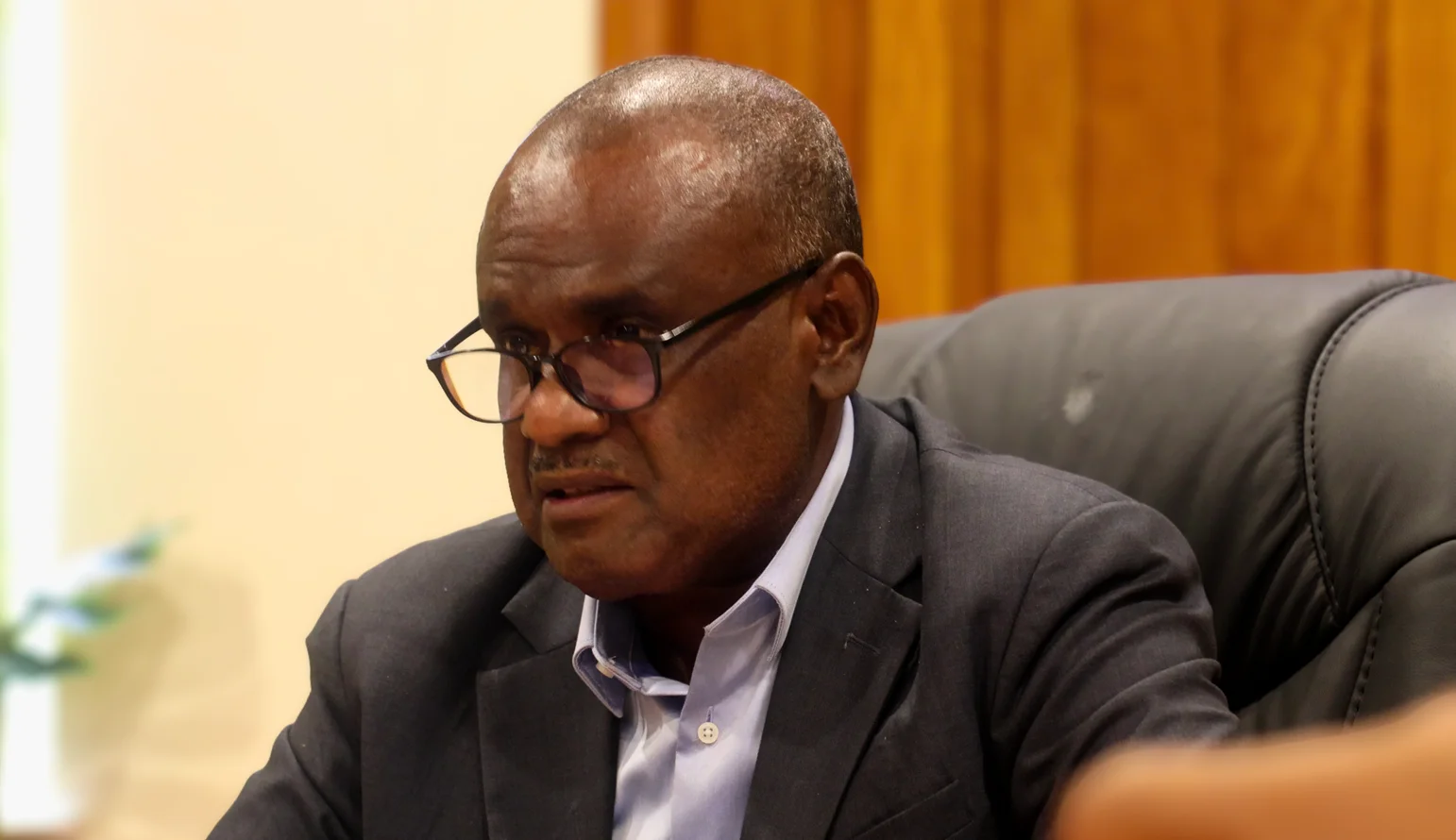
Outgoing Solomon Islands Prime Minister Jeremiah Manele has defended his leadership style, rejecting accusations that he is weak and indecisive and insisting that consultation has always guided his decision-making.
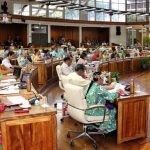
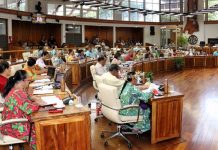
Speaking during the Motion of No Confidence debate in Parliament Thursday, Manele revealed that this was the third motion brought against him since taking office.
He said the first motion was lodged just seven months after he became Prime Minister, while the second came only five months later.
Manele said one of the major criticisms repeatedly raised against him was that he was seen as a weak leader who struggles to make decisions.
However, he told Parliament that his leadership approach has always been based on broad consultation with coalition partners and senior party leaders.
“My style of leadership is based on consultation. I always consult before I make decisions,” Manele said.
He explained that as parliamentary leader of his party, he regularly consulted the party president, caucus chairman and deputy parliamentary leader before making major decisions.
Manele said he also consulted coalition partners within the GNUT government, including leaders of the Kandere Party and Solomon Islands People’s First Party before the latter withdrew its support from the coalition.
Referring to criticism from former Health Minister and former coalition colleague, Manele addressed concerns over the role of the advisory group he had established.
He said on one occasion he chose not to consult the advisory group because he had already consulted party leaders and deputy leaders who were themselves members of the advisory body.
“When I consult widely, I am portrayed as weak and indecisive,” he said.
“If I do not consult and instead make decisions on my own, I am accused of being dependent.”
Manele acknowledged that criticism within coalition politics was unavoidable.
“Either way, there will always be some within GNUT who choose to criticise. Such is the nature of politics,” he said.
Manele also questioned recent court rulings relating to motions of no confidence, warning that the decisions could create political instability and expose governments to outside influence.
Manele said he respected the judiciary but believed the courts had set what he described as a “dangerous precedent”.
“Whilst I understand that the principle of majority rule is a fundamental tenet of representative democracy, it must be interpreted within the boundaries set out by our Constitution,” Manele said.
He argued that the Constitution does not expressly create a duty requiring the Prime Minister to convene Parliament whenever a motion of no confidence matures.
“If this was the intention of the Constitution, it would have been expressly stated,” he said.
Manele warns that the court ruling could leave any Prime Minister vulnerable to constant political pressure from dissatisfied Members of Parliament.
“The addition by the Court will leave the Prime Minister at the mercy of any Member of Parliament who does not get his way to run to Parliament with a motion of no confidence and then force the Prime Minister to call Parliament,” he said.
According to Manele, the Court of Appeal’s interpretation now places a constitutional obligation on the Prime Minister to convene Parliament once such a motion is filed.
He said this newly created constitutional duty could also expose governments to manipulation by external interests.
“This newly created constitutional duty would make the Cabinet vulnerable to state capture by private business interests, criminal syndicates or foreign interests,” he said.
“The Prime Minister would be left at the mercy of power brokers because even when Parliament is adjourned and prorogued, the Prime Minister is duty bound to call Parliament.”
Manele said that Solomon Islands’ Constitution was carefully designed to balance majority rule with the country’s need for political stability.
“Our Constitution is designed in such a way to balance the principle of majority rule with our nation’s need for political stability,” he said.
“This constitutional balance has been tampered with by the Courts.”
The outgoing Prime Minister further claims that the judiciary had entered into the role of lawmakers by creating what he described as a new constitutional duty not expressly provided for in the Constitution.
“I strongly feel the Courts have encroached into the jurisdiction of the Legislature by creating a new constitutional duty in the Prime Minister without any express contextual permission,” Manele said.
“Sadly, this is, in my humble opinion, judicial overreach of the highest order. The role of the judiciary is to interpret the law, not to write it.”
The outgoing Prime Minister also expressed appreciation to public servants for carrying out their duties during his administration.
“For the 50 of us in this House as leaders, continue to work for the betterment of this country. We have a beautiful country. It is important that both sides of the House continue to work together to deliver services to our people going forward,” Manele said.
He urged leaders to place national interests above party and personal interests, noting that Solomon Islands is expected to graduate from Least Developed Country status in 2027 and celebrate its 50th Independence Anniversary in 2028.
“These are important milestones, and I hope the new government will continue the preparations for the country,” he said.
The country has now endured more than 50 days – seven weeks of political uncertainty leading up to the vote.
Opposition Leader Matthew Wale described the outcome as proof that democracy remains strong in Solomon Islands.
“Parliament has expressed very clearly its determination on the question of confidence,” Wale told local media after the sitting.
Wale said Parliament remains the proper institution to resolve political issues through a motion of no confidence.
He also thanked Prime Minister Manele for his leadership in leading the country in the past two years.
With nomination notices for the Prime Minister’s election expected in the coming days, Wale said the new coalition is committed to forming the next government.
He said, it’s important that a new government is formed so that it can deliver to the people.