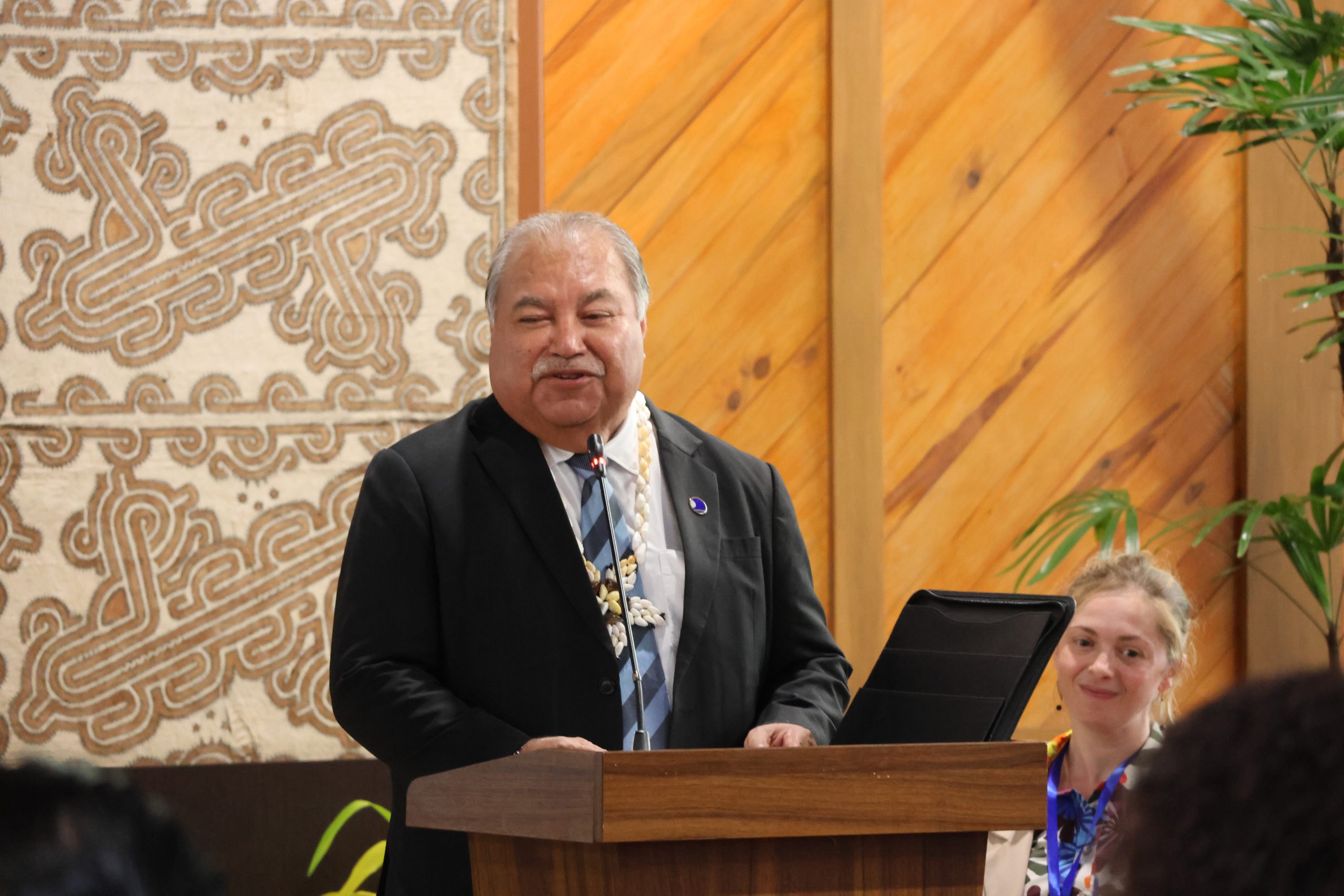
The Secretary General of the Pacific Islands Forum, Baron Waqa, has called for stronger legal capacity across the region as Pacific countries engage more deeply in international treaty processes.
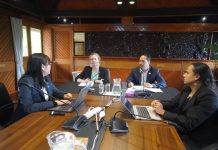
Opening the inaugural Workshop on Treaty Law and Practice in the Pacific at the Pacific Islands Forum Secretariat today, Waqa welcomed regional officials, legal experts and partners gathered to strengthen treaty-making capacity in the region.
“We are, indeed, very privileged to co-host this gathering of practitioners, experts, and partners, committed to strengthening legal capacity in our Blue Pacific region.”
Waqa thanked the Fiji Government and partners for supporting the initiative.
“At the outset, I wish to express my sincere appreciation to the Government of Fiji as host, and to our partners – the Treaty Section of the UN Office of Legal Affairs, the Government of Austria, and the Centre for International Law of the National University of Singapore – for their close collaboration in bringing this important initiative to fruition.”
He said international treaty law has grown significantly in recent decades and continues to shape many global issues.
“The International treaty landscape has expanded significantly in recent decades, producing a complex but significant and evolving body of international law that shapes many matters of international concern.”
Waqa highlighted the Pacific’s contribution to international treaty frameworks, including the South Pacific Nuclear Free Zone Treaty, which marks 40 years since entering into force in 2026.
“Our region has contributed meaningfully to this architecture – from the South Pacific Nuclear Free Zone Treaty (Rarotonga Treaty) – which marks its 40th year of entry into force in 2026, to the recently concluded Agreement to Establish the Pacific Resilience Facility (PRF Treaty), which will be discussed later today.”
He stressed that improving knowledge of treaty law is critical for Pacific nations.
“Deepening our understanding of treaty law and practice is essential if the Pacific is to engage effectively, and meaningfully, in treaty making processes.”
“Doing so secures our regional interests and ensures that binding agreements are properly domesticated.”
Waqa said this work supports the region’s long-term development vision under the 2050 Strategy for the Blue Pacific Continent.
“This is central to the vision articulated in the 2050 Strategy for the Blue Pacific Continent – a vision grounded in regional unity, collective action, and the preservation of a rules-based international order that supports peace, security, and sustainable prosperity.”
He warned that the global environment is becoming increasingly complex.
“The global environment in which we operate today is increasingly complex, and dynamic, characterised by rising geopolitical tensions, rapid technological advancements, and pressures on multilateralism.”
“In such times, our commitment to unity and the principle of international law becomes even more vital.”
Waqa said no Pacific country can address these challenges alone.
“No single Member can address these challenges alone. For our Blue Pacific, our strength lies in coordinated regional leadership, informed by shared priorities, grounded in the 2050 Strategy.”
He described the workshop as a timely opportunity for practical capacity building.
“This workshop offers timely and practical capacity building to support that endeavour.”
Participants will discuss treaty processes and key agreements affecting the region, including the Pacific Resilience Facility Treaty (PRF) and the Agreement on Biodiversity Beyond National Jurisdiction (BBNJ).
“Over the coming days, you will examine key areas of treaty practice — from registration and depositary procedures under the UN Charter, to the implementation of new instruments of particular significance for our region, including the PRF Treaty and the BBNJ Agreement.”
“These developments represent important achievements for the Blue Pacific and the wider global community.”
Waqa urged participants to actively engage during the programme.
“Knowledge gained during this workshop will undoubtedly enable you, as representatives of our Forum Members, to more effectively negotiate, implement, and uphold our obligations to international and regional agreements, whilst strengthening our national systems and the collective influence of the Blue Pacific on the global stage.”
“I encourage you to engage actively and openly throughout this programme.”
“Your national and regional experience, your Pacific perspectives, and your commitment to advancing the rule of law in our region and beyond, are essential,” said SG Waqa.