
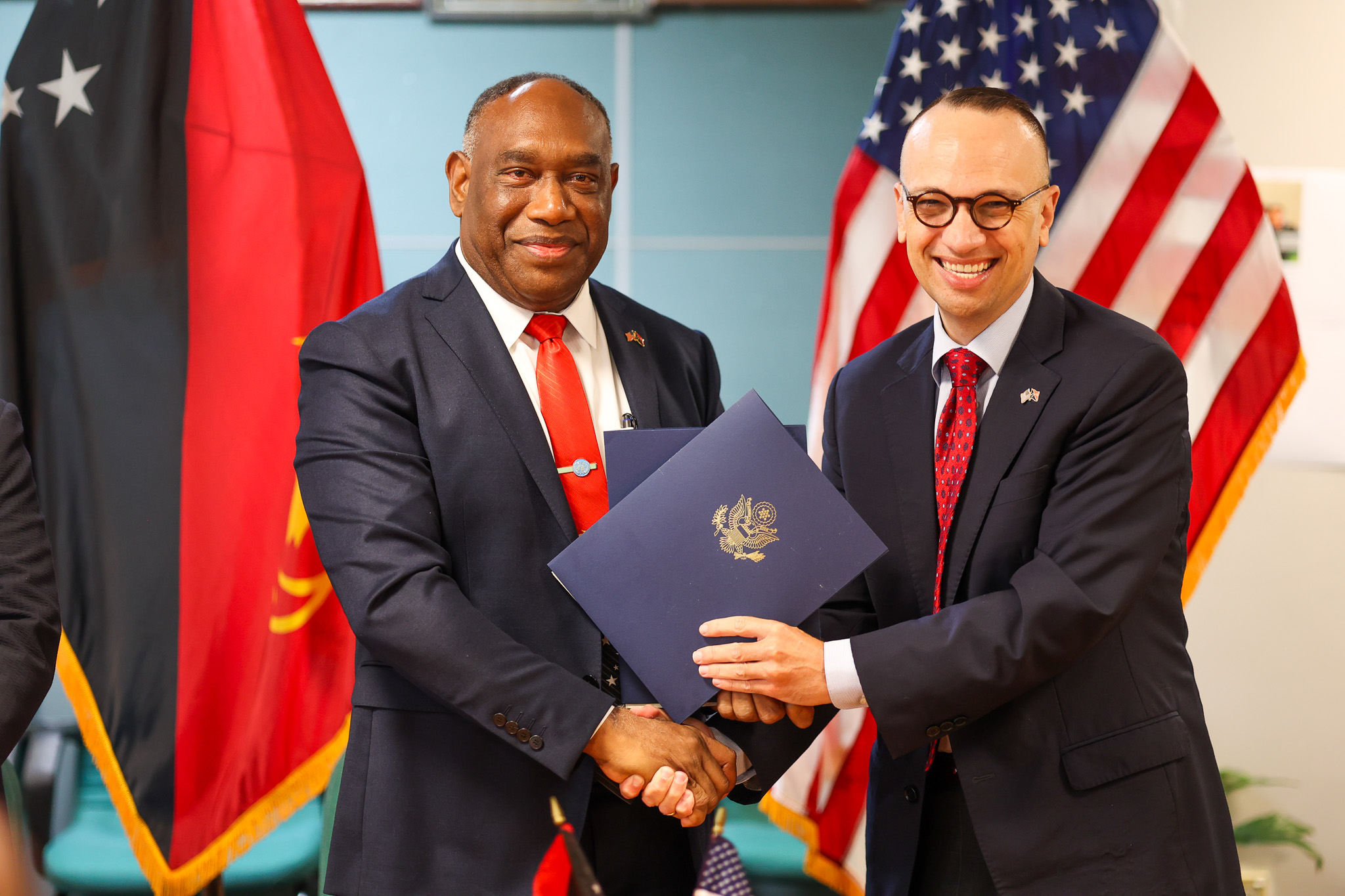
The United States and Papua New Guinea have signed a five-year health agreement aimed at strengthening disease response and building a more self-reliant health system, with Washington pledging millions in funding under its global health strategy.
Announcing the deal, U.S Sate Department Principal Deputy Spokesperson Thomas Pigott said the agreement is part of a broader push by the United States Department of State to reinforce health security partnerships.
“The United States and Papua New Guinea signed a five-year bilateral Memorandum of Understanding (MOU) through the Trump Administration’s America First Global Health Strategy.”
He said the agreement targets emerging health threats and aims to strengthen national capacity to respond quickly.
“The landmark health MOU focuses on effectively addressing emerging infectious diseases and ongoing outbreaks, building and maintaining surge-response capacities, and enabling Papua New Guinea’s government to independently manage new health threats before they spread internationally.”
Under the deal, the United States plans to commit funding through the end of the decade.
“Working with Congress, the United States intends to provide US$15 million through December 2030 through the jointly decided health MOU, building on decades of progress in reducing HIV infections and transmissions in Papua New Guinea,” he said.
Papua New Guinea is also contributing to the initiative, with funds directed at strengthening its health system.
“The government of Papua New Guinea intends to allocate up to US$3 million to disease control programs and strengthen health systems at the national and provincial levels.”
The agreement includes targeted support for global health security.
“Up to US$5 million under the health MOU will directly support global health security funding, advancing our shared commitment to health security in the region.”
Pigott said the deal is designed to deliver practical outcomes and reduce reliance on external support.
“Through the signing of this US$18 million MOU, we are bolstering infectious disease prevention and response by leveraging cost-effective, nationally-driven approaches, with the goal of increasing Papua New Guinea’s health system self-sufficiency.”
The agreement forms part of a wider global rollout of similar partnerships under the Trump Administration’s strategy.
“America First Global Health Strategy Memoranda of Understanding (MOUs) signed so far represent more than US$20.6 billion in new health funding, including more than US$12.8 billion in U.S assistance alongside US$7.8 billion in co-investment from recipient countries, building on decades of progress fighting HIV/AIDS, malaria, tuberculosis, and other infectious diseases around the world.”
Officials say Papua New Guinea joins a growing list of countries engaged in bilateral health agreements with the United States.
“As of 22 April, the State Department has signed 32 bilateral global health MOUs with Angola, Bolivia, Botswana, Burkina Faso, Burundi, Cambodia, Cameroon, Côte d’Ivoire, the Democratic Republic of the Congo, the Dominican Republic, El Salvador, Eswatini, Ethiopia, Guatemala, Guinea, Honduras, Kenya, Lesotho, Liberia, Madagascar, Malawi, Mozambique, Niger, Nigeria, Panama, Papua New Guinea, the Philippines, Rwanda, Senegal, Sierra Leone, Tajikistan, and Uganda.”
The new agreement signals a continued focus on infectious disease control in the Pacific, with both countries aiming to strengthen preparedness and response systems amid rising global health risks.