

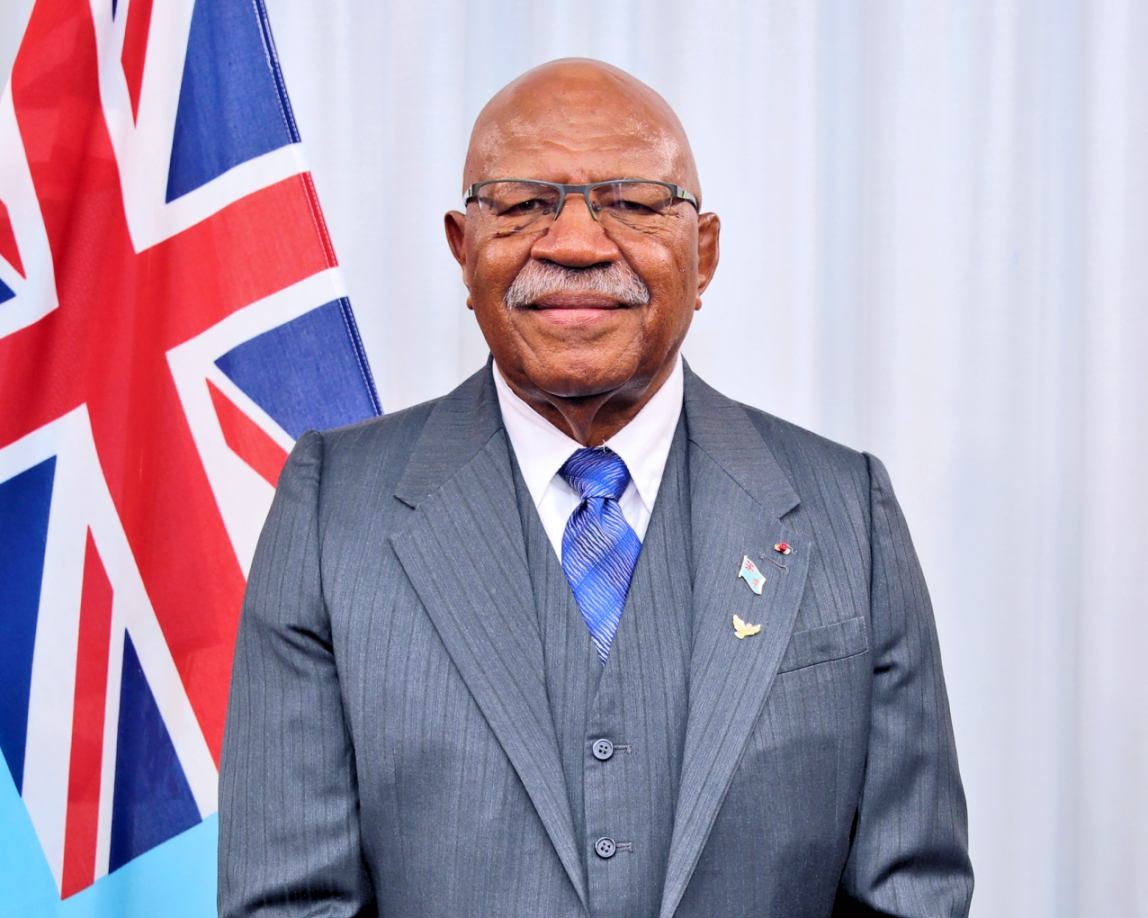
Prime Minister Sitiveni Rabuka says Fiji’s fuel supply is stable but warned more price pressure is coming, announcing a $56 million (US$39.95 million) government response to cushion families, businesses and key services.
Rabuka laid out the current fuel position, saying there is no shortage despite global disruptions.
“As of the 19th of April 2026, Fiji’s fuel supply remains stable. We currently have about 45 million litres of fuel in stock on land, and an additional 22 million litres is expected to arrive before the end of this month. This brings the total available supply for April to about 67 million litres, which is close to half of our total national storage capacity. Daily consumption remains steady at around two and half million litres,” he said in a statement.
He said stock levels will drop by the end of the month but insisted this is routine.
“Based on normal usage, fuel levels are expected to draw down to approximately 40 million litres, or about 29 percent of storage capacity, by the end of April. I want to assure you that this is not a cause for concern. This is part of the normal supply cycle. Storage levels must come down at the end of each cycle to allow the next shipment to be received and discharged safely.”
Rabuka said supply will rebound strongly in May.
“Looking ahead, fuel suppliers have already committed to delivering about 118 million litres in May. Once those shipments arrive, our national fuel stock is expected to rebound to over 59 percent of storage capacity. This means Fiji remains in a stable supply position. There is no shortage. We are currently operating in Phase 1 — a normal supply situation, but under pressure from high global fuel prices.”
He made clear the real issue is not supply, but cost.
“This is not a fuel shortage crisis. This is a global price crisis. Fuel prices have risen sharply due to the war in the Middle East, supply disruptions due to the closure of the Strait of Hormuz and rising costs in global markets.
Fuel is purchased in US dollars, and when global prices increase, those increases are passed through to our domestic market. This is why prices went up on the 1st of April. That decision was not made by Government but by the independent price regulator, FCCC to reflect real purchasing costs. Unfortunately, we anticipate another price rise in May.”
Rabuka said government is stepping in to ease the impact.
“We understand the pressure this is placing on families, businesses, and transport operators across the country. And we have acted.”
“On the 21st of April 2026, Cabinet approved the redeployment of $56 million (US$39.95 million) within the existing 2025–2026 Budget to respond to the impact of the global fuel crisis. This is not new borrowing. This is responsible Government, reprioritising funds from delayed projects to provide immediate support where it is needed most.”
“Our focus is simple: protect livelihoods, maintain essential services, and support the most vulnerable,” he said.
A key part of the response is support for public transport.
“First, we are taking action to keep Fiji moving.”
“Government has allocated $4 million (US$2 million) to support bus operators and ensure there is no disruption to public transport services.
For the next four months, from the 1st of April to the 31st of July, Government will fully absorb an additional 10 percent fare increase on top of existing bus fares. This is in addition to the current 10 percent subsidy already provided to passengers. On top of that, Government will provide a full fuel rebate of 20 cents (US$0.10) per litre to all bus companies during this period. This support ensures that our buses continue to operate and that ordinary Fijians can continue to travel affordably to work, school, and essential services,” said Rabuka.
Energy security is also a priority.
“At the same time, we are acting to keep the lights on.”
“Energy Fiji Limited relies on diesel and heavy fuel oil for approximately half of the country’s electricity generation. To ensure there is no disruption to power supply, Government will provide fuel rebates to EFL for the next four months. This includes 20 cents (US$0.10) per litre on diesel and 12 cents (US$0.06) per litre on heavy fuel oil. This support will stabilise electricity generation and ensure that homes, businesses, and essential services continue to have reliable power during this period.”
The government is also boosting social support.
“We are also focused on protecting those who need help the most.”
“With rising fuel prices increasing the cost of living, Government will provide a temporary 50 percent top-up to all social welfare recipients for three months, from the 1st of May to the 31st of July. This measure, costing approximately $24 million (US$12 million), is designed to give immediate relief to vulnerable households and ensure that no one is left behind during this difficult period,” said PM Rabuka.
Support for farmers is included in the package.
“In addition, we are supporting our rural economy and our farmers.”
“A total of $28 million (US$14 million) has been allocated for a sugar cane price top-up for the 2025 crop season. This will help stabilise incomes for our cane farmers and ensure continued production in one of our key sectors.”
Rabuka stressed the funding comes from within the current budget.
“All of these measures, totalling $56 million (US$39.95 million), are being funded through savings within the existing budget. Due to delays in some ongoing projects, funds have not been fully utilised, and Government has taken the responsible step to redeploy those funds to address this immediate national priority. At the same time, all Ministries, Departments, and Agencies have been directed to implement strict cost-cutting measures. Government is tightening its own belt first.”
He also called on the public to conserve fuel and energy.
“While supply remains stable, we must all play our part. I urge everyone to use fuel wisely. Carpool where possible. Use public transport. Reduce unnecessary travel. Save electricity in your homes. I encourage you to invest in solar lights. These small actions, taken together, make a big difference in protecting our national fuel supply.”
“Let me leave you with this assurance.”
“Fuel is available. Government is acting. And Fiji is prepared.”
“We continue to monitor the situation daily, and we stand ready to take further action if global conditions change.”
“In times like this, our strength lies in our unity, our discipline, and our faith.”
“I ask you to remain calm, to look after your families, and to support one another. Let us also keep our nation in our prayers, and pray for peace and stability around the world,” he said.