

By Makereta Komai, PACNEWS Editor in Sharm El Sheikh
Tuvalu like the rest of the Pacific is not standing idly by, waiting for the world to act – we’ve taken precautionary steps to protect and preserve our statehood and sovereignty, says Simon Kofe, the islands foreign affairs minister.
He joined delegates at COP27 virtually from an island in Tuvalu that’s predicted to be one of the first to disappear.
“Today, I am speaking again from my island country, from a small island that is likely to be one of the first in Tuvalu to be submerged by rising sea levels. Since COP26 the world has not acted, so we in the Pacific have had to act.
“We’ve seen temperature rise remain well above 1.5 degree Celsius, foretelling the imminent disappearance of our islands like this one. We’ve had to take our own precautionary steps through our Future Now project as our land will disappear and we become the world’s first digital nation.
At #COP26: 🇹🇻Minister Hon. Simon Kofe urged us to take bold action to address climate mobility. Today at #COP27 hear Min. @Simon_Kofe tuning in from an islet in 🇹🇻 to deliver an impactful👊 message to 🌎 leaders for action
📺 Watch the video message ⬇️ https://t.co/98mlZe2x36 pic.twitter.com/kTvtgwgioq
— Tuvalu Ministry of Foreign Affairs (@Tuvalu_MJCFA) November 15, 2022
Minister Kofe said given the past experiences of inaction at COP meetings, his government was planning ahead to preserve and protect its culture and state assets through digital means.
“We will recreate them virtually piece by piece to remind our children and our grandchildren what our home was once like.
“Tuvalu is taking bold steps to ensure our statehood and our maritime boundaries are permanently maintained despite the extreme impact of climate change and sea level rise.
“Our digital nation will provide an online presence that will replace our physical presence and allow us to continue to function as a state. We have been working on this initiative for the past year building our capacity to retain and preserve our nation, said Minister Kofe.
He urged Pacific and like-minded countries to urge producers of fossil fuels to end fossil fuel production.
“Without a global conscience and global commitment, we might soon find the rest of the world joining us online, the Tuvalu minister warned.
Joining him in the side event on climate mobility, Fiji’s Ambassador to the United Nations, Satyendra Prasad reiterated the need for Pacific countries to remain steadfast in their fight not to allow the world to cross the 1.5-degree Celsius red line.
“Many have said that 1.5 is the red line that must not be breached here at Sharm EL Sheikh and we agree and concur. 1.5 degree Celsius is the absolute that must not be crossed here. But for the Pacific it is something more than a red line it is our lifeline and you can’t cut off that lifeline for our people.
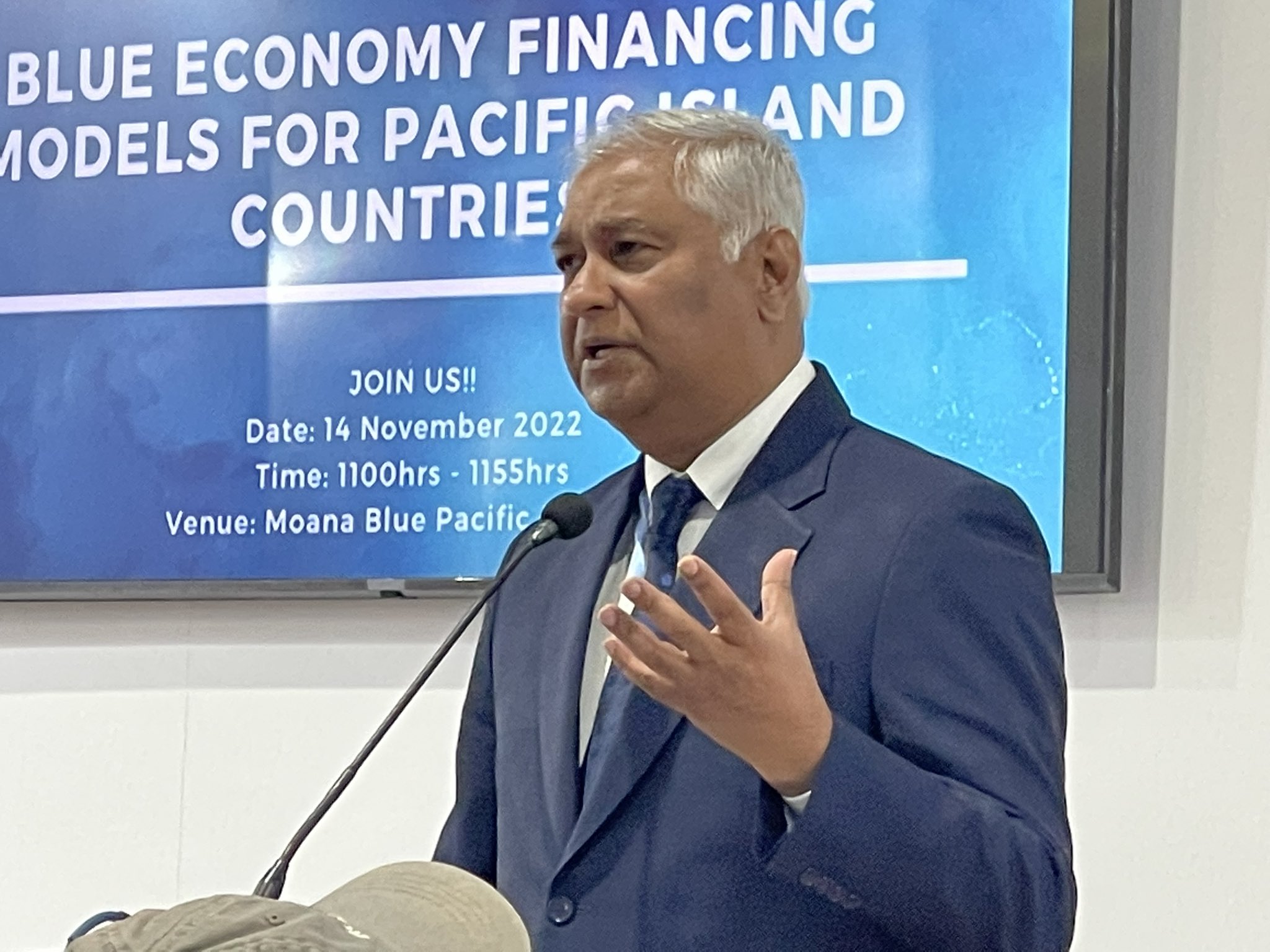
Ambassador Prasad said Tuvalu’s innovative plan to exist as a digital nation is a bold step that responds to the reality that the nation is facing now.
“And God forbid if Tuvalu is to become a digital state, it is taking steps to test the boundaries of international law to continue to exist in digital form should its land become uninhabitable. That is not the future that we wish even on our worst enemies but it’s a sad reality that the Pacific states are beginning to prepare for.
In Fiji, government is preparing for the relocation of 48 villages and communities who are at the frontline of climate change.
“The government has established relocation guidelines that is informing work in understanding migration in the region. Climate mobility is not a future but a living challenge and must be supported with predictable financing, said Ambassador Prasad.
Secretary General of the Pacific Islands Forum, Henry Puna supported calls to maintain the 1.5 degrees’ goal. If it fails, frontline communities in the Pacific will be forced to leave their ancestral homes.
“It’s already happening. The Cateret Islands in Papua New Guinea was the first organised relocation in the Pacific and Kale Island in Solomon Islands and some communities in Fiji have relocated. For atoll nations like Tuvalu, Kiribati and Marshall Islands moving further inland is not an option as there is no other place to move to.
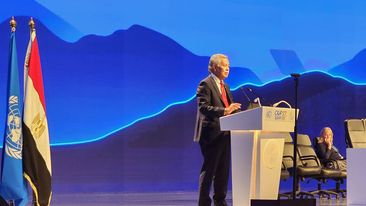
Secretary General Puna said, “It is not just about our survival but our dignity and sovereignty as a nation. Our people are resilient and we are not standing by idly.”
“The region is taking a consensus approach. Consultations have begun on a Pacific Regional Framework on mobility. Once it’s in place, it will help navigate the sensitive issues of climate mobility and migration.
The Pacific Regional Framework on Climate Mobility will help guide governments in addressing very specific legal, policy and practical issues that arise, particularly in the four main types of climate mobility: displacement, migration, evacuations and planned relocation.
SOURCE: PACNEWS