

China has taken a veiled swipe at Australia after Solomon Islands said it would terminate a landmark security agreement with Beijing and pivot to Canberra as its top security partner, in a move that will curb Chinese influence in the strategic Pacific nation.
The secretive security pact between Solomon Islands and China sent shockwaves from Canberra to Washington when it was signed in 2022 and was used by Labor to attack the Pacific credentials of the then Morrison government.
Reports that Solomon Islands will not renew the five-year deal when it expires in April – first reported on Tuesday by The Sydney Morning Herald – are a blow to China’s efforts to expand its footprint across the Pacific and a diplomatic win for Australia.
Asked about Honiara’s decision, Chinese foreign ministry spokesman Guo Jiakun said the international community should pool its efforts to respect the independence of Pacific island countries, “putting development first”, rather than targeting “any third party.”
“China always follows the principle of mutual respect and equality in developing relations with the Solomon Islands. There is no element of geopolitical rivalry or bloc confrontation in cooperation between China and Pacific island countries, including the Solomon Islands,” he said.
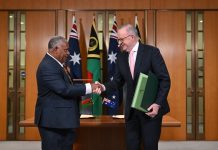
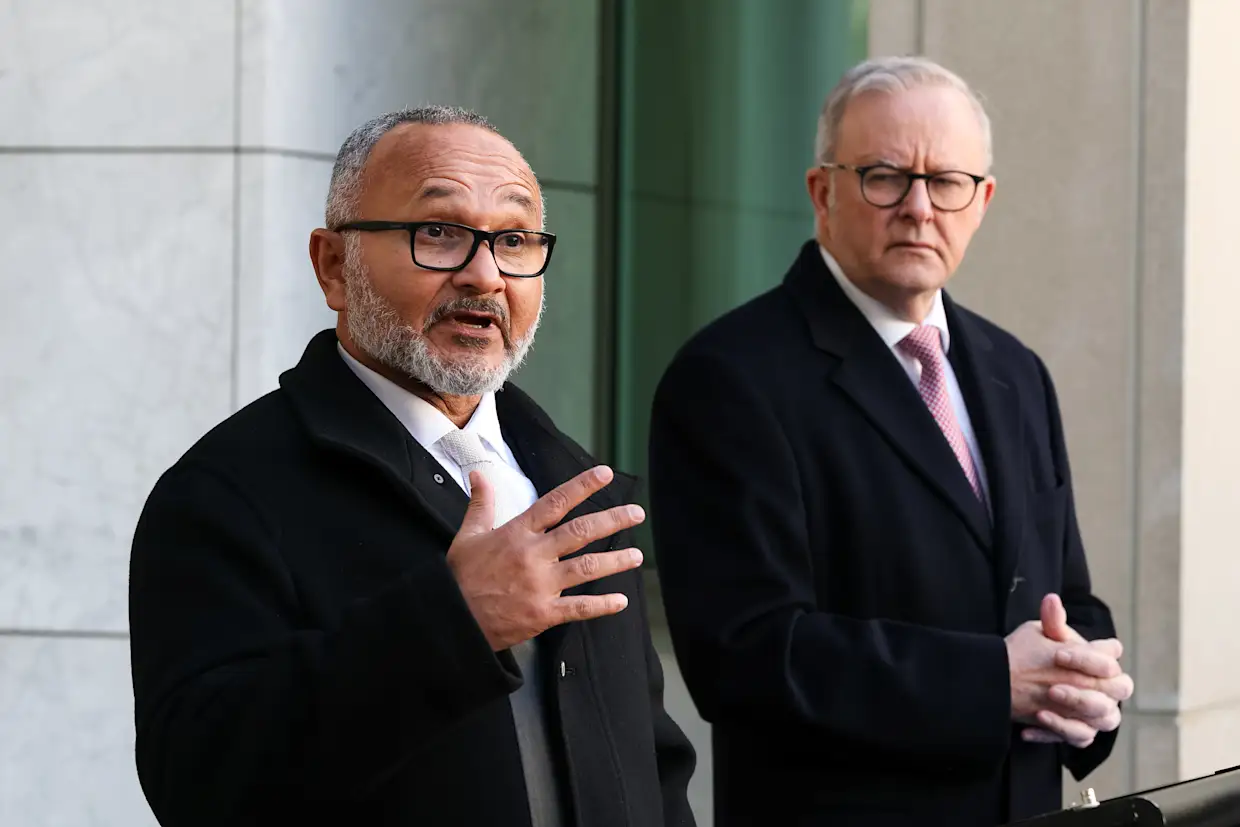
Honiara’s move comes ahead of the expected signing of a “comprehensive” new treaty between Solomons Prime Minister Matthew Wale and Prime Minister Anthony Albanese in Canberra on Wednesday.
The sweeping pact is expected to cover security, health, education, justice, infrastructure and climate resilience, according to In-depth Solomons, which reported Wale would lead a 24-member delegation to Canberra, including 15 cabinet ministers, to meet senior members of the Australian government.
“The size of the delegation reflects the weight both governments are placing on the visit,” the news outlet said.
The ditching of the 2022 security pact will be controversial within the nation’s ruling classes, where relations with China and Solomon Islands’ position on Beijing’s strategic rivalry with the U.S and Australia have long been politically divisive.
The deal was forged under the China-friendly former prime minister Manasseh Sogavare, who warned in a statement that Solomon Islands “must carefully consider what it stands to lose” should it abandon the arrangement.
“China will pursue its national interests. Australia will pursue its national interests, just as the United States will pursue its own,” he said.
“Solomon Islands must also be clear about its own interests. We cannot afford to lose sight of our national priorities while trying to accommodate the expectations of others.”
The Australian government has declined to comment on the details of the new bilateral agreement with Honiara ahead of final negotiations and a ceremonial welcome for Wale and his delegation.
“I look forward to welcoming my friend, prime minister Wale, back to Australia as we continue working together to strengthen the security and prosperity of our region,” Albanese said.
Mike Hughes, director of the defence strategy programme at the Australian Strategic Policy Institute, said he expected the agreement to be broader than just defence co-operation.
Alarm over the 2022 China pact prompted Canberra to race to construct a web of regional treaties and alliances with Pacific Island nations to create what Defence Minister Richard Marles has described as a “ring of security around Australia”.
“The overall goal is one of integrating the Solomon Islands into this broader Australia Pacific arrangement and inoculating the Solomons from the more malign effects or intent of what China is seeking to do in the region,” said Hughes.