

Pacific Island countries are experiencing sea-level rise faster than the global average, while gaps in climate finance, governance and implementation are leaving vulnerable coastal communities exposed, a new Commonwealth report warns.
The ‘Commonwealth Case Studies on Sea Level Rise – Common Themes Report’, updated in 2026, examines the experiences of Kiribati, Papua New Guinea, Tonga and Tuvalu, alongside Guyana in South America.
It found that locally observed sea-level rise across the five countries exceeded the global average of about 3.2 to 3.5 millimetres a year, with Tonga recording 7.3mm annually since 1993 and Kiribati and Tuvalu about 5mm a year.
Guyana recorded rates ranging from 4.7mm to 10.2mm annually along its Georgetown coast.
The report said local conditions, including land subsidence, tectonic movement and coastal erosion, could intensify the impacts of rising seas.
“The practical implication is shared: the design assumptions and return periods on which existing defences and settlements were built are already obsolete,” the report said, calling for adaptation measures based on local sea-level projections rather than global averages.
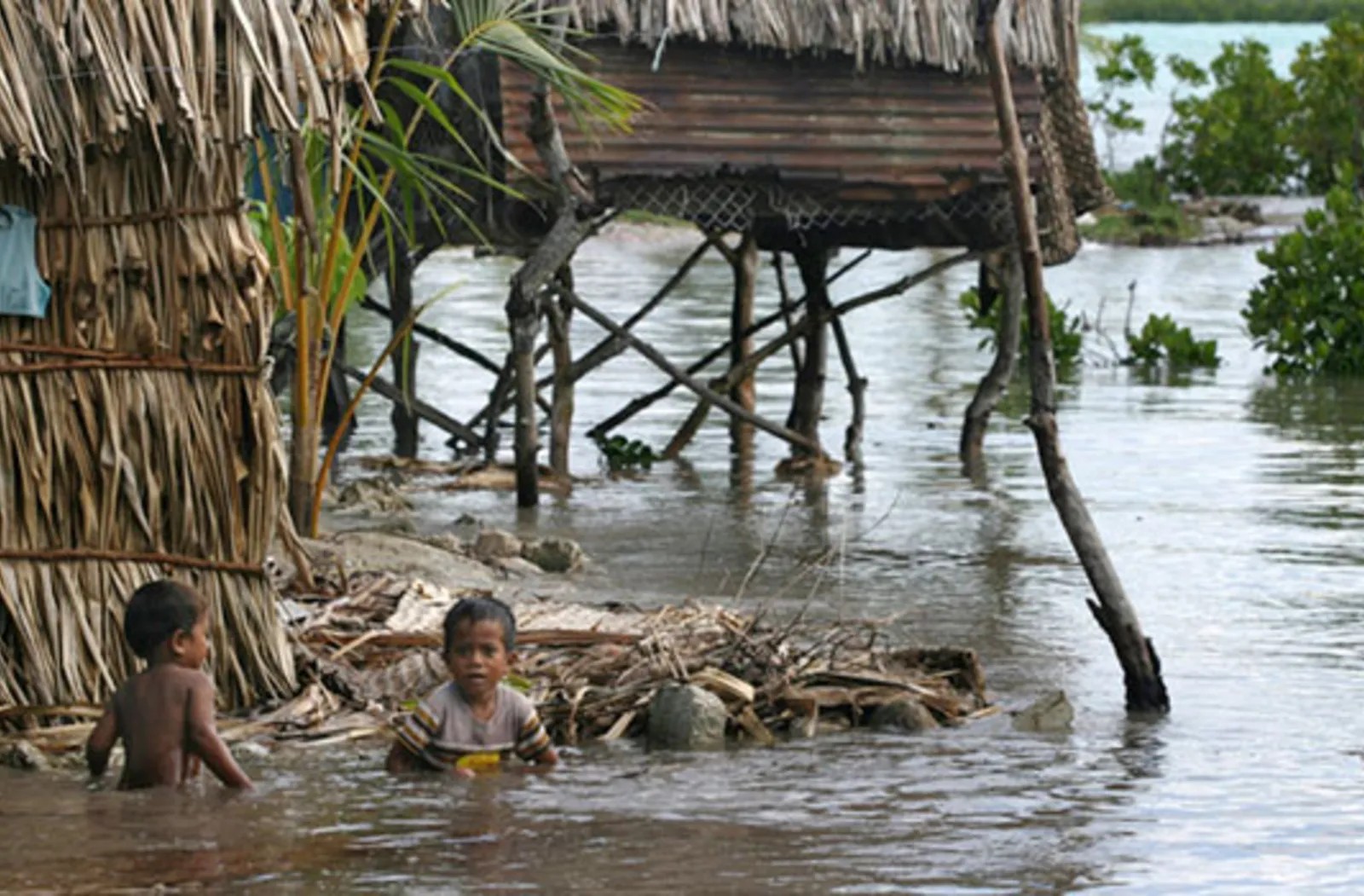
The report found that people, infrastructure and economic activity were concentrated in exposed coastal areas. In Tuvalu, the entire population lives within one kilometre of the ocean, while about 84 percent of Tonga’s population lives within the same distance of the coast.
In Papua New Guinea, about 59 percent of the population lives in maritime provinces, while around 90 percent of Guyana’s population is concentrated on its coastal plain.
Despite these risks, none of the five countries has adaptation governance and financing arrangements adequate to meet the scale of the threat, the report said.
It identified fragmented laws and institutions, poor coordination between national and local governments, dependence on donor funding and a persistent gap between climate plans and implementation as common barriers.
Remote communities face additional challenges because of transport constraints, shortages of trained personnel and limited capacity to maintain projects over time.
The report said sea-level rise must be treated as a development issue, not only an environmental concern, with adaptation incorporated into national development plans, sector policies and government budgets.
It also called for a combination of engineered coastal defences, ecosystem restoration, disaster preparedness and, where necessary, planned relocation.
Mangroves were identified as a widely used nature-based solution because they reduce wave energy, stabilise sediments and provide habitats for fisheries. However, the report cautioned that mangroves must be protected from development pressures and integrated with other coastal management measures.
The country studies highlighted different approaches that could be shared across the Commonwealth. These included Tonga’s Climate Change Trust Fund, community-based mangrove programmes in Kiribati, mangrove monitoring in Guyana and plans to strengthen coastal management institutions in Tuvalu.
The report said climate finance remained a major challenge for four of the five countries, with donor fragmentation increasing administrative burdens and delays between funding approval and disbursement slowing implementation.
It recommended better coordination of external funding, stronger national capacity to access international climate funds and dedicated domestic financing mechanisms for adaptation.
The studies also highlighted the need to address climate-related displacement and loss and damage alongside adaptation and disaster risk reduction.
Papua New Guinea’s experience with relocating communities from low-lying islands showed the difficulties associated with customary land tenure and the lack of clear policies for people displaced by climate impacts.
Kiribati and Tuvalu continue to prioritise adaptation that allows people to remain in their home countries, while also maintaining managed migration pathways as a complementary option.
The Commonwealth Secretariat said the findings would inform its technical assistance to member countries through the Commonwealth Blue Charter, which supports cooperation on ocean governance and climate resilience.
The report recommended stronger coastal monitoring, vulnerability mapping, locally led capacity-building and clearer responsibilities across government institutions.
It said the central challenge was ensuring that adaptation plans were backed by sustained political commitment, adequate financing and effective implementation.
“For the coastal and island nations of the Commonwealth, the sea will keep rising; the task now is to ensure that the pace and quality of adaptation keep ahead of it,” the report concluded.