
By Pita Ligaiula in Koror, Palau
The Pacific Resilience Facility (PRF) has moved into its operational phase after its treaty entered into force, with Pacific countries now focused on collecting US$173 million already pledged and raising a further US$327 million.
Finau Soqo, General Manager of the Pacific Resilience Facility, told the Pacific Media Workshop in Palau that the facility had reached a major milestone following the ratification of the PRF Treaty.
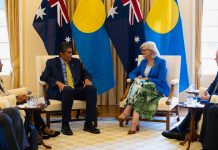
The treaty was ratified on 06 May this year after Australia and Fiji deposited their instruments of ratification, allowing the regional facility to become a legal entity.
Soqo said 14 of the 15 original signatories had now ratified the treaty.
“This is a huge milestone for us, especially for those who have been following the Pacific Resilience Facility over the last 10 years,” Soqo said.
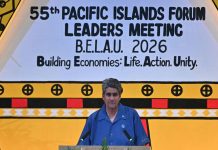
The PRF Treaty was signed by 15 Pacific leaders during the Pacific Islands Forum Leaders’ Meeting in Honiara last year.
Following the treaty’s ratification, the PRF Council has formally convened and has begun putting the facility’s governance and operational arrangements in place.
The inaugural PRF Council meeting was held on 25 June following the Forum Economic Ministers’ Meeting.
Kiribati deposited its instrument of ratification at that meeting, becoming the 11th member at the time.
In August, the Federated States of Micronesia, Vanuatu and Palau also deposited their instruments of ratification.
Soqo said the Council had already endorsed key governance arrangements, including policies covering board governance and fiduciary and integrity standards.
Financial governance policies covering contributions, allocations and investment arrangements are also being finalised.
“We are now operationalising the PRF,” Soqo said.
The Council has also agreed to establish an interim board before moving to a permanent board, expected to be in place by January next year.
Three interim board meetings are planned before the end of the year, including meetings around the Pacific pre-COP and COP31.
Soqo said the PRF was now transitioning from a long-running regional project into an independent legal entity.
The facility has begun establishing its physical and administrative operations, including an office in Tonga.
The PRF is currently operating from temporary office space at the National Reserve Bank of Tonga while arrangements are made for a longer-term interim office.
The organisation is also maintaining operations in Fiji as it completes its transition.
“We now have a two-country operation,” Soqo said.
Over time, the PRF plans to establish national coordination offices across its member countries because of its focus on financing small-scale community resilience initiatives.
The facility is also recruiting sub-regional coordinators, with officers already in place for Melanesia and Polynesia and recruitment underway for Micronesia.
Soqo said the PRF had begun delivering its first grants to Pacific communities.
The grants, known as Community Impact Demonstration Grants, are intended to demonstrate how the facility will support community-level resilience.
PRF officials recently visited communities in Palau as part of the first round of grant activities.
The facility has also met grant recipients in Tonga.
Soqo said the work marked an important shift from developing the institution to delivering support on the ground.
“We are now dispersing the very first historical grants that the PRF is giving out,” she said.
The PRF is currently developing policies covering grants, community engagement and the onboarding of partners.
Soqo said international partners and investors had previously focused on when the PRF would become an established institution.
That question had now been answered.
“When we met last year, a lot of the investor sentiment was around, when will you be establishing the PRF? When will it become a reality?
“So now that it’s actually a reality, the focus is on bringing the PRF as a legal entity, as an established vehicle for climate financing to be channelled through in order to reach communities,” she said.
The next major task is to secure the money needed to capitalise the facility.
Soqo said the PRF would seek to collect all US$173 million already pledged.
“Our ambition is 100 percent collection — collect every dollar that has been pledged,” she said.
The facility will also seek to raise the remaining US$327 million needed to meet its initial funding target.
The Pacific pre-COP and COP31 will be key opportunities for the fundraising effort.
“The spotlight is on the Pacific.
“This is really a key window for us to capitalise the PRF” Soqo said.
The PRF is being designed as a long-term financing mechanism that will invest contributions and use investment income to provide predictable and sustainable financing for community resilience.
Soqo said the model was different from traditional grant programmes.
“This is the first time in the region that we’re creating an entity like the PRF, where we’re asking for grants at this scale to invest those grants, generate an income, and then the income is used to predictably and sustainably finance community resilience,” she said.
The PRF is preparing to issue a call for fund managers and a custodian to manage its interim investment arrangements.
Those arrangements are expected to operate for about six months before the permanent board considers longer-term investment options.
Soqo said the selection of investment managers was important because governments and investors were closely watching the development of the facility.
The PRF is also preparing its first formal financial statements as part of its transition into an independent legal entity.
For the Pacific, the next stage is now clear to turn treaty ratification and financial pledges into an operational fund that can provide sustained support directly to communities facing climate and disaster risks.
With 14 of 15 signatories having ratified the treaty, the PRF is now moving from political commitment to implementation.
The immediate test will be whether Pacific leaders and international partners can deliver the US$500 million needed to establish the facility’s long-term financial base.