Solomon Islands has told the United Nations that climate change and rapid urban growth are reshaping the nation’s towns and settlements.
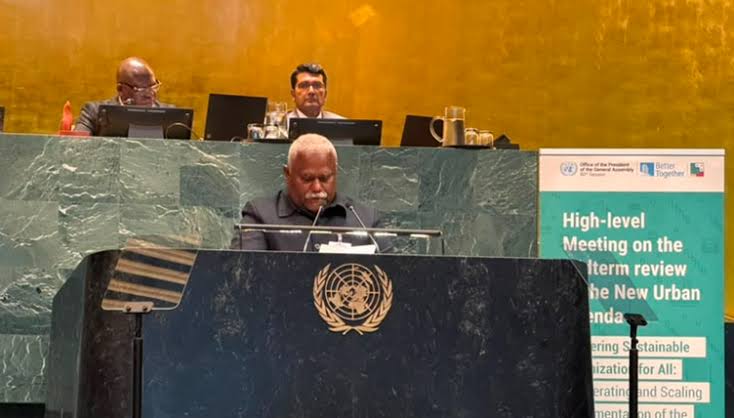
Minister of Lands and Housing Survey, Oliver Salopuka, delivered the country’s address at the UN as world leaders discussed sustainable urban development and the New Urban Agenda.
He said the country’s fast-growing urban population — mostly in Honiara and provincial centres — is putting more pressure on housing, roads, water supplies and land.
“With a high population growth rate of three percent and 70 percent of our people under 29 years old, we are facing rapid, unplanned urban expansion,” the Minister said.
While city growth brings chances for economic development and better services, it has also led to more informal settlements across the country.
Minister Salopuka pointed to climate change as a serious threat to Solomon Islands towns.
“Sea levels are rising, coastal flooding is becoming more frequent, and extreme weather events continue to threaten communities, critical infrastructure and livelihoods,” he said.
He stressed the need to include climate resilience in all urban planning and development.
The Minister said the Solomon Islands Urban Policy is the Government’s plan to manage urban growth in a sustainable way, working alongside the National Disaster Management Policy.
He reported good progress on basic services. More than 93 percent of urban Solomon Islanders now have access to clean drinking water, and over 81 percent have improved sanitation.
“The Government is also backing major projects like the Tina River Hydropower Project, which will provide cheaper, cleaner electricity and support the move to renewable energy.”
Minister Salopuka said urban development must include everyone.
“Women, young people, persons with disabilities, customary landowners and vulnerable communities must all have a voice in shaping the future of our cities and settlements,” he said.
To address informal settlements, he called for solutions that combine land rights, affordable housing, better services, education and community participation.
He also stressed the need to improve life in rural areas to reduce the poverty that forces people to move to towns — a key goal of the National Development Strategy 2016–2035, guided by the vision of “Improving the Social and Economic Livelihoods of all Solomon Islanders.”