

Solomon Islands National University (SINU) Vice Chancellor Dr Transform Aqorau has questioned whether the Pacific can maintain its vision of becoming an Ocean of Peace while the region is increasingly shaped by strategic competition and expanding security partnerships.
Dr Aqorau said the Pacific is at “an important crossroads” as major powers expand their diplomatic presence, development assistance, security agreements and military cooperation across the region.
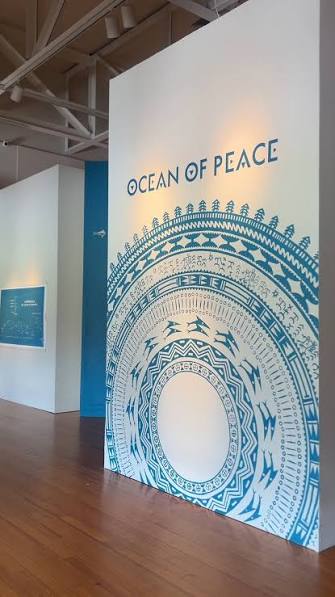
He said Pacific leaders have consistently advanced a different vision through regional declarations that seek to define the Pacific “not as an arena for strategic competition, but as an Ocean of Peace – a region where cooperation, mutual respect, sustainable development, and human security form the foundation of regional stability.”
Dr Aqorau said the issue was not about criticising individual Pacific Island countries.
“This question is not intended to criticise any individual Pacific Island country. Every sovereign state possesses the unquestionable right to determine its own foreign policy and security arrangements.
“Sovereignty necessarily includes the freedom to choose one’s partners and to pursue national interests in ways that governments consider appropriate.
“Rather, the question is whether the collective regional vision remains coherent when the Pacific is increasingly viewed through the lens of strategic competition,” Dr Aqorau said in a social media post.
He said Pacific leaders had already defined security through the 2018 Boe Declaration on Regional Security, the 2050 Strategy for the Blue Pacific Continent and the proposed Ocean of Peace Declaration.
He noted that the declaration recognised climate change as “the single greatest threat to the livelihoods, security and wellbeing of the peoples of the Pacific.”
Dr Aqorau said there was an increasing disconnect between Pacific concepts of security and those advanced by external powers.
“For many strategic actors, the Pacific has become increasingly important because of maritime access, logistics, undersea cables, critical minerals, strategic geography, and broader Indo-Pacific competition.
“But they are not necessarily the concerns that dominate daily life across Pacific communities,” said Dr Aqorau.
He said the greatest security threats facing Pacific Islanders include climate change, sea level rise, prolonged drought, destructive tropical cyclones, coral bleaching, biodiversity loss and food insecurity.
“If security is ultimately about protecting people, then climate resilience must remain the central pillar of Pacific security,” he emphasised.
Dr Aqorau also argued that development should be recognised as a form of security.
He said investments in electricity, ports, education, healthcare, digital connectivity, food security, renewable energy, universities and governance all strengthen national and regional security.
“Development is itself a form of security,” he said.
He also stressed that Pacific Island countries should not be viewed as objects of geopolitical competition.
“Pacific Island countries must never be viewed merely as objects of geopolitical competition. Nor should they be reduced to locations on someone else’s strategic map.
“The Blue Pacific is not an empty geopolitical space waiting to be organised by external powers,” he stressed.
Dr Aqorau said Pacific diplomacy has consistently favoured engagement, dialogue and partnership while maintaining independent foreign policies.
“The Pacific has always preferred engagement over alignment.
“Dialogue over confrontation. Partnership over dependency. Consensus over division,” said Dr Aqorau.
He said security partnerships should strengthen rather than weaken Pacific agency and that military arrangements should not overshadow the region’s broader understanding of security.
“The aspiration of an Ocean of Peace is not naïve.”
“Nor does it require Pacific Island countries to reject legitimate security cooperation.
“The international community would do well to remember that the Pacific has already articulated its security priorities through the Boe Declaration, the 2050 Strategy for the Blue Pacific Continent, and now the Ocean of Peace initiative,” said Dr Aqorau.
He said the future of the Blue Pacific should be determined by Pacific peoples.
“The future of the Blue Pacific should not be determined by the strategic anxieties of others.
“It should be shaped by the hopes, priorities, and agency of the Pacific peoples themselves.
“Only then will the Ocean of Peace become more than a declaration. It will become the defining principle of Pacific regionalism in the twenty-first century,” said Dr Aqorau.