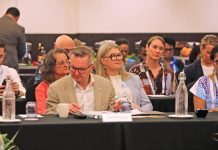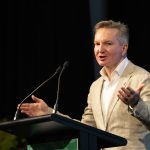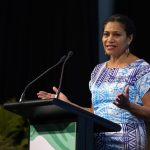
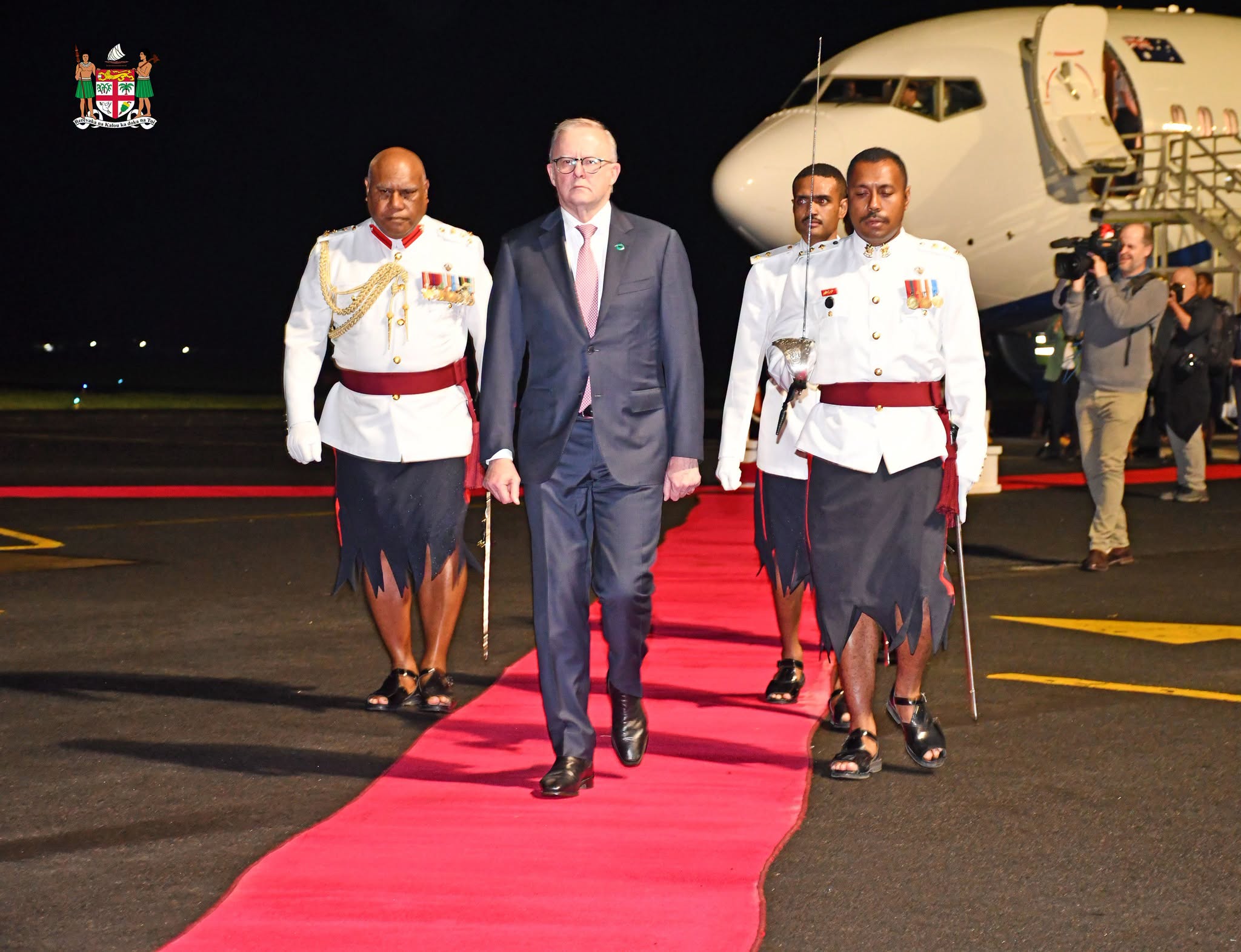
Australian Prime Minister Anthony Albanese has arrived in Fiji to seal a landmark treaty in a bid to counter China’s influence in the Pacific.
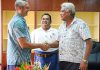
The prime minister landed in Suva on Sunday evening ahead of the signing of the Vuvale Union agreement with his Fijian counterpart Sitiveni Rabuka on Monday.
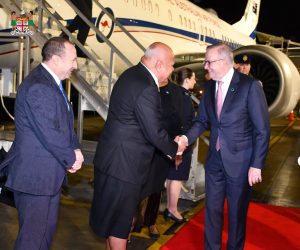
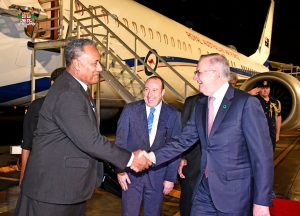
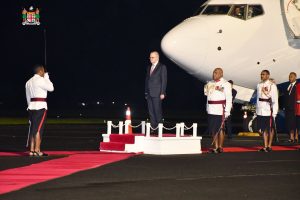
Albanese was greeted on the tarmac by Fiji’s deputy prime minister Viliame Gavoka and foreign affairs minister Sakiasi Ditoka.
He was then led to a raised platform as a Fiji Military brass band played Australia’s national anthem.
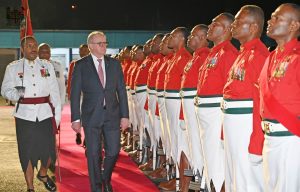
Albanese inspected a guard of honour as the song I Still Call Australia Home was performed.
During his visit, Prime Minister Albanese will undertake a number of official engagements, including a traditional ceremony of welcome, bilateral meetings, and a courtesy call on the President of Fiji Ratu Naiqama Lalabalavu.
The visit reflects the strong bonds of friendship between Fiji and Australia and further reinforces both countries’ commitment to the Vuvale Partnership, built on mutual respect, cooperation, and shared regional priorities.
The prime minister will travel to the Solomon Islands on Tuesday to progress negotiations on a new treaty with Honiara.
“Fiji and Solomon Islands are not just our neighbours, we are part of the Pacific family, and we work together for the good of our region.
“I look forward to meeting with my friend Prime Minister Rabuka to uplift the Vuvale Partnership, create opportunities for young people and celebrate the bond between our countries.
“It is a pleasure to take up Prime Minister Wale on his invitation to visit Solomon Islands so soon after his recent visit to Australia and continue discussions on how we can elevate our bilateral partnership through a comprehensive treaty.
“Australia remains a partner that the Pacific can rely on. By working together we can foster a safe and resilient region that enables all of our economies to grow and prosper,” said PM Albanese.
The whirlwind round of diplomacy doesn’t stop there, with Albanese to meet Narendra Modi in Melbourne later in the week.
The Indian prime minister will spend three days in Australia from Wednesday for the annual leaders’ summit between the two nations.
As part of his Pacific trip, Albanese will become the first foreign leader to participate in the Solomon Islands’ Independence Day celebrations.
Newly elected Solomon Islands Prime Minister Matthew Wale made Australia his first international trip as leader when he visited Canberra in June.
He is also the chair of the Pacific Islands Forum and flagged he would review his nation’s controversial policing deal with China, signed in 2022.
Wales has also called for a Pacific-wide security deal, which Australia has said it is open to pursuing.
Foreign Minister Penny Wong, who is also taking part in the Pacific trip, has previously described Australia as being in a “state of permanent contest in the Pacific”.
“The Albanese Government is working hard to make transformational breakthroughs in the Pacific and shape a peaceful, stable and prosperous region.
“In Fiji and Solomon Islands, we will continue strengthening our relationships by listening, respecting and acting on Pacific priorities in the Pacific way.
“A stronger, safer and sovereign Pacific is good for Australia and for our region,” Wong said.
Engaged in a diplomatic “knife fight” with China for regional influence, the Albanese government has since inked security and economic deals with Pacific Island nations.
The latest among them is the breakthrough $500 million (US$346 million) Nakamal Agreement signed with Vanuatu, which rules out the use of its territory for foreign military bases.
The deal had fallen through in September after Port Vila raised concerns its sovereignty would be undermined through Australia’s push for a veto over major foreign investment in critical infrastructure.
Canberra has signed a historic mutual defence pact with Papua New Guinea called the Pukpuk Treaty, and the world-leading Falepili Union with Tuvalu, which allows the population to resettle in Australia.
Albanese’s visit would be significant and he had built ‘momentum: with the region’s leaders, Lowy’s Pacific Programme director Oliver Nobetau said.
“Albanese, despite all the domestic pressures, sees that this is a permanent contest, and he’s willing to make those strides and those commitments and build those relationships out in the Pacific,” he told AAP.
“Permanent contest, it is a good framing because it doesn’t allow for anyone to take things for granted as to where the goodwill of the relationships are.”
Under the Nakamal Agreement, both Australia and Vanuatu committed to supporting dialogue addressing the dark historical practice of blackbirding, where thousands of Pacific Islanders were forced to work and live under harsh conditions on Queensland plantations.
They were taken from countries across the region, including Vanuatu, the Solomon Islands and Fiji.
Nobetau said unlike China, Australia faced the “hurdle” of its colonial past and image in the region.
‘When we saw the mention of blackbirding … that was such a significant step in looking at how mature these relationships can get,” he said.
Albanese addressed the annual NSW Labor conference in Sydney on Sunday morning before departing Australia.