


Pacific Island countries are being encouraged to develop a Regional Pacific Climate Change Taxonomy to strengthen climate-responsive public financial management, improve transparency and accountability, and better align climate finance with national and regional priorities, according to a new information brief.
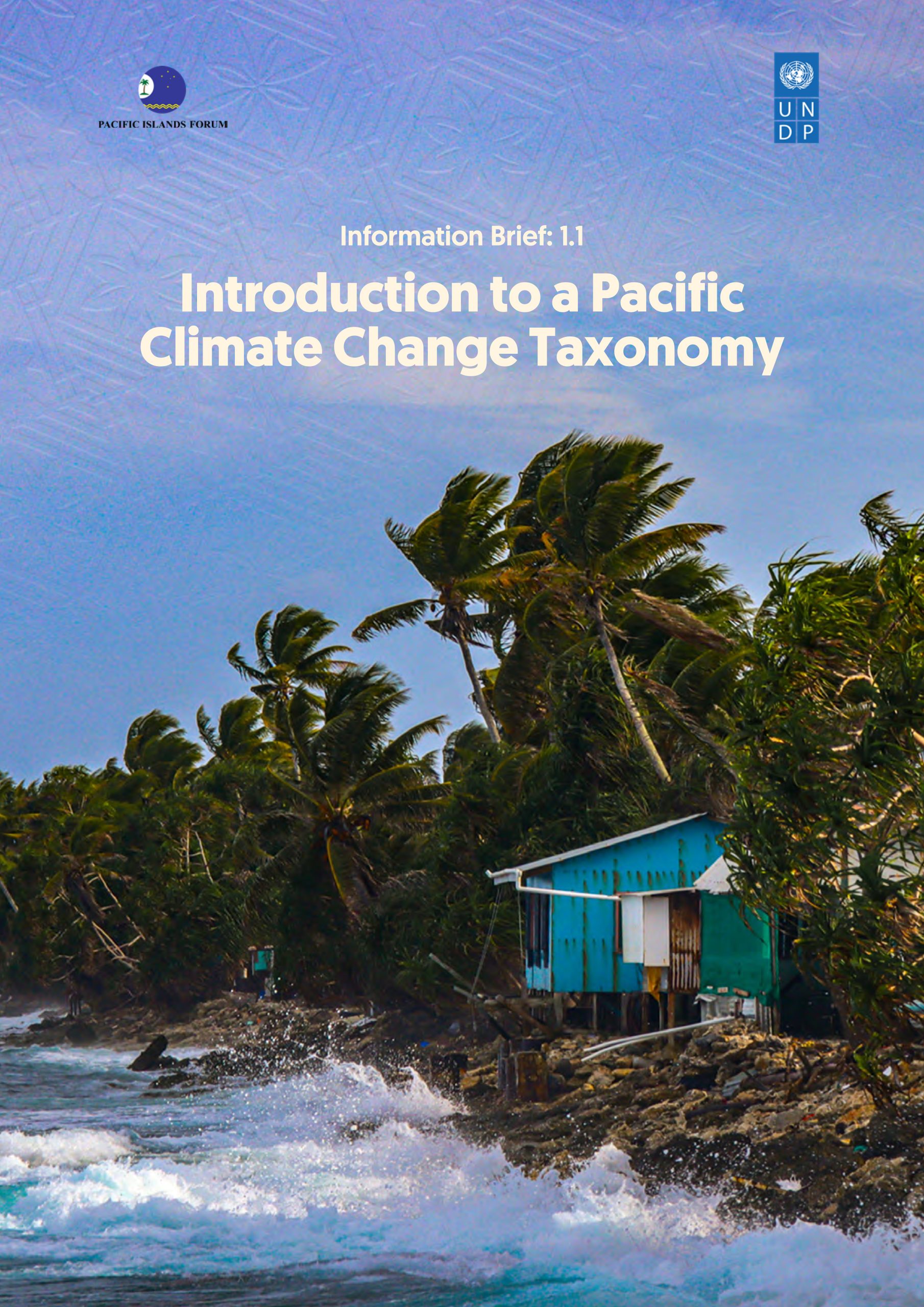
The report, Introduction to a Pacific Climate Change Taxonomy, is the first in a mini-series designed to build understanding and support the development of a regional framework for classifying climate-related investments across the Pacific.
It says the initiative draws on lessons from Pacific Island countries that have already begun similar reforms as part of broader public financial management strengthening efforts.
The brief says Pacific Island countries are facing increasing fiscal pressures, difficulties accessing and tracking climate finance, and the need to embed climate considerations across government financial management systems.
It states that a regional climate change taxonomy would improve transparency, accountability and decision-making by providing standardised systems for identifying and tracking climate-related spending and investments.
The report explains that a climate change taxonomy is a structured classification system used to identify and assess climate-related investments based on measurable criteria.
It says such taxonomies provide technical standards for determining eligibility, enable harmonised reporting and monitoring of climate finance, and serve as regulatory tools for classifying climate-related investments. It points to existing regional frameworks, including those developed by the European Union, ASEAN and Latin America and the Caribbean.
According to the report, a Pacific Climate Change Taxonomy (PCCT) would provide a structured framework for classifying and tracking climate-related fiscal and financial flows across both the public and private sectors.
It says the framework would support governments, development partners, oversight institutions and financial sector actors by improving transparency, accountability and alignment of expenditures and investments with national climate goals and international commitments.
The report says the proposed regional framework would not impose a single classification system on all Pacific Island countries but instead provide a common regional reference while allowing countries to adapt it to national priorities, institutional capacities, budget structures and public financial management systems.
It says the taxonomy would align with regional frameworks, including the 2050 Strategy for the Blue Pacific Continent and the Framework for Resilient Development in the Pacific, while allowing countries to align with Nationally Determined Contributions, National Adaptation Plans and National Biodiversity Strategies and Action Plans.
The report says the framework could later expand to include areas such as loss and damage and disaster risk reduction through a phased approach.
It says the taxonomy would improve comparability and transparency of climate finance flows, strengthen links between domestic budgeting systems and international climate finance mechanisms, and improve the capacity of Pacific economies to plan, allocate and monitor resources for resilient and sustainable development.
The brief says the proposed taxonomy would complement existing climate-responsive public financial management initiatives supported by organisations including the International Monetary Fund, the World Bank, the Asian Development Bank and the UNDP Climate Finance Network.
It says the framework would provide a coherent regional classification system that could be integrated into budgeting and reporting systems while recognising the limited institutional capacity of many Pacific Island countries.
According to the report, the Pacific’s diverse budget systems and evolving climate tagging practices make a regional framework particularly important.
It says the taxonomy would improve consistency in climate expenditure classification, support regional reporting and transparency, and strengthen access to international climate finance by providing a practical bridge between global methodologies and Pacific public financial management systems.
The report notes that while some Pacific Island countries have begun developing their own climate change taxonomies, doing so independently can place additional pressure on limited institutional capacity.
It says the similarities in climate risks faced across the region, combined with shared implementation challenges, led the 2024 Forum Economic Ministers Meeting to recommend the development of a regional climate change taxonomy as one of its key outcomes.
According to the brief, a regional approach would strengthen transparency, regional benchmarking, engagement with development partners and private sector participation, while enabling faster implementation of climate-responsive public financial management reforms.
The report also highlights existing regional frameworks supporting the initiative, including the Pacific Island Countries 2025–2030 Climate Finance Access and Mobilisation Strategy, the 2050 Strategy for the Blue Pacific Continent, the Pacific Resilience Partnership, the Framework for Resilient Development in the Pacific and the Pacific Roadmap for Economic Development.
It says these frameworks provide Pacific leaders with mechanisms for decision-making, coordination and prioritisation to ensure a Pacific climate change taxonomy contributes to resilient development across the region.
The report concludes that developing a Pacific Climate Change Taxonomy would strengthen climate-responsive public financial management by providing a standardised regional classification system that improves transparency, supports decision-making and enhances the mobilisation and use of climate finance.
It says future editions of the mini-series will examine the taxonomy’s design, technical components, country experiences and lessons learned to help Pacific Island countries prepare for its development and implementation.