


The Intergovernmental Panel on Climate Change (IPCC) has warned that a major funding shortfall is raising concerns over the successful completion of its Seventh Assessment Cycle, even as work on a series of landmark climate reports continues to advance.
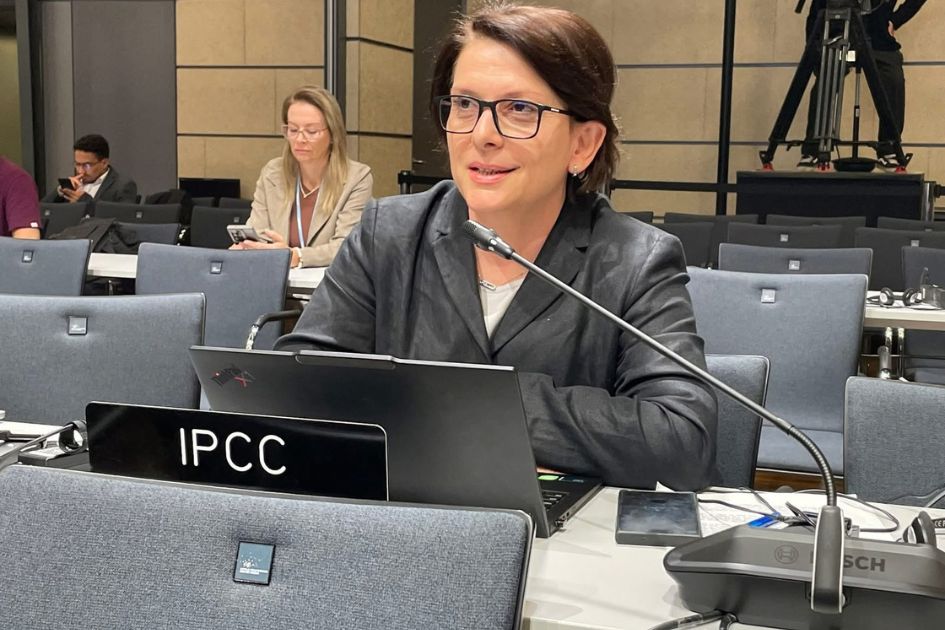
Speaking at the 64th Session of the Subsidiary Body for Scientific and Technological Advice (SBSTA64) in Bonn, Ermira Fida said all planned reports for the current assessment cycle have been scoped, authors selected, and work is progressing across the board.
“On behalf of the IPCC, I thank you for giving me the floor to update you on the progress made by the IPCC, nearly three years into the seventh assessment cycle.”
“I am pleased to inform you that all planned reports for this cycle have been scoped, all authors have been selected, and we are making steady progress on each report.”
Fida said the first publication of the cycle, the Special Report on Climate Change and Cities, is currently undergoing expert and government review, with work also underway on the Summary for Policymakers.
“The first IPCC report to be published in this cycle is the Special Report on Climate Change and Cities. Its second-order draft is currently being reviewed by experts and governments, through early July, while the initial draft of the Summary for Policymakers is under way.”
She said two key methodology reports are also moving forward toward their scheduled release next year.
“Both methodology reports – the one on Short-Lived Climate Forcers and the one on Carbon Dioxide Removal Technologies, Carbon Capture Utilisation and Storage, are also progressing towards their release next year.”
Fida noted that the expert review of the First Order Draft of the Methodology Report on Short-Lived Climate Forcers concluded in February and that the next review phase will begin in September.
She added that work has also advanced on the methodology report covering carbon dioxide removal technologies and carbon capture, utilisation and storage.
“The authors of the 2027 Methodology Report on Carbon Dioxide Removal Technologies, Carbon Capture Utilisation and Storage, began their work in mid-April and will meet again in August to advance their work on the report.”
The IPCC Deputy Secretary said all three Working Groups contributing to the Seventh Assessment Report have progressed their First Order Drafts.
“Progress has also advanced across other reports: our three Working Groups have advanced First Order Drafts of their contributions to the Seventh Assessment Report.”
She noted that Working Groups I and II met in person earlier this year, while Working Group III met virtually because of travel restrictions in the Middle East and plans to convene in person in September.
Fida also highlighted progress on a range of expert meetings and workshops covering issues including inventories, land use, carbon removal, inclusivity, climate tipping points, adaptation metrics, health and agriculture.
“Work has progressed on several Panel-mandated expert meetings and workshops across diverse topics, including inventories, land use, carbon removal, inclusivity, tipping points, atlas, adaptation metrics and indicators, health and agriculture.”
She said consultations are continuing among member governments on timelines for the reports produced by the three Working Groups, with the goal of reaching agreement at the next IPCC Plenary Session in October.
“As the timelines for the three Working Groups’ reports are yet to be agreed by the Panel, the Chair of the IPCC is currently conducting consultations with member governments on this matter, with a view to reaching consensus at the next Plenary Session scheduled for October.”
Fida also invited delegates attending the Bonn climate meetings to participate in upcoming IPCC side events focused on the Seventh Assessment Cycle and diverse knowledge systems.
However, she warned about the financial challenges facing the organisation.
“We thank all our member governments for their continued scientific and financial contributions. However, with only 19 percent of the approved 2026 budget received to date, this raises serious concerns for the successful completion of the Seventh Assessment Cycle and the long-term sustainability of the IPCC Trust Fund.”
“We therefore strongly encourage increased and sustained contributions to ensure a fully functional Trust Fund and to support the effective participation of developing countries in the IPCC’s work.”
The IPCC’s Seventh Assessment Cycle is expected to provide the latest scientific guidance for governments as they respond to climate change and prepare future climate commitments under the UN climate process.