Even when powerful countries say they are working in partnership with the Pacific, island nations must continue to ask whether those partnerships serve Pacific priorities or outside strategic interests.
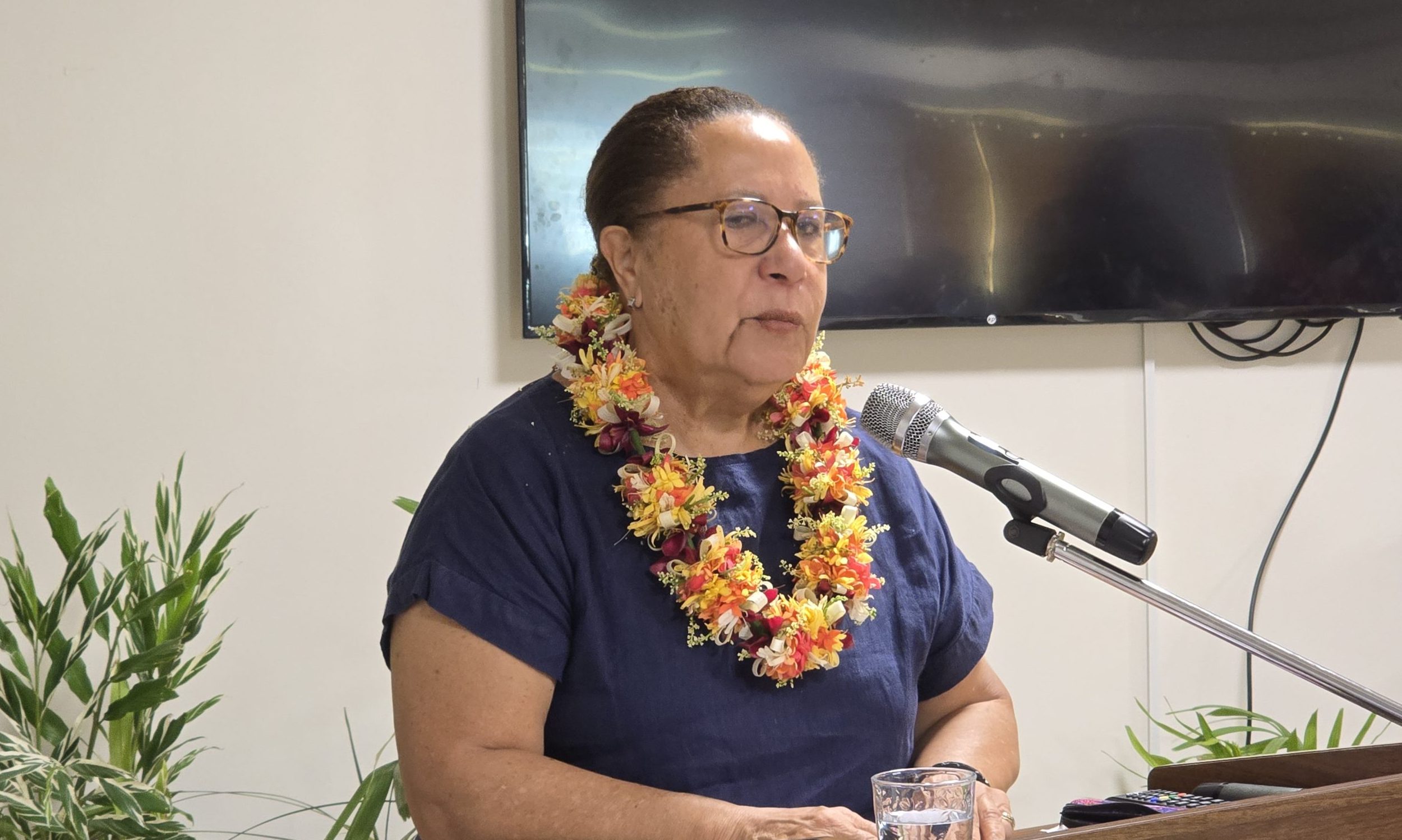
Papua New Guinea senior diplomat Dame Meg Taylor issued the caution while speaking at the State of the Pacific Ocean convening, where she said growing great power competition, militarisation and externally driven regional initiatives were placing pressure on Pacific unity.
Dame Meg said the Pacific’s regional architecture was facing genuine tensions, including within the Pacific Islands Forum.
“The inclusion of Australia and New Zealand in the forum had at times made it more difficult for Pacific countries to maintain unified positions on issues such as climate change, where the interests of larger metropolitan states could differ from Pacific priorities,” she said.
However, she said the responsibility was shared, as Pacific states themselves had also found it difficult at times to hold collective positions under sustained external pressure.
“Some Pacific countries had pursued short-term bilateral advantage in ways that could weaken long-term regional coherence.
“These are conversations we need to continue to have openly, among ourselves.”
She said great power competition had added another layer of complexity, with the Pacific becoming strategically significant to the U.S, China and their allies in ways that were not true a generation ago.
Dame Meg said some initiatives had emerged with limited consultation with Pacific Island nations and had placed the region inside frameworks shaped more by external strategic priorities than Pacific needs.
“The language of partnership is often genuine, but the question of whose priorities shape the agenda is one we must always keep asking.”
She also raised concern over the increasing militarisation of the region, including the expansion of military infrastructure, proposals to host foreign submarines and strategic bombers within the South Pacific Nuclear Free Zone, and the framing of the Pacific mainly through a security lens.
Dame Meg said these developments sat uneasily alongside the vision of peace represented by the Treaty of Rarotonga.
“They are worth watching carefully and speaking about clearly,” she said.