
The State of the Pacific Ocean Convening began Monday in Suva with a call for Pacific people to fundamentally renew their relationship with the ocean, as regional leaders gathered to confront escalating threats to marine ecosystems and shape the future of ocean governance.
The gathering at Pasifika Communities University brought together faith leaders, Indigenous representatives, academics, policymakers, and civil society organisations from across the Pacific to mark World Oceans Day and respond to growing pressures on ocean health, including climate change, biodiversity loss, and pollution.
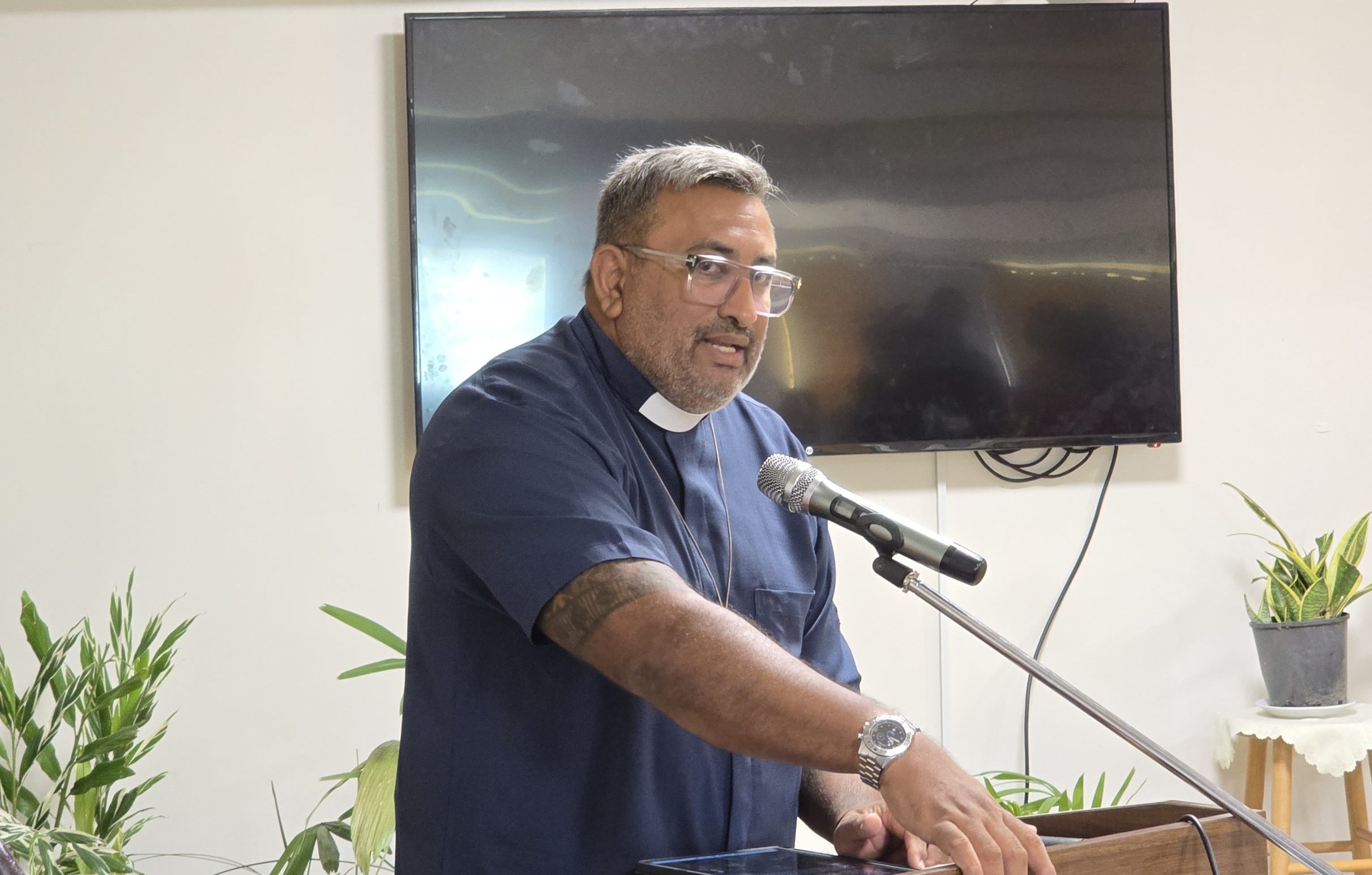
Opening the four-day convening, Pacific Conference of Churches General Secretary Reverend James Bhagwan called for a fundamental shift in how the ocean is understood, saying Pacific people must “let an old story die so a truer story can live.”
Reflecting on the World Oceans Day theme, “Reimagine: Beyond the world we know, a new relationship with our ocean,” Reverend Bhagwan said reimagining was not simply a creative exercise but a call for transformation.
“The old story tells us that the ocean is out there, separate from us, something to cross, measure, use, and extract. The old story treats the ocean as inventory and calls it progress.
But we come from a different truth.”
Drawing on the writings of renowned Pacific thinkers, Reverend Bhagwan recalled the words of the late Tongan scholar Epeli Hauʻofa, who described the Pacific as a “sea of islands” connected by relationships and belonging rather than separated by vast distances.
“We are not small islands scattered in vast nothingness. We are a sea of islands held together by movement, relationship and belonging,” he said.
He also referenced the work of the late Pacific scholar Teresia Teaiwa, reminding participants that “we sweat and cry salt water. The ocean is not only around us, but also within us.”
Using a symbolic ceremony involving water collected at dawn from three locations, beyond the reef, inside the lagoon and along the shoreline, Reverend Bhagwan illustrated the interconnectedness of ocean ecosystems and communities.
The first bowl contained deep ocean water, which he described as representing wisdom and humility.
“Let the deep correct our arrogance and let God’s depth reshape our decisions,” he said.
Lagoon water symbolised the meeting place between protection and provision, where traditional knowledge and modern science must work together.
“Let this water bless our work across difference; elders and activists, academics, policymakers, civil society, government and faith leaders, so that Indigenous knowledge and customary governance are honoured as foundations.”
The shoreline water represented the point where human actions meet the ocean’s reality.
“What we consume, what we discard, what we permit, what we ignore; none of it stays on land; the ocean remembers,” he said.
He warned that the ocean carries the consequences of human actions.
“The sea receives what we release into it; beauty and damage, prayer and plastic, and it holds without ranking,” he said.
Reverend Bhagwan called on participants to embrace a renewed covenant with the ocean grounded in reverence, justice, and responsibility.
“These three waters are one. One ocean, one living body, one shared responsibility,” he said.
“For what we do today, God will remember. For what we do today, the web of life will remember. And what we do today, the ocean will remember.”
Anchored in the spirit of World Oceans Day, the convening seeks to move beyond awareness toward collective action, strengthening Pacific-led approaches to ocean governance while ensuring Indigenous knowledge systems, local priorities and community leadership remain central to how decisions about the ocean are made.