


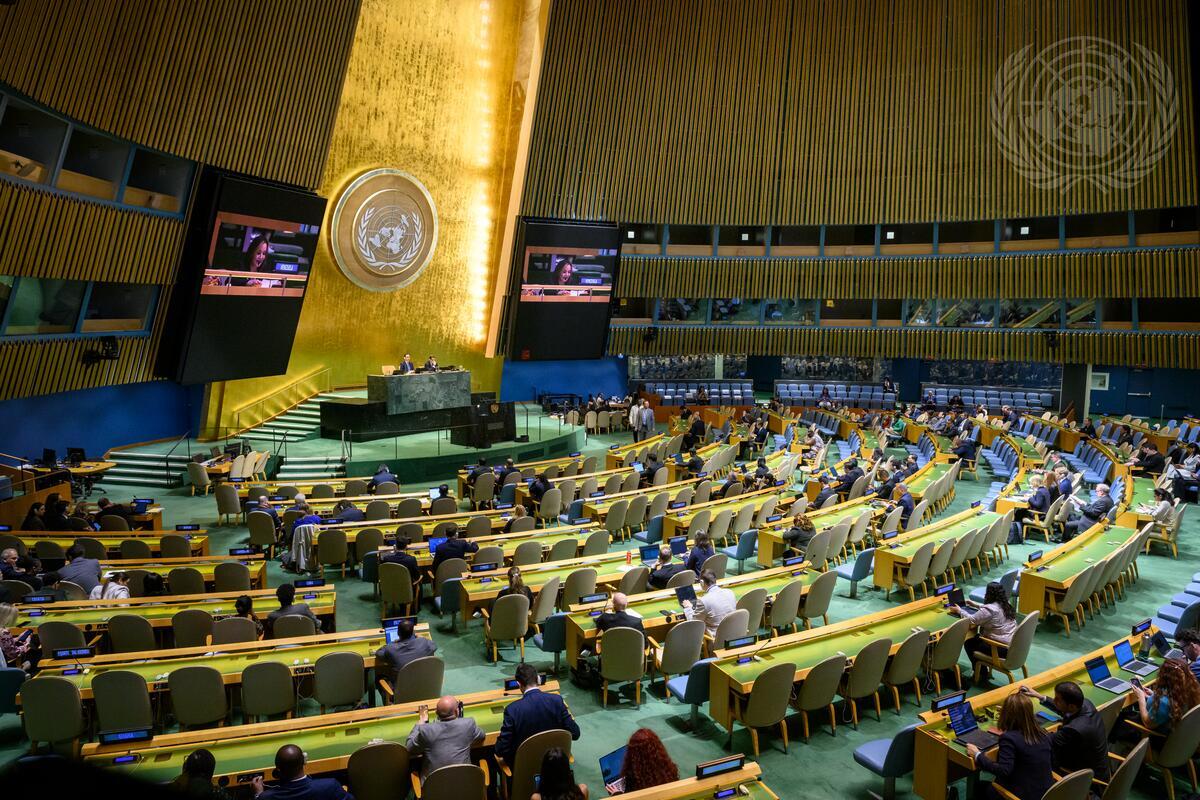
The Solomon Islands has renewed the Pacific’s opposition to nuclear weapons and nuclear testing, recalling the devastation caused by decades of testing in the region during the latest Review Conference of the Nuclear Non-Proliferation Treaty (NPT) at the United Nations.
Speaking on behalf of Parties to the South Pacific Nuclear-Free Zone Treaty, also known as the Treaty of Rarotonga, the Solomon Islands delegate described the establishment of the treaty 40 years ago as a defining moment for the Pacific.
She recalled “a profound moment” when the zone “was born out of devastation of decades of nuclear testing across our blue Pacific”, and a “collective conviction that the bounty and the beauty of Pacific land and sea must be safeguarded”.
The Solomon Islands said the Pacific continued to carry the scars of nuclear testing and warned that the dangers posed by nuclear weapons remained real.
“As the tragedies of Hiroshima and Nagasaki demonstrated the catastrophic consequences of nuclear weapons use, ‘every effort must be made to ensure that these weapons are never used again’,” the delegate said.
She stressed “the enduring legacy faced by Pacific communities most directly affected by nuclear testing and the continuing need for recognition assistance and remediation”.
The statement also reaffirmed the Pacific’s opposition to all forms of nuclear testing.
“She then restated ‘our total opposition to any nuclear testing and reiterate our calls for the remaining countries to sign and ratify the Comprehensive Nuclear-Test-Ban Treaty’.”
Referring to the 2025 Blue Pacific Ocean of Peace Declaration, the Solomon Islands said Pacific nations remained committed to the elimination of nuclear weapons and addressing the threat they posed to humanity.
The delegate also confirmed the region was “developing a regional approach for removal of hazardous waste including nuclear contamination”.
Meanwhile, New Zealand warned that global disarmament efforts were weakening and called on nuclear powers to show stronger leadership.
“Progress on disarmament is being eroded – and in some cases reversed,” New Zealand’s delegate said.
She warned that some non-nuclear weapon states were beginning to question whether nuclear weapons were necessary for their own protection.
“We expect greater responsible leadership from the nuclear-weapon States,” she said.
New Zealand said implementation of Article VI of the NPT, which commits nuclear weapon states to pursue disarmament, remained a priority.
“Implementation of Article VI remains a central priority for New Zealand,” the delegate said.
The conference ended Friday without agreement on a consensus outcome document, marking the third straight NPT review conference to fail to reach consensus.
Conference President Do Hung Viet said despite weeks of negotiations and multiple revised drafts, member states could not bridge their differences.
“My goal was to make everyone equally unhappy,” he said.
“I think we can all agree that I had made some progress towards that goal,” he said.