

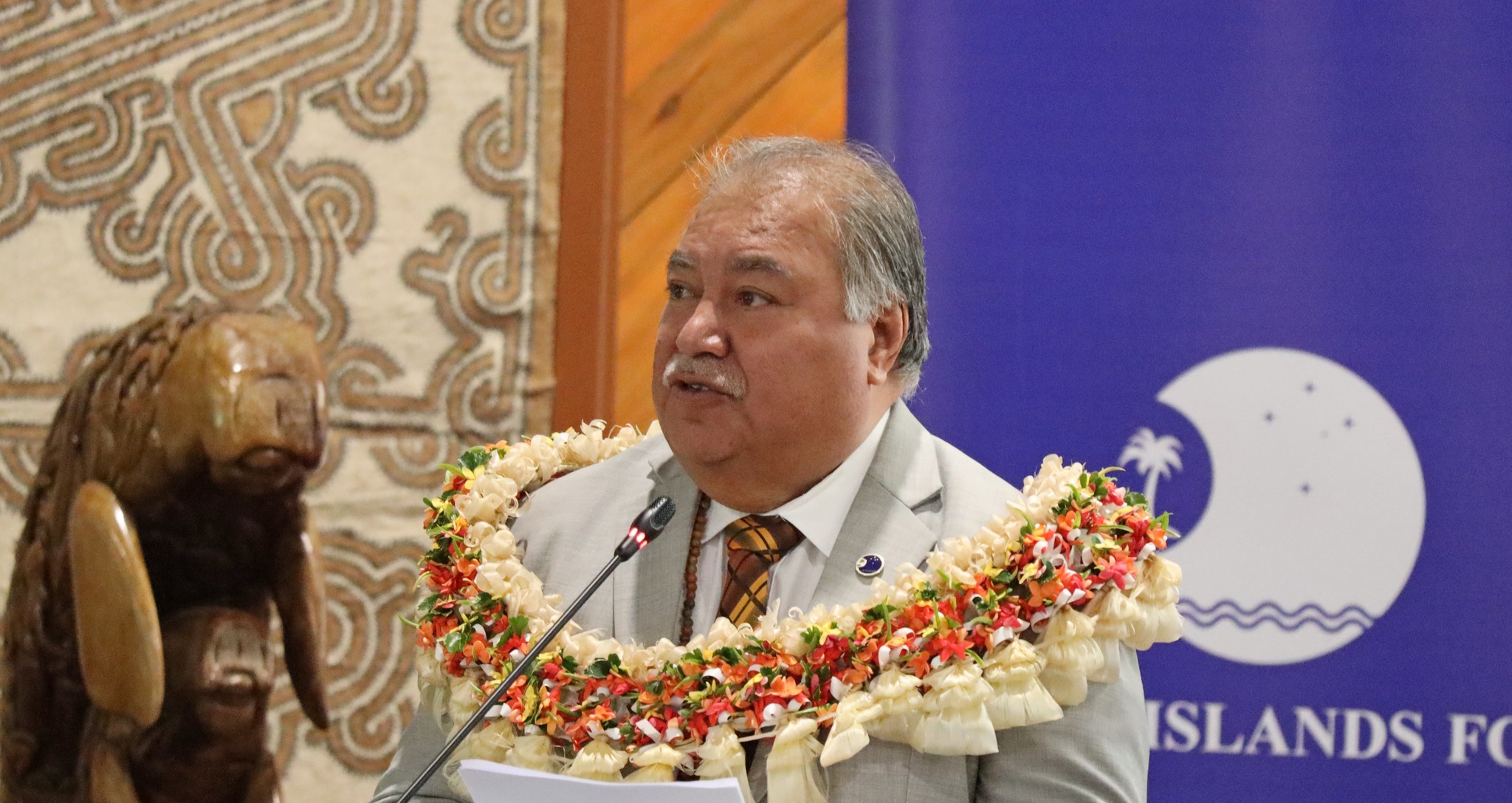
Pacific Islands Forum Secretary General, Baron Waqa has called for stronger regional and global action on climate justice and sea-level rise, warning that climate change remains “the single greatest threat” to the Pacific region.
Opening the Pacific Climate Justice and Sea-Level Rise Week at the Pacific Islands Forum Secretariat on Monday, Waqa said the recent United Nations General Assembly (UNGA) vote responding to the International Court of Justice’s Advisory (ICJ) Opinion on climate change was a major step forward for the region.
“It is timely that just last week, by an overwhelming majority, the United Nations General Assembly adopted a resolution responding to the International Court of Justice’s Advisory Opinion on the Obligations of States in respect of Climate Change,” Waqa said.
He praised Vanuatu for leading the international push on climate accountability.
“I extend the Forum’s sincere appreciation to the Government of Vanuatu for its leadership in convening this important week and in advancing this issue internationally, and to Minister Ralph Regevanu for his leadership in helping to secure this outcome,” he said.
Waqa also acknowledged Pacific solidarity at the United Nations and thanked regional partners, including Fiji Government, SPC, SPREP and UN agencies, for supporting the week-long discussions.
The Forum SG said climate change and the current fossil fuel-driven energy crisis were placing growing pressure on Pacific economies and energy security.
“Climate Change remains the single greatest threat to the livelihoods, security, and wellbeing of peoples of the Blue Pacific.
“At the same time, the current fossil fuel-driven energy crisis presents significant challenges for our region, including rising costs of living and increasing pressure on energy security,” he said.
He said the crisis also reinforced the need for the Pacific to reduce dependence on imported fossil fuels and accelerate renewable energy development.
Waqa said Pacific priorities ahead of Pre-COP and COP31 would focus on climate finance, adaptation and resilience support for smaller island states.
“Pre-COP and COP31 provide a critical and unprecedented opportunity for the Pacific to strategically advance this agenda.
“Through the Pacific’s role in hosting Pre-COP and helping shape the COP31 process, we have a unique platform to ensure that our priorities are not only present but clearly heard and reflected in global outcomes,” he said.
Waqa also highlighted the recent entry into force of the Pacific Resilience Facility Agreement (PRF) on 06 May, describing it as a key regional response to gaps in global climate finance.
“The PRF represents the Blue Pacific region’s response to a global climate finance system that too often fails to reach those most in need.
“It is designed to complement and scale existing sources of climate finance, ensuring that support reaches the last mile: our communities, villages, islands, and households, where it can make the greatest impact,” he said.
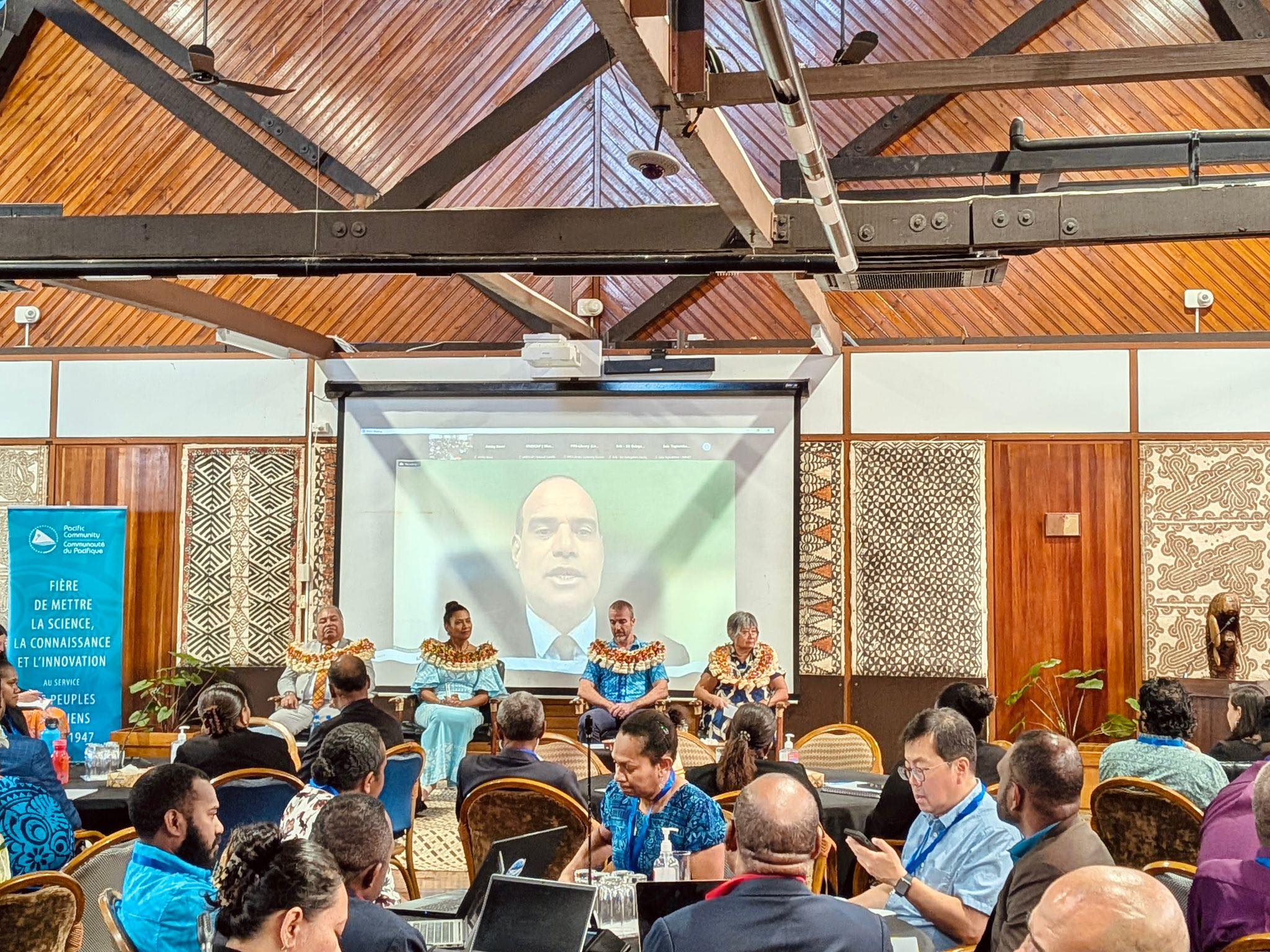
On sea-level rise, Waqa reaffirmed Pacific Leaders’ position that maritime zones, sovereignty and statehood must continue despite climate impacts.
“Through the 2021 Declaration on Preserving Maritime Zones in the Face of Climate Change-Related Sea-Level Rise, Leaders affirmed that maritime zones, once established, will be maintained without reduction, notwithstanding any physical changes connected to climate change-related sea-level rise,” he said.
He added that the 2023 Declaration on the Continuity of Statehood and the Protection of Persons confirmed that “statehood and sovereignty will continue, and that rights and entitlements that flow from them will be maintained.”
Waqa said the meeting would help strengthen regional understanding of climate justice, environmental rights and sea-level rise responses.
“This week provides an important opportunity to advance coordinated and coherent regional action,” he said.
“It will support our shared efforts to strengthen approaches to, and unpack concepts like climate justice, environmental rights, and responses to sea-level rise, in a manner that is practical and firmly grounded in the needs of our people.”
He also recognised the role of Pacific youth in pushing for climate justice internationally.
“I also wish to recognise and highlight the leadership of Pacific young people, including students, whose voices continue to strengthen the call for climate justice for present and future generations,” said SG Waqa.
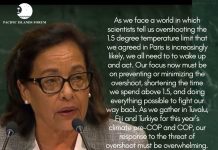
Meanwhile, families losing ancestral land, farmers struggling with changing weather patterns and fishers returning home with empty nets are among the growing human costs of climate change across the Pacific, says Fiji Minister for Information, Environment and Climate Change Lynda Tabuya.
Opening the Pacific Climate Justice and Sea Level Rise Week at the Pacific Islands Forum Secretariat in Suva, Tabuya stressed that while the region is on the frontlines of climate impacts, Pacific nations are “not only victims,” but are leaders in global efforts to confront the crisis.
“Fiji is not standing still. We have made national, regional and international commitments and are working to implement these for the benefit of vulnerable communities and future generations,” she said.
Drawing from her recent visits to the relocation sites of Nabavatu and Cogea in Vanualevu, the Minister said the experiences of these communities reflect the scale of disruption Pacific people face from a crisis they did not create.
She warned that resilience alone will not be enough as climate impacts intensify, noting that Fiji could face annual economic losses of up to 2.6 per cent of GDP from sea level rise if major interventions are not made.
“We know we cannot do this alone. Partnerships remain critical to the mobilisation of resources and delivery of our climate objectives.”
Tabuya said Fiji is developing an NDC Costed Implementation Plan and Investment Plan to translate the high-level commitments it has set out into actionable, costed and investment-ready projects.
She reaffirmed Fiji’s commitment to ocean protection, including the target of sustainably managing all ocean spaces and designating 30 per cent as Marine Protected Areas by 2030.
The Minister also welcomed the recent adoption of the United Nations General Assembly Resolution A/80/L.65, describing it as a landmark victory for the Pacific.
Close to 90 representatives from Pacific Island countries, regional organisations, civil society, academia and development partners are attending the four-day meeting to discuss climate justice, sea level rise and regional climate solutions.