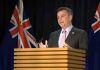


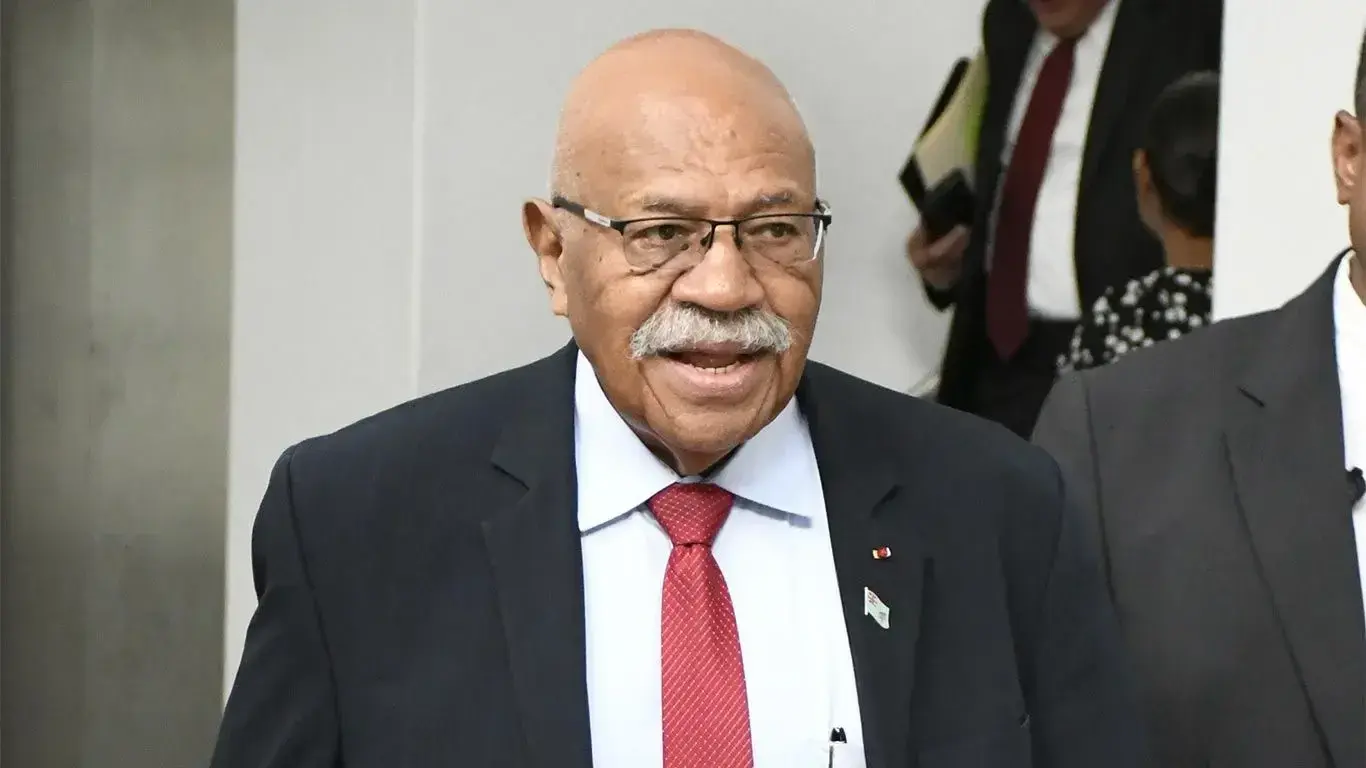
Prime Minister Sitiveni Rabuka says a State of Emergency is “very seriously” being considered to tackle Fiji’s growing drug crisis, even as his own Minister for Defence says it remains the “last resort”.
Rabuka said any escalation would come only on the recommendation of Police Commissioner Rusiate Tudravu and Republic of Fiji Military Forces Commander Major-General Ro Jone Kalouniwai.
“That is very seriously considered now and we can only work on the recommendation of the Commissioner and the Commander,” Rabuka said.
Defence Minister Pio Tikoduadua, however, signalled caution, saying joint military–Police operations were already producing results.
“A State of Emergency is usually the last thing that is done,” Mr Tikoduadua said.
“Right now, we are in one step and the joint operations are happening and it’s reaping the benefits. Things are toning down.”
He said if the Prime Minister and Cabinet were satisfied an emergency was necessary, “that’s a decision that the PM and the Cabinet is going to make.”
Under Chapter 9 of the 2013 Constitution, a State of Emergency can be declared if the security and safety of Fiji is threatened. It allows certain rights under the Bill of Rights to be limited, but only to the extent strictly necessary.
Opposition Leader Inia Seruiratu urged caution, saying: “Every decision that is taken has implications.”
He said the Prime Minister must consider all available advice, including from the National Security Council.
Opposition MP Premila Kumar said if an emergency declaration could solve the drug and HIV crisis, “why not, but a national emergency should not be treated as something where human rights are taken away.”
Meanwhile, concerns have been raised about whether a State of Emergency could delay the 2026 General Election, but the Electoral Act 2014 sets out clear provisions on what happens if polling is disrupted.
Acting Attorney-General and Minister for Justice Siromi Turaga last year assured that the Government would not delay the 2026 General Election.
Under Section 47 of the Act, disruptions caused by “force majeure” — including natural disasters, riots, open violence, structural damage to polling stations, power outages, or insufficient resources — can legally halt voting at one or more polling stations on election day.
The Act allows the Electoral Commission, on the advice of the Supervisor of Elections, to adjourn an election if the number of affected polling stations is high enough to warrant it.
If that happens, a new election date must be publicly announced through the Gazette, national daily newspapers, radio, and free-to-air television.
The earliest possible election date is 07 August 2026, and the latest is 06 February 2027.