
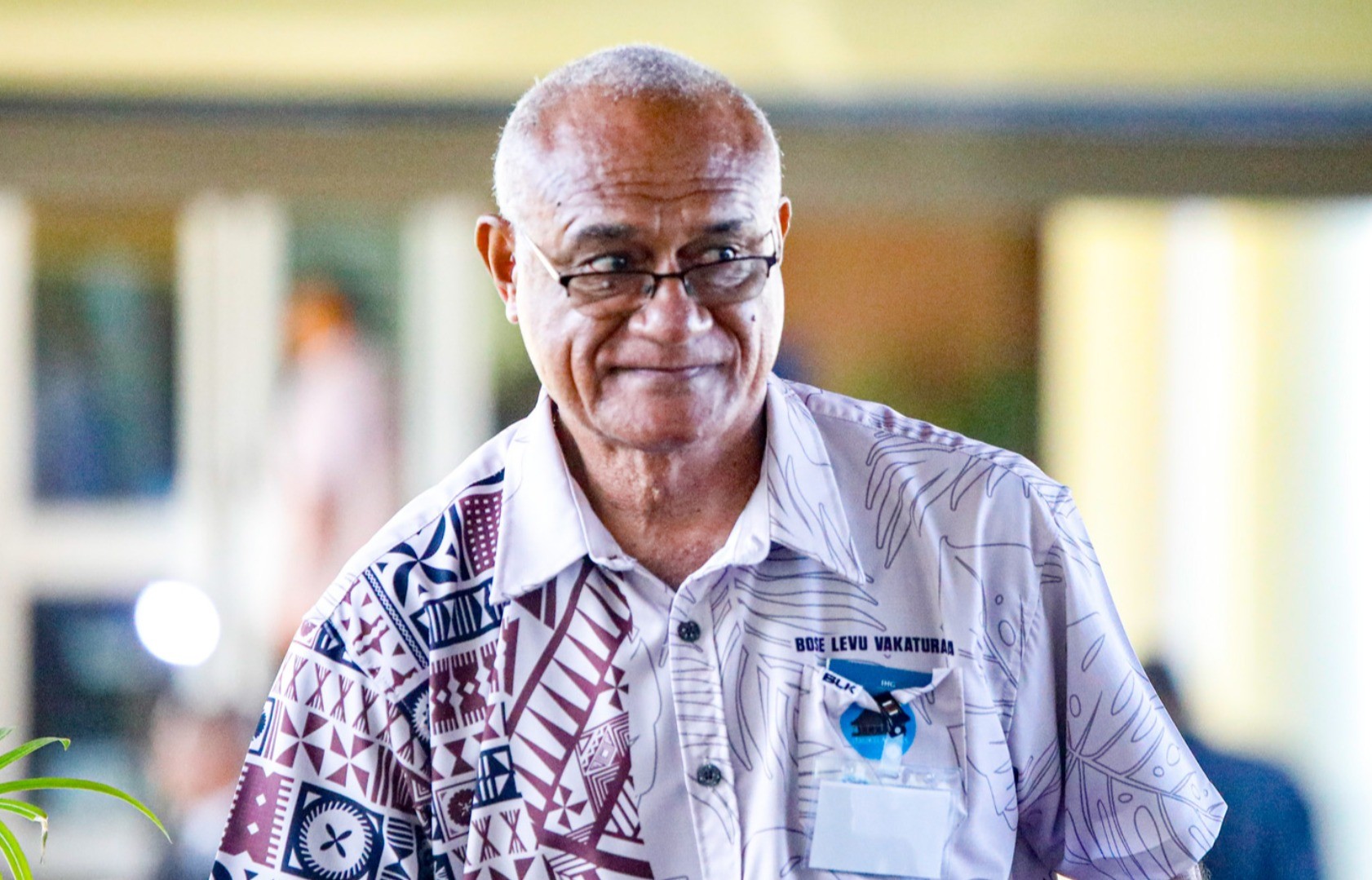
A former United Nations security executive and Rewa High Chief Ro Naulu Mataitini has issued a blunt warning that Fiji is weakening its own foreign policy by sidelining its diplomats and allowing foreign influence to dominate decision-making.
In a strongly worded social media statement, Mataitinji said political behaviour and poor strategic focus are eroding Fiji’s ability to defend its national interests.
“There is something about politicians. To get elected, they will promise anything. But once inside Parliament, too many follow their worst instincts. They convince themselves they are better than everyone else.”
“Why? They succumb to ceremonial glorification from within—learning highfalutin words, seeing themselves as the enlightened, new ‘chiefly’ establishment. And from without, they are courted by flattery and glamour. They come to believe they know more than anyone else. It is a delusion embraced without self-awareness—until the damage to their reputation, their party, and the government becomes impossible to ignore. If they were honest, they would realise that we, the voters, see straight through them,” he wrote.
Mataitini said Fiji’s foreign policy has suffered for years as global powers increase their presence in the region.
“For many years Fiji’s foreign policy suffered.”
“Other countries are establishing a presence in Fiji at an accelerating pace. Not consular offices. Not protocol posts. Their presence is strategic – designed to advance their national interests in a region that is becoming increasingly important to global geopolitics.”
“New embassies are opening. Non-resident ambassadors are flocking to Suva. They see Fiji as a platform for influence in the Pasifika. They send their best people. They resource them properly,” he said.
Mataitini questioned whether Fiji is matching that effort abroad.
“Now ask yourself: how are we responding? Do we place the same priority on our ambassadors in Canberra, Beijing, Wellington or Washington? The honest answer is no.”
“Are we resourcing our embassies to advance and defend Fiji’s interests? Or are we reducing them to protocol and consular offices? Are we leveraging the insights of our Heads of Missions (HOMs)? Or are we allowing foreign envoys in Suva – with unfettered access to our ministers – to shape our policy to their advantage?”
“These questions go to the heart of why our foreign policy engagement is ready for a strategic reset, especially now!”
The Rewa chief singled out Australia as a key example of imbalance.
“Take the case of Australia. We have now had three Australian High Commissioners who exerted and continue to exert enormous influence over our government. The current HC is selling Australia’s interests brilliantly. His success is built on our political gullibility.”
“Now ask: how are we advancing Fiji’s interests in Canberra? Are we shaping Australian policy, or just following it? The answer is uncomfortable. We are reactive, not proactive. We respond to Australian initiatives rather than shaping them. Our HC in Canberra has the insights and relationships to advance our interests – but does anyone in Suva listen? Or do our full line of ministers prefer the Australian envoy in their office?,” he asked.
Mataitini said the situation with China is even more concerning.
“The pattern with China is even worse. For years, our relationship was shaped not by our Ambassador in Beijing, but by Chinese ambassadors in Suva and their proximity to our politicians and fixers. They identified who was receptive. They cultivated those relationships. They bypassed the foreign ministry channels, it was easier and more effective for them,” he said.
He also criticised past structural arrangements that split Fiji’s overseas representation.
“We also created the fertile ground for this by splitting our overseas representation into two ministries—Foreign Affairs managing ambassadors, a separate ministry managing trade commissions and consulates. Two missions in China. Two agendas. Chinese officials and fixers played one against the other.”
Mataitini acknowledged recent reforms but said more needs to be done.
“The Prime Minister has taken a necessary step by bringing all under the Ministry of Foreign Affairs. One mission. One leader. One line of accountability.”
“Nowhere is this more needed than in China, Australia, Aotearoa and North America where split functions undermined our HOMs for years.”
The Rewa chief said current global tensions make reform urgent.
“The new Minister of Foreign Affairs and External Trade has an opportunity to make his mark, especially in these challenging times of oil and shipping embargoes, trade frictions, and new geopolitical alliances.”
He criticised how diplomatic performance is measured.
“For too long, we have measured our diplomats by handshakes, smiling photo-ops, and event attendance. These are empty metrics. They measure activity, not achievement. Being present is not the objective of diplomacy. Advancing and defending our national interest is.”
“KPIs must measure real outcomes: market access secured, investment attracted, policy influenced, resources obtained. Handshakes do not count.”
Mataitini said diplomats must focus on tangible national gains.
“Our diplomats must work to make Fiji prosper. They must secure investment, technology, climate finance, supply chain certainty, and people-to-people exchange. No amount of receptions attended changes that.”
He also questioned the trust placed in foreign diplomats over Fiji’s own representatives.
“Why do our politicians trust Suva-based foreign diplomats more than our own ambassadors abroad? Is it incompetence? Arrogance? Whatever the reason, the consequence is clear: our missions are treated as protocol offices. Their strategic counsel is ignored. Our foreign policy suffers.”
Mataitini called for immediate changes in how government engages with foreign missions.
“This must change.”
“The Ministry of Foreign Affairs and External Trade must be in the loop whenever foreign missions engage with our ministers. Cabinet must agree and the PM must issue a directive, instructing ministers accordingly. The Foreign Minister must stand behind our HOMs.”
He said Fiji must match the strategic investment other countries are making in the region.
“Other countries invest in their presence in Fiji because they understand the strategic importance of the Pasifika. We must invest in our presence abroad with the same understanding.”
“Our diplomats need empowerment and resourcing. They need the authority to act. They need the support of Suva to establish Fiji’s place in a competitive world. They must work to secure resources for Fiji. They must work to make Fiji prosper.”
The Rewa chief has also issued a direct challenge to government leadership.
“Minister of Foreign Affairs Sakeasi Ditoka has a chance to make his mark. He must resource our missions. He must empower our diplomats. He must hold them accountable for real outcomes—not just photo-op handshakes. And he must ensure that foreign envoys in Suva no longer have unfettered access to shape our policy. Our diplomats must work for Fiji,” said Mataitini.