
By Ednal Palmer
At low tide, just off the coast of South Malaita in the Solomon Islands, a few wooden posts emerge from the waters.
They aren’t easy to miss – although weathered, fragile, and half-submerged.
But for the people of Walande, those posts are more than debris. They are the last visible remains of a once-thriving artificial island that over 800 people once called home.
For generations, Walande stood as a symbol of resilience and ingenuity.
Built by hand and maintained through communal effort, the artificial island supported families, traditions, and livelihoods tied closely to the sea. But over time, rising seas, stronger storms, and increasingly severe “king tides” began to reshape daily life.
Floodwaters crept into homes. Seawalls weakened. Each year, rebuilding became harder.
Still, the community stayed.
For decades, Walande residents adapted. They rebuilt houses, reinforced stone walls, and adjusted their way of life to the changing environment. Leaving was not an easy option.
The island was not just land—it was identity, culture, and history.
But in 2009, a series of devastating king tides marked a turning point.
“We left because it was no longer possible to stand the rising tides,” recalled Francis Iro, an elder of Walande.
“We had to move to safety. The only alternative for us was the mainland.”
With few choices left, the community decided on a last resort: relocate entirely.
They moved to a 46-acre site on mainland South Malaita. It was a monumental undertaking – one that demonstrated community – and tribal-led initiative on resettlement.
Willie Firi, another community person spoken to, recalled that despite appeals for assistance when they faced the hurdle, support from the Solomon Islands government and international donors fell short.
“Undeterred, we organized ourselves. We planned, negotiated with mainland tribal landowners, and successfully executed our relocation largely on our own,” Firi said.
“Families rebuilt homes. Community members worked together to construct a new village. The move was difficult, and losses were inevitable,” he recalled.
Yet Walande’s relocation became a powerful example of community-led adaptation – marked by ingenuity, leadership, and perseverance in the face of climate change.
But the struggle did not end there.
Today, the same forces that drove Walande from their island are threatening many other low-lying communities throughout the Solomon Islands.
The nearby Fanalei community is slowly being scattered. A recent visit found the village already being torn apart by the sea.
“Many families have already moved to the mainland,” community elder Filei told In-Depth Solomons.
He said the handful of houses that remain on Fanalei Island may leave as well, but that intervention by responsible authorities and environmental support groups is critical.
It was very clear that the Island of Fanalei has gradually shrunk over the years. Coconut trees that once stood near the shoreline have fallen into the sea.
Burial grounds, sacred to the community, are now gone.
During particularly high tides, waves crash over homes, forcing families to stay awake through the night, ready to move children and belongings to safer ground.
“It’s painful. You watch the sea take your land piece by piece.”
Filei admitted that moving was not simple. Many families had blood-related connections on the Malaita mainland, but relocation meant building new homes, establishing new water sources, and adapting to a new way of life away from the sea.
In-Depth Solomons found that despite the relocation efforts from Fanalei, a few remained on Fanalei
“The islands were not just homes – they were identities. Generations had been born here, married here, and buried here. Leaving meant more than moving houses; it meant leaving history,” another resident, Rex, stated.
Climate change has made the choice of relocation for many communities in the Solomon Islands increasingly urgent.
According to regional climate projections, sea levels in the Pacific are rising faster than the global average.
For low-lying artificial islands like Walande and Fanalei, even small increases in sea level can have devastating impacts.
Saltwater intrusion contaminates wells. Storm surges become more destructive. Coastal erosion accelerates.
Communities have tried to adapt. Villagers continue reinforcing shorelines with coral stones. Some have planted mangroves to reduce wave impacts. Others have elevated homes.
But these measures provide only temporary relief.
For the people of Walande and Fanalei, climate change is not a distant concept discussed in international conferences. It is the water that seeps into their homes, the fish that no longer swim nearby, the stones that must be stacked higher every year.
It is also the quiet departure of neighbours, the dismantling of homes, and the painful decision to leave ancestral islands behind.
Yet even in the face of uncertainty, the communities remain resilient.
On calm evenings, families still gather to share meals. Children still play along narrow paths. Fishermen still head out before dawn, hoping the sea will provide.
Rex said he often returns to the edge of the submerged wooden posts, looking out toward the waters where he once fished with his father.
“The sea gave us life,” he says softly. “Now it is changing everything.”
As climate change continues to reshape the Pacific, the story of Walande and Fanalei stands as a powerful reminder: for small island communities, rising seas are not just environmental challenges — they are deeply human stories of memory, loss, and resilience.
And for Rex, the memory of fishing trips in the 1990s remains vivid – a time when the tuna were close, the tides were gentle, and the island beneath his feet felt permanent.
Loss and Damage: Climate Change Impacts in the Solomon Islands
For communities across the Solomon Islands, climate change is no longer a distant environmental concern — it is a lived reality.
Rising seas, stronger storms, changing rainfall patterns, and warming oceans are already causing irreversible losses and damages, particularly in low-lying coastal and island communities.
From the artificial islands of southern Malaita Province to its Sikaiana atoll inhabitants, the impacts are deeply human, affecting livelihoods, culture, food security, and even national identity.
The Solomon Islands is made up of more than 900 islands, many of which are low-lying and highly vulnerable to sea level rise.
Coastal communities are already experiencing land loss as shorelines erode and tides creep further inland.
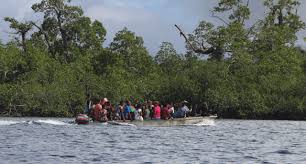
OBM is the main means of transportation around the Walande, Fanalei and other villages on the mainland of Small Malaita.
Changing Weather Patterns and Flooding
Climate change is also altering rainfall patterns across the country. Heavier rainfall events are causing more frequent flooding, especially in low-lying urban areas.
The devastating floods in Honiara in 2014 highlighted the growing risks. Homes were destroyed, infrastructure damaged, and thousands of people displaced. These extreme weather events are becoming more common and more intense as climate change progresses.
For rural communities, unpredictable rainfall disrupts farming cycles. Crops such as sweet potato, cassava, and taro — staple foods in the Solomon Islands — are increasingly vulnerable to droughts and floods. This threatens food security, particularly in remote communities that rely heavily on subsistence farming.
Impacts on Fisheries and Livelihoods
The ocean is central to life in the Solomon Islands. Many communities depend on fishing for food and income. However, warming sea temperatures and ocean acidification are affecting marine ecosystems.
Coral reefs, which support fish populations, are experiencing bleaching events. As reefs degrade, fish stocks decline or migrate to cooler waters. This forces fishermen to travel further from shore, increasing costs and risks.
Tuna, a key economic resource for the country, is also expected to shift eastward as ocean temperatures change. This could affect national revenue from fisheries, which is a major contributor to the Solomon Islands’ economy.
Cultural Loss and Displacement
One of the most significant aspects of Loss and Damage in the Solomon Islands is cultural loss.
Land is deeply connected to identity, heritage, and tradition. When communities relocate due to climate change, they risk losing cultural practices, sacred sites, and ancestral connections.
In many cases, relocation is complex. Customary land ownership systems can make it difficult for displaced communities to secure new land. This creates social tensions and uncertainty for affected families.
Climate displacement is already happening in parts of the Solomon Islands, and it is expected to increase in the coming decades.
Economic Loss and Infrastructure Damage
Climate change also damages infrastructure such as roads, schools, clinics, and water systems.
Small island economies like the Solomon Islands have limited resources to repair and rebuild after disasters.
Cyclones, storm surges, and floods strain government budgets and slow development progress. Communities often rebuild using their own limited resources, only to face repeated damage from future climate events.
This cycle of destruction and rebuilding is a major component of Loss and Damage.
International Recognition and Support
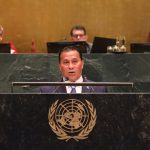
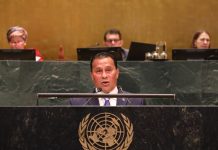
The Solomon Islands has been a strong advocate for global action on Loss and Damage. Along with other Pacific nations, it has called for financial support from major emitting countries to help address climate impacts.
At international climate negotiations under the United Nations Framework Convention on Climate Change, Pacific Island countries pushed for recognition of Loss and Damage. This effort gained momentum during COP27 United Nations Climate Change Conference in 2022, where countries agreed to establish a Loss and Damage fund to support vulnerable nations.
For the Solomon Islands, such support is crucial. Communities are already experiencing impacts beyond their ability to adapt.
A Human Story
Climate change in the Solomon Islands is ultimately about people – families losing homes, fishermen traveling further for food, and communities making difficult decisions about relocation.
From the artificial islands of southern Malaita to coastal villages across the country, the impacts are visible and growing. Loss and Damage is no longer a future concern – it is shaping lives today.
For the Solomon Islands, addressing climate change is not just about protecting the environment. It is about safeguarding culture, livelihoods, and the future of island communities that have called these shores home for generations.
The Solomon Islands Government has recognised that climate change is causing inshore sea-level rise, coastal erosion, and saltwater intrusion, rendering islands like Walande and Fanalei uninhabitable.
The new Walande relocation settlement on Small Malaita
As such, the Ministry of Environment, Climate Change, Disaster Management and Meteorology (MECDM) has partnered with the International Organisation for Migration (IOM) to launch the Planned Relocation Guidelines in 2022 to support communities facing slow-onset disasters.
While the guidelines are a significant step, reports (including in 2025) note they remain largely unimplemented, forcing communities to lead their own relocation processes, which creates new vulnerabilities regarding land rights, conflict, and food security.
At the provincial level, the Malaita provincial government has acknowledged the need for organized relocation but has highlighted the difficulty of balancing landowner interests with the needs of displaced settlers, urging formal consultation to avoid conflicts.
Walande’s story is both a warning and a testament. It demonstrates the extraordinary resilience of communities facing climate change, but it also underscores the consequences of inadequate support. Planned relocation, when poorly resourced, can lead to renewed insecurity and further displacement.
As the tide rises once more, the wooden posts (remains of Walande) in the water serve as a reminder of what has already been lost—and a symbol of the urgent need for thoughtful, sustained solutions for communities on the frontlines of the climate crisis.