Home Blog Page 92

Papua New Guinea seeks help for citizens in Middle East, supports U.S-Israel attack on Iran

0

Papua New Guinea’s government says it’s concerned about its citizens in the Middle East amid widening conflict in the region but supports the attack on Iran by Israel and the U.S that has sparked the escalation.

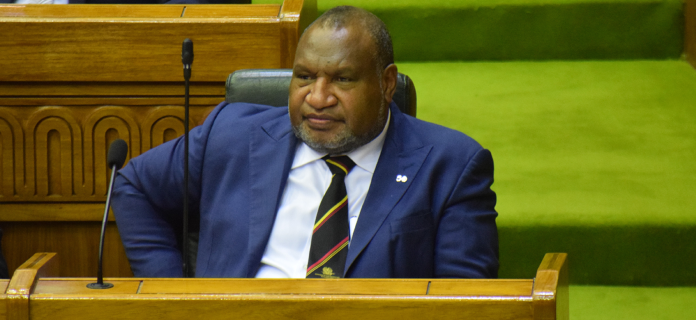
PNG’s Prime Minister James Marape on Monday said he had requested Australia’s consular help to include Papua New Guineans in their contingency and evacuation plans, particularly in the United Arab Emirates.

The escalation of conflict after Israel and the U.S attacked Iran comes when PNG is growing its diplomatic and trade presence in the Middle East. A new embassy in the UAE was soon to open in addition to the recently opened embassy in Jerusalem.

Foreign Affairs officials were just about to dispatch to Abu Dhabi for the new opening, PNG’s Foreign Minister Justin Tkatchenko told RNZ Pacific, but then the UAE capital itself became a target.

“We’ve temporarily put the setup of the embassy on hold until a more positive and peaceful situation comes about in the Middle East, especially in UAE, as they’re being attacked by Iran at the moment.”

Tkatchenko said the government was still working out how many Papua New Guineans were in the UAE but didn’t put it at over a couple dozen, but he was concerned they should get to safety.

“But also, Australia has put out their hand, their assistance, in also assisting any Pacific Islanders or Papua New Guineans as well in this situation.

“We’ll work with our close neighbours and any of the Papua New Guineans that want to leave, that are there, we encourage them to be registered immediately and get out as soon as possible.”

However, he said with all the airspace now closed and borders closed, it might be a bit difficult.

“In Jerusalem, we have our deputy ambassador and his family there at the moment. They are in the bunkers, seeking cover and safety as required when the sirens and the emergency alerts go out, so we’re keeping a close watch on that.”

Marape said his “prayers and thoughts” were with PNG citizens and diaspora for their safety and said he would be writing to the President of UAE, Mohammed bin Zayed Al Nahyan, to seek his support for their wellbeing.

“It is my government’s hope and desire that an amicable truce is reached between all parties concerned for the total restoration of regional and global peace and security in the Middle East and beyond,” he said.

The attack on Iran was not authorised by the UN Security Council and occurred without evidence of an imminent threat.

Asked if PNG was concerned about the precedent this sets in other parts of the world, including Asia Pacific, Tcatchenko accused Iran of being a country that harbours terrorism.

“Papua New Guinea has always been against terrorism, and we have supported the United States and Israel from day one all the way through in their plight to tackle these terrorist organisations.

“I think there’s a lot more behind the scenes that we don’t realise, and the truth will prevail and come out at the end of the day. But at the moment, we have a country that is just about to launch its and expose its nuclear arsenal which we can’t have in our world, especially when they support terrorism.

The minister said the Pacific Islands region has “had enough of nuclear issues from the past” and was “against any nuclear proliferation in any country that cannot control it or that will use it for devious or other means”.

“So, in that regard, you know, we can’t work with countries that also don’t want to follow the rule of law internationally or domestically,” he said.

Tkatchenko saw some potential upside for PNG as a petroleum and oil exporter, given the expected spike in oil prices due to a likely supply shortage out of the Persian Gulf as a result of the conflict.

“It will definitely benefit PNG, but then there’s the other side, where fuel prices for the domestic market will then go up.

“Unfortunately, it’s the consumers that will cop it, the people, and they are the ones that end up paying for it,” he explained.

“So yeah, it’s good in one way, but definitely won’t help out people in the long run.”

Meanwhile, Papua New Guinea Ministry of Foreign Affairs has announced the temporary closure of its Mission in Jerusalem, Israel, following the escalation of the Middle East conflict.

The Embassy will remain closed until the situation improves and it’s safe to reopen the Mission, according to Foreign Minister Justin Tkatchenko.

“Land borders and airspace are closed at this time, restricting the movement of people in and out. People are under the bunkers for safety”.

The Australian Government and its Missions in Israel and UAE are offering assistance to Papua New Guineans in this situation, the Minister said.

Commander Yvonne Gray and two other Navy officers charged over sinking of Manawanui in Samoa

0

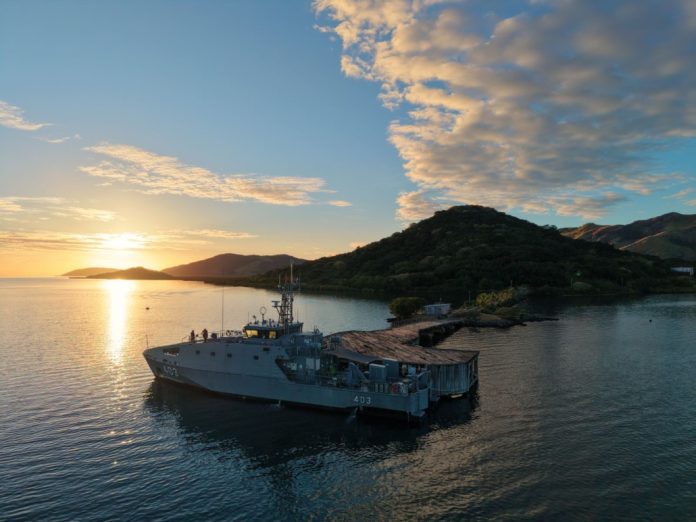
Three senior Royal New Zealand Navy officers, including the commanding officer, have been charged over the loss of HMNZS Manawanui after the ship struck a reef off Samoa.

The charges have been laid under the Armed Forces Discipline Act 1971, alleging errors on the bridge on the evening of 05 October 2024, led to the vessel grounding on a known navigational hazard southwest of Tafitoala village on Upolu Island.

Commander Yvonne Gray, Lieutenant Commander Matthew Gajzago and a third officer will face court martial over the sinking of the ship.

Pleas have not yet been entered over the allegations, although Gray has indicated via her lawyer that she will defend the charges.

The charging documents include the allegation that the third person, the officer of the watch at the time, was guilty of “negligently causing a ship to be lost”.

The charge sheet alleges they turned Manawanui towards a reef that lay about half a nautical mile ahead, at about 6.13pm local time, while travelling at more than four knots.

They are also accused of failing to disengage autopilot and take manual control in time to prevent the grounding.

Gajzago, who was the command supervisor on the bridge, has been charged with “negligently permitting a ship to be lost”.

It is alleged he failed to properly supervise third officer and ensure the ship avoided the reef.

Gray faces two alternate charges relating to the moment the ship approached the hazard. One alleges she negligently permitted the ship to be lost, by being absent from the bridge while within a nautical mile of a known reef. The alternate charge, which could be pursued instead, alleges she failed to attend her place of duty on the bridge in those circumstances.

Gray also faces a separate charge alleging she failed to ensure an appropriate plan was in place to manage the risks of conducting hydrographic survey work in uncharted waters close to reefs south of Upolu.

The charges were certified for trial and laid earlier today.

The sinking of the Manawanui was one of the most serious peacetime incidents in the modern history of the Royal New Zealand Navy. It has proved embarrassing for NZDF and the Navy, and expensive at about $120 million (US$71 million), which includes the cost of the ship and the clean-up.

Fijian PM Rabuka’s biggest election threat could come from within, academic says

0

A Fijian academic believes the government’s coalition partners could pose the biggest threat in the next general election.

Fiji is set to head to the polls later this year.

Prime Minister Sitiveni Rabuka’s People’s Alliance Party (PAP) is the ruling party alongside the Social Democratic Liberal Party (Sodelpa) and the National Federation Party (NFP).

Rabuka has also managed to coalesce the support of a dozen opposition MPs from the former FijiFirst Party to build a 40-member strong government side in the 55-member parliament.

Jope Tarai, a scholar at the Australian National University, told RNZ Pacific that the Prime Minister should watch them closely.

“They’ve (Sodelpa and NFP) been in the centre of the machinery of government, they’ve gotten full air time and they’ve gotten access. So, in that regard, the main opposition rival would probably come from those two parties, given the advantage of incumbency,” he said.

Tarai believes PAP had been “brutal” towards its coalition partners in the past, which could have built resentment.

“If PAP is not careful, parties that have been humiliated, NFP, Sodelpa, and Unity Fiji (another opposition party not in parliament) as well … this could give them a reason to unify against PAP, and that could be a different dynamic all together,” he said.

Going against the flow is Fiji’s Opposition leader, who tried to get convicted former Prime Minister Frank Bainimarama’s support to contest the election.

Inia Seruiratu told Pacific Waves that he wanted to carry on the legacy of the now deregistered FijiFirst, but Bainimarama did not play ball.

The former FijiFirst MP has since cut ties with the ex-military chief and rebranded the defunct party under the name of People First.

“We have to rebrand, not only as former FijiFirst politicians but of course the opposition as well. The opposition plays a very key role in democratic government but unfortunately there is a lot of animosity, a lot of party politics,” he said.

Bainimarama seized power in a military coup in 2006. He deposed the then democratically elected late Prime Minister Laisenia Qarase and took on the top job under an interim administration in 2007.

However, Fiji returned to democracy in 2014 and Bainimarama’s FijiFirst swept to victory in the first general election in eight years.

Seruiratu has defended FijiFirst, despite its leader’s 16-year rule being described by the current administration as a “dictatorship”.

“How do you define a dictatorship? FijiFirst won two consecutive elections. FijiFirst did a lot for Fiji in terms of raising the living standards, the state of the economy and of course our regional and international connections,” Seruiratu said.

He admits his People First party – approved as the country’s newest political part in November last year – has no manifesto and a lot of work to do. But is hopes to draw support from Fiji’s Western Division, which was previously a FijiFirst stronghold, from Indo-Fijians.

He said the party is pro multiracialism and secularism and will ensure half of its candidates are women.

“It’s about Fiji, we will one day finish [in politics] but what is it that we leave behind for our children? We need to create a better place for Fijians, not only for a few”, Seruiratu said.

Tarai insists that the coalition partners have key portfolios and strong visibility, despite the plight of the former co-Deputy Prime Minister Biman Prasad.

The former Finance Minister and current NFP leader resigned last October after facing corruption charges.

Prasad was charged with allegedly failing to declare his directorship in hotel ventures as required under the Political Parties Act.

Sodelpa’s leader Aseri Radrodro was dumped from Cabinet in January 2024 after an alleged drug and sex scandal with the then Minister for Women, Children and Social Protection, Lynda Tabuya.

Fijileaks, a blog site, known for breaking news about political corruption, had released explosive allegations of an extramarital affair between the two while they were on official business in Australia. Both Radrodro and Tabuya denied have rejected the allegations.

Radrodro was reinstated to the role of Education Minister three months later.

Tarai said Radrodro’s portfolio is key to attracting young voters, who have historically avoided the ballot box.

“While the Prime Minister is involved in high-stakes legal constitutional challenges, these parties are engaging in work where they are visible to up and coming voters and various everyday people,” he said.

Tarai feels there is growing support and sympathy for the former co-Deputy Prime Minister Manoa Kamikamica, who stepped down a week before Prasad after facing corruption charges.

Kamikamica has been charged by the Fiji Independent Commission Against Corruption (FICAC) with perjury and providing false information to a public servant.

Tarai said Rabuka’s nephew, Filimoni Vosarogo, the Minister for Lands and Mineral Resources, is definitely a candidate for the top job.

Vasarogo has stood in as acting prime minister while Rabuka was on official travel.

“He represented the PM legally in 2018 in terms of his [court] cases, he has a particular public persona that fits the conservative frame of the populous and he’s getting more and more of the roles that gain him public relations,” Tarai said.

Political commentators have questioned whether the son of Fiji’s first prime minister, High Chief Ratu Tevita Mara, aka Roko Ului, will step into politics in the future.

However, Roko Ului hails from Lau, a province in the eastern division with the lowest number of registered voters.

“What is perceived in the legacy of his late father (Ratu Sir Kamisese Mara) was under a different electoral system, so in that regard it’s going to take a lot of work,” Tarai said.

Roko Ului, a former military general, fled to Tonga in 2011 and went into exile after the then Prime Minister Bainimarama wanted him tried for treason.

The royal family sheltered him in their Nuku’alofa palace, where he worked as an advisor to King Tupou VI.

The Bainimarama administration banned him from re-entering Fiji – something that only became possible after Rabuka’s government came into power in December 2022.

Meanwhile, Tabuya, now the information, environment and climate change minister, was the fourth-highest polling MP in the 2022 general election, behind Rabuka, Bainimarama and the former Attorney-General Aiyaz Sayed-Khaiyum.

She was sacked then reinstated to Cabinet after a private video of her dancing naked was leaked online and went viral in December 2024.

Tarai said given the scandal, he doubted PAP would promote her.

“Given the internal party tensions I would be very surprised if she gets put forward, knowing full well that there are underlying hushed issues as well within the coalition,” he said.

Fiji is expected to head to the polls anytime between 07 August this year and 07 February in 2027. Eight political parties have registered to contest the general election so far.

Aside from the three coalition government parties the list includes the Fiji Labour Party, People First, All People’s Party, We Unite Fiji Party, and Unity Fiji.

Olivia Reed soars to new Marshall Islands long jump record in Boston

Marshall Islands athlete Olivia Reed has broken her own national long jump record with a leap of 5.92 metres at the 2026 Patriot League Indoor Track & Field Championship in Boston.

Competing against strong collegiate opposition, Reed produced her best-ever jump to reset the Marshall Islands national mark in the indoor long jump.

The 5.92m effort surpasses her previous record and marks another milestone for Marshall Islands athletics on the international stage.

Reed’s performance came at one of the key indoor meets on the U.S collegiate circuit, showcasing her steady progress and consistency in the event.

Her latest record underlines her position as one of the Marshall Islands’ leading track and field athletes, continuing to push the standard higher with each season.

Dr Aqorau warns Middle East conflict will hit Pacific, calls for ‘Ocean of Peace’

The Vice-Chancellor of the Solomon Islands National University, Dr Transform Aqorau, says the escalating conflict involving the United States, Israel and Iran will have direct consequences for Pacific Island countries and has urged the region to stand firm as an “Ocean of Peace.”

In a statement posted on social media, Dr Aqorau said the situation in the Middle East is deteriorating rapidly.

“The escalating conflict between the United States, Israel, and Iran is deeply alarming.

Missiles are flying. Civilians are dying. Oil tankers have reportedly been hit. The Strait of Hormuz — one of the world’s most critical oil routes — is now closed.”

He said declarations of success in war ignore the human cost.

“Some leaders speak of success. But war never has winners. The real cost is paid by ordinary people.”

Dr Aqorau warned that Pacific nations will not be shielded from the fallout.

“And the Pacific will not be immune.

If oil supplies from the Gulf are disrupted, global fuel prices will surge. For Pacific Island countries — heavily dependent on imported fuel — this means higher electricity costs, more expensive transport, rising food prices, and increased cost of living. Our already fragile economies could face another severe external shock.” said Dr Aqorau.

He said the region is already under strain from multiple crises.

“At a time when our region is struggling with climate change, rising sea levels, drug problems, mental health pressures, youth unemployment, diabetes, slow economic growth, and growing populations — we do not need more global instability.

We need peace.”

Dr Aqorau highlighted the Pacific’s long-standing position as an “Ocean of Peace.”

“Pacific leaders have declared our region an ‘Ocean of Peace’ — a commitment to unity, sovereignty, dialogue, and non-militarisation. This is not just symbolic. It is strategic. Our islands have suffered before from global power rivalries and war. We know the long shadows they cast.”

He said regional solidarity must guide the Pacific as global tensions rise.

“As global order shifts, the Pacific must look more to each other for solidarity and cooperation. Our strength is in regional unity. Our security must be rooted in development, climate resilience, and human wellbeing — not militarisation.”

Dr Aqorau said war shifts resources away from essential services.

“War diverts resources from schools to weapons, from hospitals to missiles, from climate action to destruction.

Peace creates the space for progress.”

He called for leaders and citizens to hold the line.

“For the sake of our children — their health, their education, their future — the Pacific must stand firm as an Ocean of Peace.

In a world drifting toward conflict, let us choose stability.

Let us choose cooperation. Let us choose peace,” he said.

Dates for the 8th Pacific Media Summit announced

0

The Fijian Media Association (FMA) and the Pacific Islands News Association (PINA) are pleased to announce that the 8th Pacific Media Summit will be held from 21–25 September 2026 in Savusavu, Fiji Islands.

Held under the theme “Reaching the Remote: Media and Digital Innovation for a Connected Blue Pacific”, the biennial summit will bring together an expected 150–200 media delegates from across the Pacific region, including journalists, editors, media executives, academics, development partners, donors, and key stakeholders.

This theme reflects the urgent need to ensure that every remote and underserved Pacific community has access to reliable information through strong, independent and innovative media. It underscores the importance of regional collaboration, resilient disaster-ready communication systems, and investment in emerging technologies to build a more connected, inclusive and peaceful Blue Pacific.

Together, these priorities reflect a shared commitment to ensuring that Pacific media remains inclusive, innovative, and responsive to the evolving needs of the Blue Pacific region.

The Pacific Media Summit is PINA’s flagship regional platform for dialogue, collaboration and action on media development issues in the Blue Pacific. It provides a vital space for media professionals and partners to address emerging challenges, explore innovation, strengthen professional standards, and reinforce the role of independent media in sustainable development.

PINA President Kalafi Moala said the 2026 Summit comes at a critical time for the region.

“The Pacific Media Summit continues to be our region’s most important platform for strengthening media solidarity and innovation, ensuring that even the most remote communities are connected, informed and heard.”

FMA General Secretary Stanley Simpson welcomed the opportunity for Fiji to host the regional gathering in Savusavu.

“We look forward to welcoming our Pacific colleagues to Savusavu as we explore how media and digital innovation can better serve our island communities and advance a truly connected Blue Pacific.”

The previous Pacific Media Summit was hosted in Niue in September 2024, reaffirming the importance of rotating the summit among Pacific Island countries to ensure inclusive regional participation.

The 2026 Summit will feature panel discussions, keynote addresses, technical workshops and networking sessions focused on digital transformation, media sustainability, emerging technologies, press freedom, climate reporting, and inclusive storytelling across remote island communities.

Further details on registration, programme highlights and partnership opportunities will be announced in the coming months.

Military bases in Guam raise alert level amid raging conflict in Middle East

0

While assuring Guam residents that there is no specific threat to the island at this time, the Joint Region Marianas and the Guam National Guard have raised the alert level following the U.S-Israel strikes on Iran and retaliatory activity in the Middle East.

“This adjustment is part of our ongoing commitment to ensuring the safety and security of our personnel, families, and mission capabilities,” JRM and GUNG said in a uniform statement posted on their respective Facebook pages.

Military installations in Guam have raised their force protection condition level from Alpha to Bravo as a precautionary measure, they said.

JRM said normal operations will continue with appropriate modifications to access procedures, such as increased “random antiterrorism measures.”

“We will continue to monitor the situation closely and will provide updates as necessary,” it added. “While there is no specific threat to the region at this time, this change reflects a general increase in vigilance in alignment with Department of War security protocols.”

Guam Delegate James Moylan said he is closely monitoring the situation in the Middle East and is praying for all deployed service members, especially the sons and daughters of Guam who are stationed in the region.

U.S Rep Ed Case of Hawaii said President Donald Trump must explain to Congress and the American people why he allowed the military action to take place, when only Congress has the power to authorise a war.

Case called on the U.S Congress to convene at once to obtain all the facts and vote to continue or end the military action.

Under the Constitution, Case said a president cannot take the country to war without congressional authorisation—unless there’s an imminent threat and then only for a limited period subject to congressional approval.

“There has been no demonstration of an imminent threat to our country. This action is not authorized and that cannot be ignored,” he added.

Moylan, for his part, said the United States stands firmly with its allies and partners across the Middle East, including Israel, as they face growing security threats in the region.

“Our commitment to the safety and stability of our allies remains unwavering,” he added.

It was the second time in eight months that the Trump administration had used military force against Iran. The last one was in June 2025. The attacks are being characterized to weaken Iran’s nuclear program. It accuses Iran of trying to build nuclear weapons.

Moylan said he is also closely following reports about attacks on the U.S Navy installation in Bahrain and attempted strikes on military bases in the Middle East.

He said the safety of service members must remain the highest priority, and “we stand in solidarity with our service members and their families around the world.”

Mary Camacho Torres, a Republican candidate for delegate, said Guam “is not simply another community watching” the conflict from this side of the world.

“As a vital part of America’s presence in the Pacific, our island often finds itself at the centre of decisions made far from our shores,” she said in a statement.

She noted that Guam, other U.S territories and affiliated Pacific island nations are home to thousands of service members, their families and veterans who were deployed to previous U.S military operations.

“In the face of these developments, Torres said that Guam, now more than ever, needs strong, steady representation in Washington, D.C.,” Torres said.

“In the coming days and weeks, our people should not be left guessing about what this may mean for our island. We deserve clear answers from our representative. No one questions our patriotism. But our community should not be left in the dark,” she added.

Palau Senate President Baules responds to U.S entry ban, rejects corruption claims and defends Senate’s oversight role

0

Palau Senate President Hokkons Baules has publicly rejected allegations referenced in a recent statement by the United States Department of State, saying he has never engaged in corruption, taken bribes or supported criminal activity involving Chinese nationals.

In remarks addressed to fellow senators of the 12th Olbiil Era Kelulau and to the people of Palau, Baules said he was “confused” by claims that he was involved in corruption, associated with Chinese criminals or had accepted money from Chinese businessmen.

“I don’t know what corruption I am involved in Palau or outside of Palau,” Baules said. “I don’t have Chinese friends who are criminals, in Palau or outside of Palau. And I have never taken money from businessman in Palau or outside of Palau, or support Chinese or Chinese businesses.”

Baules said he stands by the oath taken when the 12th OEK was sworn in — to “protect and defend Palau, Palau’s Constitution, Palau laws and laws of its 16 states.”

The statement from the State Department also indicated that Baules and his immediate family are banned from entering the United States. Baules questioned the basis for the decision but said he respects U.S sovereignty.

“My question is: have I broken any U.S laws while living in Palau? I don’t know what U.S laws I have broken,” he said. “But it is okay. It is their country, so it’s their discretion whether I can go there or not. Anyways, I am not crying to go to the United States.”

He noted that he has traveled to Guam in the past to attend Palau Independence Day celebrations but said if U.S authorities no longer wish to admit him, “that is their right.”

Baules called for transparency and due process, pointing to letters sent by Senate Vice President Senator Stevenson Kuartei and Palau Ambassador to the United States Hersey Kyota requesting information from the State Department regarding the allegations.

He urged President Surangel Whipps Jr. and the Ministry of State to make similar requests.

“If such information is available at the U.S Department of State, have them send it to Palau,” Baules said.

“And if that information says I am involved in corruption, let the Special Prosecutor and the Attorney General sue me. If it is proven in court that I did have criminal involvement, let it be. Let me be put in jail for it, and I’ll resign from the Senate because I’ve broken the law.”

Baules also addressed concerns about Chinese nationals in Palau, saying the country maintains diplomatic relations with many nations and is a member of the United Nations, where the People’s Republic of China voted in favour of Palau’s membership.

“We all know that Palau has no enemy in the world. But we do have many friends,” he said.

He acknowledged that some Chinese nationals in Palau have been involved in criminal activity and have been charged and jailed.

He also noted that some have been placed on the president’s Undesirable Aliens list. However, he raised questions about instances in which individuals with valid Foreign Investment Board licenses were listed without charges or investigations.

“But despite that, we respect the President of Palau’s decision on that,” Baules said.

The Senate president stressed that differences between the legislative and executive branches should not be interpreted as hostility.

“We do have differences of opinions on some issues but having differences of opinions does not mean we are against the President,” he said.

He cited a recent lawsuit filed by the Senate against the president, saying it was intended to seek clarification on constitutional or legal questions, not to oppose the executive branch.

“We represent the people of Palau, so we have right to question the President when we have differences in opinions,” Baules said. “When that is not clarified within OEK, we go to court to get clarification.”

Baules also revisited the ongoing debate over deportees entering Palau under a memorandum of understanding.

He said senators questioned whether there is legal authority for the president to allow individuals to enter and temporarily stay at Palau Community College while seeking employment.

“The United States cannot send people away without a reason. There is a reason,” he said. “They are deportees. Why? What caused that? Just like our citizens who go to the U.S and break laws and get deported.”

He emphasised that foreign workers from countries such as the Philippines and Bangladesh enter Palau under existing labour and immigration laws, unlike the deportees under the MOU arrangement.

Baules concluded by urging patience while awaiting responses from U.S authorities.

“I want to let you all know, I have nothing to hide,” he said. “Our country has an open government, a government of laws and there is a process to follow to determine if a person is guilty or not, said Baules.

Fiji monitoring Middle East tensions, as Solomon Islands warns citizens not to travel

The Fijian Government is closely monitoring escalating tensions in the Middle East, including developments involving the United States, Israel and Iran.

In a statement, Fiji’s Minister for Foreign Affairs and External Trade, Sakiasi Ditoka, said authorities are keeping a close watch on the situation amid reports of incidents across parts of the wider region.

“The Government of Fiji is closely monitoring developments in the Middle East, including recent reports of escalating tensions involving the United States, Israel and Iran, and incidents reported in parts of the wider region.”

Ditoka said Fiji’s diplomatic representatives in the region are maintaining contact with authorities and nationals.

“Our Missions and Honorary Consuls in the Middle East are in contact with relevant authorities and are maintaining communication channels with Fijian nationals where necessary.”

He confirmed that, so far, there are no verified reports of Fijians directly impacted.

“At this stage, we have not received confirmed reports of Fijian citizens directly affected by the recent incidents.”

The Minister noted that Fijians are living and working in countries including Qatar and other Gulf states, and precautionary measures are being reviewed.

“We are aware that Fijian nationals reside and work in countries such as Qatar and other parts of the Gulf. As a precaution, our Ministry is reviewing contingency protocols and stands ready to provide consular support should the need arise.”

Ditoka also issued advice to Fijians currently in the region.

“To Fijians currently in the region, we urge you to: remain calm, follow official advisories issued by host governments, maintain contact with family members where possible and Register with the nearest Fiji Mission if you have not already done so.”

He sought to reassure families in Fiji that the situation is being monitored closely.

“To families here at home who may be concerned, please be assured that the Ministry is actively monitoring the situation and will provide updates should circumstances materially change.”

Fiji is also urging restraint amid the rising tensions.

“Fiji continues to call for restraint, dialogue and the peaceful resolution of disputes in accordance with international law,” he said.

Meanwhile, the Government of Solomon Islands has issued a travel advisory for its citizens.

“Due to heightened tensions and conflict in the Middle East, all Solomon Islands nationals are strongly advised not to travel to the region until further notice.

Solomon Islanders residing in the Gulf Region and Israel are urged to take necessary precautions, remain calm, follow host country authorities, and monitor reliable updates.

Winston Peters wants to be Pacific’s Trump whisperer

0

New Zealand is courting the United States to return as a major donor and diplomatic powerhouse in the Pacific after years of disinterest in the region from American administrations.

The push will ramp up in coming months and take flight at the beefed-up Pacific Islands Forum (PIF) leaders meeting in Palau this August.

Winston Peters, New Zealand’s foreign minister, is eyeing bilateral talks with Secretary of State Marco Rubio ahead of the summit and believes his advocacy can catch the ear of President Donald Trump.

“We are working on what you might call linkages to get in his mental space on this issue,” Peters says.

He is a long-running advocate for Pacific development and has urged the US to invest in the blue continent on both strategic and humanitarian grounds.

“We want to tell them why it’s critically important and how in their terms ‘minimalist funding’, they can do so much in their front yard,” he says.

“Our job is to remind them that’s your front yard, just like ours.”

To this end, the 80-year-old is delighted this year’s PIF meeting will again allow greater powers to attend.

Last year’s summit, hosted by China-friendly Solomon Islands, closed ranks to all non-members including the U.S, China, Japan, the UK and France.

This was widely interpreted as a block to delegates from Taiwan at Beijing’s insistence, with the effect of barring the biggest donors to the underdeveloped region.

Palau President Surangel Whipps Jr has confirmed the return of these “dialogue partner” nations in 2026, with New Zealand and Australia cheerleading the shift.

“It’s critical because in the end, we need partners,” Peters says.

“They had a right to be there (in Solomon Islands last year) and that right was interfered with by outsiders telling the insiders at the forum what they should be doing.

“We’re not accepting that. So, this is going to happen in Palau this year; they’re all back and they’ll back in New Zealand when we hold the forum next year.”

In the meantime, Peters is privately scheming to engage the Trump administration, which has radically overhauled U.S foreign policy.

Trump and r Rubio have castigated old allies in Europe and disbanded USAID, which pumped tens of billions in foreign aid into poorer nations, largely in Africa and Asia.

Pacific island nations were hurt by the withdrawal but not to the extent of other nations given U.S engagement was already low.

Peters hopes to book a meeting with Rubio “very shortly” when he would argue for Pacific prominence in its foreign policy reconfiguration.

“We are going to go and talk about the relevancy of them needing to be part and parcel of the blue continent and not repeat what they were accused of by a famous man called General Douglas MacArthur,” he says, referring to the storied WWII U.S army chief.

“He says, ‘you are Euro-centric, you’re not facing and concentrating on your own area’. MacArthur was saying that then and we’re saying it again.”

Alongside his chase for deeper U.S regional ties, Peters is also embracing the new-era politics of Trump’s Republican party for his own political force: New Zealand First.

His populist party has adopted similar slogans and policies to the MAGA movement, including an embrace of fossil fuels, anti-immigrant rhetoric, a “war on woke” and a rollback of transgender rights.

This alignment has won Peters friends in the Republican administration but also highlights tensions between Peters’ populist politics and his role as New Zealand’s top diplomat.

As he rails against “globalists”, Peters is resisting calls to defund or disband parts of the UN.

New Zealand has not joined Trump’s Board of Peace but nor has it ruled out ever joining.

“We said we’ll look at it but we’re not joining now at the moment,” Peters says.

“There’s one thing I do know, and this is essence of conservatism: it is far easier to try and build what you’ve already got, or reform what you’ve already got, than to start something new,” he says on the UN.

Peters is leading a multi-partisan political and business delegation to Latin America at the weekend.

Stay connected

529FansLike
172FollowersFollow
156SubscribersSubscribe
- Advertisement -