
Papua New Guinea’s government says it’s concerned about its citizens in the Middle East amid widening conflict in the region but supports the attack on Iran by Israel and the U.S that has sparked the escalation.
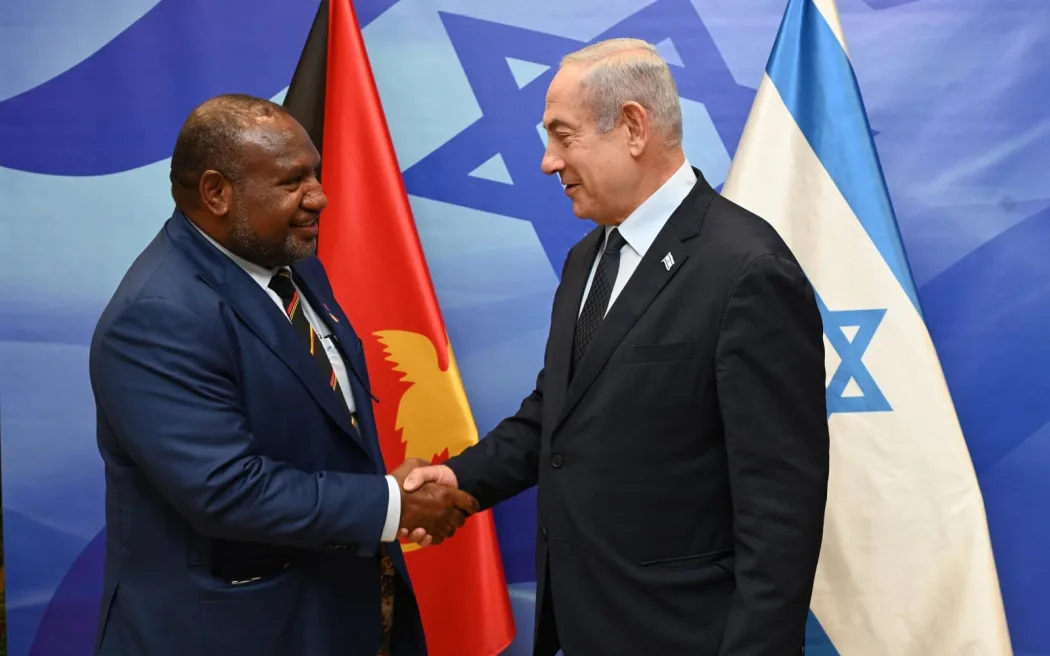
PNG’s Prime Minister James Marape on Monday said he had requested Australia’s consular help to include Papua New Guineans in their contingency and evacuation plans, particularly in the United Arab Emirates.
The escalation of conflict after Israel and the U.S attacked Iran comes when PNG is growing its diplomatic and trade presence in the Middle East. A new embassy in the UAE was soon to open in addition to the recently opened embassy in Jerusalem.
Foreign Affairs officials were just about to dispatch to Abu Dhabi for the new opening, PNG’s Foreign Minister Justin Tkatchenko told RNZ Pacific, but then the UAE capital itself became a target.
“We’ve temporarily put the setup of the embassy on hold until a more positive and peaceful situation comes about in the Middle East, especially in UAE, as they’re being attacked by Iran at the moment.”
Tkatchenko said the government was still working out how many Papua New Guineans were in the UAE but didn’t put it at over a couple dozen, but he was concerned they should get to safety.
“But also, Australia has put out their hand, their assistance, in also assisting any Pacific Islanders or Papua New Guineans as well in this situation.
“We’ll work with our close neighbours and any of the Papua New Guineans that want to leave, that are there, we encourage them to be registered immediately and get out as soon as possible.”
However, he said with all the airspace now closed and borders closed, it might be a bit difficult.
“In Jerusalem, we have our deputy ambassador and his family there at the moment. They are in the bunkers, seeking cover and safety as required when the sirens and the emergency alerts go out, so we’re keeping a close watch on that.”
Marape said his “prayers and thoughts” were with PNG citizens and diaspora for their safety and said he would be writing to the President of UAE, Mohammed bin Zayed Al Nahyan, to seek his support for their wellbeing.
“It is my government’s hope and desire that an amicable truce is reached between all parties concerned for the total restoration of regional and global peace and security in the Middle East and beyond,” he said.
The attack on Iran was not authorised by the UN Security Council and occurred without evidence of an imminent threat.
Asked if PNG was concerned about the precedent this sets in other parts of the world, including Asia Pacific, Tcatchenko accused Iran of being a country that harbours terrorism.
“Papua New Guinea has always been against terrorism, and we have supported the United States and Israel from day one all the way through in their plight to tackle these terrorist organisations.
“I think there’s a lot more behind the scenes that we don’t realise, and the truth will prevail and come out at the end of the day. But at the moment, we have a country that is just about to launch its and expose its nuclear arsenal which we can’t have in our world, especially when they support terrorism.
The minister said the Pacific Islands region has “had enough of nuclear issues from the past” and was “against any nuclear proliferation in any country that cannot control it or that will use it for devious or other means”.
“So, in that regard, you know, we can’t work with countries that also don’t want to follow the rule of law internationally or domestically,” he said.
Tkatchenko saw some potential upside for PNG as a petroleum and oil exporter, given the expected spike in oil prices due to a likely supply shortage out of the Persian Gulf as a result of the conflict.
“It will definitely benefit PNG, but then there’s the other side, where fuel prices for the domestic market will then go up.
“Unfortunately, it’s the consumers that will cop it, the people, and they are the ones that end up paying for it,” he explained.
“So yeah, it’s good in one way, but definitely won’t help out people in the long run.”
Meanwhile, Papua New Guinea Ministry of Foreign Affairs has announced the temporary closure of its Mission in Jerusalem, Israel, following the escalation of the Middle East conflict.
The Embassy will remain closed until the situation improves and it’s safe to reopen the Mission, according to Foreign Minister Justin Tkatchenko.
“Land borders and airspace are closed at this time, restricting the movement of people in and out. People are under the bunkers for safety”.
The Australian Government and its Missions in Israel and UAE are offering assistance to Papua New Guineans in this situation, the Minister said.