Home Blog Page 61

Nauru strengthens global digital strategy and appoints first international trade commissioner

0

The Nauru Government’s plans to boost the economy through becoming a leader in digital asset innovation are progressing, and “there are exciting times ahead”, according to President David Adeang.

The President said the government has appointed international entrepreneur and digital currency expert Dadvan Yousuf as an international trade commissioner to boost global investment.

He said the appointment reflects Nauru’s commitment to engaging globally with experienced leaders in emerging technologies to accelerate economic diversification and strengthen international partnerships.

“Yousuf brings a unique combination of entrepreneurial vision, international network, and deep understanding of digital asset markets,” President Adeang said.

The Parliament passed legislation to establish the Command Ridge Virtual Asset Authority (CRVAA) in June 2025, and a month later the government appointed highly respected Australian banking and financial markets executive Brian Phelps as its inaugural CEO.

At the time the President said the government wanted Nauru to become a crypto hub that attracts business investment, job creation, and financial innovation to the nation.

“We must be innovative in our quest for economic resilience and a higher standard of living for our people, while prioritising international best practices and the highest levels of governance and compliance.”

After his re-election in October, President Adeang reaffirmed the government’s commitment to prioritise current and future economic prosperity.

“While the UN has ranked us the world’s fifth most vulnerable nation to economic and climate shock, we have decided that this is not our future,” he said.

He explained that the new trade commissioner will help carry out the government’s innovation agenda by playing an important role in advancing Nauru’s international digital strategy.

The commissioner will represent Nauru in a diplomatic capacity, supporting cross-border engagement with virtual asset service providers, financial institutions, and technology companies seeking to establish operations within Nauru’s regulatory framework.

The CRVAA establishes a comprehensive licensing regime for virtual asset service providers, enabling companies to operate from Nauru under a clear, modern, and internationally aligned regulatory environment.

Yousuf said he was honoured to support Nauru’s vision and contribute to its long-term economic strategy.

Playing legislative catch-up: Drug law reform in the Pacific

0

By Virginia Comolli

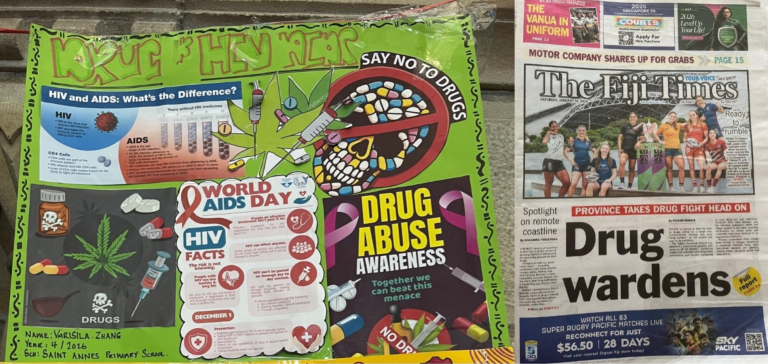
Drug trafficking is expanding rapidly across the Pacific. Countries that were once primarily transit points have experienced a surge in domestic consumption, with some also emerging as production sites. Drug legislation, however, is struggling to keep pace with these shifting regional dynamics.

Because many of the region’s drug laws were drafted when cannabis was the main policy concern, many states have been poorly equipped to respond to the spread of cocaine and synthetic substances. As a result, communities, law enforcement agencies and health services are facing challenges that existing legal frameworks were not designed to address.

Against this backdrop, recent political posturing, including periodic proposals by state officials in Fiji, Tonga and Papua New Guinea to reintroduce the death penalty, highlights the pressure governments are under to respond quickly and robustly to communities’ fear and frustration – and to be seen to do so.

Drug law reform across the Pacific

Fiji currently faces one of the most severe drug problems in the Pacific, particularly in relation to its HIV epidemic, which disproportionately affects people who inject drugs. However, debates on drug laws are gaining momentum across the region as states reassess laws written for a very different trafficking landscape.

Solomon Islands, for instance, was caught off guard by its first seizure of methamphetamine in 2023, as state legislation did not classify the substance, or other synthetics such as ketamine and ecstasy, as ‘dangerous drugs’. This legal loophole was only addressed in late 2025, and the country is now updating its legal provisions.

Policymakers are consulting the public ahead of amending the Dangerous Drugs Act to introduce harsher penalties for offences, including life imprisonment. However, critics have argued that a narrow focus on methamphetamines fails to anticipate the possible introduction of other drugs, which would leave enforcement authorities unprepared once again.

Fiji’s drug policy consultation

Recent developments in Fiji illustrate the policy challenges involved in updating drug legislation. The Melanesian country has taken a notable step through its National Counter Narcotics Strategy 2023–2028, which integrates supply, demand and harm-reduction pillars, alongside the proposed Counter Narcotics Bill. The latter would also facilitate the restructuring of the country’s Counter Narcotics Bureau, which encountered significant operational and integrity issues following its initial launch in 2024.

To inform the process, the government launched an extensive consultation process. Public meetings, community consultations and talanoa discussions – a process centred on open and respectful dialogue – have brought together government representatives and civil society organisations, including the GI-TOC. Churches and traditional authorities, such as the Great Council of Chiefs, also played a prominent role in these discussions, reflecting the social significance of the issue.

Beyond legislative reform, the consultations assessed whether existing frameworks are adequate to respond to the recent changes in the organised crime landscape. Seizures alone cannot disrupt drug markets if the systems that enable trafficking, such as financial flows and border vulnerabilities, remain intact, and if the credibility of law enforcement is not guaranteed.

The process also examined broader responses relating to prevention, treatment and community resilience. In doing so, it acknowledged the intersection of drug policy with public health, social cohesion and economic pressures.

When communities regulate drug use

In the Pacific region, village chiefs, councils and elders play a central role in maintaining social cohesion. In fact, in certain iTaukei (indigenous Fijian) villages, the chiefly system and the vanua, broadly understood as the traditional order, carry more weight than formal law or policing structures. This has important policy implications, as approaches designed for urban environments may be difficult to implement in settings where community authority structures remain highly influential.

The situation also raises complex legal and human rights concerns. Some Fijian communities have attempted to address drug use through internal mechanisms such as by-laws and customary rules. In certain cases, communities have considered excluding or banishing people accused of drug use. Such measures may conflict with constitutional protections and due process, and risk marginalising individuals who are already vulnerable. The talanoa sessions highlighted cases in which people expelled from their villages because of drug use had become homeless. Participants also noted that women and young girls in such situations may be pushed toward sex work as a means of survival or to sustain drug dependence.

Churches are also influential in Pacific societies, providing moral guidance, community support and various social services. In the context of limited state resources for countering drug addiction, these institutions can play an important role, particularly through prevention and rehabilitation initiatives. Tensions have arisen, however, around certain public health interventions. For instance, needle and syringe programmes, designed to prevent HIV transmission among people who inject drugs, have encountered resistance from some religious groups, who perceive them as condoning drug use, despite decades of scientific evidence demonstrating their effectiveness.

Toward systemic responses

While attempts to modernise drug legislation across the Pacific are an important step forward, they will not be sufficient on their own. Criminal networks are adept at exploiting weaknesses in maritime routes, customs procedures, financial oversight and legal systems, and adapt quickly to new enforcement strategies. Effective responses will therefore require a broader shift from reactive policymaking to systemic disruption.

Crucially, responses should include the acknowledgment that transnational organised crime is a regional threat that requires improved regional cooperation across intelligence sharing, financial investigations and law enforcement capacity.

At the same time, public health systems must be equipped to address the consequences of drug use, including addiction, mental health pressures and the growing risk of HIV transmission. Prevention, treatment and harm reduction initiatives are all essential components of a sustainable response. Community institutions already shape how drug issues are managed, and these can be powerful assets for prevention, social support and rehabilitation. However, their engagement must align with national law, human rights protections and evidence-based health policies.

Ultimately, the challenge for policymakers in the Pacific is not simply to update or create legislation. Rather, it is to develop integrated responses that connect law enforcement, public health and community authority systems, while also targeting the financial and institutional enablers of organised crime.

Without coordination and the tangible measurement of outcomes, governments risk remaining trapped in a cycle of reactive policymaking, continually playing catch-up with drug markets that adapt faster than the laws designed to control them.

Virginia Comolli is the Head of Pacific Programme, Global Initiative against Transnational Organised Crime.

Head Coach Glen Jackson to depart the Fijian Drua end of 2026 season

0

The Fijian Drua rugby franchise has confirmed that Head Coach Glen Jackson will depart the Club at the conclusion of the 2026 Super Rugby Pacific season, following a mutual decision not to exercise the third-year option in his contract.

Jackson, who has been with the Drua since its first year (2022) before becoming Head Coach ahead of the 2025 season, has played a crucial role in the growth of the Club and the Men’s team.

He is widely respected for his passion and commitment by the playing group, staff, sponsors and the wider Drua vuvale.

Fijian Drua CEO Jeff Miller says: “Glen has been a part of the Drua journey since Day One and we thank him for his enormous contribution to for the past five years – three as Assistant Coach and two as Head Coach. He helped lay the foundations of this new Club and the team for which we are all truly grateful. There will be time for more acknowledgement and sharing fond memories, but for now, Glen and the entire Club are firmly focused on the remainder of the season.”

Glen Jackson says: “I would like to say a massive thank you to the Drua players, staff, and sponsors for an incredible five years of my life. It has been an amazing journey helping this great club continue to grow and strive to be one of the most supportive clubs in Super Rugby Pacific.”

He added: “The fans are truly the best in the world, and I will miss their incredible voice and unwavering support. I have enormous belief in this playing group, the staff, and the direction the club is heading. With six games remaining, I will do everything I can, alongside three outstanding assistant coaches, to give this team the best possible chance of reaching the playoffs.”

“Lastly, a huge thank you to my family for all the sacrifices they have made. Now it’s time for me to give some time back to them. Vinaka vakalevu”

The Club will commence with a recruitment process for a new Head Coach shortly.

Kiribati pushes for real climate action, targets COP31

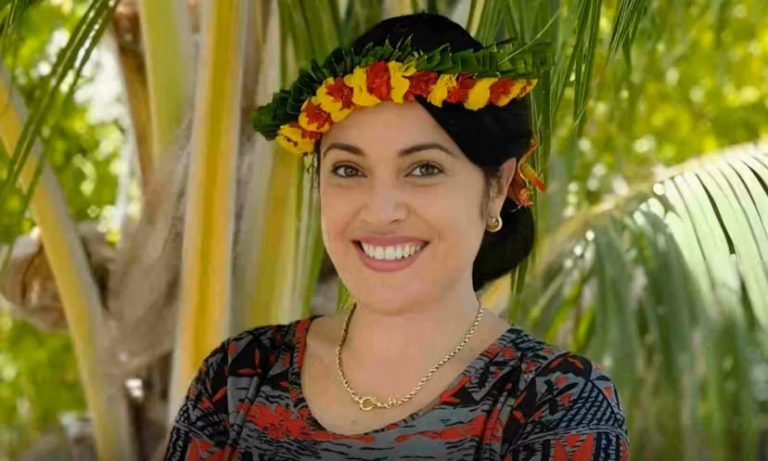
Kiribati Women Minister Ruth Cross Kwansing says Pacific leaders are shifting from talk to action as the region prepares for the next global climate talks, warning the focus must be on real solutions for frontline communities.

Speaking after the Meeting of the Pacific Political Climate Champions, Kwansing said the region is aligning its strategy ahead of COP31.

“An important moment for our region as we transition from the lessons of COP30 in Brazil to the urgent preparations for COP31 in Antalya, Türkiye,” She said in a social media post.

She said her role as Political Champion for Gender Equality and Social Inclusion is driving a stronger regional push.

“As the Political Champion for Gender Equality and Social Inclusion, this session was so helpful!”

Kwansing said leaders are working to sharpen the Pacific’s influence.

“We consolidated our regional leadership to ensure that the Pacific’s collective voice is ambitious. ”

She said engagement with key regional blocs is critical.

“We engaged directly with advisors from PSIDS and AOSIS to identify exactly how to maximise our impact.”

Kwansing said Kiribati is pushing to keep its priorities front and centre.

“For Kiribati, this was crucial opportunity to ensure that our unique challenges – particularly the intersection of gender justice and climate resilience – are at the forefront of the regional agenda leading into the Pre-COP meetings in Fiji and Tuvalu.”
She stressed the need to put people at the centre of climate action.

“We must position our people—especially our women and youth—as active agents of resilience strategies that will define our future!”

Kwansing said the region must move beyond rhetoric.

“To do so, we are preparing for COP31 with specific targets in mind, rather than repeating the same jargon that has dominated these halls for years! We must arrive with real, actionable solutions that solve problems at the frontlines and address the unique circumstances of the Pacific.”

She said the focus now is on delivering outcomes.

“I look forward to the work ahead as we carry the “ledger of survival” towards serious outcomes for our people,” Kwansing said.

Pacific Church Leaders’ Meeting opens in Fiji with focus on “life, identity, and spirituality”

0

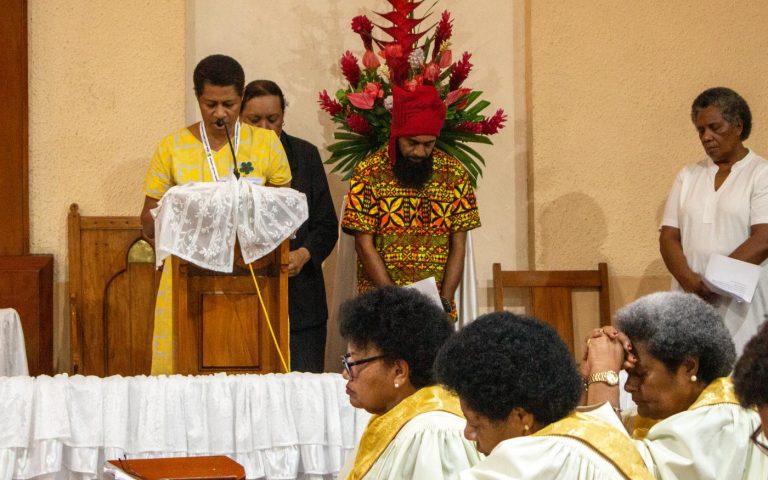
As the Pacific Church Leaders’ Meeting opened in Fiji, World Council of Churches (WCC) general secretary Reverend Professor Dr Jerry Pillay offered a sermon entitled “Resurrection Hope in the Pacific: Life Rising from the Ocean of Struggle.”

Frances Namoumou, programmes manager of the Pacific Conference of Churches and member of the WCC Commission on Climate Justice and Sustainable Development, reads one of the prayers of intercession during the welcome service on Monday.

The Pacific Ocean is not empty space—it is sacred space, noted Pillay.

“For Pacific peoples, the ocean is life, identity, and spirituality,” he said. “It connects islands and generations. It is never just water. It is life. It is memory. It is identity. It is story.”

Yet today, this sacred space is under threat, Pillay said.

“In the language of the WCC, this is not only an environmental crisis—it is a matter of justice, dignity, and life in fullness for all,” he said. “So, when we speak of resurrection, we speak not only of Christ’s victory over death, but of God’s commitment to life amid injustice.”

In the Pacific, the ocean speaks, continued Pillay. “It speaks of life, beauty, and abundance—but today it also speaks of crisis,” he said. “Resurrection hope is therefore justice-shaped hope.”

The WCC has repeatedly called the church to hear the cry of the earth and the cry of the poor. “It does not matter whether you are in Fiji, Geneva, Africa, or anywhere else on the earth,” he said. “We are together family, part of God’s creation.”

Resurrection hope does not deny suffering—it names it truthfully, while proclaiming that God is birthing something new, continued Pillay.

“The World Council of Churches speaks of the church not as static, but as a pilgrim people,” he said. “In the Pacific, this image is powerful.”

A story often told in Kiribati speaks of a community that, before relocating, gathered for worship, took sand from their ancestral shore, and carried it with them.

“Resurrection transforms displacement into pilgrimage with God,” said Pillay. “In WCC theology, salvation is never merely individual. It is communal and cosmic.”

God is renewing the whole web of life, noted Pillay. “The World Council of Churches calls the church to prophetic witness,” he said. “Resurrection is not passive comfort—it is active resistance to death-dealing powers.”

Pacific churches have become prophetic voices in global forums, said Pillay.

“Resurrection hope in the Pacific is not abstract theology,” he said. “It is lived reality.”

The Pacific will not be defined by loss – but by life, Pillay said. “May this be our resurrection hope here in Fiji and in every part of the world where hope is needed in the presence of suffering and struggle,” he said.

Reverend Elder Dr Leatulagi Faalevao, moderator of the Pacific Conference of Churches, offered words of welcome.

“We gather tonight with gratitude to God, who has brought us from many islands, nations, languages, and church traditions, and has gathered us here as one in Christ,” said Faalevao.

“We come to revisit the foundations of the Pacifica Household of God, to reflect on the journey we have travelled together, and to discern how we are called to respond faithfully to the realities facing our peoples and our region.”

Faalevao reflected that the meeting is intended to deepen shared understanding, strengthen fellowship, and help clarify pathways toward the future.

“Over the next few days, may we not only meet as church leaders, but gather as sisters and brothers in Christ, listening together for what the Spirit is saying to the churches of the Pacific at this time,” said Faalevao.

The Pacific Church Leaders’ Meeting is currently underway in Suva, Fiji, from 13-17 April.

$2.5M allocated for Western for relief distribution

0

Western Province has secured $2.5 million (US$310,931) from the $10 million (US$1.24 million) allocated by the National Government to support emergency response efforts following the impact of Tropical Cyclone Maila.

Chairman of the Provincial Disaster Committee (PDC), Collin Potakana, confirmed to Solomon Star in an exclusive interview on Sunday that the Government has committed an initial $10 million(US$1.24 million) to assist both Western and Choiseul provinces.

Potakana said Western Province will receive $2.5 million (US$310,931) from the total allocation to support relief operations across the province.

He said the funds will be directed towards assisting affected communities, particularly through the distribution of essential food supplies and non-food items (NFIs).

“We are now moving into the distribution phase of food supplies,” Potakana said.

“As we speak, two ships are travelling to Western Province carrying 30 containers of rice, food supplies and non-food items.”

He said the vessels are expected to arrive either Monday or Tuesday, with distribution to begin immediately upon arrival.

According to Potakana, the two ships will cover the most affected regions.

“One ship will serve the Central and Western region, including Simbo, Ranongga and South Vella. The other will travel to North Vella, the Shortland Islands, Fauro and Mono,” he said.

He added that alternative options, including the use of helicopters, are being considered to deliver supplies to hard-to-reach communities.

“As soon as it is confirmed, we will proceed with air delivery as well,” he said.

Potakana further revealed that a Hercules aircraft is also expected to arrive in Munda with additional relief supplies.

He stressed that the immediate priority is to ensure timely distribution of assistance to affected communities across the province.

Following the declaration of a State of Emergency in Western Province, evacuation centres have been established in Gizo, accommodating families displaced by the disaster.

Meanwhile, Potakana clarified that the $2.5 million (US$310,931) allocation has yet to be received at the provincial level, as the funds are currently with the National Disaster Management Office (NDMO).

He said the province expects the funds to be transferred by Monday.

The Prime Minister has confirmed that the Government has activated national disaster response arrangements under the National Disaster Management Plan 2018 to ensure a coordinated and timely response.

Other Provinces including Central, Isabel and Guadalcanal Province was included in the $10 million (US$1.24 million) relief assistance.

Solomons vanishing Islands: Walande and Fanalei on the Frontlines of Climate Change

0

By Ednal Palmer

At low tide, just off the coast of South Malaita in the Solomon Islands, a few wooden posts emerge from the waters.

They aren’t easy to miss – although weathered, fragile, and half-submerged.

But for the people of Walande, those posts are more than debris. They are the last visible remains of a once-thriving artificial island that over 800 people once called home.

For generations, Walande stood as a symbol of resilience and ingenuity.

Built by hand and maintained through communal effort, the artificial island supported families, traditions, and livelihoods tied closely to the sea. But over time, rising seas, stronger storms, and increasingly severe “king tides” began to reshape daily life.

Floodwaters crept into homes. Seawalls weakened. Each year, rebuilding became harder.

Still, the community stayed.

For decades, Walande residents adapted. They rebuilt houses, reinforced stone walls, and adjusted their way of life to the changing environment. Leaving was not an easy option.

The island was not just land—it was identity, culture, and history.

But in 2009, a series of devastating king tides marked a turning point.

“We left because it was no longer possible to stand the rising tides,” recalled Francis Iro, an elder of Walande.

“We had to move to safety. The only alternative for us was the mainland.”

With few choices left, the community decided on a last resort: relocate entirely.

They moved to a 46-acre site on mainland South Malaita. It was a monumental undertaking – one that demonstrated community – and tribal-led initiative on resettlement.

Willie Firi, another community person spoken to, recalled that despite appeals for assistance when they faced the hurdle, support from the Solomon Islands government and international donors fell short.

“Undeterred, we organized ourselves. We planned, negotiated with mainland tribal landowners, and successfully executed our relocation largely on our own,” Firi said.

“Families rebuilt homes. Community members worked together to construct a new village. The move was difficult, and losses were inevitable,” he recalled.

Yet Walande’s relocation became a powerful example of community-led adaptation – marked by ingenuity, leadership, and perseverance in the face of climate change.

But the struggle did not end there.

Today, the same forces that drove Walande from their island are threatening many other low-lying communities throughout the Solomon Islands.

The nearby Fanalei community is slowly being scattered. A recent visit found the village already being torn apart by the sea.

“Many families have already moved to the mainland,” community elder Filei told In-Depth Solomons.

He said the handful of houses that remain on Fanalei Island may leave as well, but that intervention by responsible authorities and environmental support groups is critical.

It was very clear that the Island of Fanalei has gradually shrunk over the years. Coconut trees that once stood near the shoreline have fallen into the sea.

Burial grounds, sacred to the community, are now gone.

During particularly high tides, waves crash over homes, forcing families to stay awake through the night, ready to move children and belongings to safer ground.

“It’s painful. You watch the sea take your land piece by piece.”

Filei admitted that moving was not simple. Many families had blood-related connections on the Malaita mainland, but relocation meant building new homes, establishing new water sources, and adapting to a new way of life away from the sea.

In-Depth Solomons found that despite the relocation efforts from Fanalei, a few remained on Fanalei

“The islands were not just homes – they were identities. Generations had been born here, married here, and buried here. Leaving meant more than moving houses; it meant leaving history,” another resident, Rex, stated.

Climate change has made the choice of relocation for many communities in the Solomon Islands increasingly urgent.

According to regional climate projections, sea levels in the Pacific are rising faster than the global average.

For low-lying artificial islands like Walande and Fanalei, even small increases in sea level can have devastating impacts.

Saltwater intrusion contaminates wells. Storm surges become more destructive. Coastal erosion accelerates.

Communities have tried to adapt. Villagers continue reinforcing shorelines with coral stones. Some have planted mangroves to reduce wave impacts. Others have elevated homes.

But these measures provide only temporary relief.

For the people of Walande and Fanalei, climate change is not a distant concept discussed in international conferences. It is the water that seeps into their homes, the fish that no longer swim nearby, the stones that must be stacked higher every year.

It is also the quiet departure of neighbours, the dismantling of homes, and the painful decision to leave ancestral islands behind.

Yet even in the face of uncertainty, the communities remain resilient.

On calm evenings, families still gather to share meals. Children still play along narrow paths. Fishermen still head out before dawn, hoping the sea will provide.

Rex said he often returns to the edge of the submerged wooden posts, looking out toward the waters where he once fished with his father.

“The sea gave us life,” he says softly. “Now it is changing everything.”

As climate change continues to reshape the Pacific, the story of Walande and Fanalei stands as a powerful reminder: for small island communities, rising seas are not just environmental challenges — they are deeply human stories of memory, loss, and resilience.

And for Rex, the memory of fishing trips in the 1990s remains vivid – a time when the tuna were close, the tides were gentle, and the island beneath his feet felt permanent.

Loss and Damage: Climate Change Impacts in the Solomon Islands

For communities across the Solomon Islands, climate change is no longer a distant environmental concern — it is a lived reality.

Rising seas, stronger storms, changing rainfall patterns, and warming oceans are already causing irreversible losses and damages, particularly in low-lying coastal and island communities.

From the artificial islands of southern Malaita Province to its Sikaiana atoll inhabitants, the impacts are deeply human, affecting livelihoods, culture, food security, and even national identity.

The Solomon Islands is made up of more than 900 islands, many of which are low-lying and highly vulnerable to sea level rise.

Coastal communities are already experiencing land loss as shorelines erode and tides creep further inland.
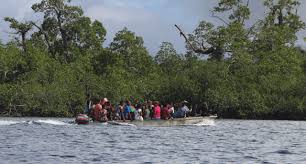
OBM is the main means of transportation around the Walande, Fanalei and other villages on the mainland of Small Malaita.

Changing Weather Patterns and Flooding

Climate change is also altering rainfall patterns across the country. Heavier rainfall events are causing more frequent flooding, especially in low-lying urban areas.

The devastating floods in Honiara in 2014 highlighted the growing risks. Homes were destroyed, infrastructure damaged, and thousands of people displaced. These extreme weather events are becoming more common and more intense as climate change progresses.

For rural communities, unpredictable rainfall disrupts farming cycles. Crops such as sweet potato, cassava, and taro — staple foods in the Solomon Islands — are increasingly vulnerable to droughts and floods. This threatens food security, particularly in remote communities that rely heavily on subsistence farming.

Impacts on Fisheries and Livelihoods

The ocean is central to life in the Solomon Islands. Many communities depend on fishing for food and income. However, warming sea temperatures and ocean acidification are affecting marine ecosystems.

Coral reefs, which support fish populations, are experiencing bleaching events. As reefs degrade, fish stocks decline or migrate to cooler waters. This forces fishermen to travel further from shore, increasing costs and risks.

Tuna, a key economic resource for the country, is also expected to shift eastward as ocean temperatures change. This could affect national revenue from fisheries, which is a major contributor to the Solomon Islands’ economy.

Cultural Loss and Displacement

One of the most significant aspects of Loss and Damage in the Solomon Islands is cultural loss.

Land is deeply connected to identity, heritage, and tradition. When communities relocate due to climate change, they risk losing cultural practices, sacred sites, and ancestral connections.

In many cases, relocation is complex. Customary land ownership systems can make it difficult for displaced communities to secure new land. This creates social tensions and uncertainty for affected families.

Climate displacement is already happening in parts of the Solomon Islands, and it is expected to increase in the coming decades.

Economic Loss and Infrastructure Damage

Climate change also damages infrastructure such as roads, schools, clinics, and water systems.

Small island economies like the Solomon Islands have limited resources to repair and rebuild after disasters.

Cyclones, storm surges, and floods strain government budgets and slow development progress. Communities often rebuild using their own limited resources, only to face repeated damage from future climate events.

This cycle of destruction and rebuilding is a major component of Loss and Damage.

International Recognition and Support

The Solomon Islands has been a strong advocate for global action on Loss and Damage. Along with other Pacific nations, it has called for financial support from major emitting countries to help address climate impacts.

At international climate negotiations under the United Nations Framework Convention on Climate Change, Pacific Island countries pushed for recognition of Loss and Damage. This effort gained momentum during COP27 United Nations Climate Change Conference in 2022, where countries agreed to establish a Loss and Damage fund to support vulnerable nations.

For the Solomon Islands, such support is crucial. Communities are already experiencing impacts beyond their ability to adapt.

A Human Story

Climate change in the Solomon Islands is ultimately about people – families losing homes, fishermen traveling further for food, and communities making difficult decisions about relocation.

From the artificial islands of southern Malaita to coastal villages across the country, the impacts are visible and growing. Loss and Damage is no longer a future concern – it is shaping lives today.

For the Solomon Islands, addressing climate change is not just about protecting the environment. It is about safeguarding culture, livelihoods, and the future of island communities that have called these shores home for generations.

The Solomon Islands Government has recognised that climate change is causing inshore sea-level rise, coastal erosion, and saltwater intrusion, rendering islands like Walande and Fanalei uninhabitable.

The new Walande relocation settlement on Small Malaita

As such, the Ministry of Environment, Climate Change, Disaster Management and Meteorology (MECDM) has partnered with the International Organisation for Migration (IOM) to launch the Planned Relocation Guidelines in 2022 to support communities facing slow-onset disasters.

While the guidelines are a significant step, reports (including in 2025) note they remain largely unimplemented, forcing communities to lead their own relocation processes, which creates new vulnerabilities regarding land rights, conflict, and food security.

At the provincial level, the Malaita provincial government has acknowledged the need for organized relocation but has highlighted the difficulty of balancing landowner interests with the needs of displaced settlers, urging formal consultation to avoid conflicts.

Walande’s story is both a warning and a testament. It demonstrates the extraordinary resilience of communities facing climate change, but it also underscores the consequences of inadequate support. Planned relocation, when poorly resourced, can lead to renewed insecurity and further displacement.

As the tide rises once more, the wooden posts (remains of Walande) in the water serve as a reminder of what has already been lost—and a symbol of the urgent need for thoughtful, sustained solutions for communities on the frontlines of the climate crisis.
Tuvalu declares State of Emergency over power, fuel risks

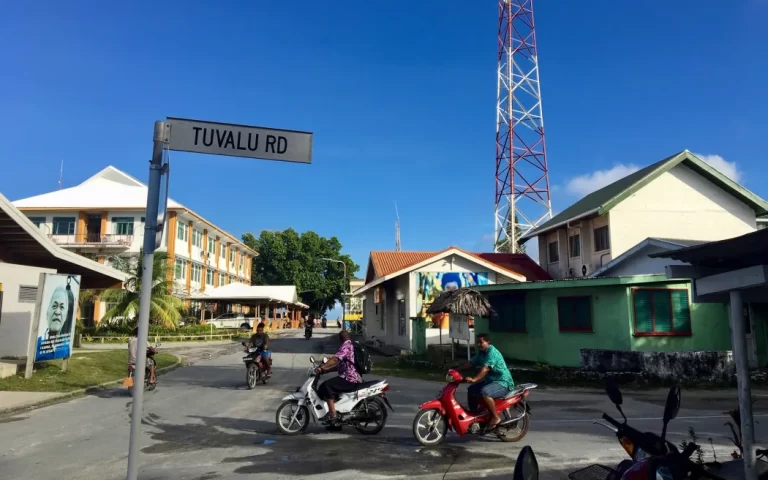
The Government of Tuvalu has declared a State of Public Emergency for Funafuti, warning that unstable electricity systems and fuel supply risks are threatening essential services nationwide.

The government said the move was triggered by growing pressure on power generation and distribution, with potential impacts beyond the capital.

“Monday 13 April 2026, Tuvalu’s Head of State Sir Reverend Tofiga Vaevalu Falani, pursuant to the powers vested in him under section 35 of the Constitution, and acting on the advice of Tuvalu’s Prime Minister Feleti Teo, declared a State of Public Emergency for the island of Funafuti in light of increasing instability in electricity generation and distribution systems, together with credible risks to fuel supply, which collectively threaten the reliable delivery of essential services in Funafuti and, by extension, across Tuvalu given the central role of Funafuti in national administration and service delivery.”

The government said the declaration is aimed at enabling urgent intervention.

“The declaration was made as a time-bound and necessary measure to enable the Government to take coordinated and immediate action to safeguard public welfare, ensure equitable access to critical services, and maintain national stability during this period of heightened risk.”

Officials confirmed the emergency order is temporary but could be extended if needed.

“The declaration takes effect from 13 April 2026 and shall remain in force for a period of 14 days unless sooner revoked or varied.”

Fiji Military warns of firm action after security threats

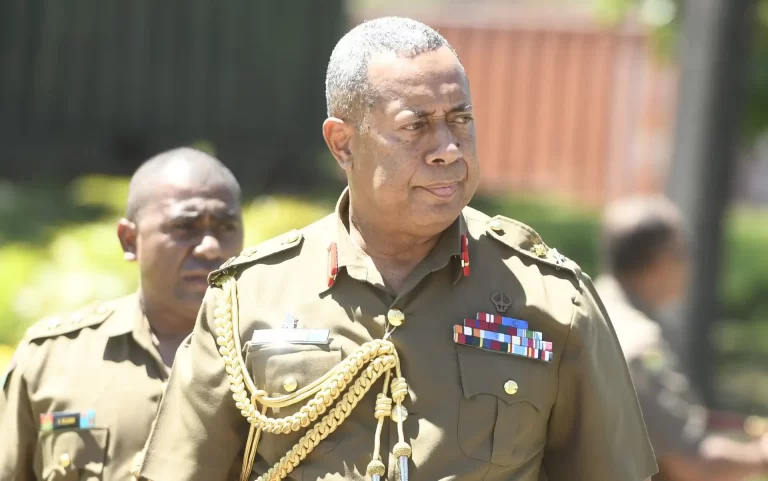
The Republic of Fiji Military Forces (RFMF) says it has launched joint security operations with the Fiji Police Force following attempts to undermine security, warning that any threats will be met with “firm, lawful, and proportionate action.”

In a statement, the military confirmed coordinated operations are now underway.

“The Republic of Fiji Military Forces (RFMF), in close coordination with the Fiji Police Force, has initiated joint security operations following recent attempts to undermine security at RFMF installations.”

The RFMF said the operations are grounded in its constitutional role.

“These operations are being undertaken in strict accordance with the constitutional mandate of the RFMF under the 2013 Constitution, which charges the Force with the responsibility to ensure at all times the security, defence, and well-being of Fiji and all Fijians. In fulfilling this duty, the RFMF is working in support of civil authorities to preserve public order and national stability.”

It said the move follows serious and unacceptable incidents.

“The joint response reflects a deliberate and measured approach to recent unacceptable challenges to security, including threats to military infrastructure and isolated acts of violence against civilians and officers in the line of duty. Such actions not only undermine the rule of law but also threaten the collective safety and confidence of the nation.”

The military also issued a clear warning.

“The RFMF will not take these matters lightly. Therefore, we put on NOTICE that any attempt to destabilize national security or endanger the well-being of citizens will be met with firm, lawful, and proportionate action.”

It said operations will continue until stability is restored.

“While a return to normal duties remains the priority, these enhanced security measures will continue for as long as necessary to ensure that a safe, stable, and lawful environment is fully restored. The operations are being conducted with professionalism, discipline, and full respect for the rule of law and the rights of all citizens.”

The public was also warned against aiding illegal activity.

“Members of the public are reminded that providing shelter, assistance, or support to individuals engaged in criminal activity is an offence and directly undermines national security. Such actions compromise not only ongoing investigations but also the broader safety and future of our communities.”

The RFMF called for public cooperation and vigilance.

“The RFMF reassures all citizens that its actions are guided by its constitutional obligations and its enduring commitment to serve and protect the people of Fiji. Public cooperation remains vital, and all are encouraged to remain vigilant and report any suspicious activities to the relevant authorities.”

Setting the Pacific scene: The IPCC and its role in our Pacific future

0

Finding the truth that is trusted when it comes to climate change is critical – otherwise anyone could make any statement about climate change, and we’d have no way of knowing if there was credible science to support claims.

And this is where the IPCC – Intergovernmental Panel on Climate Change (IPCC) is essential. If you haven’t heard the acronym IPCC yet, welcome to the world of climate change science! We hope this brief Explainer will help you learn more.

The IPCC is especially important for us in our Pacific Small Islands Developing States – collectively we contribute to less than 0.03 percent of the world’s total greenhouse gas emissions, yet we are and have always been amongst the most vulnerable to the impacts of climate change.

Demonstrating climate leadership in doing what we can to adapt to, and mitigate the impacts of, climate change, including with the support of partners, has been enabled by the science that stems from the IPCC.

Our work is now to ensure that our voices and our work contribute to the IPCC reports – the science that verifies all things climate change.

What is the IPCC?

The IPCC is the United Nations body for assessing science related to climate change and was set up to provide governments at all levels with scientific information that they can use to develop climate policies. It provides regular assessments of the scientific basis of climate change, its impacts and future risks, and options for adaptation and mitigation. It is an organisation of 195 governments that are members of the United Nations or WMO – including our Pacific Island governments.

Each IPCC member designates a National Focal Point that meet in Plenary Sessions at least once a year. The sessions are also attended by hundreds of officials and experts from relevant ministries, agencies and research institutions from member countries and from Observer Organisations.

The Panel works by consensus to decide on the organisation’s budget and work programme; the scope and outline of its reports; issues related to principles and procedures of the IPCC; and the structure and mandate of IPCC Working Groups and Task Forces. The Panel also approves and adopts IPCC reports and elects the IPCC Chair, other members of the IPCC Bureau and the Task Force Bureau.

About the IPCC Reports

Since 1988, the IPCC has had six assessment cycles and delivered six Assessment Reports, the most comprehensive scientific reports about climate change produced worldwide. It has also produced a range of Methodology Reports, Special Reports and Technical Papers, in response to requests for information on specific scientific and technical matters from the United Nations Framework Convention on Climate Change (UNFCCC), governments and international organisations.

A special one for the Pacific Small Islands Developing States who were instrumental in the Paris Agreement aiming to limit global warming to well below two degrees Celsius – ideally 1.5 degrees Celsius above pre-industrial levels, is the Special Report on Global Warming of 1.5°C.

Our Pacific goal for the IPCC

We’d like to have more Pacific Islands authors of scientific papers linked to climate change have their work contribute to any of the IPCC Reports that are released. This will factor in our lived experiences and forecasts in the documents that go through the IPCC cycle, enabling a stronger Small Islands Developing States, and Pacific, voice in these global reports. Limiting global temperature rise to 1.5°C is an urgent priority for safeguarding the Pacific Islands.

We would also like to publish papers of Pacific content based on Pacific priorities, case studies and lived realities to contribute to the global reports.

Strengthening Pacific engagement in the Intergovernmental Panel on Climate Change (IPCC) is crucial as the reports are vital sources of climate information for both international and domestic policy.

It is important to amplify our voice at the IPCC bureau meetings where our Pacific IPCC focal points provide crucial interventions to ensure Pacific climate realities, especially the mandate for “1.5 to stay alive”, are integrated into the IPCC assessment reports and decisions.

Support to help make this happen for the 6th Assessment Reports (AR6) of the IPCC and now the Seventh cycle has come from the Governments of Australia and New Zealand. With their support, this has resulted in enhanced participation from the Pacific in the IPCC as well as increased the number of Pacific Authors for the AR7 draft process.

How the reports are developed

As explained from the IPCC website – thousands of people from all over the world contribute to the work of the IPCC – including Pacific Islanders. For the Assessment Reports, experts volunteer their time as IPCC authors to assess the thousands of scientific papers that are published each year. This provides a comprehensive summary of what is known about the drivers of climate change, its impacts and future risks, and how adaptation and mitigation can reduce those risks.

An open and transparent review by experts and governments around the world is an essential part of the IPCC process, to ensure an objective and complete assessment to reflect a diverse range of views and expertise.

There is a full process in place that leads to the designation of reports and topics requested, as well as work to complete and release the IPCC reports. It also spans National Focal Points, Bureaus, Executive Committees, IPCC Authors and Review Editors.

Pacific Islands Parties to the UNGA and WMO have National Focal Points to the IPCC.

Our Pacific contributing Authors

While we have not had Pacific Island Members on any of the IPCC Bureaus we have had Pacific Islanders play a role as lead authors, contributing authors and review editors over the past years.

For the seventh cycle of the IPCC Reports we have seven experts affiliated with Pacific institutions that are Authors and Expert Reviewers. These include:

•Dr Alvin Chandra, of Fiji and Australia, Associate Professor (Adjunct) Climate Change, The University of Queensland
• Dr Awnesh Singh, of Fiji, Associate Professor and Acting Director, Pacific Centre for Environment and Sustainable Development (PACE-SD), University of the South Pacific (USP)
•Kisolel Posanau, of Papua New Guinea, Climate Researcher
•Dr Morgan Wairiu, of Solomon Islands, Pro-Chancellor Solomon Islands National University.
•Dr. Ramendra Prasad, of Fiji, Associate Professor and Head of the Science Department at the University of Fiji
•Dr Sindra Sharma, of Fiji who is the International Policy Lead, Pacific Islands Climate Action Network (PICAN).
•Lau Dr Viliamu Iese, of Samoa and Tuvalu, Senior Research Fellow, University of Melbourne.

To learn more about the IPCC itself, please visit: https://www.ipcc.ch/ 

Stay connected

529FansLike
172FollowersFollow
156SubscribersSubscribe
- Advertisement -