Home Blog Page 59

‘Devastating’: Fijian Drua coach backs Moana Pasifika to stay in Super Rugby Pacific

0

Fijian Drua head coach Glen Jackson has described the news around Moana Pasifika as “devastating” saying the Pacific presence in Super Rugby Pacific is vital to the competition’s identity.

The Fijian Drua confirmed on Tuesday that Jackson will leave the club at the end of the 2026 Super Rugby Pacific season.

Fijian Drua assistant head coach Tim Sampson has signed a two-year deal with Scottish club Edinburgh Rugby from the 2026/27 season, the club confirmed.

Edinburgh Rugby said in a statement the highly-rated attack coach brings nearly two decades of Super Rugby experience and has helped shape one of the competition’s most creative attacking systems with the Drua.

Speaking during his weekly press conference on Thursday, Jackson responded to confirmation that Moana Pasifika will not continue beyond the 2026 season.

The club announced it had told the players and team officials on Tuesday that Moana Pasifika would exit Super Rugby Pacific after the 2026 season.

The club says it is leaving the competition due to ongoing financial pressures and the inability to sustainably fund the franchise beyond the 2026 season.

New Zealand Rugby says it is disappointed by the decision and remains open to engaging with any parties interested in keeping Moana Pasifika in Super Rugby Pacific.

“It’s called Super Rugby Pacific for a reason,” Jackson said in response to RNZ Pacific during the press conference. “Both Moana and the Drua have brought a different aspect to the whole competition. I know they have tried really hard … we are Pacific brothers and our hearts are with them.”

Moana Pasifika confirmed the development earlier this week, stating the franchise is “no longer viable” beyond next season.

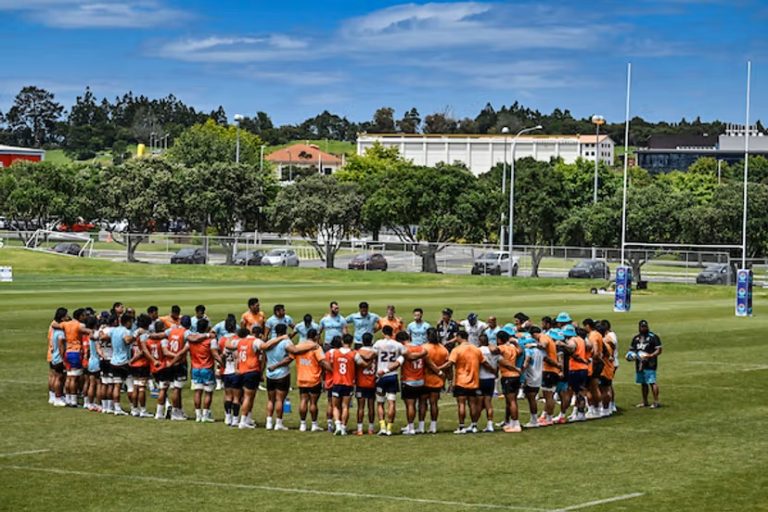
Despite the uncertainty, Moana Pasifika will see out the current Super Rugby Pacific season, starting with Friday night’s clash against the NSW Waratahs in Sydney.

The Round 10 fixture comes at a difficult time for head coach Fa’alogo Tana Umaga’s side, but also offers a chance to respond on the field against a Waratahs team chasing a crucial home win.

Umaga will leave Moana Pasifika at the end of the 2026 season before joining the All Blacks coaching set-up.

Moana Pasifika have named a strengthened line-up with Patrick Pellegrini set for a special outing in front of family and friends at Allianz Stadium.

The Sydney-born first five-eighth will make his Super Rugby debut at the venue after an impressive showing against the Chiefs last weekend.

He is joined in the backline by the return of experienced duo Melani Matavao and Jonathan Taumateine while Tuna Tuitama also comes back into the starting side on the wing.

Up front, Abraham Pole, Chris Apoua, and Semisi Paea are included in the starting pack with Ola Tauelangi named among the reserves.

Moana Pasifika hold a strong recent record against the Waratahs, having won three of their past four meetings, adding extra motivation heading into Friday night’s match.

Across the rest of Round 10, the ACT Brumbies welcome back Tom Wright for their clash with the Fijian Drua in Canberra while the Western Force return home to face the Crusaders in Perth. The Queensland Reds have the bye.

The Drua remain winless on the road this season and face a tough assignment against a Brumbies side expected to test them up front and at the set-piece.

But previous meetings have shown they can trouble Canberra’s scrum when at their best.

For Jackson, however, the focus remains wider than results alone: on what the Pacific teams have brought to the competition since joining.

His comments reflect a growing concern around the future shape of Super Rugby Pacific, and what it could mean for Pasifika representation if Moana is not replaced.

As Round 10 begins, attention now turns back to the field. But the off-field uncertainty is casting a shadow over one of the competition’s most important storylines.

Moana Pasifika vs Waratahs, Friday 17 April, Allianz Stadium – Sydney, 9.30pm (NZT). Fijian Drua vs ACT Brumbies, Saturday 18 April, GIO Stadium – Canberra, 9.35pm (NZT).

TEAMS

MOANA (1-15): Abraham Pole, Millennium Sanerivi, Chris Apoua, Tom Savage, Veikoso Poloniati, Miracle Faiilagi (c) Semisi Paea, Semisi Tupou Ta’eiloa, Melani Matavao, Patrick Pellegrini, Glen Vaihu, Tevita Latu, Solomon Alaimalo, Tuna Tuitama, William Havili. Replacements: Samiuela Moli, Malakai Hala-Ngatai, Paula Latu, Jimmy Tupou, Ola Tauelangi, Jonathan Taumateine, Faletoi Peni, Tyler Pulini.

WARATAHS (1-15): Tom Lambert, Ethan Dobbins, Daniel Botha, Matt Philip (c), Miles Amatosero, Angus Scott-Young, Charlie Gamble, Pete Samu, Jake Gordon, Jack Debreczeni, Max Jorgensen, Lawson Creighton, Joey Walton, Andrew Kellaway, Sid Harvey. Replacements: Folau Fainga’a, Isaac Kailea, Siosifa Amone, Angus Blyth, Clem Halaholo, Jamie Adamson, Teddy Wilson, Triston Reilly.

DRUA (1-15): Emosi Tuqiri, Zuriel Togiatama, Samuela Tawake, Temo Mayanavanua (c), Isoa Nasilasila, Etonia Waqa, Kitione Salawa, Isoa Tuwai, Issak Fines-Leleiwasa, Isaiah Armstrong-Ravula, Manasa Mataele, Virimi Vakatava, Tuidraki Samusamuvodre, Isikeli Basiyalo, Isikeli Rabitu. Replacements: Kavaia Tagivetaua, Penaia Cakobau, Mesake Doge, Mesake Vocevoce, Joseva Tamani, Simione Kuruvoli, Kemu Valetini, Inia Tabuavou.

BRUMBIES (1-15): James Slipper, Billy Pollard, Allan Alaalatoa, Nick Frost, Lachlan Shaw, Rob Valetini, Luke Reimer, Tuaina Taii Tualima, Ryan Lonergan (c), Declan Meredith, Corey Toole, David Feliuai, Kadin Pritchard, Ollie Sapsford, Tom Wright. Replacements: Lachlan Lonergan, Blake Schoupp, Darcy Breen, Toby MacPherson, Rory Scott, Klayton Thorn, Tane Edmed, Andy Muirhead.
PSIDS need real finance for just transition: Tuvalu Minister for Climate Change Dr Talia

0

Pacific Small Island Developing States (PSIDS) need real finance when transitioning away from fossil fuels.

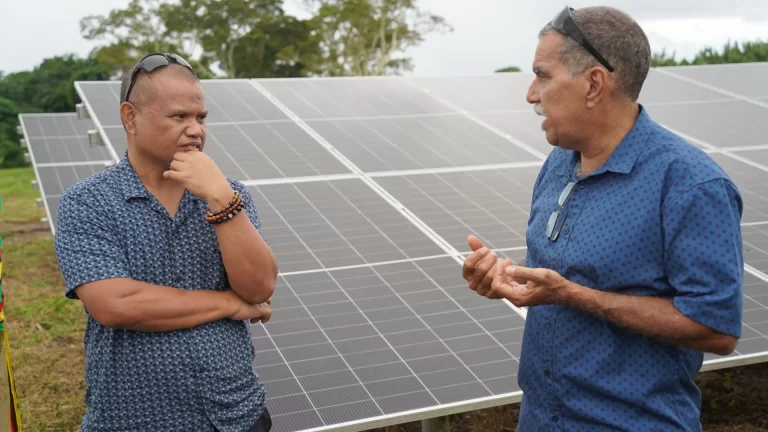
Tuvalu’s Minister for Climate Change, Dr Maina Talia, said this during a press conference at the PSIDS Ministerial Dialogue on Global Just Transition in Port Vila.

“When we talk about just transition, we are literally talking about real finance that is delivered without red tape and that supports communities,” he said.

While most PSIDS, including Vanuatu, have set ambitious 100 per cent renewable energy targets, they lack finance and face challenges in accessing it, which limits progress.

“We have made commitments to transition away from fossil fuels, but we lack the resources to make the transition ourselves,” said Palau’s Environment Minister Steven Victor.

“The technology is there, but we cannot access it because we lack finance. Even when we do, it is still very expensive due to economies of scale.”

International climate finance, provided by those most responsible for historical greenhouse gas emissions, is essential to help the Pacific build strong renewable energy sectors and move toward a fossil fuel free future.

Failing to act will increase the cost of transition and adaptation, Minister Victor said.

“Not keeping the 1.5°C target within reach means some of our islands may disappear, and the cost of adaptation will continue to rise,” he said.

Vanuatu and six other Pacific Island countries established the “Port Vila Call for a Just Transition to a Fossil Fuel Free Pacific”, urging Pacific and global leaders to phase out coal, oil, and gas and to support a Fossil Fuel Non Proliferation Treaty.

For the first time, world leaders will convene in Santa Marta, Colombia, at the end of this month for a conference on fossil fuel transition.

The Pacific region is consistently at the forefront of pushing for a fossil fuel treaty because it is a matter of survival. Pacific leaders hope that high emitting countries take accountability for their actions and help accelerate the transition.

“We are not asking the world for handouts. We are asking the world to help us save our Blue Pacific continent, which will save the future of humanity. It is the very resource that we rely on,” said Tuvalu’s minister.

‘Science has shown that there is no liveable future on this planet without a healthy ocean. We need those financial resources and technical capacity to help us achieve that, not only for us, but for the world.

‘When we go to Santa Marta, we will bring the same Pacific leadership we have shown in other climate forums, that together we can address this challenge.”

In the face of intensifying climate impacts, PSIDS have demonstrated consistent moral clarity, political resolve, and a willingness to advance approaches to global climate governance.

Tongan King Tupou VI pays final respects to Ratu Epeli Nailatikau

0

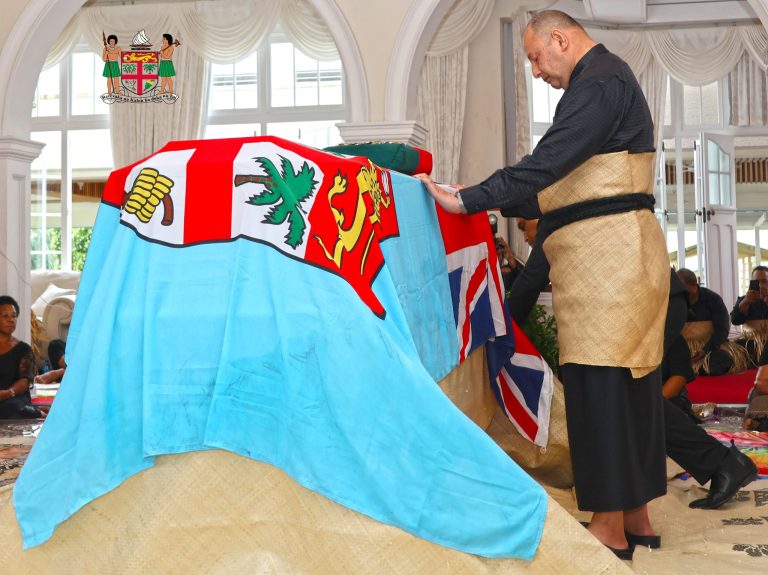
In a moment of quiet reverence at the State House this morning, His Majesty King Tupou VI paid his respects to the late former Fiji President, Ratu Epeli Nailatikau, who is lying in state.
Accompanied by members of his family including Her Royal Highness, Princess Salote Mafilao Pilolevu, the visit was marked by deep emotion, as grieving relatives gathered in solemn silence.

His Majesty stood in quiet tribute before the casket, sharing in the nation’s grief before meeting with Ratu Kamisese Vuna Nailatikau and Adi Litia Cakobau.

Though brief, the King’s visit carried profound significance—honouring a statesman whose lifelong service left an enduring legacy in Fiji and across the Pacific.

The moment was further deepened by the historic royal and family ties between Fiji and Tonga, with links tracing back to King George Tupou II—reflecting the strong and enduring bonds between the two island nations.

Through his paternal grandmother, Adi Litia Cakobau, Ratu Epeli was the grandson of King George Tupou II of Tonga.

This dynastic link made him a vital father figure within the Tongan Royal Family, a role emphasiSed as recently as July 2024 when Princess Salote Mafileʻo Pilolevu Tuita hosted a birthday dinner for the family’s last surviving uncle.

Ratu Epeli, who served as President from 2015 to 2021, had a long career in public service. He was a former Commander of the Republic of Fiji Military Forces, later served as Speaker of Parliament, and represented Fiji overseas as a diplomat, strengthening regional ties across the Pacific.

His death marks the passing of a senior statesman whose service spanned the military, Government and regional diplomacy.

Tears flowed freely in Suva this morning as the funeral procession of former President Ratu Epeli Nailatikau made its way through the capital to State House.

His casket, draped in the Fiji flag, was carried on a gun carriage that moved slowly along the streets.

A vehicle carrying his immediate family followed — his wife, Adi Koila Nailatikau, and their children, Adi Litia and Ratu Kamisese Nailatikau.

Crowds lined the route from early morning. Some bowed their heads in silence, while others watched through tears as the cortege passed.

Ratu Epeli, who served as Fiji’s President from 2015 to 2021, was widely regarded as a unifying national figure. Before his presidency, he held senior roles in Government and the military, including as Commander of the Republic of Fiji Military Forces and later as Speaker of Parliament.

He also represented Fiji on the international stage as a diplomat, contributing to regional and global engagements over several decades.

His passing marks the end of a long career in public service that spanned leadership in the military, government, and diplomacy.

Solomon Islands on the edge, again

0

A court has ordered parliament to convene with a no-confidence motion in the air. The PM is appealing. Here’s what happens next. 

By Connor Graham

In the 48 years since Solomon Islands gained independence, only twice has a prime minister survived a full parliamentary term. No incumbent PM has ever been re-elected, and several governments have been toppled by no-confidence votes.

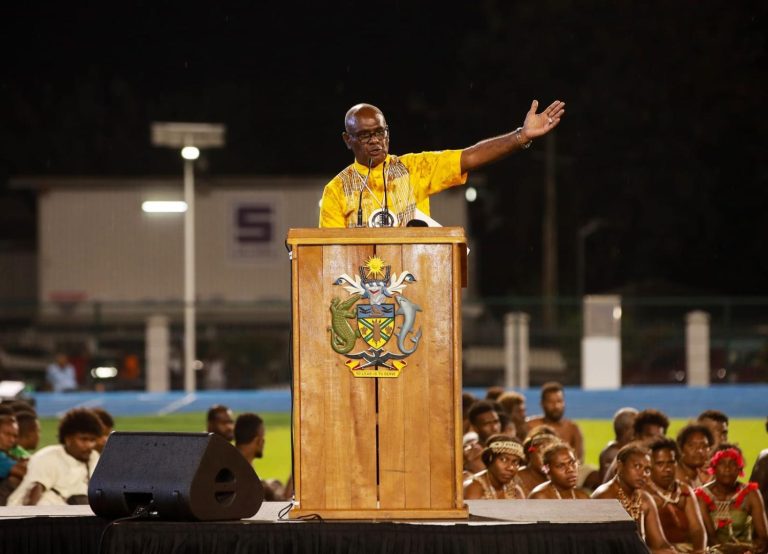
The latest chapter in Solomon Islands’ tumultuous political history occurred this week. High Court Chief Justice Sir Albert Palmer ruled on Tuesday that Prime Minister Jeremiah Manele had acted unconstitutionally by refusing to convene parliament to face a no-confidence motion backed by an opposing coalition of 28 of 50 MPs. Palmer ordered compliance within three days and ruled that the governor-general holds residual powers to convene parliament should the PM refuse. Manele announced he will appeal the decision.

For now, the ruling answers a previously unresolved question in Solomon Islands: what happens when a prime minister refuses to comply with the constitution’s accountability mechanisms? The High Court’s answer will likely now be tested in the Court of Appeal, and on the floor of parliament. As the three-day deadline for parliament to convene looms, several more questions persist.

Does Manele’s appeal suspend the court order?

Almost certainly not automatically. In Solomon Islands, following inherited English common law, filing a notice of appeal does not stay a High Court order. The appellant must apply separately for a suspension and persuade a court to grant it. No stay application has been reported. Without one, failure to convene parliament by 17 April could constitute contempt of court by Manele.

Will the Governor-General act if Manele defies the order?

Unclear. This is where the ruling breaks new ground. Palmer’s invocation of “residual powers” for the governor-general directly contradicts a 1998 Court of Appeal precedent that held the governor-general must not intervene in parliamentary political processes. Governor-General David Tiva Kapu already cited that precedent in March when he refused an earlier call from the opposition to force parliament to convene. If Manele does not convene parliament by 17 April, the governor-general could step in, though the appeal gives him a plausible reason to wait – perhaps what Manele is counting on.

A cabinet with varying views on Beijing would represent a different calculation from the current configuration that pairs Manele with Sogavare, one of Beijing’s most reliable allies in Pacific politics.

Can the 28-seat opposition coalition hold?

Coalition arithmetic in Solomon Islands has a habit of shifting at the last moment. That vulnerability gives the opposition every motivation to expedite proceedings. Manele has survived two previous no-confidence attempts by flipping opposition MPs at the last moment via calculated ministerial appointments and recruiting crossbenchers. He also controls vital constituency development funds – the money MPs can distribute in their electorates – with the allocation and timing historically leveraged for political gain in Solomon Islands. With 28 of 50 MPs currently part of the opposition coalition, and the threshold for passing a no-confidence motion a simple majority, Manele needs only three defectors. The opposition coalition has held for a month, but it is yet to be tested on the floor of parliament.

What changes if the government falls?

Not so long ago, Solomon Islands’ dealings with China dominated headlines in Australia. A change in government would not deliver the stark international realignment some in Canberra might hope for – but it would not be inconsequential. The most likely PM candidate from the opposition is Peter Shanel Agovaka, who served as Manele’s foreign minister until March this year. As recently as May 2025, Agovaka stated that Solomon Islands “stands firmly with China”. His defection was driven by internal cabinet grievances, not foreign policy. Yet the opposition also includes MPs such as Matthew Wale, who opposed the 2022 China security pact. A cabinet including Wale and others with varying views on Beijing would represent a different calculation from the current configuration that pairs Manele with Deputy Prime Minister Manasseh Sogavare, the architect of the China pact and one of Beijing’s most reliable allies in Pacific politics.

Tuvalu, tiny Pacific nation at the forefront of climate crisis, to host world leaders before Cop31 summit

0

Tuvalu, the Pacific nation at the forefront of the global climate crisis, will host a special meeting of world leaders before this year’s Cop31 summit, as the conference president expresses “complete faith” in Chris Bowen to lead tough negotiations.

Turkey’s climate minister, Murat Kurum, is president-designate for the November summit, set to see world leaders meet in Antalya to thrash out new targets for cutting carbon emissions.

After a drawn-out fight with Australia over hosting rights, Kurum used his first letter to global partners overnight to announce plans for the pre-summit meeting to take place in Fiji in October.

He and Bowen, Australia’s energy and emissions minister, will also convene a special leaders’ event in Tuvalu as part of the preparations.

The main leaders’ summit will take place in Antalya, Turkey, on 11-12 November, part of a joint model agreed between the Albanese government and the administration of Turkey’s president, Recep Tayyip Erdoğan.

Kurum said Bowen and the administration of Turkey’s president had shared purpose and would work with sincere cooperation.

“I have complete faith in his work,” Kurum said of Bowen, who will have “exclusive authority” over negotiations.

“To advance the fight against climate change, help boost climate resilience and accelerate the clean energy transition, already under way and irreversible, yet needing to progress more rapidly, we will bring together our diplomatic, geopolitical and economic strengths.”

Before the Cop31 summit, Bowen met with Germany’s state secretary for environment and climate action, Jochen Flasbarth, in Canberra to discuss preparations and the global energy shock emanating from the Middle East.

Flasbarth told Guardian Australia the war in Iran and moves by European countries to lift defence spending must not distract from global efforts to reduce carbon emissions.

He said the world should seek faster electrification of heavy freight transport, manufacturing and household technologies.

“This is all horrible but, on top of this disaster in the Middle East, it takes away the attention that is so desperately needed for global challenges, which will not disappear just because there is war,” Flasbarth said.

“This situation might create a new momentum for the Cop in Antalya, that countries are more open, including also those who were a little bit reluctant that we need to do the next steps to transition away from fossil fuels.”

Renewables make up about 60 percent of Germany’s energy supply, with coal accounting for about 22 percent in 2024. The country’s last coal-fired plants are due to be phased out by 2038, though some have been brought back online in recent weeks due to the crisis from the closure of the strait of Hormuz.

Flasbarth said, like in Australia, faster efforts to promote electrification were essential, including in passenger and freight vehicle technology.

“Electrification is the key track we all need to use,” he said.

“We started too late. We should have started this transformation much earlier and now our companies are surprised that China is faster. But nobody forced our industry to be so reluctant to invest in electric vehicles and I’m sure we will catch up … because it’s one of the backbones of our national industries.”

Darling Downs cattle and cropping farmer Sally Higgins has been named as the summit’s youth climate champion. The talks will feature core principles of “dialogue, consensus and action”.

Typhoon left a trail of damage across the Northern Mariana Islands

0

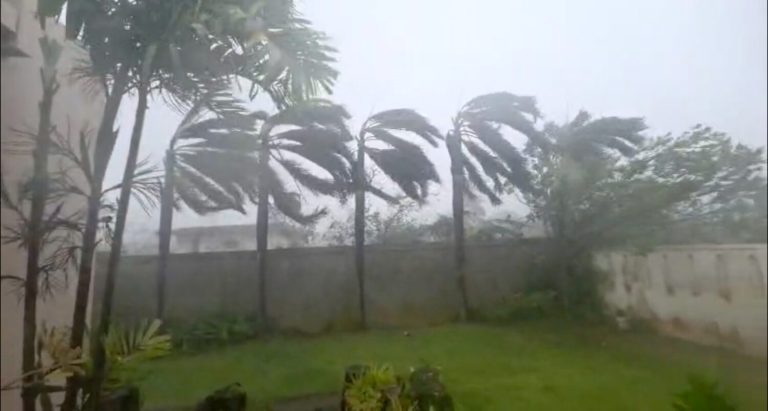
The super typhoon in the Pacific Ocean that hammered the Northern Mariana Islands flipped over cars, toppled utility poles and ripped away tin roofs. So far, there have been no reports of deaths.

Authorities were just beginning to assess the damage left behind by Super Typhoon Sinlaku, which first hit the islands Tuesday night local time and continued with a barrage of fierce winds and relentless rains for hours Wednesday.

Power was out and many of the roads were impassable across Saipan, a U.S territory that’s the largest of the Mariana Islands and home to about 43,000 people, according to local officials.

The Federal Emergency Management Agency said water outages were reported on some of the islands. The agency planned to send more personnel to the region and ramp up shipments of supplies.

The storm also battered Guam, another U.S. territory and the site of several American military bases, with tropical force winds.

In an AP interview, AccuWeather meteorologist Jason Nicholls says Super Typhoon Sinlaku has caused damage across the island of Saipan.

The typhoon — the strongest tropical cyclone on Earth this year — was packing sustained winds of up to 150 mph (240 kph) when it made landfall on the islands, the National Weather Service said.

The monster storm still had winds of 125 mph (200 kph) late Wednesday night as it pulled away to the north from the islands of Saipan, Tinian and Rota, the weather service said. Sinlaku is expected start curving toward sparsely populated volcanic islands in the far northern Marianas.

It was still very windy and rainy roughly 24 hours after the typhoon rattled the islands, but much better than the previous night, said Jaden Sanchez, spokesperson for the Saipan mayor’s office.

Preliminary reports include a lot of flooding, uprooted trees and downed power lines, but no deaths, he said.

Images from Saipan showed residential lots littered with debris and mangled trees. Winds crumbled metal bleachers at a sports field.

Resident Dong Min Lee shot video of a car sitting on top of two others in his apartment building’s parking lot. The winds tore off part of his balcony railing.

The American Red Cross and its partners were sheltering more than 1,000 residents across Guam and the Northern Marianas, agency spokesperson Stephanie Fox said.

No risk to Palau Forum travel but NZ ready to step in if Pacific fuel pressure grows – NZ PM Luxon

0

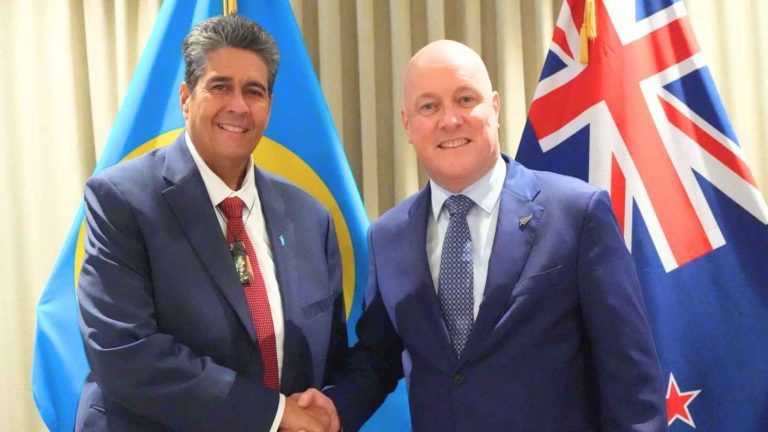
New Zealand says there is no immediate risk to Pacific leaders travelling to Palau for this year’s Pacific Islands Forum (PIF).

But Prime Minister Christopher Luxon says support is ready if the region’s fuel pressures worsen although no leaders have requested assistance so far.

“At this point we don’t see any risk of that. There is no risk to any fuel disruption for us and that’s a good thing. But August is a long way away,” Luxon told the media.

The Forum leaders meeting is the region’s most important political gathering, bringing together leaders from across the Pacific to discuss shared challenges and priorities.

For many island nations, getting to Palau is not simple.

Leaders from countries like Sāmoa, Tonga, and Niue face long and complex travel routes, mostly relying on limited international connections through hubs such as Guam, Japan and the Philippines.

That has put a spotlight on how vulnerable Pacific travel can be especially when fuel supply becomes uncertain.

Palau’s President, Surangel Whipps Jr has also played down concerns, saying he does not expect the situation to worsen.

Whipps, who visited Aotearoa last week, told Pacific Mornings: “I don’t think that [the fuel crisis] should affect [leaders] coming to PIF but we’re very grateful to New Zealand, Australia and the United States who are willing to go around and pick up leaders and bring them to PIF.”

New Zealand has stepped in before to support Pacific travel. It helped transport leaders to the Forum in Tonga in 2024 and again in Honiara last September.

Meanwhile, Foreign Minister Winston Peters said the upcoming meetings in Palau and New Zealand are an important moment for the region.

“The region faces a very challenging global strategic environment, and in this context, Pacific countries best advance our shared interests when we work together, showing strength through unity,” Peters said in a press release.

The government has yet to confirm who will attend the Palau Forum this year. New Zealand takes its turn next year with both countries forming part of the Forum’s leadership group.

While there is no confirmed disruption at this stage, the situation highlights a wider issue: how fragile travel links remain across the Pacific and how quickly small pressures can become big problems for island nations.

For now, leaders are expected to make the journey to Palau as planned. But with months to go, governments across the region will be watching closely and ready to step in if needed.

Middle East conflict chokes end of supply chain as lights go out in the Pacific

0

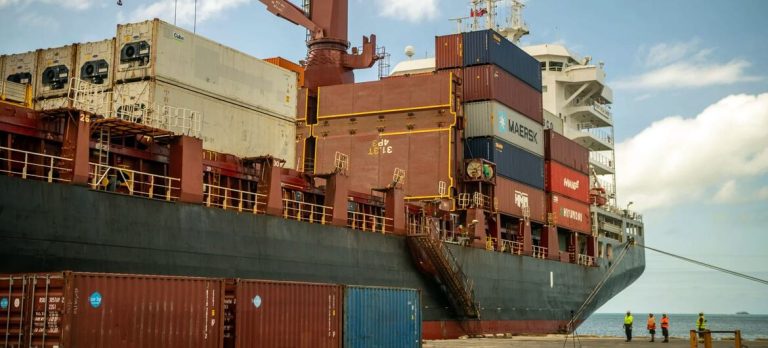
For Pacific Island countries, the Middle East crisis is not a distant geopolitical event. It is already showing up in higher fuel prices, electricity uncertainty and fears that communities sitting at the far end of global supply chains could be pushed into deeper economic insecurity.

“We are at the end of the supply chain,” Tuya Altangerel, a senior UN Development Programme (UNDP) official in the Pacific region, told UN News “so this energy crisis is really impacting our communities.”

With Fiji a significant hub in the Pacific Ocean, island nations that surround it extend thousands of miles into the world’s largest ocean, with the distance between some islands as much 3,000 miles.

Within this vast area, the isolation from the rest of the world is not only very challenging by also expensive.

From Fiji to Tuvalu, the Solomon Islands to the Marshall Islands, governments are moving to conserve fuel, protect families and the most vulnerable and keep essential services running.

The immediate concern is not only whether ships keep moving, but how quickly oil price spikes, freight costs and fuel-market disruptions in Asia ripple across some of the world’s most remote and import-dependent communities.

The Strait of Hormuz, which has largely been blocked for the last month, is a critical to global supply chains, with the waterway carrying around 20 per cent of the global seaborne oil and gas trade.

For the Pacific, the main risk is that energy disruption in the Strait drives up fuel prices, bunker costs and freight rates across Asia-Pacific supply chains.

That matters because Pacific small island communities shipping links are concentrated in Asia-Pacific markets. It is through those fuel and pricing channels that distant conflict can hit islands thousands of miles away.

Maritime transport is the lifeline of Pacific Small Island Developing States (SIDS) but they have some of the weakest shipping connectivity in the world, according to UN trade and development agency (UNCTAD).

Pacific islands have much few direct connections, which means food, fuels and shipments are not received directly, but are moved from ship to ship which raises the price.

Pacific SIDS also receive very few container ship port calls, with some countries only receiving 40 to 50 shipments per year.

That weak connectivity matters because it translates directly into higher costs, particularly for fuel that comes from outside the region and requires ‘middleman’ fees for shipments to be transferred at ports abroad.

SIDS paid twice as much for international transport of imports as developed countries in 2022, according to the UN.

For countries at the edge of the system, that means little room to absorb new disruption.

The region’s exposure is amplified by its dependence on imported fossil fuels.

Transport consumes around 70 per cent of total fuel imported in the Pacific region, with sea transport the main fuel user in some countries.

That dependence leaves Pacific countries acutely vulnerable to any turmoil affecting global oil and gas flows, especially through Asian markets that supply or refine fuel for the region.

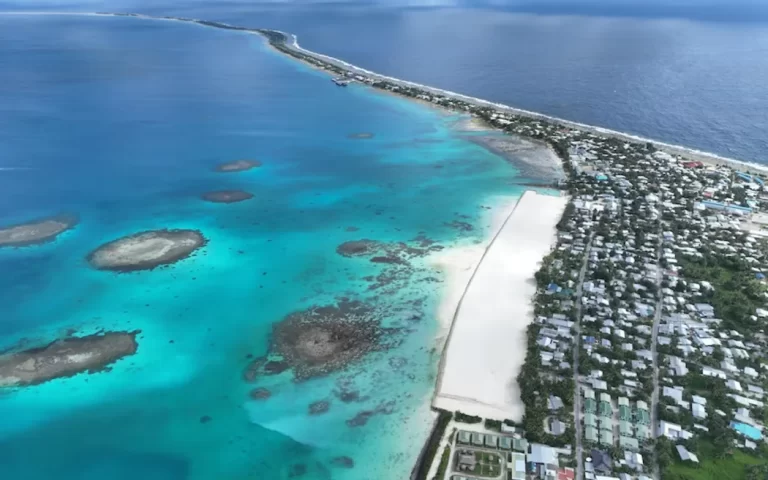
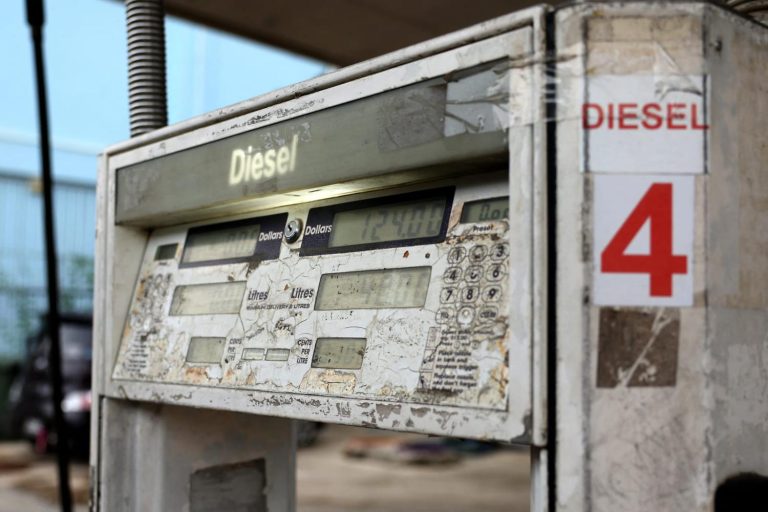
Meanwhile, many countries rely nearly entirely on fuel. “Tuvalu is definitely at the end of the supply chain and more than 90 per cent of its energy comes from diesel fuel,” Altangerel said.

She added that UNDP is looking at “solarisation of the entire island” as part of the longer-term response, stressing that the current shock underlines the urgency of reducing reliance on imported diesel.

Across the Pacific, UNDP said governments are already activating emergency measures.

In Fiji, the Government has warned citizens against panic buying and hoarding amid sharp rises in fuel prices.

As the supply chain continues to other Pacific nations from Fiji which is a regional fuel distribution hub, the impacts are even starker. Tuvalu announced a state of emergency on 14 April. The Marshall Islands has declared a 90-day economic emergency.

The Solomon Islands government said the country held between 40 and 50 days of fuel in-country.

Vanuatu has warned of electricity price rises, while Palau, Nauru and Kiribati are also weighing responses.

For households, the crisis is very real with many communities already seeing blackouts and service instability.

In Tuvalu, “we understood that already the communities are experiencing daily blackouts,” Altangerel said.

She added that blackouts are also affecting parts of Fiji, even though it is among the Pacific’s larger and relatively better-prepared economies.

These challenges are being compounded by recent cyclones that passed by Fiji and the Solomon Islands.

But the UNDP official warned that the bigger test may still lie ahead if prices rise further in May and beyond.

“The last thing that we want is because of this energy crisis that’s happening around the world, this critical work stops,” she said.
Speaking about Tuvalu’s Coastal Adaption Plan’s, which seeks to protect the island from rising sea levels, she said “it will definitely impact this important work that we doing.”

For Pacific Island countries, the message is stark: what begins as a crisis in a distant shipping chokepoint can quickly become a crisis of affordability and power supply, disconnecting vulnerable island communities from the rest of the world and alleviating their risk to climate pressures from rising sea levels and extreme weather events.

Pacific islands face a connectivity shock as oil prices surge

0

By Jake Hamstra

The Pacific’s energy crisis isn’t just economic – it’s a geopolitical opening that outside powers will be competing to fill.

Spiking global oil prices and shipping insurance costs threaten to create a connectivity crisis for the Pacific Islands region. Higher fuel and freight rates will make shipping and aviation more expensive and less frequent, undermining the transport links that underpin trade, tourism and public services.

This will be felt in day-to-day life. Pacific economies rely heavily on imported fuel and long‑distance transport, with about 80% of their energy supply and most electricity generation coming from petroleum products. When oil and insurance costs rise, so do food and transport prices, utility charges, and the cost of all imported goods.

The fiscal consequences could be severe. Small governments with narrow tax bases have limited room to absorb cost spikes and raise spending. Households already face high living costs, and rising prices for food, fuel, electricity, and transport are already triggering demands for relief measures. Governments may respond by cutting fuel taxes, subsidising utilities or delaying tariff adjustments – all of which would push costs onto public finances or state‑owned utilities. With imported fuels already costing Pacific Island states more than US$6 billion a year and net fuel imports averaging 5-15 percent of GDP, even a modest sustained oil‑price increase will worsen trade deficits and strain budgets.

The politics of the region will also become more fragile as the shock persists. Higher food, transport, and utility costs risk eroding public support for governments, especially in countries where leaders have promised to improve living standards. In tourism‑dependent Palau, Samoa, Tonga and Vanuatu, a prolonged fall in visitor numbers could destabilise budgets and undermine public‑sector wages. In Papua New Guinea, higher oil prices will boost export revenues but also exacerbate foreign‑exchange shortages and long‑standing structural weaknesses.

Already the Marshall Islands has declared a 90-day economic emergency. But the oil shock will not be limited to a short burst of inflation. Fuel imports account for 16-24 percent of the total imports of Fiji, Samoa, Tonga, Vanuatu, Palau, the Solomon Islands and Kiribati. The more fuel‑dependent an economy is, the more exposed it is to higher crude and freight costs. Even the most diversified Pacific economies, such as Fiji, will still face higher power and transport costs. Smaller states such as Samoa, Tonga, Vanuatu and Palau are likely to face fewer flights and more expensive shipping.

What makes the oil shock particularly damaging is the way it is transmitting through connectivity. Higher jet‑fuel prices translate into more expensive airfares and thinner flight schedules, eroding tourism receipts. Pacific tourism depends almost entirely on air travel and tourism generates a major proportion of GDP in Fiji (26 percent), Samoa (25 percent), Tonga (11 percent), Vanuatu (23 percent) and Palau (38 percent). If flights become scarcer or more expensive, these tourism‑dependent economies will suffer deeper and longer‑lasting downturns. Domestic mobility will also be severely affected as inter‑island shipping firms cut sailings or raise freight rates.

These factors will also make it harder for Pacific governments to combat the existential threat that climate change poses to the region. According to IMF estimates, Pacific countries need infrastructure investment of around US$1 billion a year for climate change adaptation. By increasing economic and fiscal strain, higher oil prices illustrate how fossil-fuel dependence and climate change are compounding vulnerabilities.

Geopolitically, a prolonged energy crunch would deepen Pacific states’ dependence on external partners. As budgets come under pressure, governments will look to Australia, New Zealand, the United States, China, Japan and multilateral lenders for budget support, emergency fuel supplies, concessional finance for infrastructure, and assistance to accelerate renewable‑energy projects. The region’s strategic value has already attracted heightened competition among these powers, and higher energy stress will only widen opportunities for influence. External support could help to finance renewable‑energy transitions and improve inter‑island connectivity, but it could also intensify rivalries if aid and loans are tied to broader geostrategic goals.

The risk is that elevated oil and freight prices will produce a permanent connectivity shock. This would keep inflation high, erode real incomes, and force governments into uncomfortable trade‑offs between fiscal sustainability and political stability. Yet persistent high fuel costs could also accelerate investment in renewables and more efficient shipping and aviation. They strengthen the case for renewable energy, food security, and resilient infrastructure to be central to economic policy rather than treated as separate climate agendas.

Such transitions will take years. Until then, the Pacific islands face not just an energy shock but a comprehensive disruption of the transport and utilities that sustain their economies.

‘Don’t give up’: Moana Pasifika CEO opens door to rescue as new interest emerges

0

Moana Pasifika’s future may not be over yet.

Chief executive Debbie Sorensen says there is still hope the club can survive beyond 2026.

She said new interest is emerging behind the scenes as the search for investors gathers pace.

Sorensen’s comments come after the club’s announcement earlier on Wednesday that Moana Pasifika will exit Super Rugby Pacific after the 2026 season.

The club says it is leaving the competition due to ongoing financial pressures and the inability to sustainably fund the franchise beyond the 2026 season.

New Zealand Rugby says it is disappointed by the decision and remains open to engaging with any parties interested in keeping Moana Pasifika in Super Rugby Pacific.

Speaking to PMN, Sorensen said going public with the club’s financial situation has already started to open doors.

“Don’t give up yet, that there will be a place for Moana,” she told PMN. “It can. Yes, I think it can. And we are considering, you know, all options.

“One of the real advantages in going out publicly and saying, this is the situation that we’re in, actually allows others who mightn’t have thought about it before, but might want to actually invest in the franchise.”

While no formal offers have been made yet, she confirmed work is happening in the background.

“No one has spoken to us directly, but we understand that there is work being undertaken behind the scenes with various parties.

“That work should, and those parties should emerge over the next week or so, I would think.”

The update comes just hours after the club confirmed it would disband at the end of the 2026 Super Rugby Pacific season due to financial pressures.

But Sorensen made clear that the outcome is based on the current situation, not a closed door.

“When we say that, what we mean is under the current kind of situation, we wouldn’t be able to field a team next year. And there might be all sorts of other scenarios.”

She said any rescue would require serious backing, with the cost of running a Super Rugby franchise sitting between $10 million (US$5.91 million) and $12 million (US$7 million) a year.

“If someone was to take the franchise, they’d need to come with money.”

But Sorensen stressed money alone is not enough, the identity of the team must remain Pacific.

“If we really wanted to continue the movement, then having Pasifika people involved in another organisation that might come forward is really important.”

“The essence of who we are is that we’re Pacific and that’s not something that anyone else can take away from us.”

For Sorensen, the past five years have proven the value of Moana Pasifika, not just as a rugby team, but as something bigger.

“We’ve demonstrated that we’ve got a product that adds value to the Super Rugby environment, that we bring colour, we bring beauty, and we bring strength and purpose.”

She pointed to the club’s role in creating opportunities for players across the Pacific, highlighting stories of those who may not have reached the professional level without the team.

“It is more than rugby. It is about our families. It’s about hope for the future. It’s about opportunity.”

Despite the uncertainty, Sorensen said the focus remains on supporting players and staff, many of whom are now facing an unclear future.

“Our boys are on a plane in 10 minutes to Sydney… our first responsibility and interest is in the welfare of our players and our staff.”

The team is set to face the Waratahs this weekend as preparations continue amid the off-field turmoil.

For fans and Pacific communities, Sorensen had a clear message: the fight is not over.

“Without our fans, our supporters, our families, our communities and our sponsors, we would never have been able to do five years.

“My message really is to say don’t give up yet.”

As interest builds and conversations begin, the next few weeks could decide whether Moana Pasifika’s story truly ends or enters a new chapter.