

Home Blog Page 5

UN Climate Chief warns against backsliding as Bonn talks close with key divides unresolved

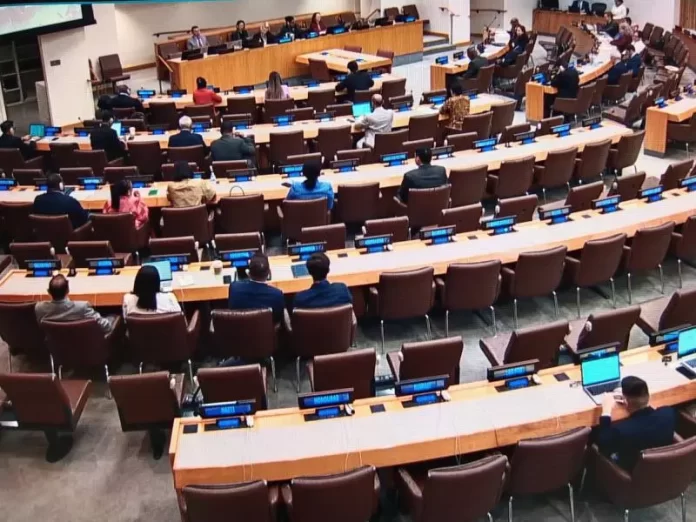
United Nations climate chief Simon Stiell has warned countries against reopening previously agreed climate commitments and delaying action, as the UN June Climate Meetings concluded with major differences still unresolved ahead of COP31.

In his closing statement to delegates at the end of the two-week negotiations, the Executive Secretary of the United Nations Framework Convention on Climate Change (UNFCCC) said progress had been made in several areas but acknowledged that critical gaps remain, particularly on adaptation and mitigation.

“Sometimes history is progressed in moments. Through heavy choices, big decisions or pure chance. And sometimes it is made in rooms like these. Gradually, carefully, out of the spotlight,” he said.

Stiell said the meetings demonstrated the slow but essential work of multilateral climate negotiations.

“We have seen that process in action over these ten days. Yes, there remain significant divides, and significant work for the intersessional period ahead. But we have seen a seriousness in tackling key issues, and a determination to find solutions,” he said.

The UN climate chief said negotiators had made meaningful advances in several key areas, particularly on the just transition agenda.

“In key areas we’ve taken real strides forward – showing climate cooperation at work, and this process doing its job.

On just transition, you took important steps towards turning the promise of the just transition mechanism into a reality, and to set up the review of the just transition work programme,” Stiell said.

He noted that while the outcomes may appear modest within the context of the UN climate process, they carry broader significance for communities and workers worldwide.

“While these might feel like modest steps for our process, they are big strides in the right directions for communities and working people everywhere.”

Stiell also highlighted progress under Action for Climate Empowerment (ACE), which focuses on public participation, education, and engagement in climate action.

“On Action for Climate Empowerment, we laid crucial groundwork for accelerating a just transition, and deepening participation and engagement across societies,” he said.

He said negotiators also achieved substantive progress across several other thematic areas, but expressed disappointment over the lack of stronger outcomes on adaptation and mitigation.

“There were also substantive steps taken across other crucial thematic areas.

On adaptation and mitigation, Parties voiced the need to deepen and accelerate action, but very disappointingly, we did not deliver on that here in Bonn,” Stiell said.

The remarks come as governments face mounting pressure to accelerate implementation of commitments agreed under the Paris Agreement and previous UN climate conferences.

Stiell welcomed announcements made by the COP31 Presidency, which is being jointly hosted by Australia and Türkiye.

“And we’ve heard the COP31 Presidency announce targets for electrification, city resilience and efficiency, and waste under the Action Agenda.”

He stressed that both formal negotiations and the COP31 Action Agenda would be critical to achieving progress.

“Minister Kurum, Minister Bowen and I are in lock-step: the negotiations and the Action Agenda are both vital, separate but parallel and complimentary tracks. COP31 must deliver real strides forward in both,” he said.

Despite areas of progress, Stiell warned that geopolitical tensions had increasingly influenced negotiations.

“In some areas, we have seen some side-stepping and stalling. We’ve seen geopolitical tensions washing through these halls.”

He reiterated that countries must honour commitments already agreed under the UN climate framework and the Paris Agreement.

“As I said when these meetings began, we must all deliver on existing obligations and plans under the Convention and Paris Agreement. And we simply cannot afford to re-open previous decisions, to renegotiate existing targets, or to backslide,” Stiell said.

The UNFCCC chief delivered one of his strongest warnings against attempts to weaken or selectively interpret existing agreements.

“Let me now go further, and say:All Parties must be comfortable and confident in restating our existing global commitments – without cherry-picking those that suit tactically in the moment.”

He highlighted specifically to commitments made during the first Global Stocktake and key financial and adaptation targets already agreed by governments.

“Commitments made in the first global stocktake; commitments that respond to the science and the 1.5 degrees limit; on Loss and Damage; on 300 billion; on 1.3 trillion; on tripling adaptation finance; and more.
These are the baselines,” he said.

Stiell also criticised what he described as a recurring tendency among negotiating groups to condition their own actions on commitments from others.

“But in some negotiating rooms, we’ve heard a familiar tendency towards you-first-ism: Groups refusing to deliver commitments or allow the process to move forward unless others go first.

This is a recipe for gridlock when we need all negotiating tracks to be moving in the fast lane,” he stressed.

He said countries must move beyond political deadlock if they are to make progress ahead of upcoming international meetings and future climate negotiations.

“So that we make real progress towards implementation in Antalya and Addis Ababa. And arrive at the second global stocktake at COP33 much closer to delivering on the pledges made at the first.” said Stiell.

Stiell said leadership from upcoming COP hosts and partner countries would be critical.

“The leadership of Türkiye and Australia will be vital. So will the ongoing support of Azerbaijan, Brazil and Ethiopia.”

He also highlighted the importance of upcoming pre-COP meetings in the Pacific.

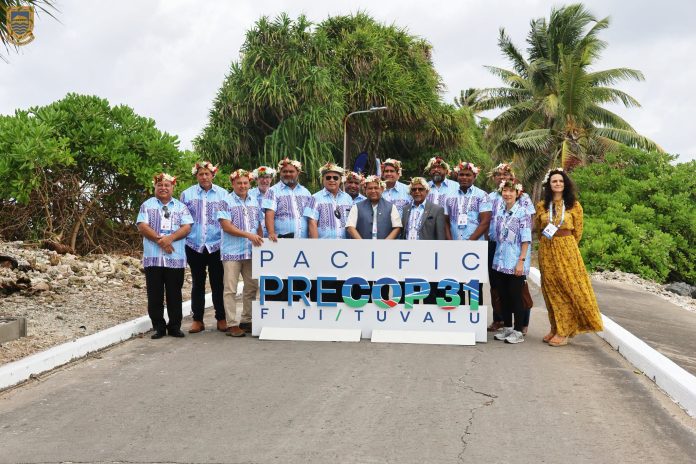
“Pre-COP in Fiji and Tuvalu is a key moment on the road to Antalya.”

However, he cautioned against delaying efforts to bridge differences until those meetings take place.

“But we cannot wait until then to step up efforts to find common ground on the tough issues.” he said.

The Executive Secretary called on governments to elevate discussions to ministerial level in the coming months.

“So I urge you to bring in your Ministers as soon as possible, in the weeks and months ahead. Particularly on the thorniest issues,.” he said.

Stiell also addressed efforts to improve the efficiency of the UN climate process, saying the secretariat is examining ways to strengthen the system while preserving its party-driven nature.

“The secretariat has been listening carefully and taking steps to find efficiencies, so we can keep delivering on all our growing mandates.”

He revealed that an independent group of experts had been tasked with exploring possible reforms.

“I also asked a group of experts to consider ways that our process could be optimised or evolve – recognising all that it has achieved, and its Party-owned nature and foundations. This week, they shared some of their independent ideas. A summary will be made available in the weeks ahead.”

The UNFCCC Secretariat will now seek further input from governments and stakeholders.

“The secretariat is very much in listening mode, and very clear on our mandates.

We particularly want to hear from you – the Parties – and other stakeholders, and we’ll provide information soon on a process and timelines to do that,” he said

Looking ahead to COP31 and future negotiations, he urged countries to maintain momentum despite exhaustion following the intensive negotiations.

“We must press forward,” he said.

Stiell also warned against viewing climate diplomacy as a contest between winners and losers.

“I know many folks will take a breath after these ten longs days and watch some World Cup football.

But let’s please not get the idea of winners and losers in our heads. To protect 8 billion people from this climate crisis, it’s cooperation not fierce competition that we need,” he said.

The Bonn talks are widely viewed as a critical stepping stone toward COP31, where governments will face increasing pressure to demonstrate that commitments made under the Paris Agreement are being translated into action amid rising climate impacts and growing global uncertainty.

SB64 ends in delay and division as Pacific now looks to a crowded agenda at COP31

0

The outcomes of the June Climate Meetings in Bonn, Germany (SB64) is marked by delay, division and a dangerous weakening of ambition at a time when climate impacts are accelerating across the Pacific.

Across the major negotiating tracks, Parties failed to reach meaningful agreement, pushing critical decisions on mitigation, adaptation, finance and just transition to COP31 in Türkiye.

For Pacific communities already living with the consequences of the climate crisis, the outcome is more delay when the world can least afford it.

SB64 also exposed growing fault lines across the negotiations, including attempts to weaken the role of science in climate decision-making, continued resistance to delivering climate finance at the scale required, and a widening gap between political rhetoric and climate reality.

As the road to COP31 begins, PICAN warns that trust is declining while the workload grows.

The burden now falls to COP31 to deliver where SB64 could not. The world cannot arrive at another climate conference with the same unresolved questions and expect different results.

Responding to the conclusion of SB64, Dr Sindra Sharma, International Policy Lead at PICAN said: “SB64 will be remembered as a negotiation that deferred rather than decided. For Pacific people, every delay means more lives disrupted, more communities at risk and a narrowing pathway to 1.5°C.

“What concerns us most is not only the lack of outcomes, but the growing willingness to sideline science, soften accountability and postpone responsibility. Negotiating the science of climate change won’t delay the truth of the crisis upon us.

“The Pacific came to Bonn defending science because science is our floor of consequence. Without it, ambition becomes optional and justice becomes negotiable. We reject both.

“As we head towards COP31, we must stop managing the politics of climate change and start addressing the reality of it. The Pacific is demanding action that matches the scale of the crisis in full recognition that the window to deliver is narrowing. Fast,” she said.

Hanson holding ‘gun to the head’ of Pacific nations: O’Brien

0

Australian Opposition foreign affairs spokesman Ted O’Brien has accused Labor of playing “partisan politics” over relationships in the Pacific and its leader Pauline Hanson of holding a gun to their heads over development aid after he returned from a trip to Australia’s key regional partners Papua New Guinea and Fiji.

“Labor has misused the relationships in the Pacific to play partisan politics,” he told ABC TV’s Insiders program on Sunday. “I don’t believe in that.

“We need to demonstrate as much bipartisanship as we can. We need to be Team Australia, especially when it comes to our closest neighbours in the Pacific.

“I didn’t politicise Labor’s very poor performance on climate change. Let’s not forget emissions are actually higher now than they were under the Coalition. I didn’t talk like that when I was in the Pacific.

“We shouldn’t actually have political fights in the Pacific, and that’s a key criticism I have of the Albanese government,” he said.

O’Brien highlighted the maritime drug highway coming through the Pacific Islands and feeding the lucrative Australian and New Zealand markets for cocaine and methamphetamine, which was a number one concern for Pacific governments.

Asked about comments by One Nation leader Pauline Hanson, who suggested Australia should not give aid to Pacific countries that are also taking financial assistance from China, O’Brien said he disagreed with her position.

“On one hand, I think she’s identifying a legitimate point in that we don’t want to see any nation overly strategically dependent or overly financially indebted to any country, and we don’t see any nation in our own region in that position to that extent. I think it’s a fair point,” he said.

“But I completely disagree with Senator Hanson’s stance and solution. I mean, the idea that you effectively hold a gun to the head of our Pacific neighbours – that’s not what a friend does.

“That’s not a way of building trust. You don’t basically create an ultimatum, and you certainly don’t say it’s all about who you’re going to get money from.

“The relationship that we have with the Pacific Islands is far deeper than development money, and if you were to narrow the debate to just that, well, you’ve got to be careful who you want to go into a bidding war with.

“You go into a bidding war with someone with deeper pockets; well, you’re going to lose that,” he said.

Solomon Islands intercepts suspected crime-linked cargo vessel as regional investigation expands

A joint law enforcement operation has intercepted and detained a Belize-flagged cargo vessel suspected of links to transnational organised crime, prompting a widening regional investigation into alleged illicit tobacco smuggling, drug trafficking, and other maritime criminal activities across the Pacific.

The Royal Solomon Islands Police Force (RSIPF), working alongside Solomon Islands Customs and Immigration, confirmed the successful interception of MV WEALTH in Renbel Province following a months-long intelligence-led operation involving regional and international law enforcement agencies.
Authorities say the vessel became the focus of coordinated surveillance after intelligence was received from the Australian Border Force, the Pacific Islands Forum Fisheries Agency (FFA), and other regional partners.

MV WEALTH is a general cargo ship registered under the Belize flag, measuring approximately 98 metres in length and capable of carrying both containerised and bulk cargo.

According to police, RSIPF Maritime personnel had been monitoring the vessel since April 2026 through ongoing maritime domain awareness operations after intelligence reports highlighted suspicious movements and activities believed to be consistent with organised criminal operations at sea.

Investigators suspect the vessel may have been involved in multiple forms of maritime crime operating across Pacific waters.

“Preliminary intelligence assessments suggest that the vessel may have been involved in illicit tobacco smuggling, drug trafficking, and other forms of maritime transnational crime,” the RSIPF said in a statement.

Authorities also suspect deliberate attempts were made to avoid detection by law enforcement agencies.

“Authorities also suspect deliberate attempts to evade law enforcement detection, conceal operational activities, and misrepresent its intended voyage and cargo movements.”

Acting on the intelligence gathered over several months, officers aboard RSIPV GIZO, supported by personnel from the Police Response Department, Customs, and Immigration, moved to intercept the vessel.

The operation culminated in a successful boarding of MV WEALTH before it was escorted to Honiara for further investigation.

Investigators are now examining a series of developments surrounding the vessel’s movements, including the activities of a suspected support vessel and a fast craft that reportedly arrived at Noro Marina Wharf on 08 May and departed four days later without the knowledge or clearance of Customs, Immigration, or Police authorities.

The unexplained movements have raised additional concerns among investigators.

“Of particular concern to investigators is the movement of a suspected support vessel and fast craft that reportedly arrived at Noro Marina Wharf on 8 May and departed on 12 May without the knowledge or clearance of Customs, Immigration, or Police authorities.”

Authorities are also investigating reports that a Chinese national may have been left behind during the same period.

“Investigators are also examining reports that a Chinese national was left behind during this period. These developments have raised further questions regarding the vessel’s activities and potential links to illicit cargo transfers.”

Police confirmed that 19 crew members were found onboard the vessel during the boarding operation.

The crew are believed to include nationals from China, Indonesia, and the Philippines. However, authorities have encountered difficulties verifying the identities of all personnel onboard.

“However, authorities were unable to verify the identities and nationalities of all crew members due to the absence of a complete and legitimate crew manifest, a matter that forms part of the ongoing investigation.”

The investigation has now expanded beyond Solomon Islands waters after intelligence assessments revealed that two support tender vessels linked to MV WEALTH remain missing.

Authorities believe the vessels may have been used to move illicit cargo to other Pacific destinations.

“Further inquiries have revealed that two support tender vessels associated with MV WEALTH remain unaccounted for. Intelligence assessments indicate a strong possibility that these vessels may have been utilised to transport illicit cargo to other destinations within the Pacific region, including Fiji, Papua New Guinea, Vanuatu, and potentially Australia.”

Law enforcement agencies across the region have been alerted and are working together to track the movements of the missing vessels and determine whether criminal networks operating across multiple Pacific jurisdictions are involved.

Investigators say the case highlights the increasing sophistication of organised criminal groups seeking to exploit the vast maritime spaces of the Pacific.

“The interception and detention of MV WEALTH underscore the evolving threat posed by organised criminal networks that exploit the vast maritime environment of the Pacific to facilitate illegal activities.”

Police warned that such criminal organisations threaten border security, economic stability, and public safety throughout the region.

“Such networks seek to undermine border security, economic stability, and the safety of Pacific communities through sophisticated cross-border criminal operations.”

Authorities said the operation demonstrated the critical role of intelligence sharing and cooperation among Pacific nations and international partners in combating organised crime.

“This operation serves as a powerful reminder that no single agency or country can effectively combat transnational organised crime alone. Success in addressing these threats depends on strong partnerships, timely intelligence sharing, and coordinated operational responses among national, regional, and international law enforcement agencies.”

The RSIPF, Customs, and Immigration said they remain committed to protecting Solomon Islands’ maritime borders and preventing criminal organisations from using Pacific waters as routes for illegal activities.

“The RSIPF, Solomon Islands Customs, and Immigration remain committed to protecting the sovereignty and security of Solomon Islands’ maritime borders. Working alongside regional and international partners, authorities will continue to detect, disrupt, and deter criminal organisations that seek to exploit Pacific waters for unlawful purposes.”

Investigators are conducting what authorities describe as a comprehensive examination of the vessel, including its documentation, cargo, crew, and any connections to wider criminal networks operating throughout the Pacific region.

“Investigations into MV WEALTH and its associated activities remain ongoing. Authorities are conducting a comprehensive examination of the vessel, its documentation, cargo, crew, and any potential links to broader criminal networks operating across the region.”

The Solomon Islands Government has also reaffirmed its commitment to enforcing national laws and protecting its borders from transnational criminal activity.

“The Solomon Islands Government remains steadfast in its commitment to safeguarding the nation’s borders and ensuring that those who seek to engage in criminal activities within our waters are identified, investigated, and held accountable under the law.”

Authorities described the operation as a significant example of regional cooperation against organised crime in the Pacific.

“It is a demonstration of inter-agency cooperation and regional security partnership to deal with transnational organised crime on the blue pacific.”

Further updates are expected as investigations continue and regional law enforcement agencies work to determine the full scope of MV WEALTH’s activities and any associated criminal networks operating across Pacific waters.

“Further updates will be provided as investigations progress.”

Pacific Finance Ministers to tackle Middle East crisis, economic resilience at Marshall Islands meeting

Finance and Economic Ministers from across the Pacific will gather in the Republic of the Marshall Islands (RMI) this week for the 2026 Forum Economic Ministers Meeting (FEMM), with the escalating crisis in the Middle East, regional economic resilience, and the launch of the Pacific Resilience Facility high on the agenda.

The annual meeting of Pacific Islands Forum (PIF) Finance and Economic Ministers comes at a time of growing global uncertainty, with leaders expected to assess the potential impacts of international developments on Pacific economies and agree on coordinated regional responses.

The 2026 FEMM will be chaired by David Paul, Minister of Finance, Banking and Postal Services of the Republic of the Marshall Islands.

Before ministers convene, senior finance and economic officials from Forum member countries will meet to deliberate on issues that will be presented for ministerial consideration and decision.

The meeting will also be attended by technical observers and representatives from agencies of the Council of Regional Organisations of the Pacific (CROP).

Forum Economic Ministers play a central role in shaping regional economic policy and strengthening cooperation among Pacific Island countries. Through FEMM, ministers help advance agreed regional economic priorities and provide advice to Forum Leaders on major economic development challenges affecting the region.

According to the Pacific Islands Forum, FEMM remains one of the region’s key decision-making platforms on economic and financial matters.

This year’s meeting will focus on strengthening regional economic resilience and preparedness as Pacific nations face mounting external pressures from geopolitical tensions, inflationary risks, climate-related challenges, and economic uncertainty.

A major area of discussion will be the evolving crisis in the Middle East and its potential consequences for Pacific economies.

Ministers will review the Regional Economic State of Play, including assessments of how instability in the Middle East could affect economic growth, inflation, remittance flows, development finance, and fuel security across Forum member countries.

The meeting will open with a high-level discussion on the crisis and its broader implications for the Pacific region.

Officials say the discussion will focus on potential impacts on fuel security, inflation, fiscal resilience, and overall economic stability as countries continue to navigate an increasingly uncertain global environment.

Economic integration will remain a key priority throughout the meeting, with ministers expected to examine ways to strengthen cooperation and improve the region’s collective ability to respond to external shocks.

Forum members will also reflect on the long-term goals of the 2050 Strategy for the Blue Pacific Continent while reviewing progress under the Pacific Roadmap for Economic Development (PRED), which guides regional efforts to strengthen economic resilience and promote sustainable development.

The roadmap aims to help Pacific countries cushion the effects of external economic shocks while supporting stability through regional cooperation and solidarity.

Ministers will consider a range of initiatives being implemented under PRED that are designed to deepen regional economic integration and enhance the capacity of Forum members to anticipate, withstand, and respond to global disruptions.

A significant milestone during the meeting will be the inaugural Pacific Resilience Facility (PRF) Council meeting.

The gathering marks a major step in operationalising the Pacific-owned regional financing mechanism, which was established to support resilience-building investments across the region.

The PRF Treaty entered into force on 06 May 2026 following the required ratifications by Forum member countries.

To date, ten Pacific Islands Forum members have ratified the treaty: Australia, Cook Islands, Fiji, Nauru, New Zealand, Niue, the Republic of the Marshall Islands, Solomon Islands, Tonga, and Tuvalu.

The inaugural council meeting is expected to lay the groundwork for the facility’s future operations and governance arrangements as Pacific leaders seek greater regional ownership of financing mechanisms aimed at strengthening resilience and reducing vulnerability to future shocks.

The outcomes of FEMM 2026 will help shape economic policy discussions ahead of future Pacific Islands Forum meetings and provide guidance to Forum Leaders on key economic challenges confronting the region.

With global instability continuing to affect markets, trade, energy supplies and development financing, ministers are expected to focus on practical measures that can strengthen regional cooperation and safeguard economic stability across the Blue Pacific.

The Forum Economic officials will meet on 22 June, followed by FEMM 23–24 June in Majuro.

“For many people, their priority is to eat.”

0

By Nic Maclellan

At dusk, a small group of residents starts to gather at the public housing towers at Magenta, in Noumea, the capital of New Caledonia.

Supporters of the Front de Libération Nationale Kanak et Socialiste (FLNKS) set up microphones for a community meeting with local residents. With provincial elections looming on 28 June, the Kanaky pour Tous (Kanaky for all) electoral list is looking for votes, especially from young people who normally have little time for politicians.

As the meeting begins in the central plaza, there’s only a small number of older women, rugged up against the biting wind. But as the speeches progress, more and more people drift in to stand around under the trees. Come question time, residents raise a mix of issues: an elderly women who needs help to re-register on the electoral roll; another raises concerns about the relocation of the domestic airport from Magenta to the international airport more than 50 kilometres away; while a third pointedly questions whether the politicians will be seen again after the elections.

Leading independence activists address the locals, including FLNKS president Christian Tein and president of the Parti Travailliste (Labour Party) Marie-Pierre Goyetche. But pride of place is given to younger members of the Kanaky pour Tous electoral list, a recognition that many young people are wary of politicians, and more focussed on daily life than the ongoing debate over a new political status for New Caledonia.

Ikee Toutikian, age 33, is a single mother of two young boys. She’s served for two terms on the municipal council of Mont Dore, but it’s the first time she’s joined an electoral list to campaign for the Southern Provincial Assembly.

Toutikian is one of many younger people running for this month’s elections, as political parties seek to mobilise voters who usually abstain from voting.

“There aren’t many young people involved in political life,” Toutikian said. “It’s complicated and you often hear people say they don’t give a damn about politics. I understand their distrust – all too often, young people are described as ‘a problem.’ But our young people aren’t a problem, they’re the solution for our future.

“There are so many things that are decided up there, without us, and so it’s important that they hear our voice,” she said. “We’ve seen our brothers and sisters die in front of us, and we see police harassment every day. After the insurrection in 2024, it was clear we needed a renewal of the political class. So young people have stepped up, even though we still have our elders on the list – we need their experience and their wisdom. That’s why I’ve joined this list Kanaky pour tous, because I believe in my country.”

Electoral competition

In the Southern Province, the FLNKS list is led by Johanito Wamytan, who works as cabinet director for the UC-FLNKS parliamentary group within the Congress of New Caledonia. Now, he’s running for office himself, as a new generation of activists push veteran campaigners to the bottom of the list.

At a time of economic crisis and political fatigue, candidates across the spectrum are focussed on mobilising wavering voters, urging them to turn out on election day. But in the Southern Province, there are 11 competing lists including two major pro-independence coalitions: the FLNKS and the Union nationale pour l’Indépendance (UNI).

The UNI list in the South is led by veteran Kanak leader Louis Mapou, who served as President of New Caledonia between 2021-2025. The two parties in UNI – Palika and UPM – left the main FLNKS independence coalition in 2025 and are running under their own banner (in contrast, the main anti-independence groups Les Loyalistes and Rassemblement les Républicains are running a joint ticket in the North and South).

To win a seat in the Southern Province, an electoral list must obtain at least 6,300 votes – no easy task and the division in the independence camp doesn’t help.

However, Wamytan told Islands Business that there is a large pool of potential voters: “The campaign dynamics are important for us, because the potential number of voters out there is around 30,000. We saw that during the 2020 referendum: the YES vote amounted to nearly 30,000. In 2024, for the elections to the French National Assembly, Emmanuel Tjibaou won more than 20,000 votes. So, there’s a margin to manoeuvre for us, but that’s the challenge – to mobilise the maximum number of voters.”

“Many young people don’t understand how our institutions function nor the significance of this election campaign” Wamytan acknowledged. “So, another element of our campaign is the renewal of our electoral list, responding to the desire to have more young faces and transform the political class. Finally, there’s our political program, on social justice, the struggle against economic inequality and the creation of solutions for the country’s youth, who until now have been left aside by society.”

Across the country, the FLNKS has chosen leaders in their forties to head their electoral lists: Wamytan (aged 46) in the South; Pascal Sawa (44) in the North; and Mickaël Forrest (46) in the Loyalty Islands. This change hasn’t been without controversy, as the largest party Union Calédonienne negotiated with other FLNKS members over the top positions on the 50-string electoral lists that would guarantee a seat.

Wamytan defends the changes in the FLNKS since New Caledonia’s crisis in 2024: “Some people say that the FLNKS today is not what it once was – and that’s true! But that’s not to say that the FLNKS is weakened, or that it no longer represents the colonised people as a national liberation front. The FLNKS is still recognised locally, regionally and internationally as a liberation movement.”

Tough economic times

In May 2024, Noumea erupted into violence, as the French government sought to open up the restricted electoral roll for New Caledonia’s three provincial assemblies and National Congress. During six months of conflict, hundreds of Kanak – especially young people – were detained and charged, public infrastructure and private businesses were damaged or looted, and the economy collapsed. In 2024, GDP fell 13.5%, damaging an economy that was already reeling after the COVID pandemic and the surge in global energy prices after the Russian invasion of Ukraine.

Two years on, working people are still suffering the after-effects of that time.

“For many people, their priority today is to eat – the future status of their country is not their primary preoccupation,” Johanito Wamytan said. “Their priority is to put food on the table so their children can salve their hunger, to pay the rent, the electricity bills, the cost of transport. That’s their concern – the cost of a packet of SAO biscuits, or Chinese noodles, a tin of sardines. This is the reality facing many people today and that’s the challenge for our political institutions, to lift the people of New Caledonia out of the hole where they’ve fallen.

“So that’s the focus of our campaign: the province should be there to help people stand up, not as charity but as a safety net to address their situation, while respecting their dignity. If people can’t see economic development, we are creating the conditions for a social explosion.”

“There are a lot of young people who are angry at politicians, for not finding solutions to address their day-to-day concerns” he said. “So, we must explain to them that if you want things to change, you have to change the majority in the Southern Assembly. I say to them, if you don’t vote, you’re actually voting for Sonia Backès,” the current provincial president and head of the anti-independence Loyalists-Rassemblement electoral ticket.

New political statute

These are the first provincial elections in seven years, and many New Caledonians are fatigued by a decade of economic woes and the trauma of the 2024 crisis.

But Wamytan stresses the importance of the poll on 28 June, to give a mandate to leaders who must continue a dialogue on a future political status for the French Pacific dependency. In May, the French National Assembly rejected a proposed political statute known as the Bougival Accord, leaving the country at an impasse.

Wamytan noted that “this is the first time we’ve gone to elections without a political agreement – that’s different to 1998, when we signed the Noumea Accord then went to the elections afterwards. Now we’re on a different path, so we need to explain to people how our institutions are governed. If they don’t vote, the current people in power will continue to rule. Beyond this, we need to create the conditions to allow the FLNKS to work towards an ‘Accord de Kanaky,’ that recognises our sovereignty.”

French Prime Minister Sébastien Lecornu has proposed a new round of talks in July, to bring together the French State with both supporters and opponents of independence for discussions on a new political statute.

“We’re committed to sitting around the table in July,” Wamytan said. “However, we’ve already warned the French State that the talks must be on a basis agreed by all, as in 1988 and 1998. All of the methods used by the French State since then have created this impasse, highlighted by the example of the Bougival process. There must be an agreed process. There also must be trust, unlike what we saw last year, when Bougival was adopted as a draft, but was suddenly described as a ‘historic agreement’.”

Time is short however to achieve consensus on a new political framework. In May 2027, the French presidential elections will be held, and already candidates are preparing for the contest, from LFI’s Jean-Luc Mélenchon on the Left, to Jordan Bardella and Marine Le Pen of the Rassemblement national on the extreme Right.

Wamytan stressed that “the FLNKS is not fixed on the need to sign an agreement now. Whoever represents the French State, it’s still the French State, whether it’s Emmanuel Macron, Jordan Bardella or Jean-Luc Mélenchon!”

“It’s been 173 years that the actors before us have changed, just as the interlocuters of the Kanak people have changed,” he said. “There’s no need to rush to finalise an agreement. We must take the time to forge a political agreement that satisfies everyone. This is all about the future stability of our country.”

Weightlifter Eileen Cikamatana out to maintain golden Games haul

0

History-making Australian weightlifter Eileen Cikamatana will compete for her third-straight Commonwealth Games medal in Glasgow.

The 26-year-old powerhouse is the only Games gold medallist in the 12-person Australian weightlifting team named on Friday.

Cikamatana became the first woman to win Commonwealth Games gold for two countries in an individual sport when she dominated the 87kg event at the 2022 Birmingham edition.

Four years earlier, she won gold for Fiji in the 90kg event at the Gold Coast Games.

In 2019, Cikamatana switched to Australia because of a local dispute involving Fiji’s weightlifting governing body.

She made her Olympic debut two years ago as one of the medal favourites in the 81kg event, narrowly missing on bronze and finishing fourth.

Cikamatana, who was in tears after the near-miss, will lift in the 86kg event at Glasgow.

Ridge Barredo will also compete at his third Commonwealth Games, in the 110kg event.

Kiana Elliott (63kg), Brenna Kean (53kg) and Suamili Nanai (110kg+) are other Birmingham team members going to their second Games.

The seven Games debutants include two women still eligible for junior competition – 19-year-old Ashley Kolomoisky (58kg) and Chloe Perkins (48kg), who is 20.

Isabella Andueza (77kg), Ryven Ewing (88kg), Nya Hayman (69kg), Oliver Saxton (94kg and Rory Scott (79kg) are the other first-time selections.

Bishop hat-trick not enough as Brumbies Women fall in Fijian thriller

0

The ACT Brumbies Women have delivered a spirited performance but ultimately fell to the Fijian Drua, 42 – 25, in a highly entertaining Swyftx Super Rugby Women’s clash at Four R Stadium in Ba, Fiji.

Despite a valiant comeback that locked the scores at halftime, the Brumbies were unable to hold off a late surge from the home side in the testing Fijian conditions.

The Drua started fast, opening the scoring early when Repeka Tove chased down a clever chip into space by Varanisese Qoro, putting the home side up 5-0.

The Brumbies soon found their rhythm and asserted themselves on the contest.

Youngster Georgie Hayes halted a dangerous blindside break by dragging a charging Nunia Daunimoala into touch, turning the tide for the visitors to launch their counter-attack.

Ash Bishop put a deep kick into Drua territory, forcing an error from Litiana Vueti metres from her own line. The Brumbies capitalised from the ensuing scrum, with the ball moving swiftly through the hands for Bishop to cross and tie the game ten minutes in.

The home side quickly regained the lead, going bang-bang when Josivini Naihamu dived over the line before shortly after Sulita Waisega crashed across, extending the Drua’s advantage to 15 to 5 just before the 20-minute heat management water break.

Following the pause, the Brumbies’ defensive pressure forced a Drua line-out error. Launching a blindside move down the left before swinging wide, Palu Sekona gave the final pass for Bishop to slide over for her second try of the afternoon.

the back-and-forth contest continued, Drua striking back through outside centre, Merewairita Neivosa to make it 20 to 10.

The Brumbies, who are developing a harder edge to them in 2026, refused to back down. hard-running Outside centre, Bonnie Brewer, ran a sublime line to beat three players and carry a fourth across the line to bring her side within five points of the Drua as the clock ticked down to the end of the first half.

Moments later, the Drua were reduced to 14 players when Naihamu was sent to the sin bin for a late tackle, and the visitors immediately exploited the numerical advantage. Brilliant backline execution from 50 metres out sent Bishop galloping into open space to streak away for a superb first half hat-trick, locking the scores at 20-all heading into the break.

The visitors started the second half on the front foot, probing the home side’s defence.

Unable to penetrate the line, they elected to take a penalty shot, but Ella Ryan’s attempt dropped just short of the posts. The Drua responded immediately, with slick passing setting up Salaseini Railumu to edge the hosts ahead 25 to 20.

At the 50-minute mark, the Brumbies turned to their bench to inject fresh energy into the Super W contest. Ryan and Ashley Fernandez made way, prompting a reshuffle across the park. Paua Lee Going came on to the wing, Hayes stepped up to steer the team at fly-half, Bishop moved to full-back, and Grace Sullivan joined the locks.

Despite the tactical adjustments, the Drua extended their lead in the 61st minute when Karalaini Naisewa powered over from close range to make it 30 to 20.

A yellow card to the Drua’s Keri Lawavou in the 68th minute offered the Brumbies a crucial opportunity. Tania Naden took immediate advantage of the extra player, scoring from close range to tighten the margin to 30 to 25 and setting up a grandstand finish.

However, the home side managed to close out the match with a late flurry.

A flowing sequence of passes put Tove in for her second try in the 73rd minute, and although Qoro’s conversion attempt dropped short, the Drua’s momentum was difficult to halt. In the 80th minute, Naihamu snatched an interception and raced away to seal the result, with Qoro nailing the final conversion in the 82nd minute to confirm the 42-to-25 scoreline.

The Brumbies will now return to Canberra for a bye in Round 4, before they turn their attention to their last match of the season against the Western Force, to be played out at home, at Viking Park on the 5th of July.

“Those blocking climate science are not our friends”: Pacific issues strong warning at Bonn talks

Pacific Island nations have delivered a sharp rebuke to countries seeking to weaken climate ambition at the UN climate negotiations in Bonn, warning that efforts to sideline science threaten the future of the world’s most vulnerable communities.

Speaking on behalf of the 14-member Pacific Small Island Developing States (PSIDS) group at the Defend the Science press conference on Wednesday, Fiji’s Permanent Secretary for Environment and Climate Change, Dr Sivendra Michael, condemned attempts to remove references to climate science and the 1.5 degrees Celsius temperature limit from negotiation texts.

“Let me be absolutely clear, anyone that is blocking references to science, they are not our friends,” Dr Michael said.

The statement came amid growing concerns from Pacific negotiators that scientific evidence underpinning global climate action is increasingly coming under attack during discussions at the Bonn Climate Change Conference (SB64).

Dr Michael described scientists as the Pacific’s “closest allies” and said the work of the Intergovernmental Panel on Climate Change (IPCC) remained central to the fight for climate justice.

“Scientists are our closest allies. The IPCC is the backbone of our climate diplomacy regime,” he said.

“There is no equity for the most vulnerable if we fail to protect the science and stay within the 1.5-degree temperature limit.”

He warned that some negotiators were attempting to create a false choice between science and equity, a narrative that Pacific nations firmly reject.

“There are attempts to argue that science gets in the way of equitable solutions,” he said. “Science and equity go hand in hand.”

For Pacific Island countries already grappling with rising seas, coastal erosion, stronger storms and increasingly unpredictable weather, science provides critical evidence of the risks they face and the actions needed to avoid catastrophic impacts.

“Science has shown us the suffering that will come if we do not keep fighting for the 1.5 degree,” Dr Michael said.

“Science has revealed that our ocean’s pulse is failing as we approach one of the world’s greatest climatic tipping points. Science has confirmed that we need trillions in dollars more to adapt and save lives.”

He also criticised what he described as efforts by powerful interests to delay meaningful climate action.

“There are powerful interests desperate to protect their wealth and influence,” he said.

“Science reveals when the solutions they put forward are false. A healthy future lies not in unproven technologies but the fast and fair phase out of fossil fuels.”

Dr Michael said Pacific countries were witnessing coordinated attempts to weaken previously agreed language on climate science and temperature goals across multiple negotiating rooms.

“We are seeing efforts to remove references to IPCC and the 1.5-degree temperature limit,” he said.

“The Paris Agreement does not have temperature goals. It has a temperature goal of 1.5 degree.”

Questioning why countries were seeking to revisit previously agreed decisions, he added: “If it’s a pre-agreed text, why are we renegotiating an agreed decision?”

Dr Michael warned that the challenge extended beyond formal negotiations.

“We are seeing a very coordinated attack across rooms and this is not only happening inside the rooms, but also outside the room” he said.

He pointed to what he described as a growing “polluted narrative” suggesting that countries must choose between following science and pursuing equity.

“We reject this notion,” he said.

“Science and equity for us as PSIDS are interlinked.”

Pacific nations say defending science remains essential to protecting vulnerable communities and ensuring climate decisions are grounded in evidence rather than political convenience.

“This is how we fight for outcomes that are based in science.

“We can’t solve everything in the process today, but with groups represented here we can fight for science to stay at its heart,” Dr Michael said.

“When you deny us the science, you deny our future”: Pacific advocate at Bonn Climate Talks

Pacific civil society organisations have warned that attempts to weaken the role of science in international climate negotiations risk undermining climate justice and the ability of vulnerable nations to prepare for an increasingly uncertain future.

Speaking at the Defend the Science press conference during the United Nations June Climate Meetings (SB64) in Bonn, Dr Sindra Sharma, the International Policy Lead of the Pacific Islands Climate Action Network (PICAN), said science remains the foundation upon which Pacific communities build their climate responses and future planning.

Dr Sharma, representing more than 260 Pacific civil society organisations across the Blue Pacific, stressed that for Pacific Island nations, exceeding the 1.5 degrees Celsius global warming threshold is not merely a scientific projection but a lived reality with devastating consequences.

“For us, overshoot is not a pathway; it is a harm event,” she said.

“It is something that happens to people, to reefs, to cyclone seasons, to the mothers and grandmothers and daughters to whom the harm lands the hardest.”

Dr Sharma said Pacific communities have observed the impacts of climate change for generations, long before they were documented in scientific studies.

“Our people have spoken these truths long before they were measured, studied or validated,” she said.

“What we are seeing now is science listening more deeply and learning from other ways of knowing and evolving in the process.”

She noted that the Intergovernmental Panel on Climate Change (IPCC) plays a critical role in translating generations of Indigenous and local observations into evidence-based assessments that inform global decision-making.
“It takes what Pacific communities have observed across thousands of years; the currents, the seasons, the silences where certain birds used to be; and it places that reality into assessed literature that the world cannot ignore,” she said.

“When we say 1.5 degrees is a survival threshold, that is not politics. That is the ocean measured.”

Dr Sharma stressed that scientific findings establish the minimum obligations required from the international community to address climate change.

“There is a floor of obligation. There is a floor of consequence, and below these floors, no agreement is legitimate. No outcome is just,” she said.

“Science built that floor, and science names what is already happening. It tells us exactly how little time we have.”

She warned that efforts to delay scientific assessments or weaken their influence on climate negotiations would disproportionately affect vulnerable nations, including those in the Pacific.

“When anyone in these negotiations suggests we delay the science or soften its connection to the decisions we are here to make, I want them to understand what that means in practice.

“When you deny us the science, you deny us the ability to come here on a level playing field and you deny us the ability to plan for our own uncertain future,” she said.

Dr Sharma said the erosion of scientific foundations within the climate process could have far-reaching consequences across all areas of climate action.

“We know what to do,” she said.

“When we start to erode the base effect that will enable us to do that, then were going to erode every single agenda item that were working towards to enable us as a collective community to be able to progress into a really uncertain future.”

Addressing concerns surrounding the IPCC’s ongoing Seventh Assessment Report (AR7), Dr Sharma sought to clarify the panel’s role, noting that it does not generate research itself but assesses existing scientific and technical literature from around the world.

“It doesn’t produce literature. It assesses existing literature,” she said.

She welcomed efforts to increase the diversity of knowledge and perspectives included in future assessments, particularly from developing countries and Indigenous communities.

“AR7 will carry more diverse voices than any report before it. More Global South knowledge, more of what it means to live inside a climate and not above it,” she said.

Dr Sharma also encouraged researchers, practitioners and communities to contribute knowledge that can be assessed by the IPCC in future reports.

“It’s our responsibility to develop the literature that can be assessed by the IPCC,” she said.

“If you want to see your concerns, publish it. It doesn’t have to be peer-reviewed, and it will be assessed. That’s why the IPCC is important.”

As negotiators in Bonn prepare the groundwork for COP31 in Antalya, Türkiye, Pacific advocates say defending scientific integrity remains essential to ensuring climate decisions reflect the realities facing communities on the frontlines of the crisis.

Stay connected

529FansLike
172FollowersFollow
156SubscribersSubscribe
- Advertisement -