

Home Blog Page 1129

Fiji High Court strikes out no jab no job case

Fiji’s High Court has struck out the constitutional redress filed by Lautoka lawyer Aman Ravindra Singh on the no jab no job policy.

The matter was called in the High Court Thursday, however Singh did not appear on time.

Chief Justice Kamal Kumar then struck out the case.

A similar application has been filed by the Fijian Teachers Association.

Meanwhile, an employment legal expert in Fiji says compulsory vaccination for parts of the workforce is not a new idea to governments.

Fiji announced Covid-19 mandatory vaccination in July where public servants were told they would need to be fully vaccinated.

Prime Minister Frank Bainimarama directed this section of the workforce to vaccinate against the virus by 01 November or face losing their jobs.

He said people who received the state benefits would also need to get the jabs.

Workers rights’ advocates and legal experts in Fiji had labelled the government’s Covid-19 response as being “more of a fire brigade approach” and that it was not in control of the fight against the deadly virus.

Suva lawyer Jon Apted said the issue during the Covid-19 pandemic was how far and in what circumstances the requirement for a person to be vaccinated as a condition of some benefit could be imposed by a State, an employer, school or public person like a retailer or shop.

Apted highlighted this during an online annual lecture series organised by the Citizen’s Constitutional Forum (CCF).

He said compulsory vaccination against smallpox began in 1853 in England, and the U.S Supreme Court upheld compulsory smallpox vaccination in 1905.

But following World War II and the Nuremberg experiments, a new right was introduced and that right was now reflected in Fiji’s Constitution.

“The freedom from medical experimentation, scientific treatment and medical treatment without your consent, so this is the novel area.”

Apted said the coronavirus was the ‘first real international pandemic’ since the right had come to be recognised.

He said many countries had accepted they could impose it, not as a requirement for compulsory vaccination “but as a mandatory condition for certain things”.

Fiji is expected to reopen its borders to fully vaccinated international travellers in November.

Apted said no country had yet said that its people must be vaccinated against Covid-19 or face penalties and fines.

“So far, all States have said that if you’re not vaccinated against Covid, you may not do this kind of work, like you can’t work in a nursing home, you can’t work in a hospital, you can’t work in a border facility in some countries.”

Apted said in some countries, unvaccinated persons could not go to restaurants, night-clubs or places where they were in close proximity to other people and where they risked infecting them.

The lawyer said in those cases, limitations would arise and they could justify them based on a person’s right coming into conflict with the rights of others and balancing the two rights.

He said what people needed to realise was that no right was absolute.

SOURCE: FBC NEWS/RNZ PACIFIC/PACNEWS

New Zealand donates more COVID-19 vaccines to COVAX and the Pacific

Foreign Affairs Minister Nanaia Mahuta and Associate Health Minister Aupito Sua William Sio announced today that New Zealand is donating additional Pfizer vaccines to the Pacific and AstraZeneca vaccines to the COVAX Facility, to support equitable access to COVID-19 vaccines.

“New Zealand is donating 708,000 doses of the AstraZeneca COVID-19 vaccine to the COVAX Facility to support vaccine programmes in developing countries,” said Nanaia Mahuta.

”We are also committing to provide Pfizer COVID-19 vaccines to the Cook Islands, Niue and Tokelau to support the vaccination of their 12-15 year-olds from October this year,” said Aupito William Sio.

“These vaccines are part of our ongoing commitment to supporting the global effort to combat COVID-19. We know that we all need to play our part – these vaccines will provide a line of defence to countries who most need it,” said Nanaia Mahuta.

The COVAX doses have been allocated to Samoa, which will receive 25,000 doses, and Indonesia which will receive 683,000 doses, to be delivered to the countries in October. These doses are in addition to our existing donation of 1.668 million AstraZeneca doses to COVAX, announced earlier in the year.

“COVAX exists to enable global equitable access to COVID-19 vaccines, ensuring widespread vaccination around the world. New Zealand is committed to supporting those efforts,” said Nanaia Mahuta.

“Aotearoa’s deliveries from Pfizer will ramp up over the next few months to provide enough vaccines for everyone in New Zealand to be vaccinated by the end of the year. We will also be able to assist our Pacific neighbours using New Zealand’s surplus doses to support their vaccination programmes,” Aupito William Sio said.

New Zealand purchased additional doses of the Pfizer vaccine to help maintain the pace of the domestic roll out, and has now purchased over 10.8 million doses of the Pfizer vaccine. The surplus doses will be shared with the Cook Islands, Niue and Tokelau.

“We are sharing vaccines with our partners in the Pacific to help protect the region’s precious tamariki and tamaiti against COVID-19. The donations will make a tangible contribution to COVID-19 resilience in the region, as many of these countries have large youthful populations,” said Aupito William Sio.

“We are also working closely with the governments of Tonga, Samoa and Fiji to donate vaccines for their younger population. These discussions are well underway,” said Nanaia Mahuta.

SOURCE: MFAT/PACNEWS

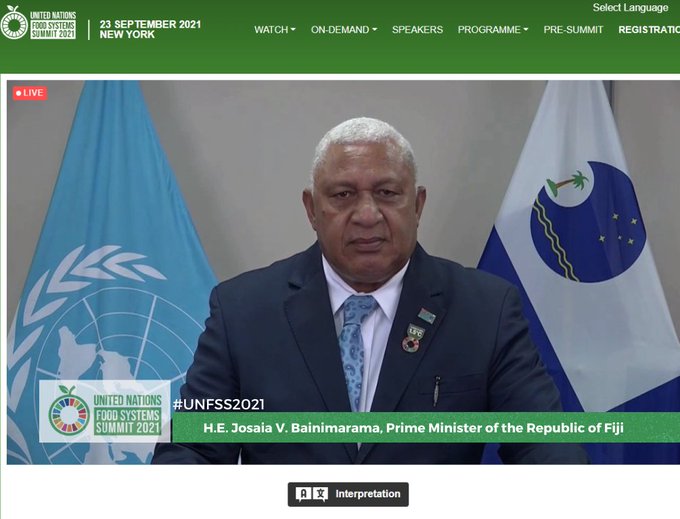
Fiji PM conveys Pacific’s unwavering commitment to the historic UN Food Summit

In a historic event convened by the United Nations today, Prime Minister, Voreqe Bainimarama and Chair of the Pacific Islands Forum (PIF) delivered a bold statement on the region’s unwavering commitment for global food systems transformation to advance the United Nations’ Sustainable Development Goals and recover better from COVID-19.

At the UN Food Summit 2021, UN Secretary-General Antoìnio Guterres collaborated with Heads of States and Governments from more than 90 countries in launching the new actions to deliver progress on all 17 SDGs, each of which relies to some degree on, a healthier, more sustainable and equitable food system.

Representing the 18 Members of Pacific Islands Forum (PIF) at this Summit, Prime Minister Bainimarama delivered a comprehensive statement outlining the challenges, collective actions and plans pursued by the region to build resilient and sustainable food systems.

Bainimarama said that food security must be recognised as a cross-cutting aspect of human development and a fundamental building block for sustainable development.

“In 2018, the Pacific Sustainable Development Report had already highlighted food security as one of our region’s key development challenges. We must act on the promises we make at this Summit. For the Pacific, climate change represents a major threat to the maintenance and development of Food Systems which are vital to food security. Our greatest challenges include sea-level rise, saltwater intrusion, and ocean acidification. All of these combined will impact our culture, water and food security; livelihoods; biodiversity; health and wellbeing.”

He stated that Pacific Island biodiversity is under intense pressure from climate change and human-induced disturbances.

“Agriculture, fisheries and forestry sectors are vital to national and regional recovery efforts, therefore, coordinated, integrated and ecosystem based sustainable development approaches with all our partners are required to improve resource management practices and to rebuild food security and livelihoods.”

“The Pacific region is also grappling with Non-Communicable Diseases (NCD), a crisis that is closely linked to our food systems, health and nutrition. Intensifying multi-sector efforts and financing to address the NCD crisis is necessary through i) increasing resourcing for enforcement of policies and legislation; ii) strengthening preventative interventions across people’s life cycles; iii) promoting nutrition and food security and limiting industries interference; and iv) enhancing investment, resource allocations and accountability.”

The other threats to food security in the Pacific region as highlighted includes rapid urban population growth, land degradation and declining land productivity, erosion of crop genetic diversity, coastal and coral degradation, declining productivity of fisheries, illegal fishing, food storage and transportation limitations.

The Chair of the PIF said that within the framing of the 2050 Strategy for the Blue Pacific Continent, food security has been identified as a key driver of change for improving the socio-economic well-being of all Pacific people.

He also stated that the region has stepped up its efforts to guide investments and reforms necessary to ensure resilient sectors so that the Pacific region can achieve food sovereignty, enabling the region to receive a fair and equitable share from the contribution of Pacific resources and Blue Foods to global Food Systems.

“The Pacific region also intends to strengthen e-commerce and expand digitalisation to accelerate progress on resilient Food Systems, improve nutrition and health and build climate-resilient adaptation capacity.””

“COVID-19 has had devastating impacts on food security with exponential increases arising from trade disruptions, and loss of jobs in the service sectors.””

“This has reinforced the need for regional and global trade co-operation which are essential for sustainable Food Systems.”

“We are encouraged to see a growing recognition that Blue Food Systems serve as an anchoring pillar in the development and maintenance of sustainable food and we recognise that successful management of Blue Foods requires co-operation among governments and between governments together with relevant stakeholders.”

“We are supportive of efforts to create a network to ensure that Blue Foods are brought into the heart of discussions and decisions about Food Systems and to mobilize support for countries and communities that are taking action to build the vibrant, sustainable Blue Food Systems of the future. We are in firm agreement with the Secretary-General that transforming our food systems is central in our effort to achieve the SDGs.”

In conclusion, Prime Minister Bainimarama supported the call for all stakeholders to work together to adopt a sustainable food systems approach that incorporates science, policy and action into diverse and complex food systems effectively.

“It is critical that we redouble our multilateral efforts to address these vital issues, drawing on the shared capacity within this august body and the common ideals that bring us here. Just as our environment, peoples and food systems are profoundly interwoven and mutually sustaining, so must our response be, for the sake of our and future generations,” he said.

SOURCE: FIJI GOVT/PACNEWS

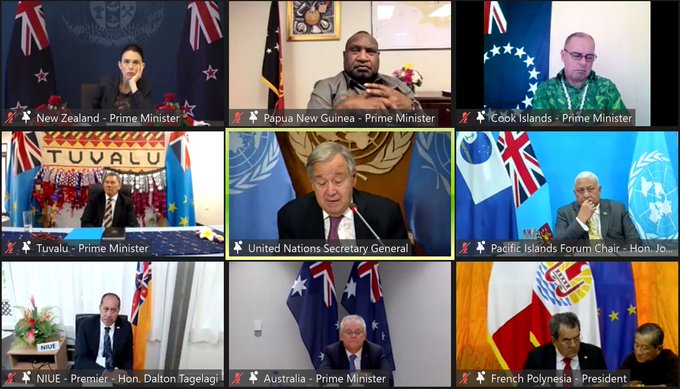
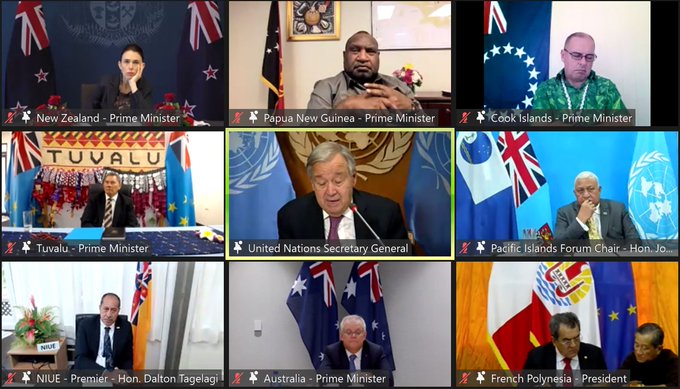
UN SG’s António Guterres remarks at virtual meeting with Pacific Islands Forum Leaders

Thank you for the opportunity to once again address the Pacific Islands Forum.

Your nations are confronting a dual crisis of climate change and the COVID-19 pandemic.

Both threaten Pacific lives and livelihoods.

If we follow the current path, the consequences of climate disruption for the prosperity, the well-being and the very survival of Pacific communities will be severe.

I witnessed the impacts first-hand during my visit two years ago.

You have been raising the alarm, and your voice must be heard loud and clear in the preparation for the COP26 in Glasgow.

We need more ambition from every country.

More ambition on mitigation.

We need a 45 per cent cut in emissions by 2030 to reach carbon neutrality by mid-century.

Yet Nationally Determined Contributions that currently exist would result in an increase of 16 per cent in emissions by 2030, and that puts us on a catastrophic pathway of 2.7-degrees of global heating.

This must stop. This must be reversed.

We also need more ambition on finance.

Developed countries must live up to the promise of mobilising US$100 billion dollars a year for climate action in developing countries.

Just last week, the OECD reported a gap of at least USD$20 billion.

And – as you know it all too well – we need more ambition on adaptation.

Developing countries received only US$16.8 billion dollars in 2018, compared to adaptation costs of some US$70 billion.

Developed countries and multilateral development banks must urgently increase the share dedicated to adaptation to 50 per cent of climate finance and provide credible support in building resilience to climate impacts.

And we must also further integrate oceans into climate change discussions.

The Ocean absorbs nearly a quarter of annual CO2 emissions, and ocean warming is now being observed 1000 meters deep.

The second United Nations Ocean Conference in 2022 will provide an opportunity for accelerated ocean action for the achievement of Sustainable Development Goal 14. I also welcome the recent launch of the United Nations Decade of Ocean Science for Sustainable Development.

As the COVID-19 pandemic continues to wreak havoc around the world, Small Island Developing States disproportionately bear the brunt of its impacts.

Your tourism industry, supply chains and aviation industries have been dramatically affected.

Your solidarity and regional cooperation complement the massive efforts you are undertaking nationally to address the pandemic.

And despite many challenges, I commend your commitment to ensure vaccination drive as a top priority.

But we need a global vaccination plan. It is essential. I have been asking for it time and time again.

A plan that could be implemented by an emergency Task Force, including the countries that are producing vaccines and the countries that can produce vaccines, the World Health Organisation (WHO), ACT-Accelerator partners, international financial institutions and working with pharmaceutical companies.

A plan that would ensure that vaccines reach seventy percent of the world’s population in the first half of 2022, as the WHO has asked for. It means at least doubling current production and ensuring equitable global distribution

Recovery from the pandemic presents us with a rare opportunity to change course.
As vast sums are mobilised to revitalize economies, we must ensure that those investments reach your countries and place the world on a more sustainable path – with the 2030 Agenda as our roadmap.

Inclusive policies, based on universal human rights, gender equality, health and education remain the best basis for long-term peace, prosperity and well-being.

I applaud the creation of an integrated cooperation framework for the Pacific, well linked to the global and regional review processes.

However, we are not on track.

Recognition of multidimensional vulnerabilities is crucial.

No state should have to choose between rebuilding their economy and servicing their debt.

The Debt Service Suspension Initiative should be extended to vulnerable developing countries and middle-income countries that request it.

And Special Drawing Rights should go to where they are most needed, no matter the income classification before the crisis Today distribution is skewed towards wealthier nations, but money should be distributed according to the needs of nations and people.

I acknowledge the leadership of the Pacific in the development of the Multidimensional Vulnerability Index within the framework of the SAMOA Pathway and the Index is now before the General Assembly.

Finally, we must follow today’s Food Systems Summit with a strong commitment to National Pathways to build further resilience, improve nutrition, tackle non-communicable diseases, and promote sustainable ocean food systems.

I am very grateful for your contributions and commitment to a strong and ambitious United Nations. Our reforms have yielded results, but we will not rest until we have reached our objective of an Organization that effectively implements its mandates and serves those who need us most. That is also the spirit of Our Common Agenda report.

I am pleased that the Multi-Country Office in the North Pacific is becoming operational and wish to thank the Governments of Fiji and Samoa for hosting the other two Multi-Country Offices.

As we confront today’s global crises together, you can count on our solidarity and support. We are on your side, and I thank you.

SOURCE: UN/PACNEWS

Household Income and Expenditure Survey clarity

0

By Kemueli Naiqama, former Fiji Bureau of Statistics chief

I note that there has been much debate since the release of the 2019-2020 Household Income and Expenditure Survey on the Fiji Bureau of Statistics Website www.statsfiji.gov.fi. The Minister of Economy, Aiyaz Sayed Khaiyum made a statement regarding the report on Tuesday evening 14th September 2021. I wish to set the record straight and to clarify the issues relating to the publication of the HIES Report so that Fiji can understand why this report was released for public consumption. This is an honest, clear and realistic snapshot of the poverty situation in Fiji according to internationally accepted standards and categories, and nothing else.

Survey Budget Re-Adjustment

It is important to note that the Fiji Bureau of Statistics (FBS) was still able to conduct the survey, process, analyze and publish the 2019-20 HIES Report despite the 40 percent reduction in its 2019-20 budgetary allocation. As a result, most Established Staff who are Supervisors had to forego their overtime meal entitlements and subsistence allowances, despite them having to attend evening and weekend interviews with their Enumerators depending on the time preferences of the survey participants. I commend the staff for their full commitment to their duty despite the lack of resources.

Enumerators’ Training

In any survey by the Statistics Office, there are always two phases.
First is the vigorous preparation phase and second is the implementation (Data collection, Analysis and Reporting) phase.
During the preparation phase, after the nomination of enumerators following the Open Merit Recruitment System (OMRS), they undertake two weeks of training to understand the purpose of the survey, the different thematic areas/modules of the questionnaire, the linkage between thematic areas of the questionnaire, and why such questions are included in the questionnaire. Additionally, they learn about the linkages of such questions to the Global, Regional and National Indicators e.g. SDG Goals, SAMOA Pathway and the National Development Plan. The enumerators during the training sessions do several pilot testing of the questionnaires to familiarise themselves with the survey tablets, measure the effectiveness of the questions, flow of questionnaires, time taken for an interview, identify modules, topics and questions that may pose some difficulties for the Enumerators. They learn about other gaps in the questionnaire such as correct interpretation and definitions to ensure the quality of responses received from the survey participants. In addition, there was also a one week allocated for the Training of Trainers (ToT) to ensure that training materials and deliverance are consistence across our Regional Offices.

Methodology and Sampling

It is important to note the sampling methodology used in the 2019-20 HIES is well recognised internationally and also applied by other Pacific Island National Statistics Offices (as endorsed by the Pacific Statistics Methods Board, of which I am a member) for comparable purposes. In addition, the 2017 Census was only used as a frame to randomly select the 600 Enumeration Areas only. All sample surveys will use the Enumeration Areas (EA) from the latest Census data where all population were counted and, in this case, the 2017 Population and Housing Census. The purpose of the sample is to draw inferences on the population, i.e. the data is generated from a random sample size from the population of interest.

2017 Census Specification for Sampling

A Two-Stage, Stratified, Probability Proportional to Size, and Systematic sampling was used to select the 6,000 households. In the first stage, the sampling of the selected Enumeration Areas are sorted by geographical position. Sorting by Division and by strata (urban/rural). This is the Probability Proportion to size (PPS) sampling method where the more the number of households in an enumeration area, the higher the chances of being selected. This is how the 600 sample Enumeration Areas were selected for the 2019-20 HIES survey.
In the 2nd stage, a systematic sampling method was used in which all households in the selected enumeration areas were interviewed to provide the following information: number of people residing in each household; name and relationship to Head of the Household; the sub population group; address of Household; sex; age, and residency status.
From the information collected above, the 10 households were then randomly selected in each Enumeration Area using the systematic sampling method as follows: Households were sorted by size and subpopulation group; Total households in the Enumeration Area were divided by the 10 households to derive the sample interval; Random number (start) was then selected from the random tables provided; and once the random number is selected, the random interval is used to select the 10 households. The above process is repeated in all the selected 600 Enumeration areas to arrive at the 6,000 households.
The HIES 2019-2020 estimated population was based on the household population at the time of the survey and therefore excluded the population of those living in non-private dwellings. Non-private dwellings (NPDs) are outside the definition of households used in the survey. Therefore, the HIES 2019-2020 estimated population of 864,132 was expected to be lower than the 2017 population census estimates of 884,887.
The survey had to be undertaken for one whole year so that we are able to observe and measure the consumption pattern of households in Fiji. These include the preferences and choices people make with regard to their consumption, whether for food or non-food items. For non-food items, the activities that the household intend to commit are explored to understand the reasons why it is placed above or below the Basic Needs Poverty Line.

World Bank and Bristol University Validation

To quantify and validate the effectiveness of any survey result, is the role of any Statistical Agency including FBoS to engage itself with any credible organisation that has expertise to verify its survey results and analysis. In this HIES 2019-2020 survey, we opted for the World Bank and Bristol University of UK for these reasons. The World Bank offered to assist the Statistics Office with regard to issues pertaining to Reducing Poverty and Inequality, whilst Bristol University of UK agreed to assist with producing the multidimensional poverty estimates using the consensual deprivation method, which incorporates the views of a representative sample of the Fijian population into the measurement of poverty. This therefore produces estimates of poverty and deprivation that are both statistically sound and socially realistic, validated by two prestigious institutions.
In addition, we engage with the two institutions so that our officers can further strengthen their analytical skills and enhance their understanding of poverty related issues.

Published HIES Report

This HIES Report is a poverty report which provides the characteristics and the contributing factors/variables of poverty. The report is not about race, but about providing transparent and independent disaggregated official statistics for all users.
The report and results are designed to provide users of statistics/policy makers with the high quality information they need to help design efficient and effective anti-poverty policies.

Conclusion

This is statistical report on poverty and one needs to wear a ‘statistical lens” to understand how to tackle poverty related issues. We cannot pickup on one or two variables (like race and religion, separately from other issues, and think that one is addressing/dealing with poverty. Poverty is multidimensional and should be tackled accordingly. I have discharged my responsibility as a trained statistician to the best of my ability, without fear or favour and as a neutral civil servant.
We have to embrace all contributing variables of poverty and collectively allow all stakeholders, whether it’s Government, Private Sector, Civil Society Organisations, Religious Bodies, or International Agencies – to identify their responsible thematic areas, provide the necessary budgetary allocation and intervention programmes to reduce and eliminate poverty. This way we all contribute in achieving SDG Goal 1 “No Poverty” and the global theme of ‘Leaving No one Behind’ as Fiji becomes a healthy and wealthy nation come 2030.
When one gets sick – consult a doctor.
When one has a toothache – consult a dentist.
When one wants to understand statistics – consult Statisticians – the data experts.

SOURCE:KN/PACNEWS

Forum Leaders to meet with UN Secretary-General Guterres

0

Pacific Islands Forum Leaders will meet with the United Nations Secretary-General, António Guterres, in the margins of the 76th Session of the UN General Assembly.

The meeting will be held virtually 24 September 2021 and recommences the annual meeting after it was postponed in 2020 due to the COVID-19 pandemic.

Usually a face-to-face session, the meeting will give Forum Leaders the opportunity to raise the most urgent issues facing the Blue Pacific, directly with the UN Chief.

Pacific Islands Forum Secretary General, Henry Puna, was pleased that the Forum could secure the meeting amid ongoing COVID-19 disruptions to the regular UNGA format.

“It is immensely significant. During the UN Secretary-General’s busiest and most influential week of the year, we will have his full attention to discuss matters important to our Blue Pacific. It is symbolic of the Secretary-General’s commitment to our region, and we must capitalise on this platform to amplify our messages to the global community. Pacific priorities are global priorities,”.

The meeting is expected to cover a range of key Forum priorities, including climate change, oceans and the Forum Leaders’ Declaration on preserving maritime zones in the face of Climate change-related sea-level rise, COVID-19 and the state of global and Pacific multilateralism. The meeting will be a crucial platform as Forum Members look to gain momentum into a busy upcoming international calendar of events, including COP 26.

The Forum and UN enjoy a strong partnership, one that is reaffirmed by this year’s General Assembly resolution that seeks to enhance cooperation between the two organisations.

Forum Leaders will also be delivering national statements at the 76th general debate this year, following on from the 51st Forum Leaders meeting in August 2021 where they progressed significant commitments to collectively securing the future of the Blue Pacific.

SOURCE: PIFS/PACNEWS

UN chief appeals for countries to sign nuclear test-ban treaty

UN Secretary-General António Guterres on Thursday again urged eight key countries which have not yet signed or ratified the Comprehensive Nuclear-Test-Ban Treaty (CTBT), to do so without delay.

His request came in remarks to the latest conference to promote the treaty’s entry into force, which were delivered by UN High Representative for Disarmament Affairs, Izumi Nakamitsu.

The CTBT was adopted in 1996 and has been signed by 185 countries, and ratified by 170 of them, including three nuclear weapons-holding States: France, Russia and the United Kingdom.

However, for the treaty to enter into force, it must be signed and ratified by 44 specific nuclear technology holder countries, eight of which are still missing.

The Secretary-General stated that a prohibition on nuclear testing is an essential element of a nuclear weapons-free world.

The CTBT “has created an almost universally adopted norm against the testing of nuclear weapons,” he added.

The UN chief applauded the Preparatory Commission, the office working to achieve the treaty’s entry into force, for its tireless efforts in establishing a proven, robust and global verification system that can conduct real-time monitoring of nuclear tests anywhere in the world.

“Given its necessity and readiness, it is both disappointing and frustrating that the Treaty has not yet entered into force. We all know the reason for this – the eight remaining Annex II States whose ratifications are required for the Treaty’s entry-into-force,” he said.

“As a result, a critical element of our collective security cannot be fully operationalised. I repeat my call to these States to sign and ratify the CTBT as soon as possible. I also call on all other States that have not yet signed or ratified the treaty to do so without delay.”

The Secretary-General expressed hope that the day will come when the Article XIV Conference will no longer need to be convened. It has been held every other year since 1999.

“We have remained in this state of limbo for too long,” he said.

“No norm or moratorium can replace a legally binding prohibition. States must take this occasion to redouble their efforts. To think creatively. And to act in the interest of the entire world’s security,” said Guterres.

SOURCE: UN NEWS CENTRE/PACNEWS

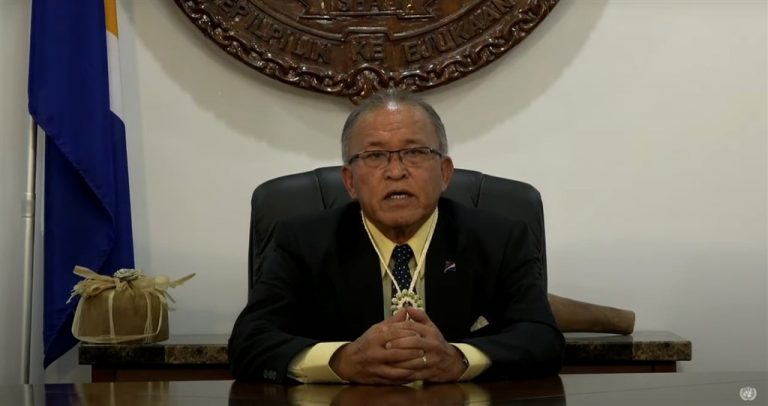
Marshall Islands president urges UN to monitor geopolitical tension in Pacific

The Marshall Islands president has urged world leaders at the United Nations to monitor geopolitical tensions in the Pacific.

Addressing the UN General Assembly in New York via a recorded video message, David Kabua, said countries in the region were in the middle of a tug-o-war between ‘the world’s greatest powers’.

“My own Pacific islands region faces a new emerging security threat in the form of geopolitical competition,” Kabua said.

Without addressing the elephant in the room directly Kabua said the Marshall Islands has always strived to maintain an independent democracy and protect the basic human rights of its citizens.

“As island leaders we must remain firmly in control of our commitment to a free and open Indo Pacific and stand apart from any who would seek to have us trade our core values for easy inducement.”

Kabua called on the Pacific’s traditional allies stand by island nations and stressed the importance of having a strong UN body to prevent history from repeating itself.

“If we cannot remember the mistakes that led to the last century’s open global military conflicts…my fear is that we are doomed to repeat them,” David Kabua said.

The Marshall Islands president’s comments come as the U.S, the UK and Australia have been on the defensive over widespread criticism of their recently announced security pact AUKUS.

SOURCE: RNZ PACIFIC/PACNEWS

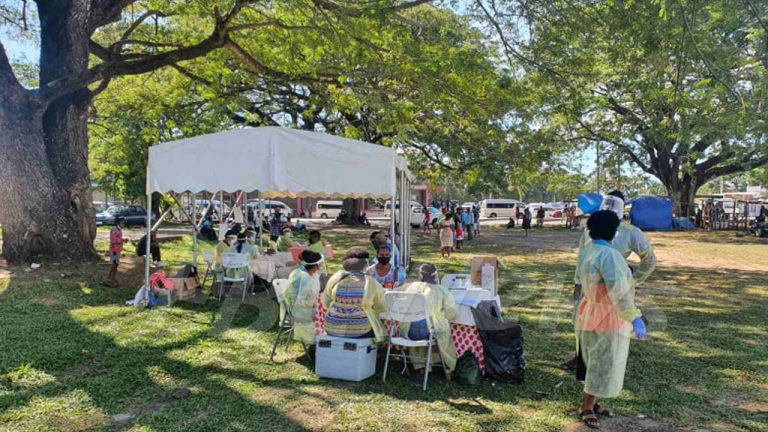
Fiji records 177 new cases of COVID-19, four new deaths reported

Fiji has recorded 177 new cases of COVID-19 and four new deaths Thursday, increasing the total number of cases to 50,377 and 581 deaths since the outbreak in April.

Permanent secretary for Health, Dr James Fong said there have been 170 new recoveries to report since the last update, which means that there are now 12,979active cases.

“There have been 50,377 cases during the outbreak that started in April 2021. We have recorded a total of 50,447 cases in Fiji since the first case was reported in March 2020, with 36,460 recoveries.

“We have two new border quarantine cases to announce today. A first case is a 20-year-old man from Nadi and a second case is a 22-year-old man from Lautoka. They both arrived in Fiji on the 19th September 2021 at the Lautoka Seaport in a vessel that visited several other seaports. Although both individuals reported to have not disembarked the vessel at any of these ports due to COVID-19 restrictions, however, crew change over at one port is the possible source of infection transmission.

“The Fiji Border Health Protection Unit is currently investigating this. They have been retrieved as per protocol and transferred to our managed isolation facilities. Both individuals were noted to be symptomatic for COVID-19 but are currently stable,” Dr Fong explained.

He said the four new COVID-19 deaths reported for the period of 21 July- 18 August 2021. All four COVID-19 deaths reported are from the Central division.

Dr Fong said these deaths reported Thursday due to the delay in the issuance of the official death certificates.

“There have been 6 deaths of COVID-19 positive patients. However, these deaths have been classified as non-COVID deaths by their doctors. The doctors have determined that these deaths were caused by a serious pre-existing medical condition and not COVID-19.

“There have now been 583 deaths due to COVID-19 in Fiji, with 581 of these deaths during the outbreak that started in April this year. As of 18 September, the national seven days rolling average of COVID-19 deaths per day is 0.6. The seven days rolling average for COVID-19 deaths per day in the Central division is 0.3 and 0.3 in the Western division.

“We have also recorded 425 COVID-19 positive patients who died from the serious medical conditions that they had before they contracted COVID-19; these are not classified as COVID-19 deaths,” said Dr Fong.

He said there are currently 110 COVID-19 patients admitted to hospitals in Fiji.

“41 patients are admitted at the Lautoka Hospital and 69 are admitted at CWM hospital, St Giles, and Makoi.

“Seven patients are considered to be in severe condition, and two are in critical condition,” Dr Fong said.

The national seven-day average daily test positivity is 10 percent, which is on a downward trend, but it still is indicating a high level of community transmission, he said

As of 22 September, 589,830 adults in Fiji have received their first dose of the vaccine and 412,897 have received their second doses.

“Based on our updated total population of 618,173 people aged 18 years and over (adults), the revised vaccination coverage rates are 95.4 percent for adults who have received at least one dose, and 66.8 percent are now fully vaccinated nationwide.

“As for children, 11,409 children in Fiji have received their first dose of the vaccine as of the 22nd of September. We will be tracking our vaccine coverage rates once we have firmed up our 15 to 17-year-old denominator,” Dr Fong said.

SOURCE: PACNEWS

Marshall Islands leader urges UN to end ‘shameful silence’ in excluding Taiwan

0

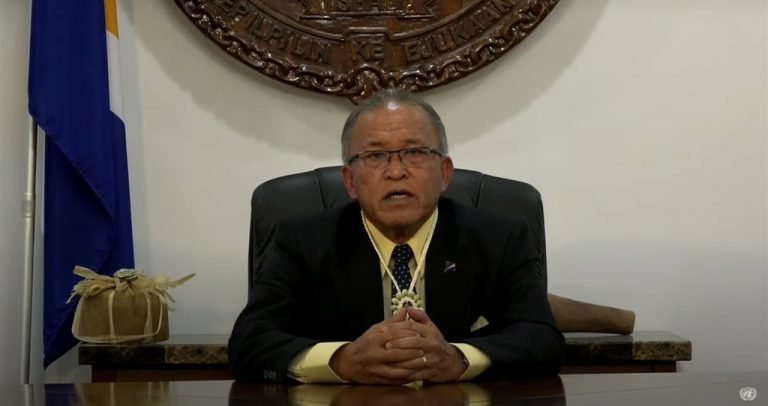
Marshall Islands President David Kabua on Wednesday urged the UN to put an end to the “shameful silence” on Taiwan’s exclusion from the UN system.

In his 15-minute pre-recorded address to the UN General Assembly in New York City, Kabua said that collective action is needed from all countries, stakeholders and people to ensure a resilient recovery from the COVID-19 pandemic.

“The democratic government of Taiwan should be allowed to participate in an equal and dignified manner within the UN system,” Kabua said, adding that this would include the WHO, the International Civil Aviation Organisation, the UN Framework Convention on Climate Change and the UN’s Sustainable Development Goals.

The UN has repeatedly cited General Assembly Resolution 2758 to prevent Taiwan’s inclusion, he said.

“There is absolutely nothing in General Assembly Resolution 2758 which prevents this inclusive approach, and this resolution affords nothing to hide behind, as it expresses no position on Taiwan,” he said.

“As a people-centric institution, the UN cannot ignore the Taiwanese people or continue to use their nationality to exclude them from attending public meetings or public tours at its headquarters. The shameful silence must end,” Kabua said.

The resolution — passed on 25 October, 1971 — says that the People’s Republic of China is the only legitimate representative of China to the UN, instead of the Republic of China, Taiwan’s official name.

Taipei has over the past few years reiterated its position that the resolution is concerned with the representation of China, not Taiwan, and that it does not describe Taiwan as part of China, nor does it authorise Beijing to represent Taiwan in the UN system.

Guatemalan President Alejandro Giammattei Falla briefly mentioned Taiwan in his address to the General Assembly.

Guatemala believes that Taiwan can provide “experience, capacities and knowledge” to boost multilateralism at a time when the world is facing challenges, he said.

Honduran President Juan Orlando Hernandez, the third leader of an ally of Taiwan to speak in front of the UN on that day, did not mention Taiwan in his address, marking the sixth consecutive year that the Central American ally did not speak up on behalf of the nation at the General Assembly.

Instead, Honduras sends a letter to the UN secretary-general each year to support Taiwan’s participation in the UN system.

Nauru, an ally of Taiwan in the Pacific, was expected to speak Thursday.

Taiwan left the UN in 1971, and Beijing took its place.

Since then, the nation has been excluded from the General Assembly and other UN agencies.

SOURCE: CENTRAL NEWS AGENCY/PACNEWS

Stay connected

529FansLike
172FollowersFollow
156SubscribersSubscribe
- Advertisement -