Home Blog Page 1124

Fiji joins the global call at UNGA for a “nuclear free world”

Fiji has reaffirmed its commitment and solidarity with the international community to support all efforts in making the world free of nuclear weapons.

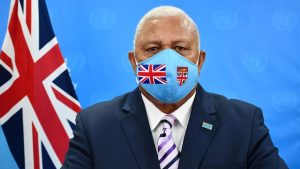
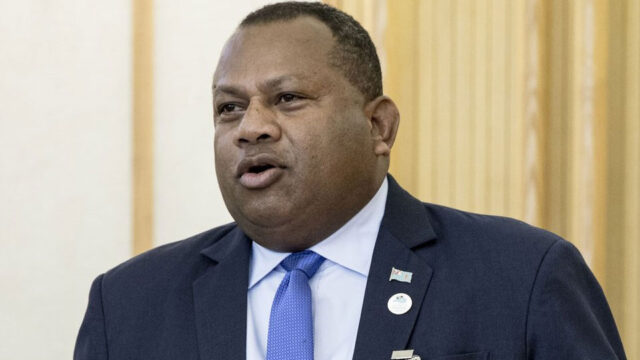
This was emphasised by Prime Minister, Josaia Voreqe Bainimarama in his statement today to the United Nations on the occasion of the High Level Plenary meeting to commemorate the 20th Anniversary of the Total Elimination of Nuclear weapons.

The virtual meeting held at the margins of UNGA76 was convened by UN Secretary-General António Guterres and Heads of Governments to raise awareness on threats posed to humanity by nuclear weapons and the need for their elimination, in addition to mobilize international efforts towards achieving the common goal of a nuclear-weapon-free world.

Prime Minister Bainimarama said the fact that the first resolution adopted by this General Assembly was on nuclear disarmament, reflects the supreme importance of this issue to Member States.

“After 75 years, the destructive power of nuclear weapons remains heavily on the world’s consciousness. The Nuclear Proliferation Treaty (NPT) came into force more than 50 years ago with the overall aim of making the world free of nuclear weapons. The NPT was a great achievement, but we must do a great deal more to realise a world free of nuclear weapons. Fiji remains concerned at the slow pace of nuclear disarmament.

“The stockpiling and further development of nuclear weapons is a threat to the entire world, and the world is not made safer by increasing the number and sophistication of nuclear weapons in the hope that they will never be used.”

He said Fiji signed and ratified the Treaty for the Prohibition of Nuclear Weapons (TPNW) because it was the right thing to do, for ourselves, our communities, and for the global family.

“Fiji urges all Member States to join and ratify the new TPNW, to free the world of nuclear weapons and make our world safer for today and for future generations.

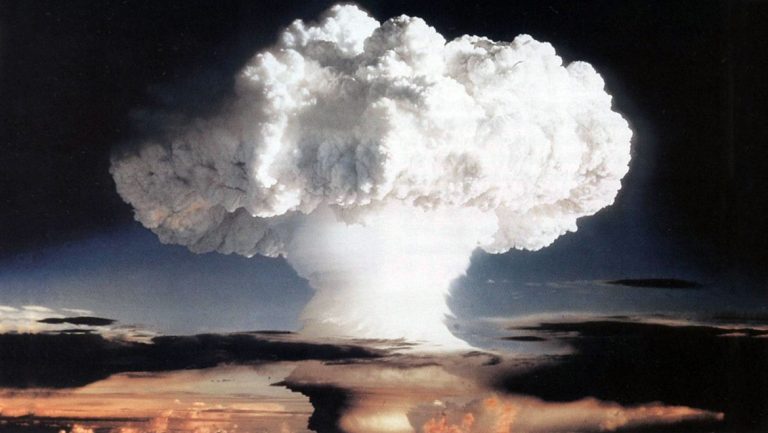
“Since the first nuclear test in the Bikini Atoll in 1946, more than 300 nuclear tests were conducted across the Pacific. Inter-generational impacts of nuclear tests in the atmosphere, underground and beneath the sea across the vast Blue Pacific, continue to take a toll on the health, wellbeing, environment and livelihoods of Pacific peoples.

“Radio-active waste and machinery that were either buried or dumped into the Pacific Ocean threaten the health of our Oceans. The commitment of the Pacific Island nations to the elimination of nuclear weapons is not based on an abstraction. It is based on real experience with the consequences of nuclear fallout, and it is at the root of our sense of urgency.”

Prime Minister Bainimarama said it is vital that nuclear disarmament progress beyond its current state.

“Indeed, we appear to be stuck in place. We will need a concerted collective effort by all if the world is to advance towards the total elimination of nuclear weapons.

“All Member States must abide by international laws and norms, and transparency, dialogue, and confidence building measures are essential. Existing nuclear disarmament treaties like the NPT and the TPNW need our collective support. Constant political commitment, vigilance, and attention are needed for them to remain relevant, and to advance our goals towards a world free of nuclear weapons,” he said.

SOURCE: FIJI GOVT/PACNEWS

Pacific nations face ‘lost decade’ due to economic cost of Covid

Countries in the Pacific risk a “lost decade” following the Covid pandemic, with the region facing its greatest economic contraction in four decades, according to a new report into foreign aid.

The latest Lowy Institute Pacific Aid Map, which sets out aid spending and donations to the Pacific Islands region, shows US$2.44bn in foreign aid reached the Pacific in 2019, which is about eight percent of the region’s GDP.

Australian aid to the region has increased, after growing fears China’s “soft diplomacy” through concessional loans for infrastructure projects was lessening Australia’s influence on the region. While Australia’s total foreign aid budget has shrunk under the Coalition, the Pacific has been the focus of what remains, with Australia “retooling” its budget to increase its contributions to Pacific neighbours.

But China, an emerging force in the region, slashed its contributions that same year, reducing its aid budget from US$246m in 2018 by 31 percent, delivering US$169m in 2019.

Lowy reports that’s the lowest level of aid China has given to the Pacific region since 2012, with the drop occurring even as Beijing secured new diplomatic alliances. China’s funding to the region is more commonly given in the form of a concessional loan, leaving countries indebted to the government. In 2019, 67 percent of Chinese aid was given in the form of loans, up from 41 percent the year before.

The early analysis for 2020 shows no indication China has increased its financial support, leaving governments in the region with financial gaps it has little hope of filling.

The Lowy Institute analysis, to be released on Wednesday, estimates an additional US$3.5bn will be needed for the region to recover from the pandemic, but donors appear in short supply.

All up, aid to the Pacific declined by 15 percent in 2019, with health spending accounting for just 11 percent of the US$2.44bn.

Lowy reports Australia accounted for 42 percent of all aid to the Pacific region between 2009 and 2019, but in more recent years, the amount of money being spent on health has been cut in favour of infrastructure projects.

As part of its pandemic response, Australia established a temporary AUD$305m (US$220 million) Covid package within the Pacific Step-Up programme, which aimed to “to help address the economic and social costs of the pandemic in the Pacific and Timor-Leste, helping to underpin our region’s stability and economic recovery”.

The package was mostly designed to help Pacific governments maintain essential services, including aviation, during the worst of the pandemic. Vaccines have also been sent to Pacific Island governments, along with specialist teams, to help curb the spread of Covid.

But with the world beginning to move on, the Lowy Institute points to more needing to be done to ensure nations within the Pacific region do not fall further behind.

Australia is also facing pressure from its Pacific neighbours to act on climate, with warnings the Coalition’s “inertia” on the issue was undermining its position within the Indo-Pacific, at the same time as scrambling to reassure partners the new strategic Aukus pact would not heighten defence tensions in the region.

SOURCE: THE GUARDIAN/PACNEWS

Nauru’s seabed mining pitch out of step with Pacific

A Pacific government which has sought to expedite deep sea mining used its UN platform to make a pitch for an industry that is unpopular with ocean peoples.

There’s great interest among advocates of the fledgling sector in the polymetallic nodules found on the deepest seabed of the Pacific, but few regional countries are on board.

Polymetallic nodules are lumps found on the seafloor which are known to contain metals such as manganese, ganesenickel, copper, cobalt and other minerals.

These eagerly sought after materials are integral for lithium-ion batteries and storage, among other uses.

Nauru recently invoked a rule at the International Seabed Authority (ISA) to allow seabed mining to commence within two years in its waters.

Ocean scientists, environmentalists and Pacific civil society have criticised the move and repeatedly urged a pause on any start to mining.

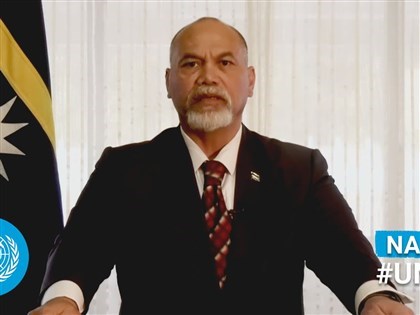
However, Nauru’s president Lionel Aingimea told the UN General Assembly that the fledgling sector was a vital component in the fight against climate change.

“Accessing these polymetallic nodule resources is critical to building the clean energy transitions we need, and towards a circular economy.

“These polymetallic nodules are needed to transform big and small countries’ energy systems, and support our fight against the climate crisis.”

Nauru is one of four Pacific Island countries who have approved licenses for exploration in their waters. The others are Kiribati, Tonga and the Cook Islands.

They’re going against the grain of the Pacific push for ocean health, a chief advocate of which is Fiji’s Prime Minister Frank Bainimarama, who told a conservation event on the sidelines of the General Assembly that his country had banned deep sea mining.

“Humanity is not above nature. We are part of it. And the arrogance of thinking otherwise is costing us dearly,” he said.

“Fiji is committed to the 100 percent sustainable management of the ocean, with 30 percent declared as marine protected areas. We have banned deep sea mining in Fijian waters,” said Bainimarama.

According to Aingimea, his country has a right to explore the possibilities of deep sea mining.

“This process will allow Nauru and other developing countries to participate in a new industry, accessing valuable resources in light of a historical context that far too often deprived developing countries from reaping the benefits,” he said.

“We look forward to working with ISA members and observers to develop environmental regulations that help ensure any exploitation in sea floor collection operations are conducted safely and responsibly.”

But ocean scientists such as Douglas McCauley, the head of the of the Benioff Ocean Initiative at the University of California, Santa Barbara, say there should be a pause on any mining activity until more research is conducted on the farthest depths of the ocean, perhaps the least studied part of the planet.

While there is still much to be learnt, McCauley said the damage risks were high for such a slow-evolving ecosystem as the ocean floor.

While advocates of mining say the seafloor nodules are critically needed for batteries for electric vehicles, McCauley said there was more potential in recycling of old batteries already in the waste cycle, in order to meet renewable energy’s demand for metals.

Development of environmental regulations for seabed mining is also where New Zealand’s government is pinning its focus in the ongoing debate around seabed mining.

But its abstention on a recent vote for a moratiorum on seabed mining at the IUCN World Conservation Conference drew plenty of criticism in parliament.

Foreign Affairs Minister Nanaia Mahuta was unapologetic for New Zealand not voting with the majority.

“Our position on that particular motion, alongside the UK, USA, Australia, Canada, France, was set to ensure that we continue to work in a very strong way to build the regulatory framework through the ISA to guide countries in their sovereign determination of deep sea mining,” she said.

The New Zealand Maori Party’s Debbie Ngarewa-Packer was one of several MPs who grilled the minister on seabed mining.

“What will she say to tagata whenua in Aotearoa and tagata moana across the Pacific who have been consistently opposing this destructive mining of the seabed?” Ngarewa-Packer asked.

In reply, Mahuta doubled down on New Zealand’s position that it participates in the ISA to ensure there is a strong regulatory framework to guide the industry.

The position of most Pacific Island governments is reflected by the Secretariat of the Pacific Regional Environment Programme’s (SPREP) recent recommendation for a 10-year moratorium on deep sea mining.

Meanwhile, with global efforts to increase protection for the deep ocean gaining pace, investors appear to have taken flight from one of the main entities seeking to mine the Pacific seabed, The Metals Company.

Formed out of a merger involving DeepGreen Metals, a company with multiple exploration licenses in the Pacific and close ties to Nauru, the miner has seen its share price plunge this month.

SOURCE: RNZ PACIFIC/PACNEWS

PNG Controller imposes one-month ban on gatherings of 20-plus persons

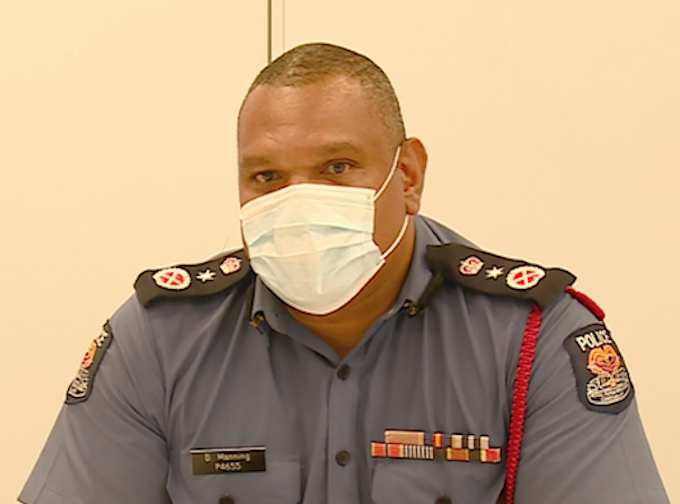
Papua New Guinea Commissioner of Police and Controller of the PNG COVID-19 National Pandemic Response David Manning has issued a directive banning gatherings of more than 20 persons effective from tomorrow (30 September) for one month ending 30 October 2021.

Manning has directed that events/gatherings, inclusive of social (clubbing/bar activities, dances, dinners, parties, sporting competitions, etc.) and religious activities (church, fellowships, etc.) will not be approved from 30 September till 30 October, 2021.

Further, all prior approvals granted for gatherings/events that will occur between 30 September, 2021 to 30 October 2021 are now revoked. Those that have been granted prior approvals must liaise with the Niupela Pasin team at the National Control Centre.

Manning also issued another directive outlining the process for those requesting approval for hosting of gatherings/events of more than 20 persons:

a) All organisations, whether private or public, shall request to host an event of more than 20 persons by writing in, copying the Deputy Controller and attention to the Niupela Pasin team;

b) Request letters must indicate the following information –
– Type of event,
– Date, time and venue of event,
– Number of participants who will attend the event,
– Focal person contact information for communication purposes, and
– Floor plans of the event.

c) Venue facilities (hotels, clubs, government buildings, etc.) shall not host events unless approval from the National Control Centre is presented by the event requester/organiser;

d) All organisations, whether private or public, must liaise with the Niupela Pasin Team to ensure due process of pre-event set up assessment and event assessment is adhered to.

As per the new directive, all organisations, whether private or public, shall formulate standard operating procedures for COVID-19 safety within their organisations and submit to the Niupela Pasin team at the National Control Centre.

Private organisations and businesses shall liaise with the Niupela Pasin team in formulating their respective standard operating procedures.

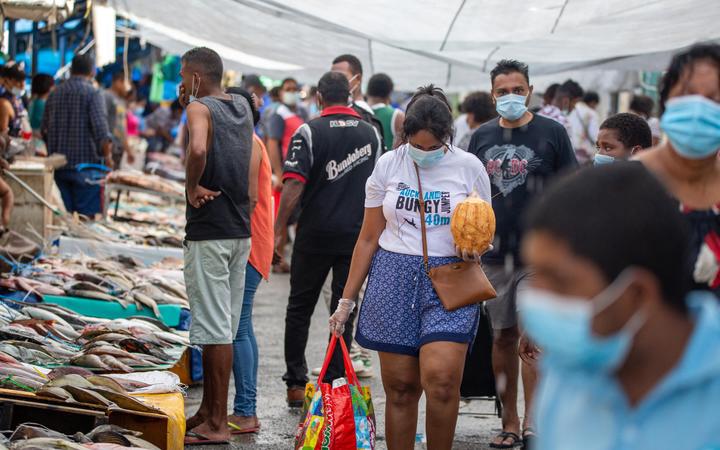
Manning has also directed that the wearing of masks is mandatory and effective immediately in public places as of 30 September, 2021.

Public places include: the public transport system (buses, taxies), individual transport systems, shops, schools, offices, restaurants, bars, hair salons, hotels, lodges, sporting facilities, markets and churches.

SOURCE: PNG GOVT/PACNEWS


‘Ikale Tahi European tour confirmed

0

The ‘Ikale Tahi will face Scotland, England, French Barbarians, and Romania during their European tour in October and November, Tonga Rugby Union CEO Peter Harding confirmed Tuesday.

However, the team will be without Head Coach Toutai Kefu, who had surgery after he was stabbed during a home invasion in Brisbane last month. Toutai has recovered but will remain with his family.

“There will be no Head Coach on tour,” said Harding.

“I will announce staff next week and there will be a coaching co-ordinator in the group and Toutai will have continuous input throughout.”

The players will be announced at a later date.

The ‘Ikale Tahi European tour schedule follows:

*30 October: Scotland
*06 November: England
*13 November 13: French Barbarians
*20 November 20: Romania.

Meanwhile, Malakai Fekitoa’s dream of playing test rugby for Tonga is on hold after the former All Black suffered a serious shoulder injury in the English Premiership.

Fekitoa is now eligible to play XVs for Tonga after representing them at the Olympic Games 7s qualifier in Monaco last June.

The hard-running midfield back played 24 tests for the All Blacks before taking his game to France in 2017, joining European powerhouse Toulon. He moved to English outfit Wasps in 2019 and has become the rock of their backline.

But disaster struck just two games into the current season when Fekitoa, 29, was seriously injured in last weekend’s 44-8 thumping of the Bristol Bears.

“Malakai has dislocated his shoulder and will need surgery. It will be months rather than weeks, and he will be out for a significant time,” Wasps coach Lee Blackett said as he provided the unwanted diagnosis on Fekitoa’s injury update.

That means Fekitoa will miss Tonga’s exciting test schedule where they are set to play Scotland in Edinburgh on October 30 and England at Twickenham the following weekend.

Blackett is also worried about the impact on his ambitious Wasps club who finished eighth last season after being runners-up the previous year.

“It is a blow to lose someone who is a talisman for us, and it will open up opportunities for guys to come in. He is the ultimate team man and leads the backline, but some of the young guys will get a chance now,” Blackett said.

“We will explore looking at bringing someone in and also things we can do within the squad to move people into the centre.

“We will look around but if we don’t feel we can add to the group we won’t bring them in. We have options in the squad,” he said.

SOURCE: TONGA WIRES/STUFF NZ/PACNEWS

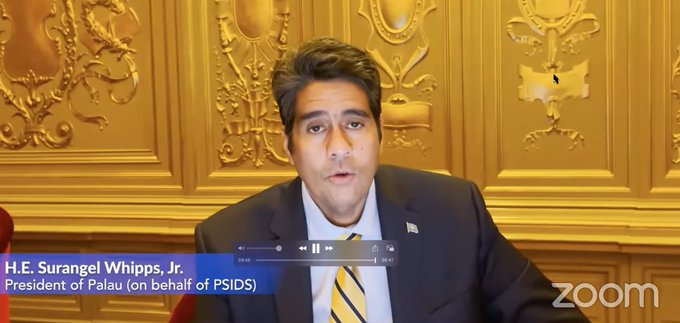
Palau President Whipps asks world leaders to support Pacific maritime boundaries declaration

Palau President Surangel Whipps Jr called on the global community to support the Pacific island leaders’ declaration of setting permanent maritime boundaries even if their shorelines diminish due to sea-level rise.

Whipps in his statement delivered during the Alliance of Small Islands States (AOSIS) Leaders’ Summit last week also pointed out the adoption last month of a Declaration on Preserving Maritime Zones in the Face of Climate Change related Sea-level Rise.

“We are heartened that AOSIS leaders have reflected key elements of that document in this meeting’s Declaration, and we encourage the international community as a whole to support the Declaration as a matter of equity, fairness, and justice as well as a reflection of the legal soundness of the Declaration, in full alignment with the text and purposes of UNCLOS,” Whipps said.

Pacific island countries could lose their territory as sea level rises continue with boundaries still measured from the point of land.

The president also reiterated that for the small island nations in the Pacific, climate change is a top priority and that collective action is needed to address the risks.

He called on world leaders to step up climate action and those big emitters needed to act.

“We have all the evidence we need – let us move with confidence and focus squarely on actions, actions, and more actions. Our survival is dependent on what we achieve on the ground. In the same breath, the big polluters and emitters need to demonstrate true leadership and understanding of the desperate situation faced by SIDS and the global community as reported in the latest IPCC Report,’ he said in his statement.

The president said global action is urgent to combat the climate crisis.

“We as the global family need to come together and succeed in our fight against climate change,” said President Whipps

SOURCE: ISLAND TIMES/PACNEWS

‘Neglected danger’: Nukes not in forefront in speeches at UN

It was the Marshall Islands’ turn to speak, and the president wanted to remind world leaders of a cause the United Nations has espoused since its founding.

“No effort should be spared,” President David Kabua told the UN General Assembly this month, “to move towards a world free of nuclear weapons and nuclear risk.”

It might seem like a must-discuss topic in countries’ big speeches at the annual meeting of presidents, prime ministers and other top officials — perhaps especially in a year when a historic nuclear weapons ban treaty take effect, though without participation from nuclear-armed nations.

This year also marks the 25th anniversary of the signing of the Comprehensive Nuclear Test Ban Treaty, which has yet to enter into force for lack of ratification by eight crucial nations but has helped greatly reduce such tests. And it’s the 75th anniversary of the General Assembly’s very first resolution, which sought proposals to eliminate atomic weapons.

So where was all the discussion?

Nuclear disarmament wasn’t a dominant theme, particularly among major powers, in the “General Debate” that is the assembly’s centerpiece and provides something of a yearbook of what’s on world leaders’ minds. Even specific concerns about the troubled Iran nuclear deal and North Korea’s atomic programme didn’t get as much emphasis as in some years past.

The world’s nuclear arsenal “is a forgotten and neglected danger, but it is forever present,” said Darryl Kimball of the Washington-based Arms Control Association. “It deserves to be at the top of the agenda, and it really should demand more attention.”

It did get some, including from the nations with the biggest stockpiles.

Russian Foreign Minister Sergey Lavrov said “the world was encouraged” by last winter’s renewal of the New START treaty that limits Moscow’s and Washington’s nukes, and he noted the countries’ upcoming strategic talks. U.S President Joe Biden said the world needed to come together on problems including “enduring threats like nuclear proliferation.”

UN Secretary-General Antonio declared “we need progress on nuclear disarmament,” and there were separate events on it during diplomacy’s biggest convocation of the year.

Still, the treatment of the issue in national speeches “seems to suggest that nuclear disarmament is not a big priority among the nuclear-armed states” and reflects uncertainty about prospects for progress, said Tytti Erästö, a disarmament researcher at the Stockholm International Peace Research Institute.

It’s no surprise that nukes didn’t get more of the spotlight from leaders preoccupied by the coronavirus pandemic and climate change. But it’s still “a missed opportunity,” said Richard Ponzio of the Stimson Centre, a Washington-based foreign policy think tank.

The chance to convene leaders from around the planet “should not go underutilised,” said Ponzio, a former UN and U.S State Department official.

The UN was founded in the wake of World War II. The world had just watched the devastating debut of nuclear weapons — the bombs that the United States dropped on two Japanese cities in 1945, killing over 100,000 people.

The so-called Cold War followed. The nuclear-armed U.S and Soviet Union engaged in proxy conflicts, came perilously close to the use of atomic weapons in the 1962 Cuban missile crisis, and pursued an arms race animated by a chilling doctrine of deterrence: “mutual assured destruction.”

The potential for atomic annihilation loomed over international relations. And it burrowed into the psyche of generations of Americans, at least, who grew up with bomb shelters, “duck and cover” air raid drills, and depictions of nuclear war in formats ranging from the 1964 “daisy ad” campaign commercial to the 1983 TV film “The Day After.”

The UN “helped reduce the tensions and helped to hold back the darkness,” as U.S President John F. Kennedy put it to the General Assembly in 1963. He spoke shortly before a limited nuclear weapon test treaty took effect.

There have since been more pacts and some significant progress.

There were over 2,000 nuclear tests worldwide from 1945 to 1996, but fewer than a dozen since. The global count of nuclear warheads is about one-quarter what it was at its mid-’80s peak, though still potentially cataclysmic at more than 13,000. And the Cold War’s end, finalised with the 1991 dissolution of the Soviet Union, somewhat eased global fears of nuclear conflict.

Concerns about terrorism, global warming and other perils subsequently grew and focus on nuclear issues receded, for many, in a world increasingly populated by people who didn’t experience the Cold War.

“We’re seeing a generational change,” says John Erath, a former U.S diplomat and national security official now with the nonprofit, Washington-based Center for Arms Control and Non-Proliferation.

“What’s going to be very interesting to see, over the next few years, is how the new generation feels about this and in what direction they take this,” Erath said. He noted that some security experts have discussed whether climate change could propel conflict and potentially raise the risks of nuclear confrontation.

To be sure, nuclear disarmament did get its own place in the assembly’s agenda. Some presidents and premiers, plus scores of foreign ministers, were speaking at an event Tuesday marking the International Day for the Total Elimination of Nuclear Weapons.

A biennial conference on the assembly’s sidelines last week aimed to build support for the comprehensive test ban treaty, and Ireland led a UN Security Council discussion Monday on the state of the pact.

The council currently includes six nuclear-armed nations: Britain, France, Russia, China, the U.S and India. The last three are among the eight countries whose ratification is most needed under the treaty’s complicated structure.

While there may not have been breakthroughs, Ireland’s European affairs minister, Thomas Byrne, called the meeting “a clear reminder of just how relevant nuclear disarmament is today.”

There were other, sometimes poignant reminders from the General Assembly rostrum over the past week.

“Nuclear weapons remain the ultimate agents of mass destruction,” Nigerian President Muhammadu Buhari said.

Austrian Foreign Minister Alexander Schallenberg, whose country hosts a conference next year on the nuke ban treaty that recently took effect, warned that “we cannot increase our potential to destroy — and, most of all, by hanging onto the myth of nuclear deterrence.”

Japan, pledging to try to bridge differences about disarmament, noted that it is the only nation where atom bombs have been dropped. Costa Rica cited “interdependence” in appealing for a nuke-free world.

And Kabua, the Marshall Islands’ president, recalled the dozen years of U.S nuclear weapons tests that his country endured in the mid-20th century. Their legacy continues “in our waters, our lands and our bodies,” he said.

“No people or nation,” Kabua added, “should ever have to bear a burden such as ours,” he said.

SOURCE: AP/PACNEWS
Fiji records 65 new cases of COVID-19, 29 new covid deaths reported

Fiji has recorded 65 new cases of COVID-19 and 29 new deaths Tuesday, increasing the total number of cases in the island nation to 50,802 and 612 deaths since the outbreak in April.

Permanent secretary for Health, Dr James Fong said there have been 196 new recoveries to report since the last update, which means that there are now 12,869 active cases.

“There have been 50,802 cases during the outbreak that started in April 2021. We have recorded a total of 50,872 cases in Fiji since the first case was reported in March 2020, with 36,724 recoveries,” he said.

Dr Fong said 29 new COVID-19 deaths reported for the period of 06 July – 17 September. 28 COVID-19 deaths were reported from the Central division while one COVID-19 death was reported from the Western division.

“There have been 16 more deaths of COVID-19 positive patients. However, these deaths have been classified as non-COVID deaths by their doctors. The doctors have determined that these deaths were caused by a serious pre-existing medical condition and not COVID-19.

“There have now been 621 deaths due to COVID-19 in Fiji, with 619 of these deaths during the outbreak that started in April this year. As of 23 September, the national seven days rolling average of COVID-19 deaths per day is 0.4. The seven days rolling average for COVID-19 deaths per day in the Central division is 0.1 and 0.3 in the Western division.

“We have also recorded 462 COVID-19 positive patients who died from the serious medical conditions that they had before they contracted COVID-19; these are not classified as COVID-19 deaths,” explained Dr Fong.

To date, 591,785 adults in Fiji have received their first dose of the vaccine and 437,730 have received their second doses.

“Based on our updated total population of 618,173 people aged 18 years and over (adults), the revised vaccination coverage rates are 95.7 percent for adults who have received at least one dose, and 70.8 percent are now fully vaccinated nationwide.

“As for children, 17,996 children in Fiji have received their first dose of the vaccine as of 24/09/2021. We will be tracking our vaccine coverage rates once we have firmed up our 15 to 17-year-old denominator,” said Dr Fong.

Meanwhile, the curfew hours have been moved back an hour to begin from 10pm until 4am from tonight, Wed 29 September 2021.

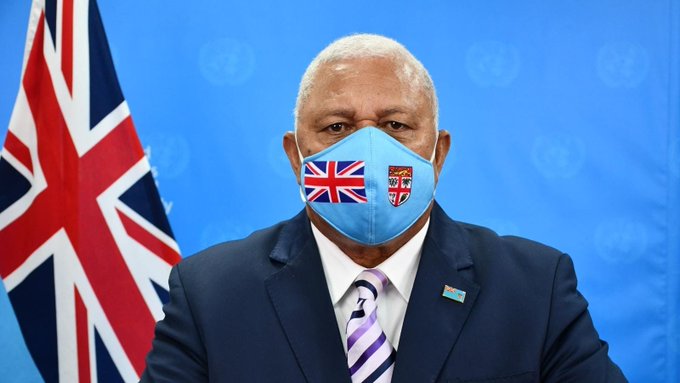
This was confirmed by Prime Minister Voreqe Bainimarama.

“Well done, Fiji! With 70 percent of adults now fully vaccinated, the curfew hours will be 10pm – 4am.

“Remember, from 04 October, houses of worship and almost all workplaces can open at 70 percent capacity to double-dosed adults. So, if you have one jab, don’t skip your second!” Bainimarama tweeted.

SOURCE: PACNEWS

Sydney think tank says China less generous toward Pacific

0

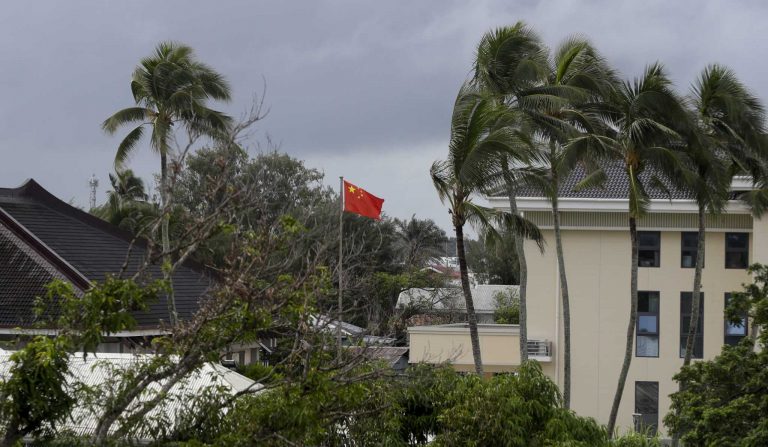
China gave significantly less aid to Pacific island nations in recent years despite Beijing’s diplomatic efforts to increase its influence in the region, according to a Sydney-based think tank.

Chinese aid to the Pacific shrank by 31 percent in 2019 to US$169 million, the Lowy Institute said in its annual Pacific Aid Map released Wednesday.

Only the World Bank pulled back more that year, but that had been expected after aid tripled between 2017 and 2018 through an extraordinary burst of investment, said Jonathan Pryke, Pacific Islands programme director at the international policy think tank.

“There has been a consistent level of growing engagement from China in previous years and we’ve seen this sharp decline in 2019 which is against the narrative,” Pryke said.

The map is a data base covering 66 donors and tens of thousands of aid projects in 14 Pacific island sovereign nations, which exclude the French territories of New Caledonia and French Polynesia.

Data since 2019 including the impact of the pandemic are incomplete and are not included in the latest report.

Pryke said preliminary data since 2019 suggested that China’s lowest contribution to the Pacific region since 2012 was not an anomaly.

“We’ve done some cursory analysis of 2020 on China as well and we haven’t seen a bounce back,” Pryke said.

International aid to the Pacific dropped by 15 percent in 2019 to US$2.44 billion. The Lowy Institute expects data will show contributions rose last year in response to the pandemic.

It is not clear why China pulled back from the Pacific since its aid to the region peaked at US$287 million in 2016.

Chinese President Xi Jinping made a state visit to Papua New Guinea in late 2018 ahead of an Asia Pacific Economic Cooperation leaders’ summit hosted by one of the most populous South Pacific island nations.

Two Pacific island nations, Kiribati and Solomon Islands, switched their diplomatic allegiances from Taiwan to Beijing in 2019 in a major regional win for the Chinese Communist Party.

The Pacific’s traditional aid partners, the United States, Japan, Australia and New Zealand, have stepped up efforts to offer alternatives to China’s Belt and Road Initiative infrastructure partnerships.

Pryke suspects Pacific nations now have more aid options and are seeking better deals than China offers.

“They’ve become a bit more savvy about what they’re borrowing for because a lot of these projects from China haven’t panned out as they expected,” Pryke said.

“It could well be that China’s just not as engaged, they’re focused elsewhere. They’ve certainly been tightening the purse globally,” he added.

The Chinese have also become less generous with the sums of aid they offer the Pacific.

In 2018, 59 percent of the Chinese aid was offered as grants and the remainder was concessional loans.

In 2019, 67 percent of the Chinese aid was loans, according to the Lowy Institute.

SOURCE: AP/PACNEWS

Fiji Defence Minister welcomes top appointments

0

Fiji’s Defence Minister Inia Seruiratu says the recent top appointments within the disciplined forces are timely.

Seruiratu said these are challenging times and there are various issues that need to be addressed.

Brigadier-General Jone Kalouniwai was recently appointed the new Commander of the Republic of Fiji Military Forces by the Constitutional Offices Commission.

This includes the re-appointment of Brigadier-General Sitiveni Qiliho as Police Commissioner.

Commander Francis Kean was also re-appointed Commissioner for the Fiji Corrections Service.

Minister Seruiratu said Government looks forward to working with the new leaders.

“We very much look forward to working closely with General Kalouniwai and Brigadier-General Qiliho in their respective positions. Given the fact that we are in very challenging times and there are a lot of issues that need to be addressed, I think the confirmation of the appointments is timely and we look forward to them providing the necessary leadership and guidance to the services.”

When questioned on the resignation of Deputy Commander Brigadier General Mohammed Aziz and RFMF Chief of Staff John Fox – the Minister said they appreciate the fact that both have served the RFMF with distinction.

“They have their own reasons and we do respect the decision that they have taken but of course to wish them well too in their future endeavors. Of course, they will still be part of this big family.”

Commodore Humphrey Tawake has also been appointed as Deputy Commander of the RFMF, moving on from his previous position as Chief of Navy.

Colonel Sapenafa Motufaga has been appointed as Chief of Staff at the RFMF headquarters.

SOURCE: FBC NEWS/PACNEWS