Home Blog Page 1116

Major leak of offshore data exposes Rarotonga based Trust company

The Cook Islands made an appearance in the Pandora Papers – the leaked cache of 11.9 million financial records – which includes a high-profile Israeli businessman who allegedly tried to hide over US$1 billion in a trust company here.

The Pandora Papers is the name given to the confidential information unlocked from 14 offshore financial service providers – including one that operates here – that set up and manage shell companies and trusts in tax havens around the world.

The information was found by the International Consortium of Investigative Journalists (ICIJ) that was shared with 150 media partners.

According to The Times of Israel, Beny Steinmetz, an Israeli mining magnate “tried to squirrel away US$1 billion in Cook Islands”.

Also revealed in the Papers, “politically connected” Sri Lankan, Thirukumar Nadesan, who is married to a former member of Sri Lanka’s parliament, used the Cook Islands for a trust.

According to an ICIJ article, Asiaciti Trust which is among the 14 offshore financial service providers, set up a trust for Nadesan in New Zealand and moved it to the Cook Islands in 2012.

The article said the Cook Islands is a jurisdiction that U.S law enforcement agencies consider “vulnerable” to money laundering, with laws that protect trust beneficiaries from court judgments.

Asiaciti Trust, also operates out of New Zealand, Singapore, Hong Kong, Dubai, Nevi, Panama and Samoa.

Cook Islands News approached the branch based in Avarua for comments on the Pandora Papers. Asiaciti Trust Cook Islands’ managing director Tine Ponia said she could not comment on the leak and directed the newspaper to the company’s media response.

The response from Asiaciti Trust said, “the ICIJ and its partners have published a series of coordinated stories that seek to negatively characterise our industry, company and clients. These articles are based on incomplete and sometimes erroneous information, including some confidential information that was illegally obtained from Asiaciti Trust as part of a global attack on industry service providers.”

“Asiaciti Trust provides fiduciary services to clients around the world. Our work is subject to stringent law and regulation by the relevant authorities in each jurisdiction in which we operate. We are committed to the highest business standards, including ensuring that our operations fully comply with all laws and regulations.

“We maintain a strong compliance program and each of our offices have passed third party audits for Anti-Money Laundering & Counter-Financing of Terrorism practices in recent years, which reflects our intense focus on this area.”

The response said media coverage by the ICIJ was largely based on illegally obtained information that contains inaccuracies.

“In many cases the stories published do not represent all the facts or context of a situation. This has led to grossly misleading inferences and conclusions about Asiaciti Trust,” the response said.

It said the Trust was bound by confidentiality laws that restrict the company from commenting on specific matters.

Cook Islands News also reached out to Marie Francis, chief executive officer of Cook Islands Financial Services Development Authority for comment.

But Francis asked for more details and did not respond by the time this story went to print.

The Cook Islands Financial Services Development Authority provides companies with offshore banking and asset protection services.

SOURCE: COOK ISLANDS NEWS/PACNEWS

Samoan connections unearthed in Pandora Papers leak

The global Pandora Papers leak has shed light on the links between an Australian accountant who set up an offshore financial advisory firm in Samoa, and the Pacific nation’s government.

Asiaciti Trust, founded by Graeme Briggs, is one of 14 such firms that had a total of 12 million internal documents leaked to the International Consortium of Investigative Journalists.

Two million of the documents relate to Asiaciti and detail how Briggs amassed a personal fortune, partly by helping high-risk clients keep their private financial dealings out of public view.

Samoa, with its zero tax rate for international companies and formerly tight secrecy provisions, features prominently in Asiaciti’s early operations.

In one email obtained in the leak, a Samoan regulator described Briggs as the “grandfather” of the offshore finance industry.

In another, Asiaciti bragged that Briggs was responsible for the “setting up of the structure and legislation of the Samoa offshore finance centre”.

The head of the Samoa International Finance Authority Tuifaasisina Sieni Tualega-Voorwinden told the ABC’s Background Briefing that the offshore finance industry has provided the country with much-needed revenue since its independence in 1962.

“Right now, if we look at the numbers, the offshore industry has contributed over $200 million (US$77 million) to Samoa’s government’s budget,” Tualega-Voorwinden said.

She said Briggs played an significant role in its development.

“He was first. He has some kind of pioneer status. I am sure Graeme Briggs was instrumental in that early work,” she said.

The leaked documents show Asiaciti and Briggs lobbied the Samoan government not to bow to international pressure to increase the transparency of the country’s offshore finance industry, though the move was ultimately unsuccessful.

The work that firms like Asiacity do in creating trusts and shell companies to hide their clients’ money and assets is not illegal in places like Samoa.

But experts say it can give cover to illicit money flows for some of their clients, enabling bribery, money laundering, tax evasion, terrorism financing and human trafficking and other human rights abuses.

The leaked documents show Asiaciti had a number of high risk clients on its books including a Brazilian politician imprisoned for corruption, tax evasion and money laundering, a Sri Lankan businessman accused of misappropriating public funds, and a Nigerian senator alleged to have facilitated the theft of billions of dollars of public money.

In 2017 in Sinagpore where the company is headquartered, the Monetary Authority of Singapore began investigating Asiaciti’s controls for anti-money laundering and countering the financing of terrorism.

According to an internal report contained in the leak, the “Monetary Authority of Singapore’s inspection detected multiple — and in some cases, systemic — lapses in Asiaciti’s systems, frameworks and controls,”

In 2020 the authority fined Asiaciti US$1.1 million for the breaches they found in their investigation.

At the time Asiaciti released a statement saying it had fully addressed the issues and a “new management team” had enhanced its internal compliance and governance systems.

In a statement to the ABC’s investigations unit, Asiaciti said it provided legitimate services to clients around the world.

“We maintain a strong compliance programME and each of our offices have passed third party audits for Anti-Money Laundering & Counter-Financing of Terrorism practices in recent years,” the statement said.

“However, no compliance programme is infallible”.

The company said regulations in many countries have changed over time and there have been isolated instances where Asiaciti hasn’t kept up with the changes.

Asiaciti said it has worked closely with regulatory authorities to address any deficiencies.

“Our work is highly regulated and we are committed to the highest business standards, including ensuring that our operations fully comply with all laws and regulations in the jurisdictions in which we operate,” Asiaciti said.

Tax lawyer Roneil Prasad has advised several Pacific governments, including past Samoan governments, on tax reform and he’s concerned Samoa might be singled-out following the Pandora Papers leak.

“What’s particularly problematic nowadays is that it’s only the smaller countries that get stigmatised as a result of these leaks,” he said.

“Often what gets whitewashed are the roles of bigger countries such as the United Kingdom and Singapore in facilitating offshore activities”.

Prasad said the Samoa government has done significant work in recent years to increase the transparency of its offshore finance industry but to eliminate the risks of tax evasion and money laundering the global industry as a whole needs to be cleaned up.

“There’s absolutely no doubt about that but the same rules that apply to the smaller countries need to apply to the bigger countries as well,” he said.

Pacific Beat has sought comment from the Samoan government.

SOURCE: ABC PACIFIC BEAT/PACNEWS

Now its your time Fiji!

0

After months of keeping each other safe and staying home, Tourism Fiji know you’re ready to get out and explore Fiji again

In line with the Fijian Government’s announcement of an easing of domestic travel restrictions from 04 October 2021, Tourism Fiji launched their domestic campaign ‘Now is your time Fiji!’.

With a plethora of unique and immersive unexplored experiences in Fiji, the campaign aims to inspire Fijians to enjoy a long-awaited escape by taking advantage of the favourable local deals and explore their very own backyard here in Fiji.

The pent-up travel demand due to the lockdown has resulted in a new-found interest in domestic travel within Fiji. Locals are seeking to explore and discover Fiji’s untold stories and traveller secrets. Keeping in mind the culture, adventure and palate of local flavors Fiji has to offer, it provides an enticement along with information on exploring domestic travel within the islands.

The campaign aims to bring to life the depth and breadth of our beautiful homeland through specially curated travel experiences, sharing top of mind with engaging content from the lens of a local Fijians perspective. It was rolled out across social media, print, radio and content partnerships, with Fijians being encouraged to travel responsibly and in-turn support fellow Fijians get back into jobs that they love.

The Tourism sector is now getting back up and running with many industry stakeholders having opened their doors ready to welcome Fijian’s. To support this drive towards domestic tourism, Australia’s Market Development Facility (MDF) and the Fiji Hotel and Tourism Association (FHTA), together with Tourism Fiji had launched Fiji’s first Domestic Tourism Study. The study has helped tourism stakeholders better understand different local tourism segments and identify in-market opportunities to more effectively target and cater to the local tourism market.

“This piece of research work by MDF has given us a clear direction and insight which we have utilised in our marketing strategies. We would like to thank all our industry partners, without whom this study could not be possible.

“Today, as the number of vaccinated Fijians continues to rise, we are pleased that our economy is opening up more and more. We also anticipate a lot of domestic travel and activity as restaurants and places of business begin to open up to fully vaccinated Fijians,” said Tourism Fiji CEO Brent Hill.

Since its launch, the campaign has received a strong and positive uptake having reached over 180 thousand Fijians via the Love Our Locals Fiji Facebook channel who check on the special travel deals and promotions available to them.

Tourism Fiji is playing an important role in supporting the country’s economic recovery by helping restart the tourism sector. The Campaign is an ongoing stream of work from Tourism Fiji that builds towards our 3-year plan to establish and boost domestic tourism in the country. The work is centred on developing domestic tourism and providing new tools, data and insights to the sector along with business support services.

With the current high digital consumption in Fiji, restart of domestic tourism, and preparations to sprint towards international borders reopening in December, we intend to pace up momentum with the ultimate intent to accelerate domestic travel demand and to help industry stakeholders generate bookings.

SOURCE: TOURISM FIJI/PACNEWS

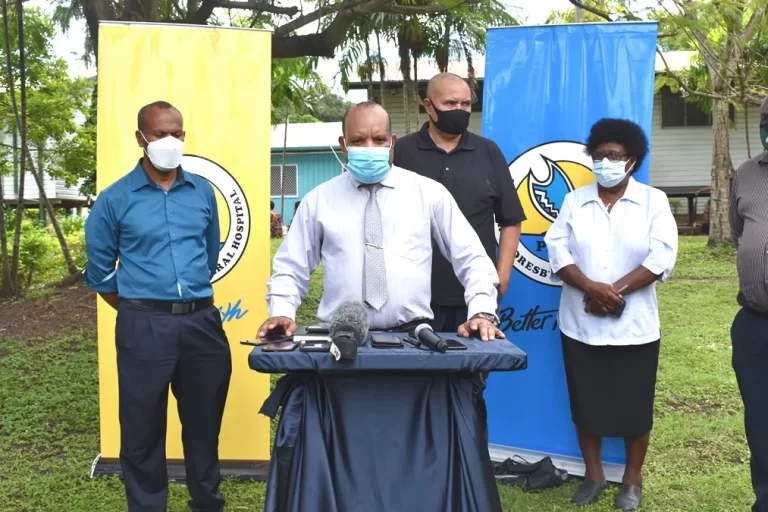
Third COVID-19 surge worst: Port Moresby General Hospital CEO Dr Molumi

Papua New Guinea’s biggest hospital, which recorded four Covid-19 deaths in one week, and more than 80 patients admitted, will scale down services from today, Port Moresby General Hospital chief executive officer says.

Dr Paki Molumi warned of a third surge in Covid-19 cases which he said was worse than the second one.

“This is the worst we have experienced,” he said.

“We will scale down non-essential services for two weeks (starting today 06 October) to re-organise our staff and to contain the situation.

“All hospital clinical services and related services will be scaled down. Staff will be deployed to critical areas such as the Emergency Department, Medical Ward 3B, Isolation Ward and the Taurama Aquatic Centre.”

He told The National that on Monday, there were 50 Covid-19 patients admitted, adding on to the 30 admitted in the previous 24 hours.

He said by 5pm Tuesday, 88 Covid-19 patients were admitted at the hospital and he expected the number to increase.

Dr Molumi said 30 hospital workers had also tested positive for the Covid-19 with mild symptoms and were placed in isolation.

He said the hospital was going through the third wave of the Covid-19 surge which was worse than the last surge.

Measures put in place to help the hospital manage the surge include:

*Pathology services – only urgent tests such as cross-match and blood transfusion services will be maintained;

* All elective surgeries are on hold indefinitely except for emergency surgeries;

*All consultation will be closed except any special arrangement to review cases;

*TB Clinics will be open as per schedule with strict compliance of the Covid-19 protocol;

*Only emergency and life threatening conditions will be attended to at the Emergency Department;

*Only emergency and in-patient radiology services will be maintained;

*Other essential specialty services such as dental, physiotherapy, social works, Heduru Clinic, oncology, antenatal and general support services to remain open but to maintain Covid-19 protocol;

*Dispensing of prescription medications will be maintained with limited capacity including reducing operating hours from Monday to Friday.

Dr Molumi said all staff were expected to come to work as per the rosters including call-out to critical areas within the hospital during this period.

He urged hospital workers to get vaccinated at the vaccination sites in the hospital and other sites in the city.
The vaccination site at the hospital is for workers, patients and members of the public set up by the National Capital District Health Authority and National Control Centre.

Dr Molumi again stressed that vaccination was important in addressing this surge.

Meanwhile, Prime Minister James Marape has again urged the people, especially health workers, to get vaccinated, and for health authorities to establish a better communication system between the provinces and Waigani.

“While vaccine remains optional, I am encouraging everyone to get vaccinated. Coronavirus vaccines save lives,” he said.

“There is a relative increase in (the Covid-19) vaccination, but it is still a tiny margin. We still have a long way to go before we reach the target many countries have already reached for their people.”

He appealed to all health workers to be vaccinated because of the “high-risk” they face in their workplace.
He sounded the warning as he ordered a major step-up in vaccination implementation, and a better communication channel between the Health Department and provincial health authorities.

He wants to see a stronger performance by all stakeholders to contain the fast-spreading Coronavirus (Covid-19) and its deadlier Delta variant.

“We must dramatically increase our roll-out of the vaccines around the country. There is a lot that we have done well since the pandemic struck us in early 2020, but there is still a lot more that we need to do,” he said.

“This war against Covid-19 will not be won by departments in Waigani issuing orders to people (in the provinces) but through a stronger working partnership between stakeholders.

“Our authorities and health workers are on the battlefront. They know what must be done to prevent more people from getting sick and dying, and what is needed to increase vaccination.”

He mooted the idea of providing insurance for frontline health care workers – doctors, nurses and those directly involved in handling the pandemic response.

In Morobe, to use the Morobe Health Authority will use a new tuberculosis ward as Covid-19 ward to manage patients better, says chief executive officer Dr Kipas Binga.

It is currently treating Covid-19 patients at the Sir Ignatius Kilage stadium indoor complex – a five-minute drive from the Angau Memorial Hospital.

Dr Binga said the current set-up was hard to manage.

“We have made those decisions so it becomes easier for things such as oxygen access, and food,” he said.
The new TB ward is at the hospital built as part of a redevelopment project funded by Australia.

“Luckily, we have that facility there,” he said.

“Now with the surge and given our earlier experience, we feel it will be better managed on the hospital campus. All hospitals around the country have theirs on campus.”

Dr Binga said the 12 TB patients in the ward would be moved to another ward.

“We’ve got two wards and we’re trying to free one up,” he said.

The medical ward and TB ward have 26 beds.

“At least we’ve got 26 beds that are linked to oxygen and easier to manage,” he said.

“We’re still keeping the stadium set-up in case there’s a spillover from the surge.”

He said manpower remained an issue.

“As we go along, we see our capacity in terms of financial strength and (is there is any) manpower in Lae we can recruit,” he said.

Dr Binga said there were enough supply for the geneXpert and antibody testing.

He also said lockdowns in certain institutions in the province were entirely up to the management for their safety. The authority and the provincial government had nothing to do with it.

In Goroka, Covid-19 surge in Eastern Highlands, has been described by the national emergency medical team which arrived on Monday as “extremely serious”.

Team leader Dr Garry Nou told The National from Goroka that the solution was in vaccination.

“(People) must get vaccinated,” he said.

“This is so important.”

The PNG Sports Foundation confirmed five Delta variant cases at Goroka’s National Sports Institute (NSI) which has been closed since Friday.

Dr Nou warned the people of Eastern Highlands to stop moving around unnecessarily and to follow all the public health safety measures such as the wearing of masks, physical distancing and regular hand-washing.

The eight-member team from Port Moresby he is in charge of in Goroka comprises five nurses, a specialist nurse on infection prevention control, and a doctor.

“They are all very experienced in isolation care in Port Moresby. They will provide interventional support and help in ward care.”

He thanked the World Health Organisation, Health Department, National Control Centre and Australia’s Department of Foreign Affairs and Trade for supporting the team.

“We also thank chief executive officer Dr Paki Molumi of the Port Moresby General Hospital, Dr Steven Yennie of the National Capital District Health Authority and Matt Cannon of St John Ambulance for allowing their staff to be on the team.

Dr Nou said teams of emergency medical workers from overseas were in the country to help in the pandemic response.

SOURCE: THE NATIONAL/PACNEWS
Palau’s unemployment benefits during the pandemic marred with allegations of fraud as accused still waits for formal charges

By Island Times Team

(First of the two-part investigative article on the US pandemic assistance to Palau under the WIOA programme)

After a handful of complaints and social media inquiries, the Workforce Investment Opportunity Act (WIOA) office, a U.S federal government grant programme burst into national attention as early as 19 February last year as two individuals went on radio to scrutinise and question WIOA’s disbursement process.

The WIOA office disburses millions of dollars in assistance from the U.S CARES programme, made possible through the Compact of Free Association agreement between Palau and the United States.

Dubbed as an “important lifeline for Palauans unemployed by the pandemic,” Palau as citizens of the Freely Associated States (FAS) are eligible for certain unemployment benefits under two U.S-funded facilities: Pandemic Unemployment Assistance (PUA), and the Federal Pandemic Unemployment Compensation (FPUC).

From this assistance, eligible recipients can receive at least US$397 a week for up to 39 weeks through 31 December, 2020, under the PUA, and US$600 a week for periods beginning on or after 01 April 2020, through 31 July 2020, under the FPUC were given to eligible Palauans. The CARES programmes were extended for a further two periods through the end of FY21.

But while many are happy with the help especially when the amount provided by the U.S is bigger than most average salaries in Palau, the WIOA office was not without criticism and marred with reported favouritism and nepotism.

Starlla Ngirngotel Anderson, a Palauan resident and Michael Batutii Glinski an American investor in Palau were the first to publicly complain about how WIOA deprived them of financial assistance which they claim was rightfully theirs.

“I am here on behalf of my daughter Hannah who applied for this financial help”. Her daughter who is an American citizen, “applied for assistance in April 2021.”

Starlla and her daughter Hannah who work as receptionists at Melusech Dil beauty shop decided that “although we both can apply, I told my daughter to apply first and we’ll see from there”. “She applied in April 2020, and as for all the necessary paper works and information needed, the company provided for her, yet the denials continued to come”.

As the denials continued, Starlla decided to accompany her daughter to WIOA office to ask Josephine, WIOA’s Executive director to “why is my daughter denied of this aid?”. Starlla said in the radio show that Director Josephine told her at the time, “Starlla, you are working for the only salon in Palau that is currently open and you are the only salon in Palau that applied for aid at WIOA; salon is not a tourist space.”

In her explanation, Starlla clarified that her workplace “Melusech Dil has a massage parlour and skincare services, and for those; it has no more businesses as we depend on tourists.” She further reported that “our gross income every month is now not enough to support all our employees in fact some employees have already left.”

Following the denial from WIOA, Starlla wrote a letter to WIOA board members. “I submitted the letter to most of them as I could not locate all board members.”

Fortunately, as Starlla revealed, one board member whom she did not identify started communicating with WIOA on their behalf. “Even though they told my daughter that she was not eligible for the aid, one week later she received her first financial assistance.”

“She only received one check of financial assistance,” said Starlla. She also revealed on the radio talk show that she did not receive any document explaining why her daughter is all of a sudden qualified to receive financial assistance.

Her daughter Hannah only received one check for October and that was the last of it. Interestingly, there is also still no explanation from WIOA on why the financial aid was discontinued after she received her first payment.

As early as 2020, Josephine Ulengchong, Director of WIOA was notified of the US$14 million award, the application of eligibility for the money.

A total of 1,200 in Palau have registered with WIOA for this assistance.

(Research assistance was provided by the Pacific Anti-Corruption Journalists’ Network (PACJN)

SOURCE: ISLAND TIMES/PACNEWS

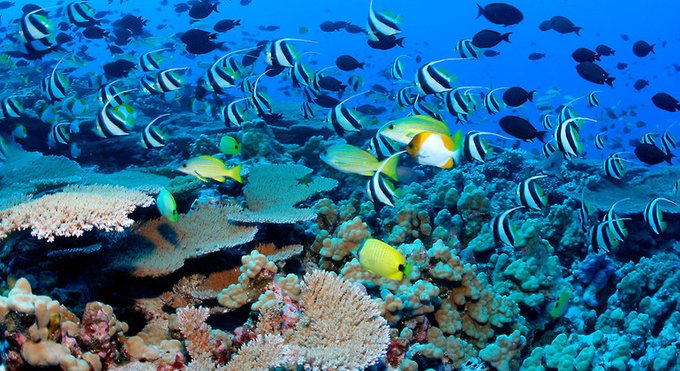
Decade of climate breakdown saw 14 percent of coral reefs vanish

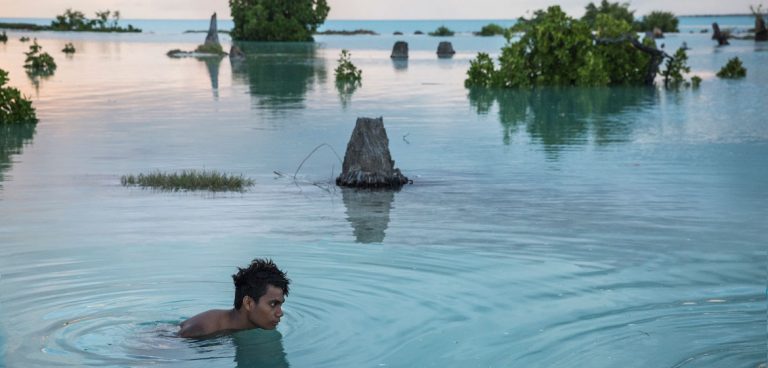
Between 2009 and 2018, the continuous rise in sea temperature cost the world 14 percent of its coral reefs – that’s more than the size of Australia’s reefs combined – a UN-backed report revealed on Tuesday.

In the Sixth Status of Corals of the World: 2020 Report, experts from the Global Coral Reef Monitoring Network, funded by the UN Environment Programme (UNEP), collected data from more than 300 scientists from 73 countries, over a span of 40 years, including two million individual observations.

It revealed that almost invariably, sharp declines in coral cover, correspond with rapid increases in sea surface temperatures, indicating their vulnerability to temperature spikes, and found that this phenomenon is likely to increase as the planet continues to warm.

Dynamic underwater coral cities support up to 800 different species of hard coral and are home to more than 25 percent of all marine life, according to the report.

Soft corals bend and sway amongst the craggy mountains of hard corals providing additional homes for fish, snails and other marine creatures.

And reefs harbour the highest biodiversity of any of the world’s ecosystems, making them one of the most biologically complex and valuable on the planet.

However, when waters get too warm, corals released their colourful micro-algae, turning a skeletal white colour. Some glowed, by naturally producing a protective layer of neon pigments, before they bleach.

“Bleaching can be thought of as the ocean’s version of the ‘canary in the coral mine’ since it demonstrates corals’ sensitivity to dangerous and deadly conditions”, the Status of Coral Reefs explained.

A shift from coral to algae-dominated reefs, reduces the architectural complexity and structural integrity of these habitats, making them less biodiverse and providing fewer goods and services to humans.

According to the report, there has been a steady decrease in hard coral cover since 2010 with the worst impacts occurring in South Asia, Australia, the Pacific, East Asia, the Western Indian Ocean, The Gulf and Gulf of Oman.

Although coral reefs in more than 100 countries cover only 0.2 percent of the seafloor, they underpin the safety, coastal protection, wellbeing, food and economic security of hundreds of millions of people, said the report.

And the value of goods and services they provide, is estimated at US$2.7 trillion per year, including $36 billion in coral reef tourism.

However, coral reefs are under threat from climate change, ocean acidification, and land-based pollution; as well as sediments from agriculture, marine pollution and overfishing.

“Maintaining the integrity and resilience of coral reef ecosystems is essential for the wellbeing of tropical coastal communities worldwide, and a critical part of the solution for achieving the Sustainable Development Goals (SDGs) under the 2030 Agenda for Sustainable Development”, underscored the Status of Coral Reefs.

Despite these gloomy assessments, there is still hope for coral reefs. They are remarkably resilient and can recover in the absence of large-scale disturbances.

After a 1998 mass coral bleaching event, hard coral cover rebounded to pre-1998 levels within a decade.

“If we halt and reverse ocean warming through global cooperation, we give coral reefs a chance to come back from the brink. It will, however, take nothing less than ambitious, immediate and well-funded climate and ocean action to save the world’s coral reefs”, said the report.

This year marks the beginning of the UN Decade of Ocean Science for Sustainable Development and the UN Decade on Ecosystem Restoration, campaigns designed to help protect our seas through scientific advancement and to resuscitate the planet’s declining ecosystems.

Moreover, political leaders will attend the 15th meeting of the Conference of the Parties (CoP) to the Convention on Biological Diversity on Monday and again from 25 April to 8 May next year.

There, world Governments will negotiate a post-2020 global biodiversity framework to map out how humanity will live in harmony with nature in the coming decade.

SOURCE: VANUATU DAILY POST/PACNEWS

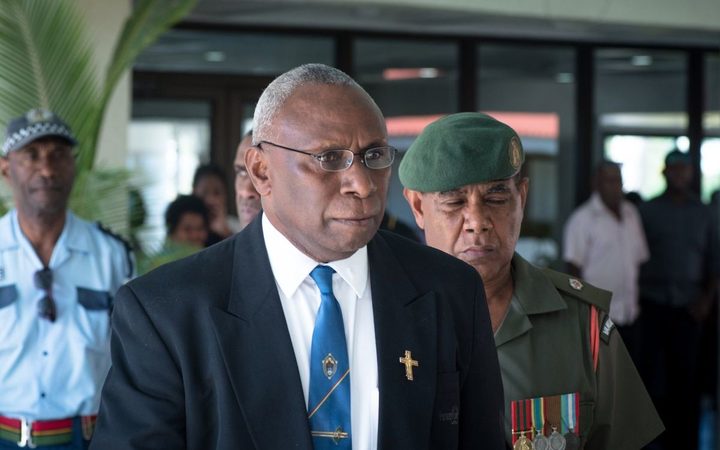
Constitutional case filed against Vanuatu President

A constitutional case over the recent pardoning of three former Prime Ministers of Vanuatu, Rialuth Serge Vohor, Joe Natuman and Charlot Salwai, has been filed against President Obed Moses Tallis.

Daily Post was informed by a reliable source that the Ombudsman filed the case to challenge the legality and rational of the pardoning.

Article 38 of the Constitution which provides for the ‘Presidential powers of pardon, commutation and reduction of sentences’ states: “The President of the Republic may pardon, commute or reduce a sentence imposed on a person convicted of an offence. Parliament may provide for a committee to advise the President in the exercise of this function.”

It is argued the Constitution has no provisions for the Head of State to pardon convictions, only sentences.

Natuman and Salwai were convicted during their reigns as PMs in two separate legislatures. Vohor, on the other hand, was sent to jail when he was Member of Parliament for Santo Rural constituency.

Meanwhile, to mark and celebrate the 42nd anniversary of the signing of the National Constitution of Vanuatu, Head of State Obed Moses Tallis acknowledged that this celebration is more than a book or a document, but the need to know everything within the Constitution and upholding it.

“Our celebration is a show of gratitude to our forefathers and the leaders who were inspired by our statelessness and shared the vison of a Constitution, making it a reality,” he said in his official address Tuesday.

“We have to bear in mind that if we do not know or understand the Constitution, we cannot observe it.”

The President emphasised on the need for all citizens of Vanuatu to better understand and grasp the Constitution, as he quoted the Scripture from 1 Samuel:15-22, “Behold to obey is better than sacrifice.”

The President referred to the rule of law as a concept, and the Constitution as a guideline for good governance.

He said, “To me, the rule of law is characterised by four features. The first, key institutions of the country are effective, incorruptible and impartial. Secondly, there has to be a culture of rights that is respected, effective and enforced, thirdly, Government policies and bills are consistent with the Constitution, and lastly the legal system is established in fairness.”

He added, “The rule of law is essential to our country and that is why it is embedded in our Constitution.”

Two of the signatories of the Constitution were decorated with medals, former Prime Minister, Joe Natuman and George Pakoa Tarimanu, in recognition of their contributions.

SOURCE: VANUATU DAILY POST/PACNEWS

Climate change, population increase fuel looming water crisis: WMO

Improved water management, monitoring and forecasting are needed in the face of a looming global water crisis, the UN World Meteorological Organisation (WMO) and partners said in a report published on Tuesday.

The warning comes as floods, droughts and other water-related hazards increase due to climate change, while the number of people experiencing “water stress” continues to rise amid population growth and dwindling availability.

In 2018, some 3.6 billion people globally had inadequate access to water for one month per year, which is expected to surpass five billion by 2050.

“Increasing temperatures are resulting in global and regional precipitation changes, leading to shifts in rainfall patterns and agricultural seasons, with a major impact on food security and human health and well-being,” said Petteri Taalas, the WMO Secretary-General.

Water-related disasters have increased in frequency since the year 2000, according to The State of Climate Services 2021: Water report, which was coordinated by WMO and includes input from more than 20 international organisations, development agencies and scientific institutions.

Flood-related disasters rose by 134 per cent when compared with the two previous decades.Most deaths and economic losses occurred in Asia, where warning systems require strengthening.

Taalas recalled that over the past year, extreme rainfall across the continent caused massive flooding in Japan, China, Indonesia, Nepal, Pakistan and India.Millions were displaced and hundreds were killed.

“But it is not just in the developing world that flooding has led to major disruption,” he said. “Catastrophic flooding in Europe led to hundreds of deaths and widespread damage.”
The number and duration of droughts also increased by 29 percent over the past two decades. Most deaths were in Africa, again indicating the need for stronger warning systems.

“Lack of water continues to be a major cause of concern for many nations, especially in Africa.More than two billion people live in water-stressed countries and suffer lack of access to safe drinking water and sanitation,” said Taalas, adding, “we need to wake up to the looming water crisis.”

The report calls for improving water management, integrating water and climate policies, and scaling up investment as current measures are fragmented and inadequate.

Recommendations include investing in integrated resources water management to better manage water stress, especially in Small Island Developing States (SIDS) and the world’s Least Developed Countries (LDCs).

Authorities in the LDCs are particularly urged to invest in early warning systems for droughts and floods.

Countries are also encouraged to fill gaps related to data collection critical to climate services and early warning systems, and to join the Water and Climate Coalition, a WMO initiative that provides support, including in improving assessment of water resources.

SOURCE: UN NEWS CENTRE/PACNEWS

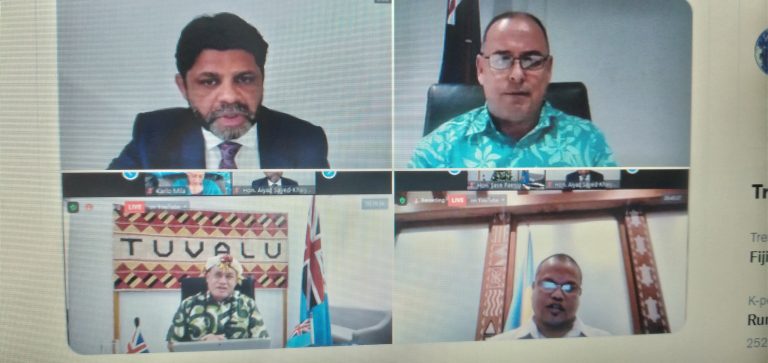
Pacific High-Level Champions announced

As the countdown continues, the Pacific voice will be amplified on the global stage at COP26 in Glasgow with the announcement of five High-Level Climate Change Champions Tuesday.

The High-Level Champions are Cook Islands Prime Minister, Mark Brown – Fiji’s Minister of Economy and Climate Change, Aiyaz Sayed Khaiyum – Palau’s Minister of Agriculture, Fisheries and Environment , Steven Victor – Tuvalu’s Minister of Finance and Climate Change, Seve Paeniu – and the Republic of the Marshall Islands Minister of Finance – Alfred Alfred Jr.

What will their message be?

The impacts of climate change will worsen drastically unless global warming is limited to 1.5 degrees Celsius.

The Champions will push for five Pacific priorities, which include Climate Finance, Climate Ambition, Environmental Integrity, Loss and Damage, and Oceans.

Meanwhile, Fiji’s Attorney-General, Aiyaz Sayed-Khaiyum has been nominated to serve as the Pacific’s High-Level Champion for Oceans at COP26.

This responsibility reflects the faith of Pacific Forum leaders for Fiji to amplify regional climate priorities in the global arena.

Sayed-Khaiyum virtually participated at the Amplifying Pacific Voices at COP26 through the Political Climate Champions High-Level Launch Event.

The event officially marks the beginning of a major regional campaign on amplifying Pacific voices in the lead up to, during and after COP26.

The AG highlighted the need to mainstream the Oceans-Climate nexus into global climate discussions during the launch event.

Sayed-Khaiyum said that grant and concessional finance for climate action and creating the right balance between adaptation and mitigation finance are crucial priorities for the Pacific going into COP26.

The upcoming COP26 will be held in Glasgow, Scotland from 01 – 12 November.

The High-Level Launch Event: Magnifying our Pacific Voice at COP26 through Political Climate Champions was held Tuesday 5 October 2021.

SOURCE: SPREP/FBC NEWS/PACNEWS

Legal implications of sea level rise for Small Island States explored in New World Bank study

A new World Bank study examining the potential legal implications of sea-level rise on the maritime and legal rights of Pacific Island nations provides a pathbreaking review of the key legal questions and highlights that some international legal conventions may need to be reconsidered.

The new study, Legal Dimensions of Sea Level Rise: Pacific Perspectives, sets out the latest developments in international law to support policy considerations now underway in the Pacific and around the world. The report assesses how states would defend their existing territories and marine resources in accordance with international law when dealing with rising seas and land loss.

Furthermore, the report considers more existential questions for these countries such as whether statehood could continue if a nation were to become uninhabitable and legal rights and implications for citizen mobility if people are to be relocated.

Global mean sea-level will continue to rise throughout the 21st century due to the effects of climate change. In many areas, this will result in increased coastal flooding, storm surges, cyclones and even land loss. In small Pacific atoll nations, these impacts are expected to be more severe, with entire islands at risk of becoming uninhabitable. Along with the loss of homes and resources, the loss of land to rising seas would also have profound impacts on countries’ legal and maritime rights.

“The impacts of climate change are a global concern, however the loss of territory is a real and clear threat to the very existence of Pacific states, and particularly atoll nations,” said Benoit Bosquet, World Bank Regional Director for Sustainable Development in East Asia and the Pacific. “Such impacts would be unprecedented and create similarly unprecedented legal questions. We hope this work will provide useful analysis for Pacific nations and small island states facing these unique and challenging questions.”

The Pacific region has been a leader in considering policy and legal options in the face of sea-level rise, most recently with the Members of the Pacific Island Forum endorsing the Declaration on Preserving Maritime Zones in the Face of Climate Change Related Sea Level Rise in August 2021.

While the report highlights a range of legal and policy tools available to island states, a re-examination of the current paradigms of international law are also suggested. One example is clarifying how territorial and maritime entitlements – including to resources – can be preserved in the face of rising sea levels. Something the Pacific Islands Forum’s recent Declaration on Preserving Maritime Zones has just set out to do.

“As the impacts of climate change are being felt, it is clear that adaptation alone will not be sufficient for small island states such as the Marshall Islands,” said Acting RMI Chief Secretary, Catalino Kijiner. “This work will be helpful in informing government decision-making in the context of rising sea levels, and will help direct how the international community can best provide island and atoll nations with the support we need to address these unprecedented challenges.”

The study, authored by David Freestone and Duygu Cicek, has been developed as part of the World Bank’s work on Building Resilience in Pacific Atoll Island Countries with financing from the Global Facility for Disaster Reduction and Recovery (GFDRR).

The World Bank works in partnership with 12 countries across the Pacific supporting 87 projects totaling US$2.09 billion in commitments in sectors like agriculture, health, education and employment, climate resilience and adaptation, energy, fisheries, rural development, economic policy, macroeconomic management, aviation and transport, telecommunications, and tourism.

SOURCE: WORLD BANK/PACNEWS

Stay connected

529FansLike
172FollowersFollow
156SubscribersSubscribe
- Advertisement -